



Special guest blog by John Walters, Co-founder & Director of Questae Collective.
Businesses have many differing objectives. They have different visions, and goals. They have different internal cultures, societal belief systems, habits, traditions. Things are done in a certain way because that is how they do them! They have hierarchy, roles, responsibilities, and structures. They also have many different departments, all with their own differing cultures, personalities, and communication processes.
But the one thing they do all have in common, is that they all have PEOPLE!
Studies have found that 1 in 5 people take a day off due to stress, yet 90% of these people cited a different reason for their absence. Source MHFA England
And when we look at the statistics, it’s even more concerning. Data from the Office for National Statistics’ (ONS) 2019 report has found that “17.5 million working days were lost last year due to mental health-related sickness absence.” Source ONS Labour Force Survey
The report further found that stress, depression or anxiety accounted for 44% of all work-related ill health cases and 54% of all working days lost due to ill health.” Source MHFA England
The workplace is certainly shifting, and the past 10 months have accelerated this incredibly, irreversibly maybe (I hope so).
Culture within the workplace, whether that be at home, in the office, in transit, co-working space, or wherever it is, is now more than ever changing how we work, how we interact, how we communicate.
So how do we ensure that this shift takes us towards a culture of health and wellbeing?
How can businesses embrace this shift to help their people nourish, thrive, and expand?
The first question we often get asked is “what is wellness?”
Our take on this is that wellness is an active process of becoming aware of, and making choices toward, a healthy and fulfilling life. It is more than just being free from illness; it is a dynamic process of change and growth. Wellness is a state of complete physical, mental, and social wellbeing, and not merely the absence of disease or infirmity.
“Physical and mental health are inextricably connected; without one, the other cannot thrive.” An interview with Rex Millar www.rexmillar.com
Businesses that have already engaged in programmes, or implemented strategies or shifts in their culture to embrace, promote, and live by the pillars of wellness, they really are making a difference, but not only to their people, to themselves as well.
By treating their people as individuals, by empowering them and creating a culture that has a focus on offering, and expanding ideas, knowledge, techniques, and skills to enhance wellness and wellbeing, they have shifted their culture in a way that supports, guides, and encourages individuals with the aim of enhancing physical, mental and emotional wellbeing.
So, what’s in it for the business?
Vitality Health’s ‘Britain’s Healthiest Workplace’ initiative has proven that businesses that embrace wellness as a fundamental part of their culture do thrive and succeed and expand in many more ways that just bottom line. In fact, in an open letter to business leaders in the 2019 2019 Health at Work Report, Neville Koopowitz, CEO of Vitality UK writes, “when employers embark on promoting better health among their employees, there are no losers. Employees are healthier, happier, and more engaged with their work: employers benefit from a more productive and motivated workforce, with lower levels of sickness absence.”
These benefits include:
On top of these benefits, the people, the staff, and I mean all of them all the way up to the executive leadership teams, will benefit from a greater understanding of wellness, and will have a better understanding of themselves, their emotions and those of their colleagues.
But what really makes the change is the tool kit that they will all have within their own personal armoury. They will have the knowledge, the skills, and the confidence to manage many situations and scenarios that currently they would not. Situations that may cause them, and those around them, distress, stress, anxiety, panic, mood changes and many more.
They will know what they need to do for themselves, and how to encourage others.
So, what are some of the simple, and easy to achieve tools, tips or activities that we can take part in?
Get out and into nature, embrace the sunshine and fresh air or, when indoors, whether in the home or workspace, bring nature with you by introducing biophilia, which literally means ‘love of life’. This can improve productivity, lower stress levels, enhance learning comprehension, and increase recovery rates from illness.
Researchers have found that more than 90% of people would imagine themselves in a natural setting when asked to think of a place where they felt relaxed and calm. Being in or around nature makes us feel good, our physical and mental wellbeing depends on us spending time in a natural environment and this affects our productivity and general wellbeing too. Source Biophilia – What is it and why is it important? | Planteria. Similar benefits can be received in the work place from the installation of corporate plants in commercial spaces.
Exercise, no matter how simple (or intense), as well as eating nutritious food, maintaining good gut health, and keeping energy levels up, can help too.
Finding time and space for ourselves, whether this is meditation or reading a good book it important as well, as is laughter – watch a good old comedy (or a new one, of course).
Keep a check on finances, on your vocational ambitions, and recognise how you are feeling in your mind… how is your emotional wellbeing and what are you doing to maintain healthy, positive mindfulness?
By implementing and creating such inclusive, open and caring cultures, conversations that would normally be considered ‘unspeakable’ or ‘not for the office’ will be normalised. People will feel listened to, valued, appreciated, welcome, safe. They will have the tools to understand, be compassionate, caring, and be inclusive to all.
And there you have it, in simplistic terms, to enjoy the journey that wellness takes us on, we need to understand and implement the strategies that work for us, that bring us an overall feeling of wellbeing, and we can now see, and understand, in very simplistic terms, the many benefits to enjoy.
The key now is to get businesses to see, understand, value, and implement strategies within the workplace to complete the circle.
If you have read this, and you would like to know more, or if you would like to find out how we can assist, guide and implement programmes tailored for you, then please do get in touch on:
Special guest blog by Nadia Themistocleous, Designer at Trifle* Creative.
An inspiring workspace will help you focus, be more productive and more enthused about sitting down to work. If you’re drawing a blank when you sit down to work or simply don’t even fancy taking a seat then perhaps consider a few of these tips to help you feel a little more energised, ready and want to work…
Critical for good air, mental breaks and overall wellbeing; outdoor breaks are scientifically proven to increase productivity, creativity and attention span. Connecting to nature is a basic need and that’s why surrounding yourself with plants has such a good impact too. Planteria Home was born to support staff working from home and you can arrange to gift, or buy at a discount for your organisation.
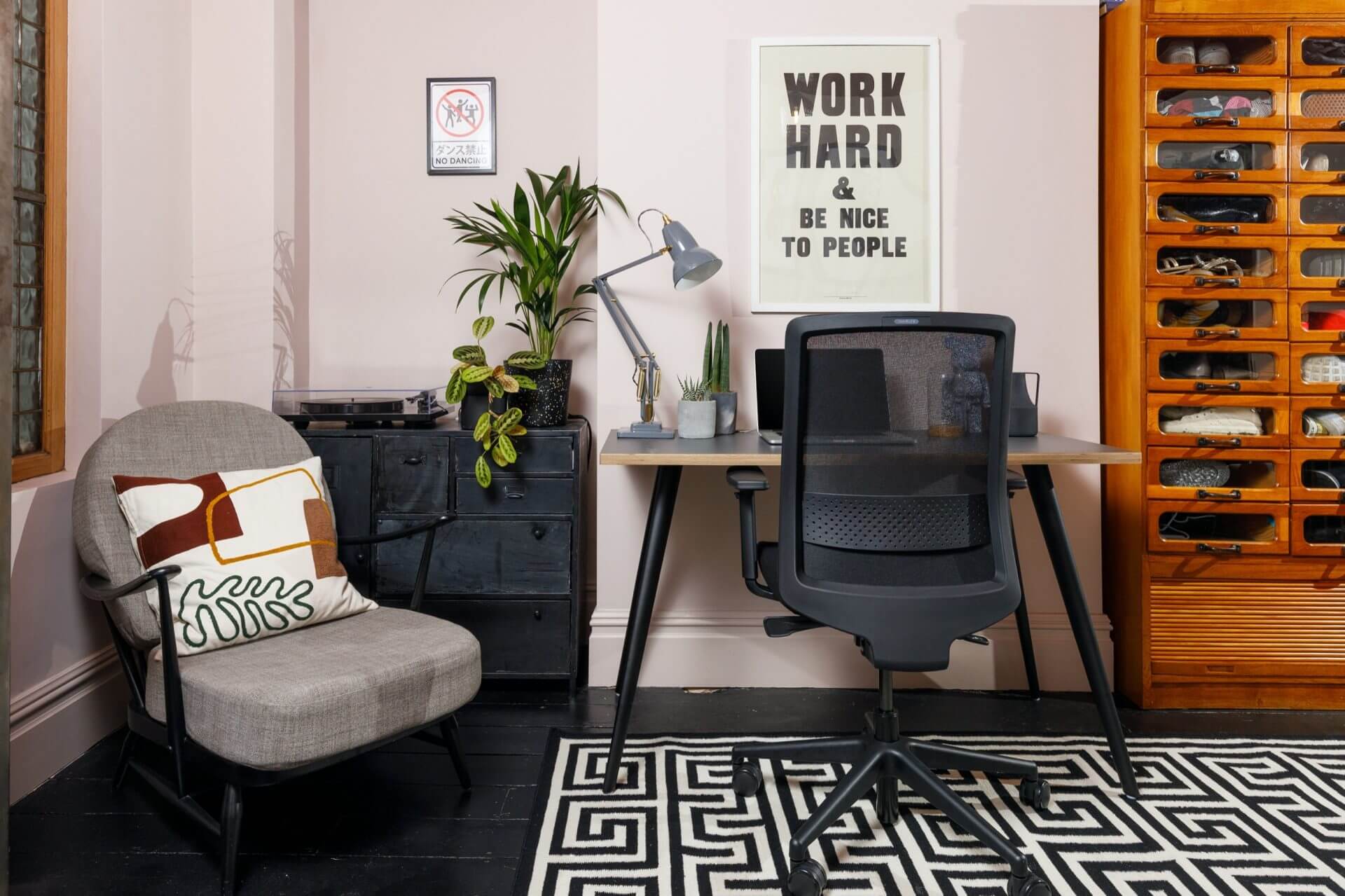
Sitting at the kitchen table might be alright for a few hours but it’s really not conducive to productivity or any good for your posture. The reality is that working from home will be part of the future so invest in some proper kit. Workplace designers Trifle* offer a great collection. The Homework Bureau package is part of their HomeWork collection and is the in-house favourite.
Have items around you that inspire and uplift (books, reference, imagery, art, objects, photos). It’s good to let your mind wander occasionally as it triggers your subconscious which lets you come up with great ideas. Fine art dealer Art in Offices has diversified from its corporate client base with its art rental for homes offering and a selection of affordable prints to buy.

“Music is the strongest form of magic.” – Marilyn Manson. Music can have an incredibly powerful influence on our mood. If you need to get yourself out of a rut, concentrate or just feel a little happier about things, get a good playlist on the go, it can really help.
Think about all your senses. Smell isn’t considered that much at the workplace (apart from when it’s bad) but it can also help you in the same way music can. Creating a calm or even feeling energised can be impacted by the scent in your space. It’s definitely a good excuse to justify yourself a nice candle.
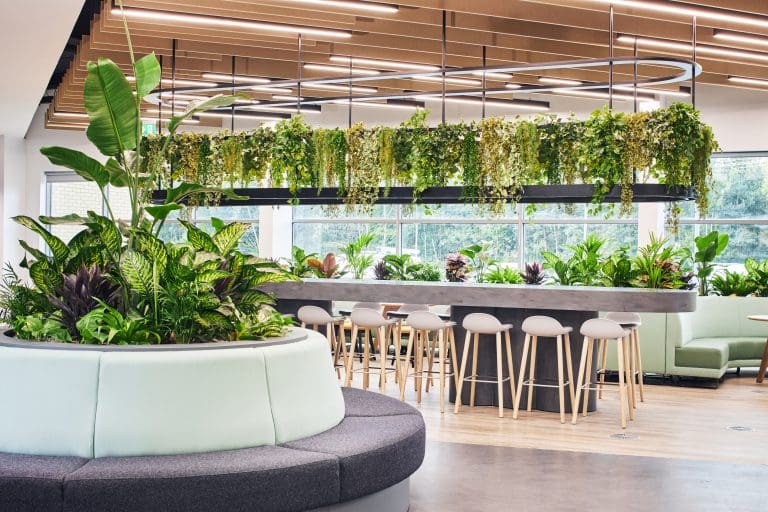
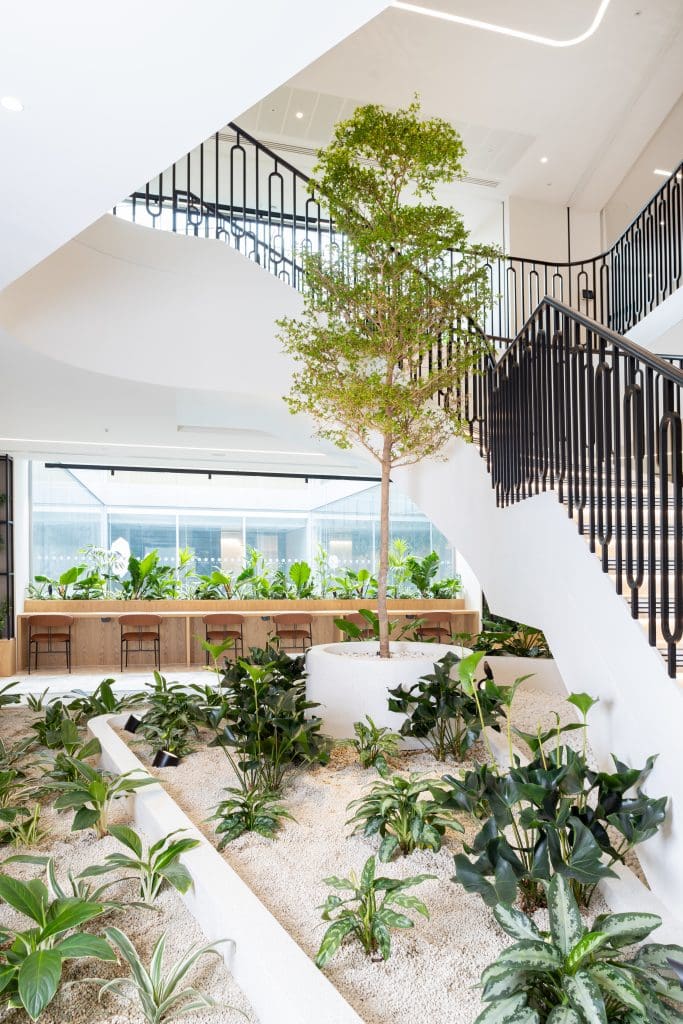
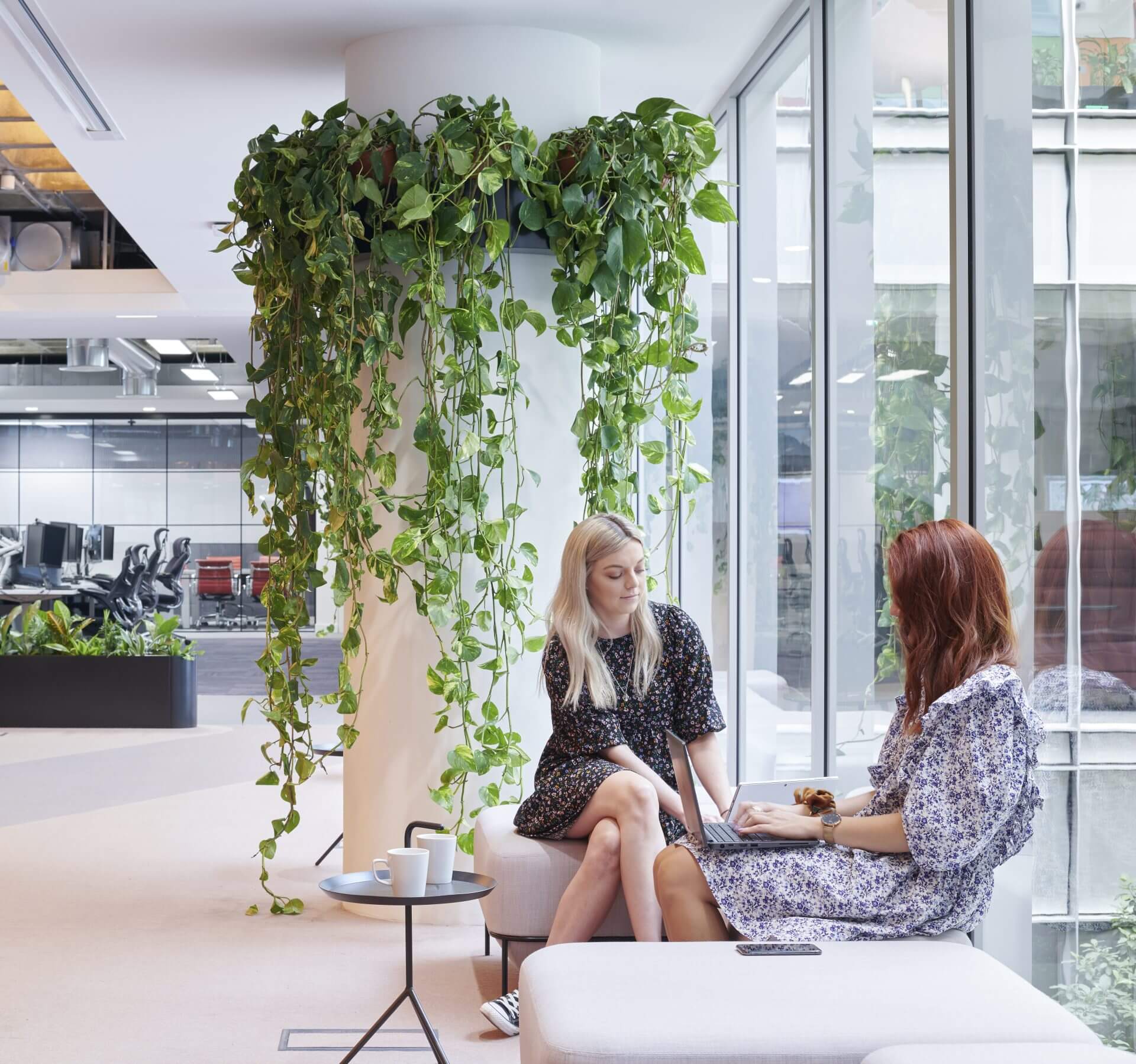
Having just a solitary plant by the window is no longer the norm – offices across the nation are creating their own little patches of green and incorporating plants into their interior décor.
The benefits of a green office space are many, from mental wellbeing to lower levels of stress. Green Plants for Green Buildings say that a productive office includes biophilic design or bringing the outside in. The urban jungle trend can help you accomplish this goal – and it’s a trend that we love here at Planteria.
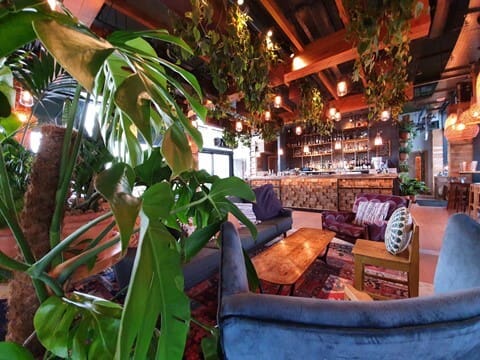
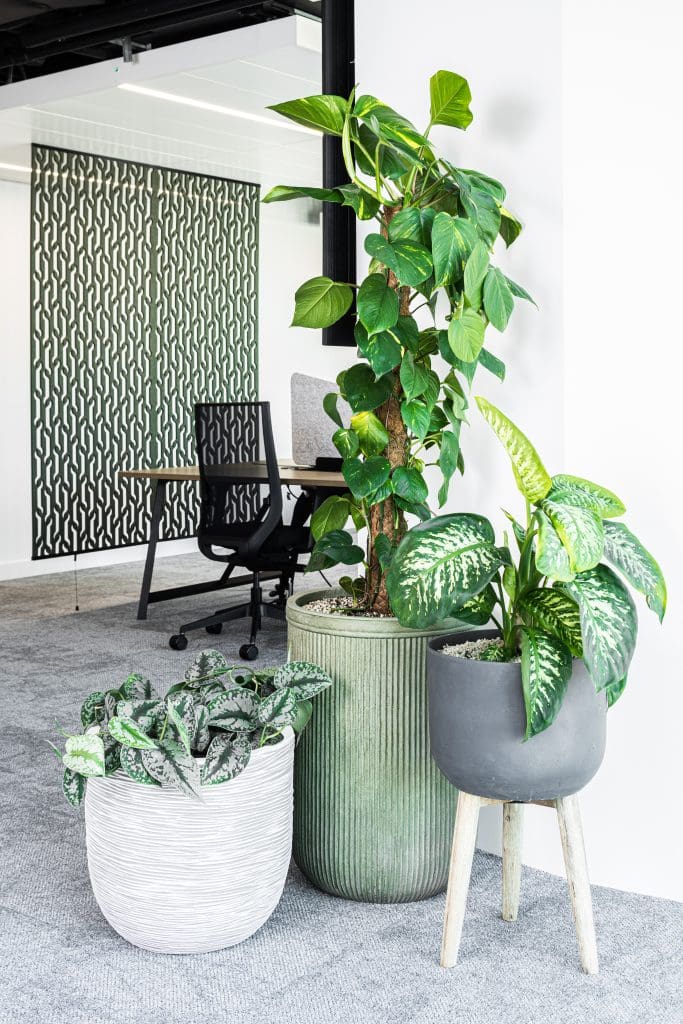
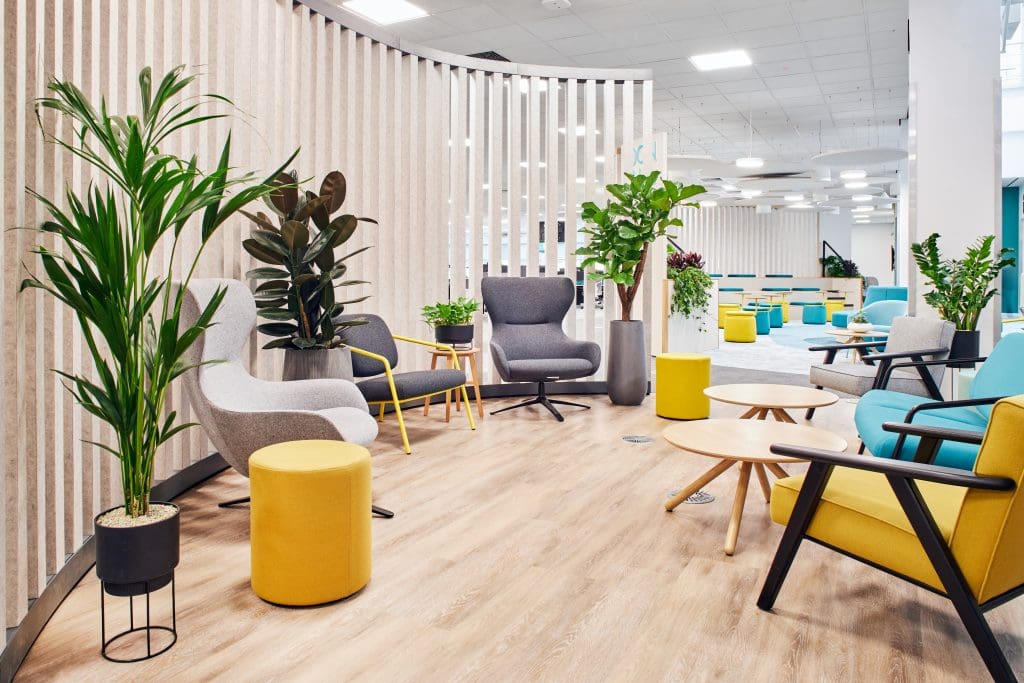
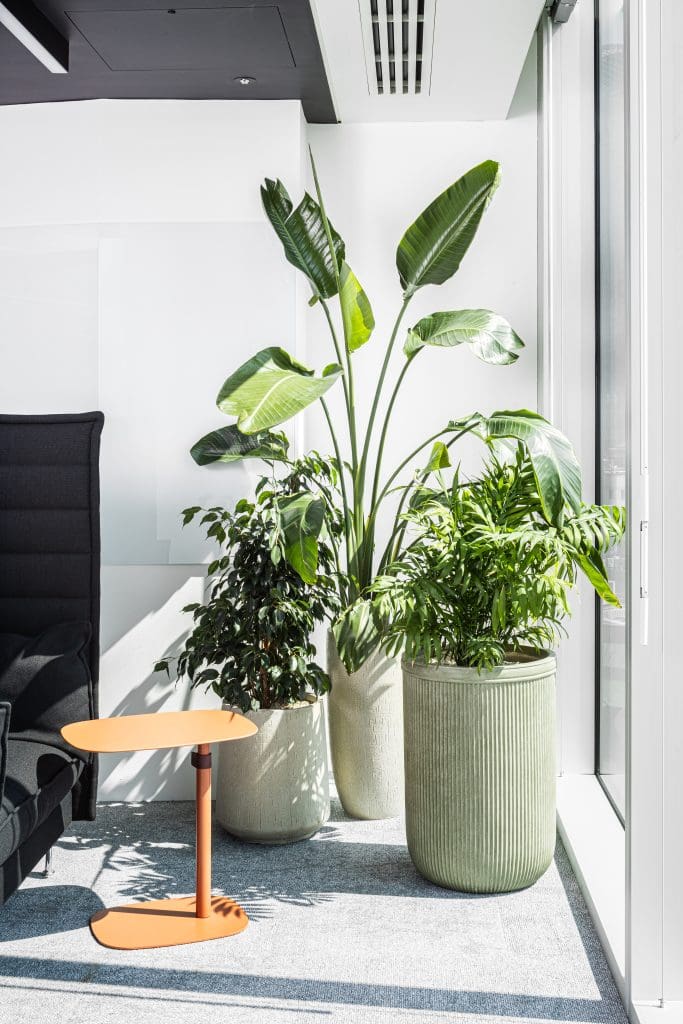
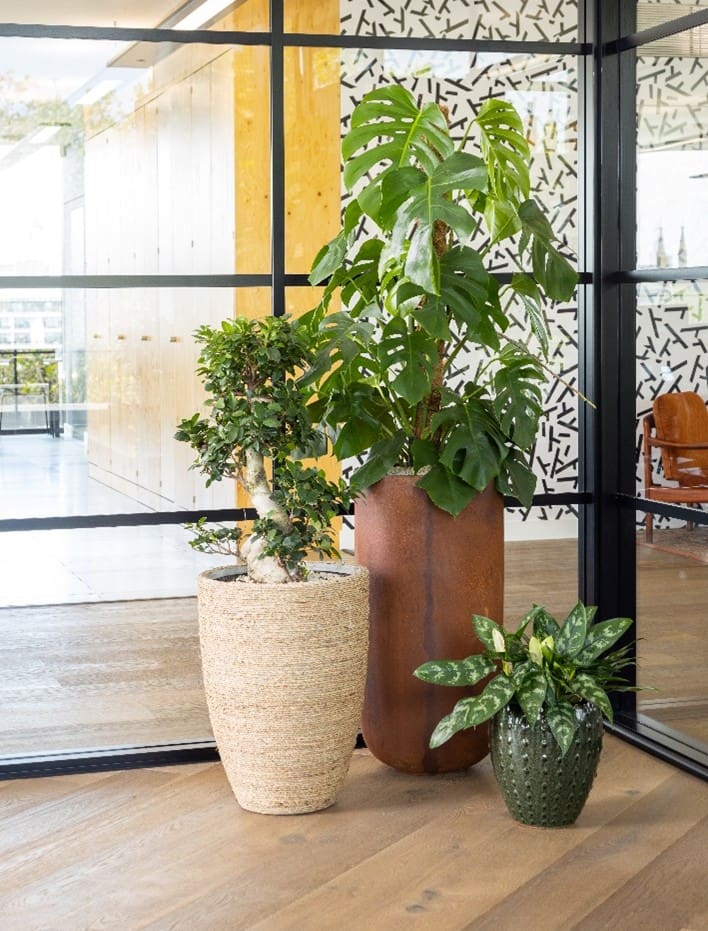
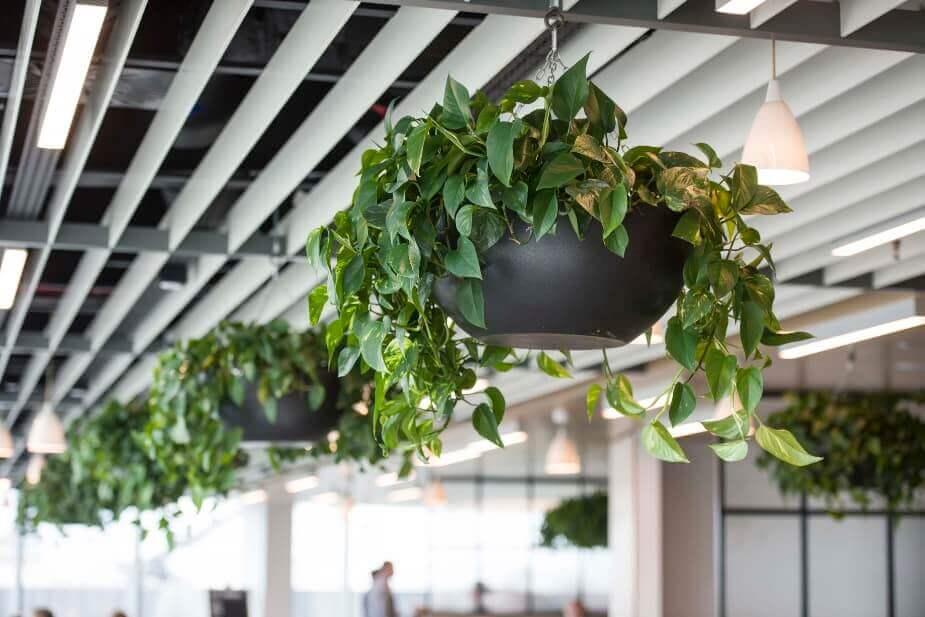
By adding planters, plant stands, indoor plants, hanging plants and more to the office, you can create a ‘jungle’ in the building or workspace (and even at home!) that boosts people’s wellbeing and productivity.
And, at Planteria, we believe this interior trend is here to stay.
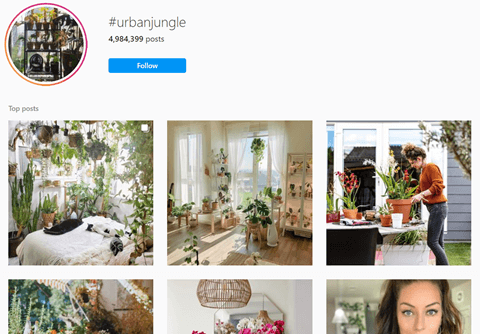
For a start, this is not a new concept, as people have been trying to create ‘jungle vibes’ in their home and place of work for a long time. If you look at the popularity of hashtags such as #urbanjungle, #junglestyle and #junglehome on Instagram, it’s clear this trend is not just a fad.
For example, there are almost 5 million posts just with the #urbanjungle tag!
Also, with a growing number of people living in cities (it’s estimated that, by 2050, there will be 2.4 billion more people in cities), bringing the jungle indoors is an increasingly attractive option.
It’s difficult for us to imagine life without greenery, so it’s no wonder that the urban jungle trend appeals so much to us. Plants can create a soothing atmosphere and are a brilliant addition to commercial spaces in general, including offices.
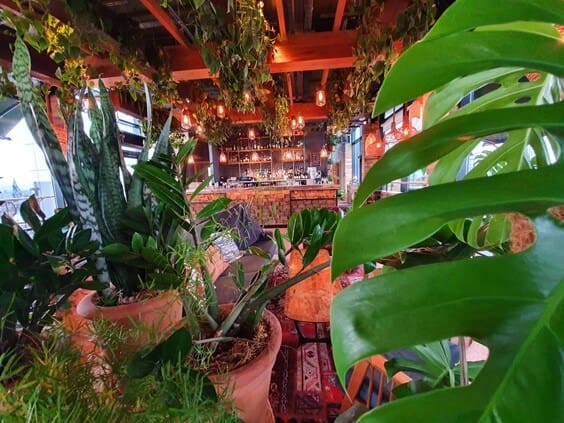
After all, an office full of bright colours and vivid greens will make people feel at ease (since it meets their biophilic needs) and reduces employees’ stress levels. We also believe an indoor jungle can improve air quality, boost people’s moods and create a happier workplace, which is why we love this trend so much.
The short answer is that it’s incredibly easy to bring the jungle indoors with a trusted office plant supplier.
You don’t have to go as far as Amazon, who really took the jungle look to the next level by building the Spheres. These giant biodomes in their Seattle headquarters allow staff to escape the office and work surrounded by nature:
If you’re considering rewilding your interior, there are two things you must take into account:
So, with this in mind, make sure that the layout of your workplace still makes sense. The visual appeal and impact of the plants are undeniable, but you also want your employees and visitors to be able to easily navigate the office without obstacles in the way, for instance.
The urban jungle look is all about more plants and more coverage, so don’t skip the walls either – living walls or potted plants on walls can add to the jungle effect and maximise your floor space at the same time.
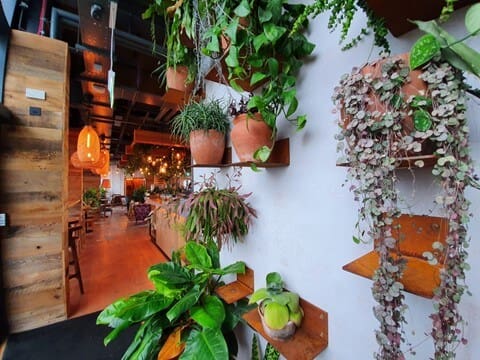
Choosing the right plants for the office is also important because you want something that is easy to maintain. Plants require TLC to look their best and offices are usually busy places so, in order to keep up the jungle look, low effort plants and flowers should be top choice. You can however leave that to us at Planteria Group and we can help pick the best ones for your space, and look after them for you too!
Plants are a source of inspiration and this trend can help people to reconnect with nature and unleash their creativity. What’s more, plants bring life into interiors as well – if you remove all plants from a space, it’s easy to see how empty and boring it can look.
The urban jungle trend also allows people to have fun taking care of something living and to contribute to the aesthetic of their own home workspace, which appeals to many home jungle fans who prefer plants to pets, they are both cheaper and easier to care for and don’t require walking!
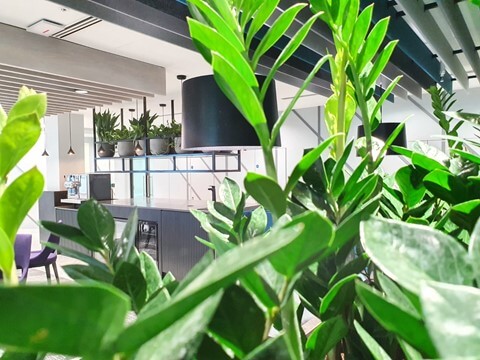
Our expert plant technicians create solutions tailored to your workspace. We always take the building design and restrictions into consideration, which includes humidity levels, lighting and heat; this allows us to create a bespoke design that matches your unique requirements.
Our knowledge of office plants is unrivalled and we make sure to match your corporate image and select the right plants for your environment as well.
We have a wide range of plants to choose from, so you’ll be spoilt for choice with Planteria. From Dracaena Lemon Limes and Anthuriums to Sansevieria and Aglaonema Stripes, we provide beautiful plants for any type of office and sector, including hotels, restaurants and offices of every shape and size!
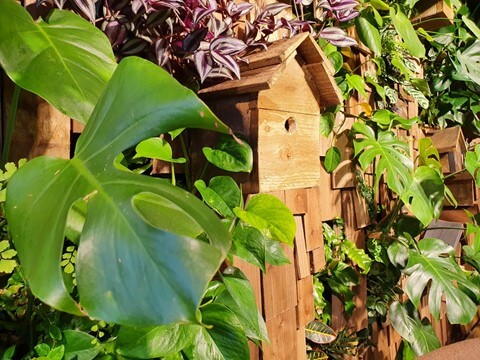
We offer many options for corporate plants at Planteria, so get in touch today to learn more about them and how we can help create an urban jungle in your office.
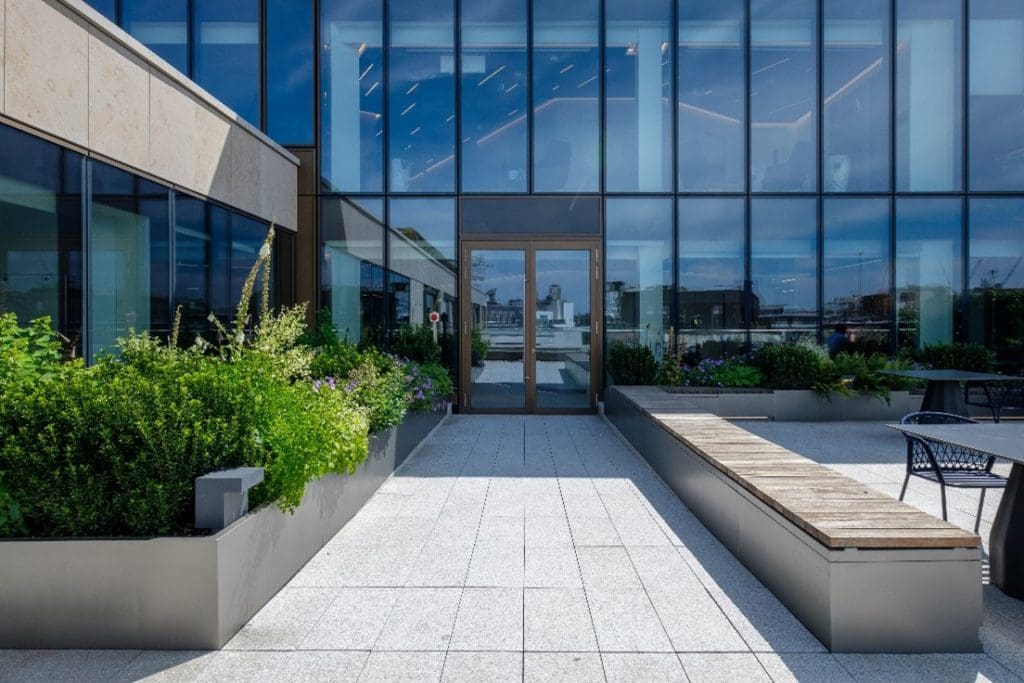
Outside spaces at the workplace can often be forgotten about, but we’re looking to change that. An outside space can be a place for relaxation, re-energising, and creativity. We strive to encourage more businesses to incorporate popular biophilic trends by blurring the lines between indoors and out – and we love to discuss the benefits of doing so.
Here, you can learn about some of the best ways to use your outdoors spaces, as well as how to bring a piece of the outdoors into your establishment with indoor office plants.
If you’re working in close proximity to a park or garden, using this space to hold meetings could prove to be great for morale – especially during warm weather. Of course, we wouldn’t recommend hosting any meetings that will include information that is confidential to your clients, but taking a break from the office to discuss internal changes, processes or brainstorming will maintain efficiency with time, and may even help your workers to stay productive later into the working day.
Many offices have difficulty keeping their indoor air quality at healthy levels, so encouraging staff to take a break in the outdoors can improve health and concentration. Particle pollution is known to poorly affect physical and mental health, and indoor spaces are typically ten times worse for this pollution than outdoors. Taking a break from particle pollution can do wonders for the help and headspace of your staff, so if it’s a nice day – why not suggest a picnic? Ideally, if you do have some viable outdoor space at your office, providing table and chairs to create an alfresco area which can be used for eating, taking a coffee break or having an informal meeting is an excellent idea.
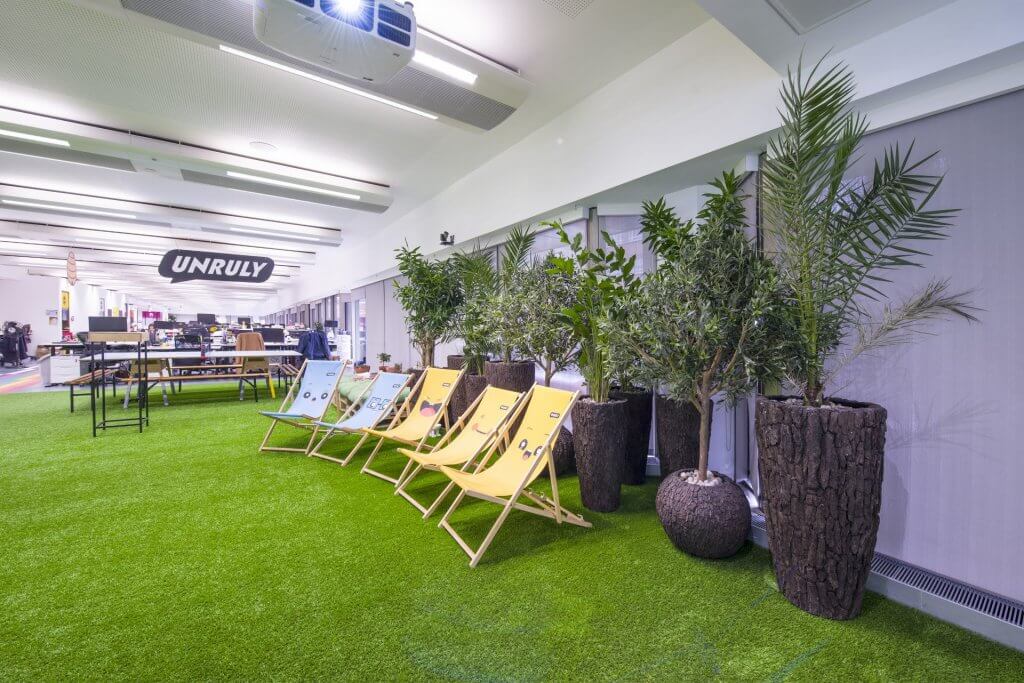
Help to boost health and wellbeing, by turning your outdoor space into a useable attractive area for a quick spell outside for formalised lunchtimes. When under duress a break outside can help staff to reset and return with a fresh can-do attitude, whether they’ve just struggled with an intense call with a client or business partner, or a busy morning with back-to-back activity. Plants and nature have plenty of restorative qualities. Your business could easily be enjoying these benefits with minimal cost. The added benefit of topping up vitamin D levels in the sunshine and taking in the view of green plants will also help to improve immune systems to work optimally and keep your workforce healthier and happier.
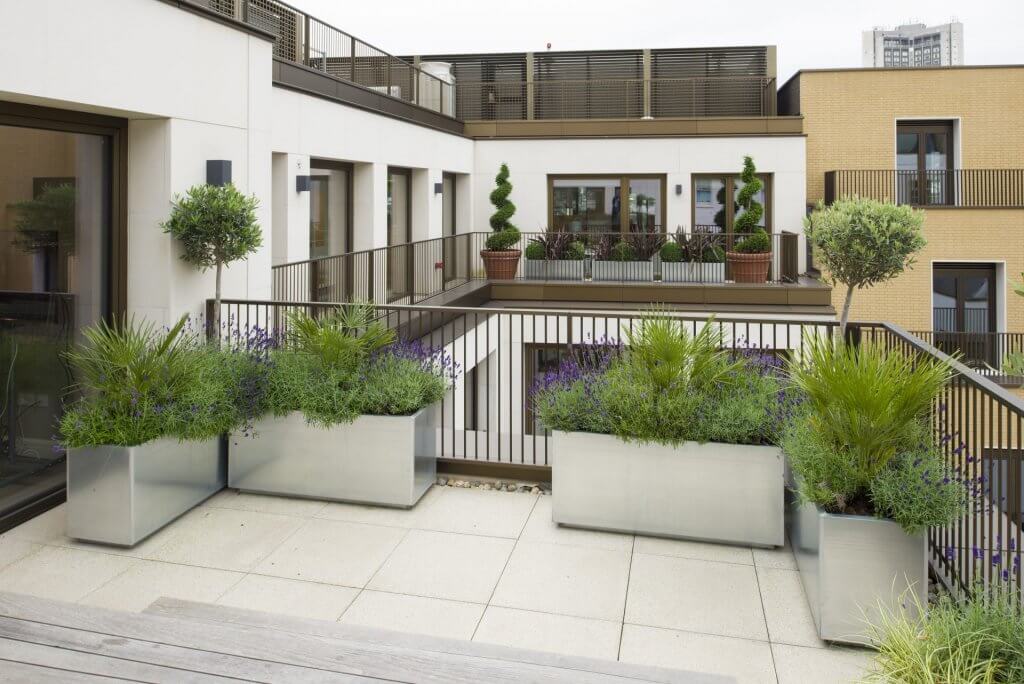
In many cases, a green attractive outdoor space may not be within a lunchtime walking distance of the office. And you may not be lucky enough to have accessible outdoor space of your own. In this case, you may be looking to bring aspects of the outdoors into your workspace so that staff and guests can still reap some of the benefits of natural elements and plants.
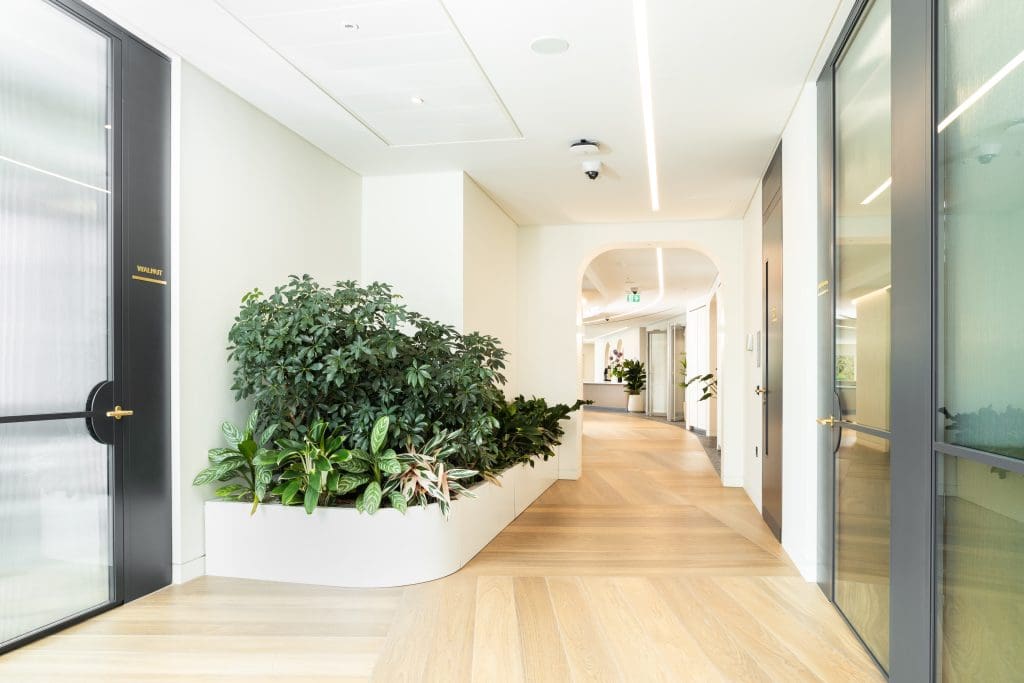
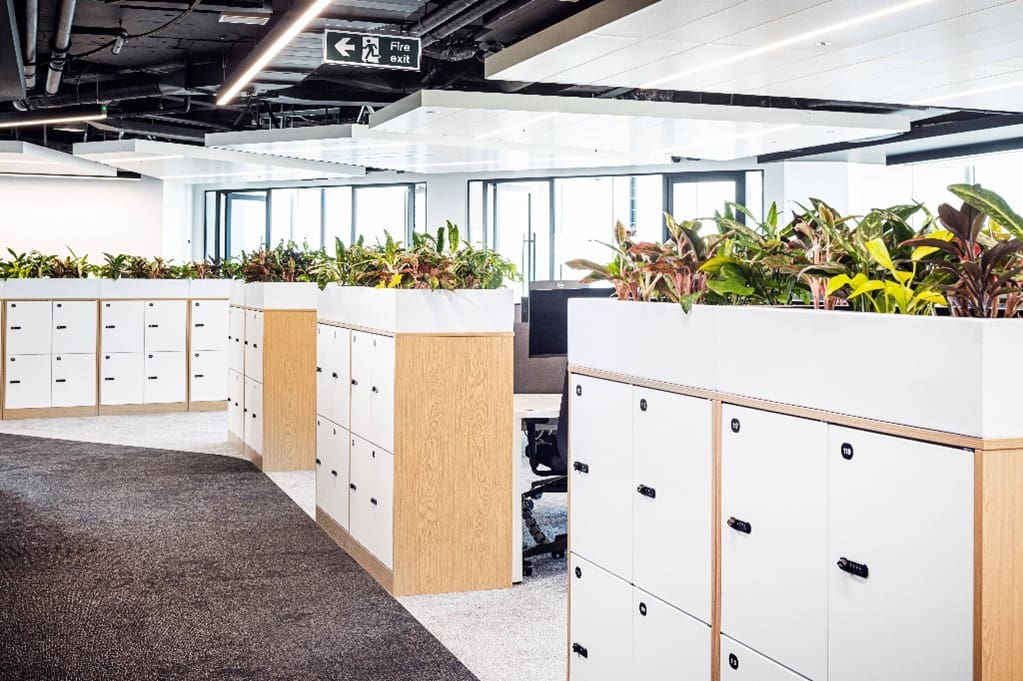
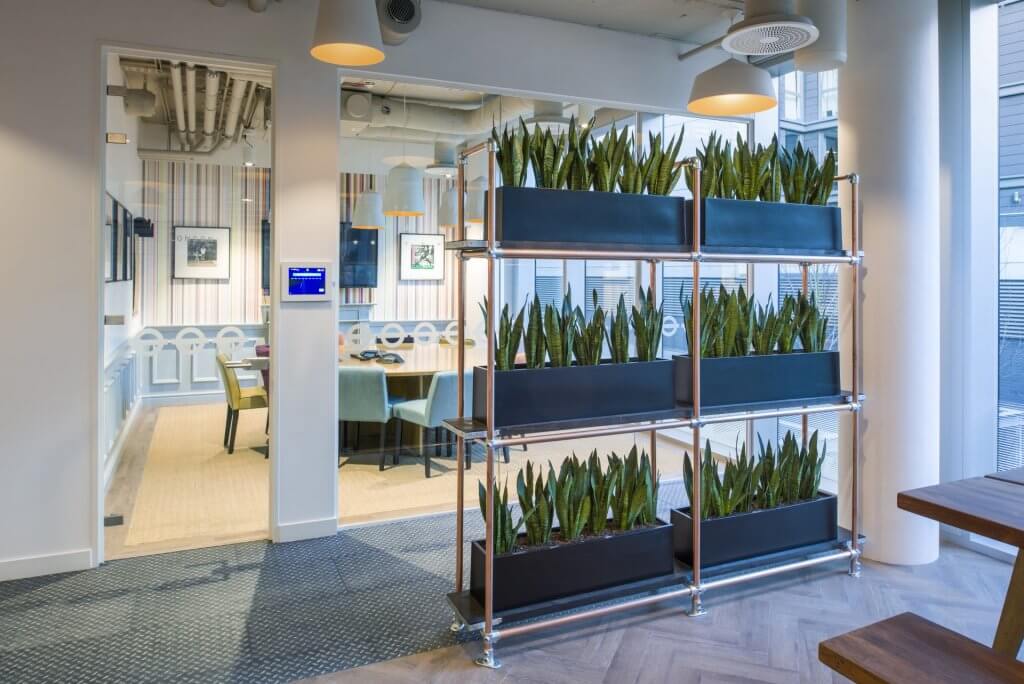
Looking around your office, you may find some areas that can easily be converted into a green space. Think about you dining area, or communal areas such as locker tops, or break out rooms. Here are some popular methods that modern businesses use to bring biophilic benefits into their place of work:
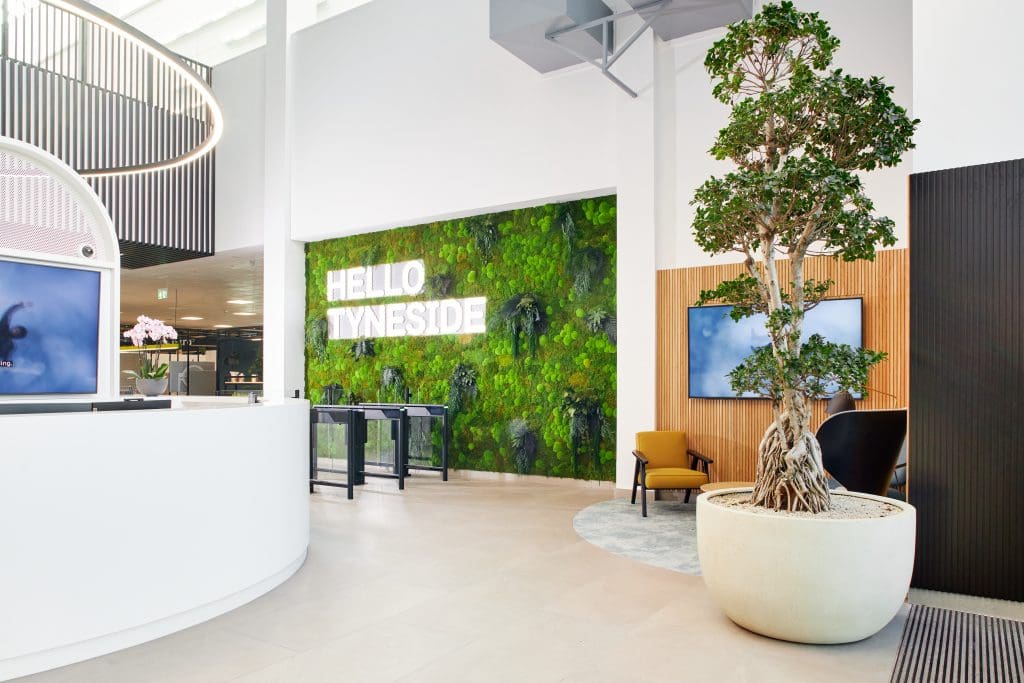
Often overlooked but integral to the first impressions of your business, the entrance can be a fabulous place to start adding some greenery. Not only important for your guests, a green entrance will suggest positivity to your workers as they enter and leave your establishment.
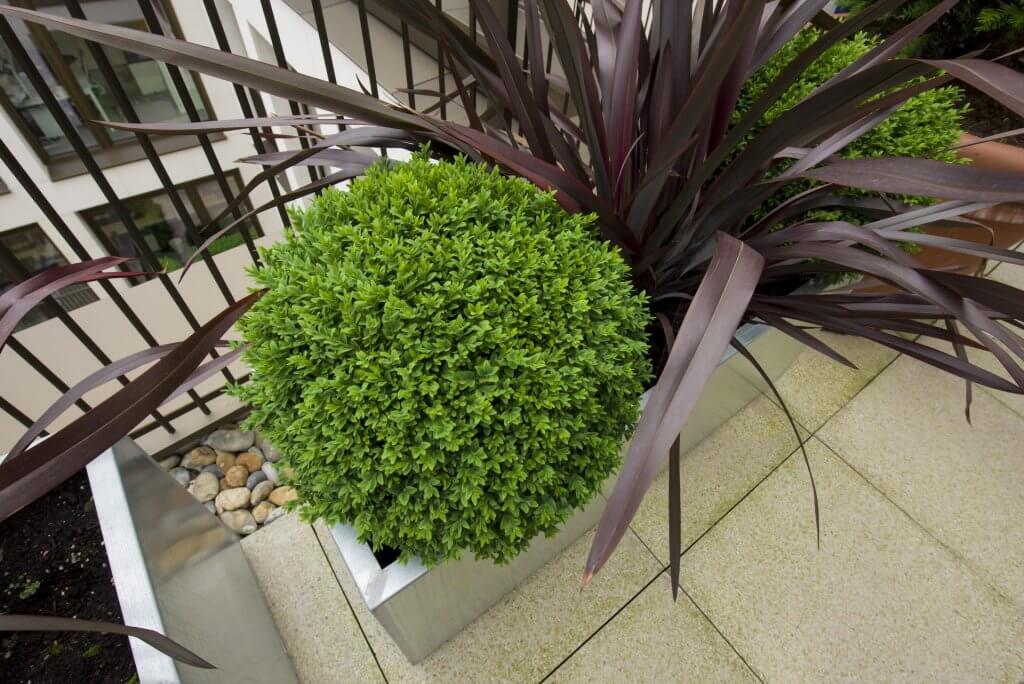
There are a number of methods for increasing your kerb-appeal, including window boxes and external green walls, but you might also choose to add an internal moss wall to your lobby area, large and unique planting options by the door, and table posies in waiting areas.
If you’re interested about installing a moss wall or green living wall for your business, we recommend reading our blogs on this topic:
It’s Alive! Buildings with Living Walls
Green roofing is a brilliant idea – looking out for your office window, a green roof nearby brings brilliant rural landscapes a little closer to city-orientated businesses. Our brains respond very positively to colour, and views to nature so the sight of a verdant green roof could prove to be quite inspiring, boosting productivity and creativity.
There may be a group near you that you can help to get involved with green initiatives. A BID (Business Improvement District) will typically group neighbouring businesses in an effort to improve their local working area together, and sometimes, this might include making their views greener by collaboratively installing green roofs.
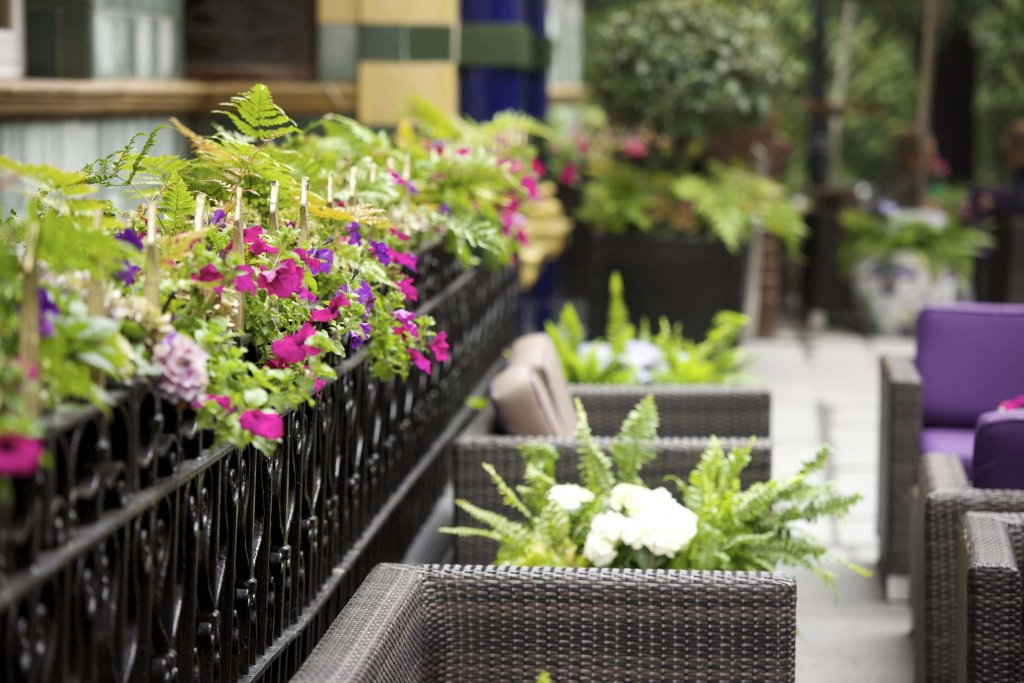
Balconies and terraces can be a great place for workers to enjoy a brief respite in the fresh air, but you can bring nature even closer by installing some beautiful window boxes or planters to add to the relaxing vibe and make them visually beautiful.
Could your business be making more of outside spaces, or is it more feasible for you to create some green spaces inside your own office area? We love all things biophilic and can help you with any green design queries that you might have, so speak to one of our friendly team about your ideas soon.
If you’ve been reading about the buzzword Biophilia but have yet to understand what the buzz is about, then we’ve made a helpful infographic for you, designed to show you the amazing relationships that can occur between workers and plants in the modern office.
Plants truly are amazing. If you’re looking to improve your office space with some smart greenery, why not enhance your office with our office plants for hire service. Impress your workers and guests with an outstanding boardroom, ensure that they remember you as an innovative and forward-thinking company by transforming your spaces into greener, healthier, places to enjoy working in.

And if you’re interested in reading more about the joys of biophilia and the many benefits of plants, we have plenty of blogs to keep you up-to-date on the latest hints, tips and news:
Biophilia – What is It and Why is it Important
Indoor Air Quality: Facts & How to Improve

It’s #WorldFMDay – Hurrah! We’re joining in the celebrations and recognition of Facilities Management (FM) people and projects that enable positive experiences. Some of our biggest clients are FM companies and BIFM members, so we know a thing or two about helping get things right for you and your clients.
In today’s world our cities are so built up and our environments often claustrophobic and bland so it’s more important than ever that we work together to create welcoming, feel-good spaces to enable businesses (and people) to thrive.
What could be more suitable than floristry and green planting to bring positive changes to the built environment? Planteria Group has 40 years of experience working with FM companies providing planting and floristry services to suit your budget. Even if you’re already working with another planting provider, we’re confident we can go above and beyond to meet your requirements. If you’re considering us, why not request a no-obligation free quote?
1) Soften the interior and/or exterior of your business, providing psychological benefits such as positive effects on reducing stress and promoting health and well-being. As humans we have an innate desire to be connected to nature, also known as biophilia, and it seems we have lost much of this ability to be in the natural world as our cities and work environments have become absorbed by the concrete jungle. By adding a variety of plants and flowers for businesses we suddenly bring back a part of the nature that we crave.
2) Increase productivity, creativity and happiness. It is proven that a vibrant, welcoming environment has positive effects on the speed at which we work and improves mood. Studies show that employees who are exposed to plants within the workplace, actively engage with their surroundings, are more productive and have a more positive outlook at work.
3) Make spaces more welcoming and inviting for employees, visitors and clients. Having a space that is pleasant to be in and beckons to visitors has a positive effect on businesses and improves perception of their image. Plants and flowers bring life to a space and boosts eco-credentials too.
4) Improve air quality and reduce allergens by cleansing the air. As shown in NASA’s Clean Air Study, plants provide a natural way of removing toxins from the air and also reduces the presence of aggravating allergens. NASA researchers suggest efficient air cleaning is accomplished with at least one plant per 100 square feet of home or office space.
5) Reduce sickness and absence at work. Combining all of the points above results in reduced illness and time away from work, increasing the overall effectiveness of businesses and staff wellbeing. One of the most common illnesses in today’s workplace is Sick Building Syndrome which is often linked to poor air quality and indoor air circulation which can easily be combated with a variety of planting solutions.
A recent Norwegian research study tested what happened when plants were placed into and then removed from offices. When plants were present headaches, coughs, sore throats, fatigue and dry skin all reduced. Several similar studies around the world have found similar results:
Interested in how we can offer similar improvements for you?
Have a look at some of our Creative Planting Innovations & our Nationwide Orchid Delivery Service.
Contact Us Today or Request a Free Online Quote.
Follow us on LinkedIn and Facebook for regular updates, inspiration and case studies.
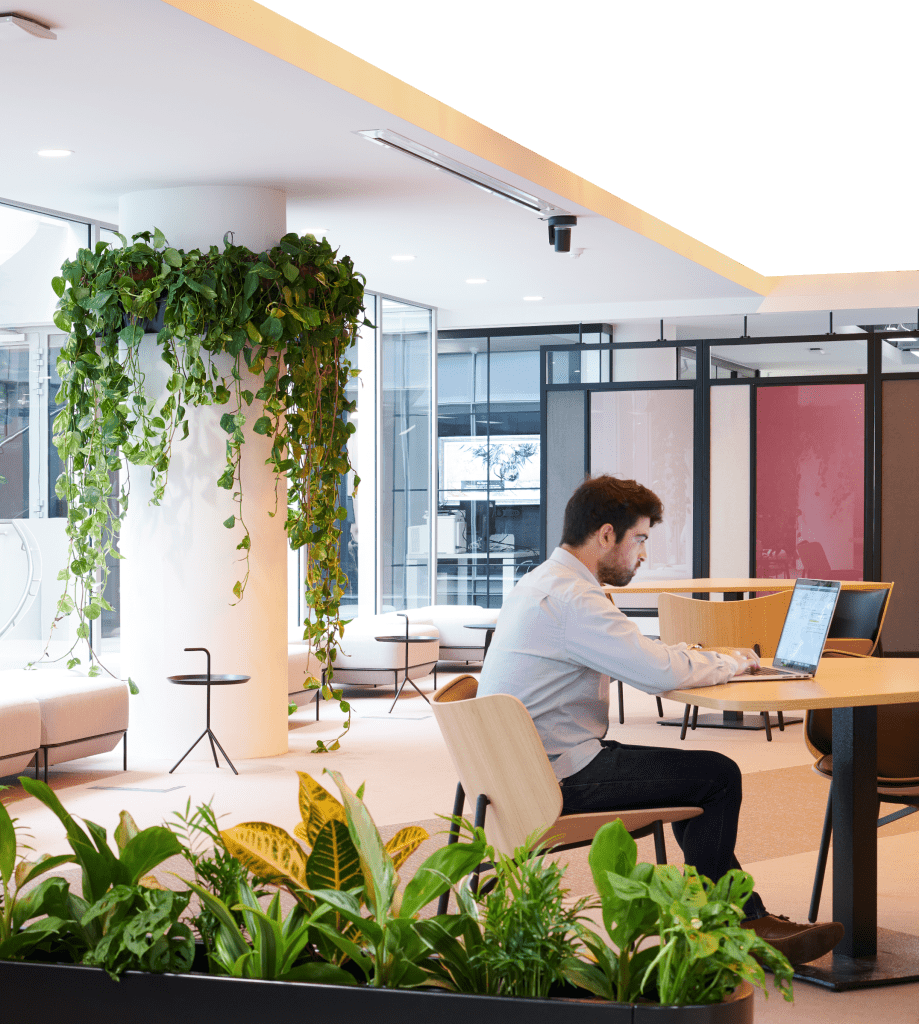
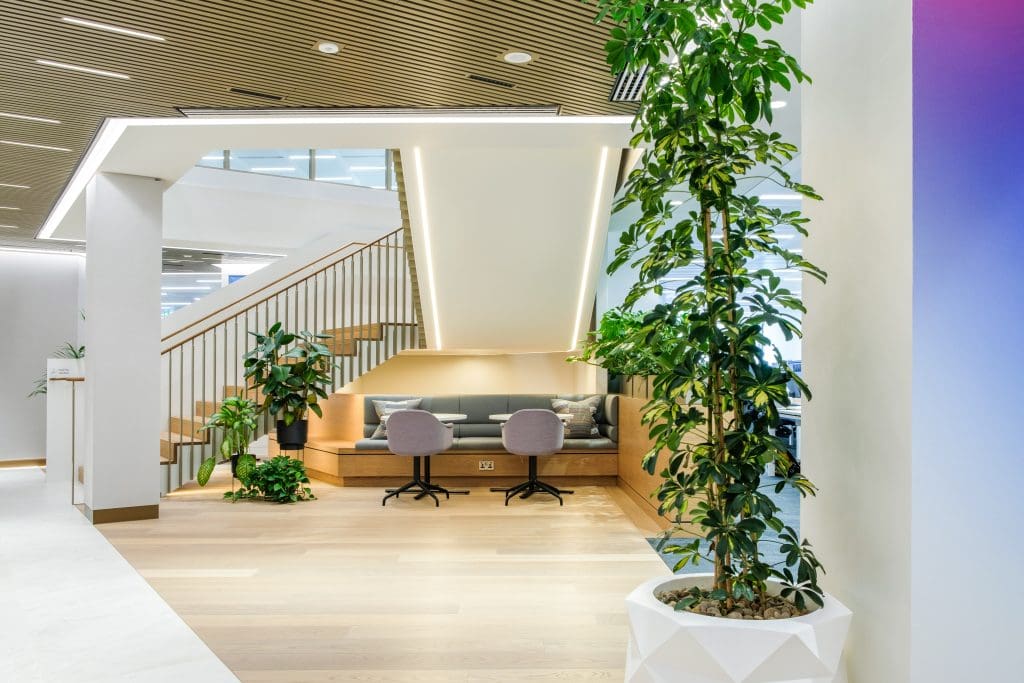
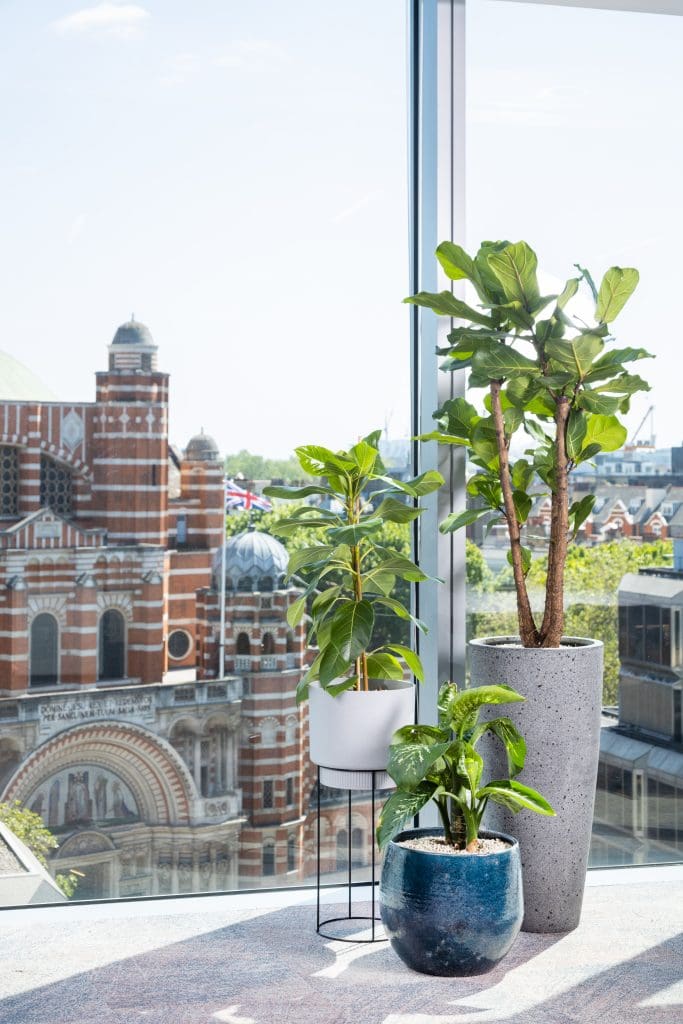
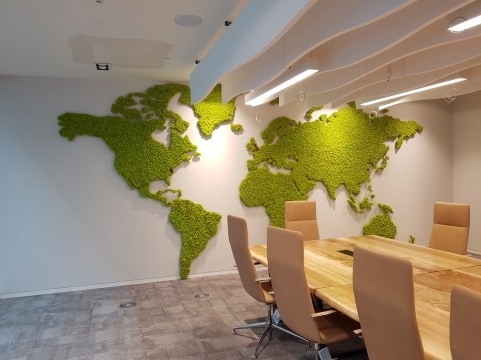
Sadly, now that Halloween is over for another year, this isn’t an exposé on haunted houses, but it is about the benefits of biophilia. By adding a living wall to your building or office, you are more likely to improve your employee retention rates. This article will look at some of the benefits of having an office moss wall, whilst looking at some of the most inspiring uses of nature on buildings from around the world. Could your building be the next Churchill Arms?
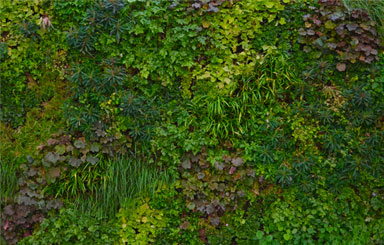
It is well known that having plants in an office has many benefits. For example they can increase motivation and productivity by up to 15%. This means that smart employers are sure to be investing money in greener office environments. Some employers, especially smaller start-ups, might worry about the amount of space required to make an office green – a legitimate concern – which is one of the reasons why an office moss wall, or a living picture is an attractive option.
Living walls make use of space that isn’t being used already; without taking up precious floor space, they still offer all the benefits of having plants in the office. Faux versions are also available, whilst not so environmentally friendly, they do have the benefit of being low maintenance and long lasting and will give the outdoors indoors look.
In the past offices were often minimalist and stark, featuring black, grey and chrome. This look suggests power and efficiency, but an austere interior does not allow for individuality and it does not encourage creativity either.
We recommend that offices steer away from this power-oppressive mindset, and instead employ more plants into their designs. This will bring an eco-friendly touch, and with a specialised office moss wall, you won’t be sacrificing the professional aesthetic of your office either.
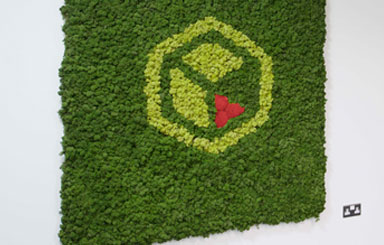
There are plenty of ways to incorporate an office moss wall into your building. By looking at some of the world’s most famous living walls, you might find yourself feeling quite inspired.
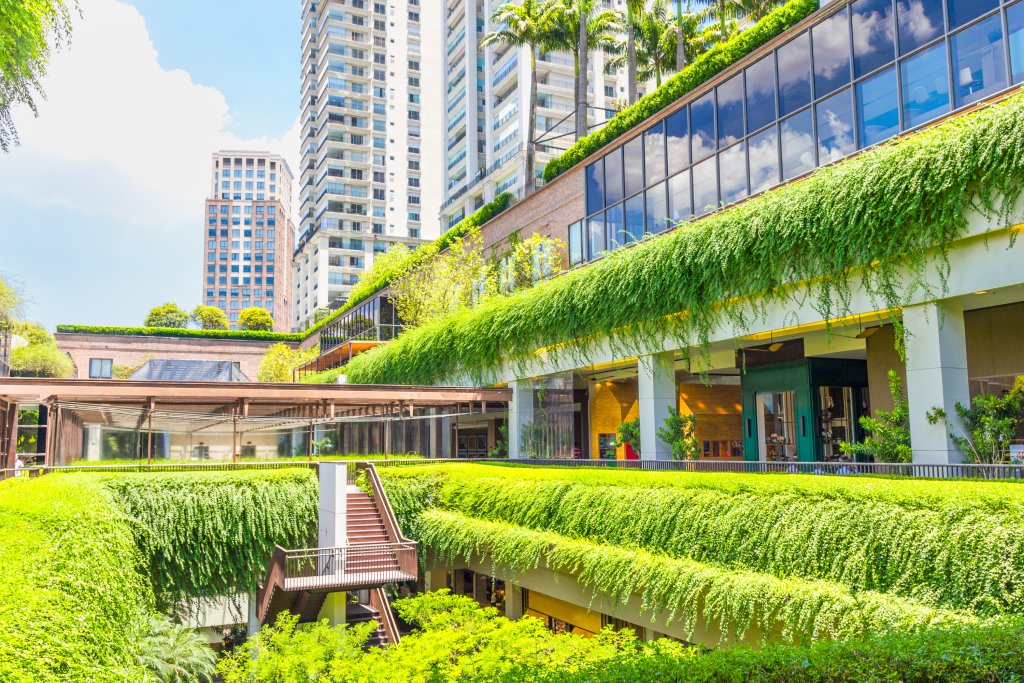
The Cidade Jardim shopping centre is inspired by the world’s most luxurious streets, and it makes extensive use of plants both indoors and out, and each of its stores overlooks a modern garden.
Cidade Jardim is Portuguese for ‘Garden City’, which could not be more true for this shopping centre. Climbing plants festoon the walls and balconies, and the floor gardens between the shops have natural-styled chairs for shoppers to take rest in.
The Cidade Jardim shows how lots of plants can be used in a retail setting, but the Churchill Arms shows the draw of a spectacular planting display extravaganza that cannot be missed. Every year, The Churchill Arms beats every other establishment in London with its Christmas cheer, which has a noteworthy effect on its sales, too.
Each Christmas, punters flock to book their meal at the infamously Christmassy Churchill Arms in Kensington. It truly is a sight to behold. Consider what kind of audience your business attracts, and whether you too could benefit from showing off your Christmas cheer. When it comes to commercial Christmas Trees, you’ll be wanting the best if you want to stand out.
London is becoming greener and greener each year. The Churchill Arms is one example of green Christmas cheer, but living walls can thrive all year round. The Edgware Road tube station in Marylebone, London, is one such example of an outdoor living wall that is not just eco-friendly, but artful too.
Holding an amazing 14,000 plants from 15 different species, Edgeware Road is a vibrant example of how you can attract attention to your business through living walls. These plants curl around one another in waves of colour and texture that really catch the eye.
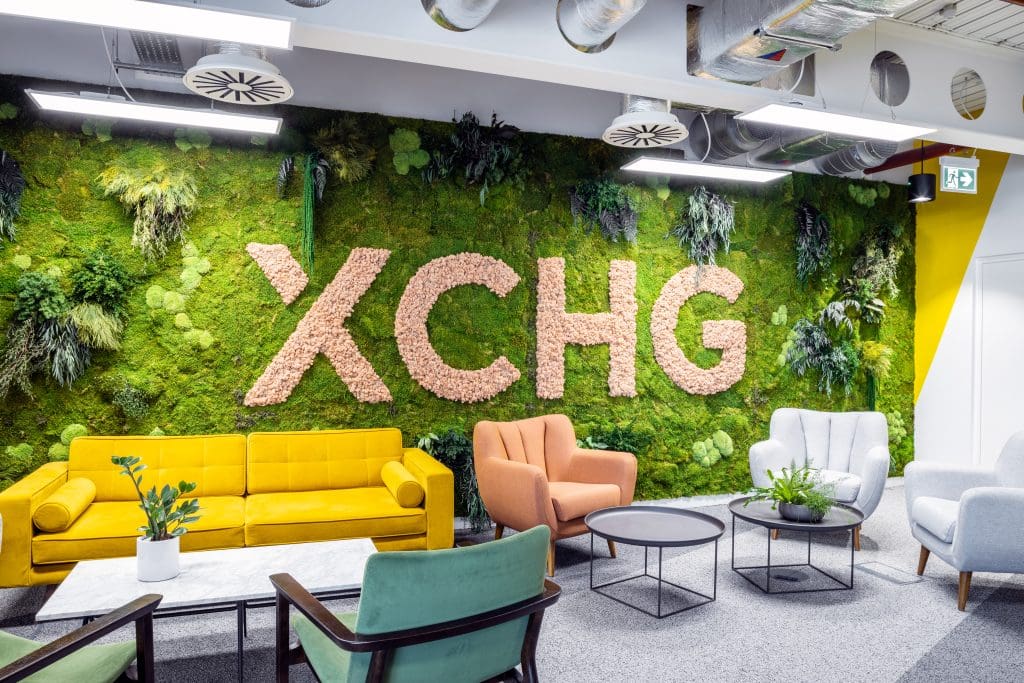
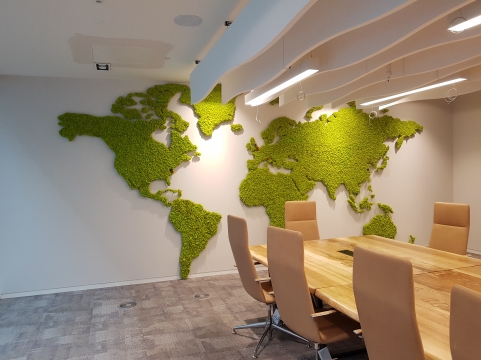
Moss walls are a fantastic option for businesses looking to make their offices greener. They are low-maintenance, space-friendly, and very decorative. Differing from other living walls, moss walls (made from preserved moss) do not require water or light and will neither grow nor decompose.
We stock moss in 16 different colours, and we’re able to create an entirely personal design for your office moss wall, such as your company logo.
Keep your building or office looking lively by introducing more plants. Your employees will surely benefit from it, and therefore so will your business.
If you have any questions about living walls or office moss walls, don’t hesitate to get in contact with us. Likewise, if your creativity has been sparked by some of the amazing walls we’ve covered in this article, why not request your free quote on a moss wall today?

There are many things associated with the UK: tea that solves a multitude of ills, rain that never ceases and queuing that is a national sport in itself. Yet this sceptered isle is also renowned for its green spaces and as such boasts an astonishing fifteen National Parks across the nation.
This month, a week-long calendar of events is taking place to celebrate our National Parks and encourage us to get out and explore them.
From Sunday 22nd to Sunday 29th July a range of activities that the whole family can get involved in will be taking place up and down the country and here at Planteria Group we take a look at what’s going on and why you should get involved.
Amongst the many studies that support the theory of the benefits that nature has on our mental health as well as our physical well-being, there is increasing focus on how interaction with animals influences this too.
With that in mind, the wildlife-friendly events organised as part of this week-long festival provide the perfect opportunity to get involved.
If you’re local to Exmoor, why not join the Evening Deer Search for a two-hour walk over three miles looking for the Red Deer at the Exmoor National Park on Tuesday 24th July starting at 7pm? Naturally shy beasts, it might be worth taking binoculars to ensure you catch a glimpse, but no dogs please!

Earlier on in the same day, the Yorkshire Dales National Park hosts a Secret Squirrel event in which a specialist guide will show you how to look for the squirrels and other wildlife that make the peaceful woods their home. Being a gentle afternoon stroll covering just a mile and a half, this is an ideal event for young and old alike.
A fantastic family event takes place on the Thursday of National Parks Week on the Cleveland Way National Trail, part of the North York Moors National Park. Taking around two hours to complete and costing five pounds per family, this fun Geocaching activity involves using a GPS unit provided as part of the event to locate clues that have been hidden in boxes. What’s more, as long as your dogs are on a short lead, they are welcome to help sniff out the clues!
The little ones can take charge with the Young Explorers Smugglers’ Treasure Hunt – with one nearly every day of the event – and use their smugglers’ map to search for hidden treasure, meeting at the Danby centre.

If you fancy something more physical, the Run ‘n’ Park event at Balloch on Saturday 28th July might just be for you; with a 2k and a 5k course marked out taking in the stunning, iconic views of Loch Lomond and with no official recording of times, you can take this event at your own pace and enjoy the great outdoors.
The kids can get involved at the New Forest National Park on each day of the festival on the Holiday Adventure Days. With activities throughout the whole day that they can enjoy, you can guarantee they’ll have a good night’s sleep after all that fun.
If you’re more of a hands-on type of person, there are plenty of great events for you to take advantage of. From dry-stone walling, letter-carving and archery to machine embroidery, there’s plenty of opportunity to learn a new skill in beautiful outdoor settings. Take a look at the diary of events to find an activity near you.
Of course, you don’t have to wait for an official week of events to enjoy our National Parks – nor are you only restricted to visiting a National Park to reap the benefits of spending time outdoors amongst nature.
Dr Andrea Mechelli of the Institute of Psychiatry, Psychology and Neuroscience at Kings College London, acknowledges that whilst it has long been understood that there is a positive link between contact with nature and health – in particular mental health – the lack of ability to gather qualitative data has led to little compelling evidence to support this.
With this in mind, he collaborated with the developers of an app called Urban Mind which tracked users’ movements through mobile devices and randomly asked them questions about their feelings and their immediate environment.

The findings were quite staggering, including not only demonstrating this positive link between the outdoors and health but also providing surprising but measurable results in terms of the length of time these positive effects lasted. He found, for example, that a single exposure to nature such as a walk or even time spent in a garden can have beneficial effects lasting up to seven hours.

Additional studies have shown how incorporating a green outdoor space in other settings, such as hospitals and care homes, has had a positive influence on successful outcomes for patients in relation to aiding their ultimate recovery in the case of the former and their improved well-being whilst being cared for in both circumstances.
So, the recent trend for providing an outdoor space in unexpected locations such as offices has been shown to be more than just improving the aesthetics; it can actually have a beneficial emotional impact on employees that can last a whole working day in addition to creating a pleasant environment to take a break and enjoy the visual stimulation, access to vitamin D and peace quiet from the humdrum of an office.

Additionally, these spaces provide an easy talking point that enables colleagues to engage with each other naturally thus improving relationships, whilst also providing handy sustenance and shelter for local wildlife.
The good news is that you don’t have to find the room to recreate the Hanging Gardens of Babylon in order to do this; any amount of space can accommodate an element of nature, from a small collection of pots planted up with flowers, a green ‘living wall’ to a roof garden hosting low-maintenance plants such as lavenders and other scented butterfly attracting plants.
Here at Planteria Group, we specialise in Corporate Floristry to help organisations to provide green spaces for the benefit both of their employees and their customers so to see how we could help you bring nature closer to home – or rather the workplace – get in touch with us.
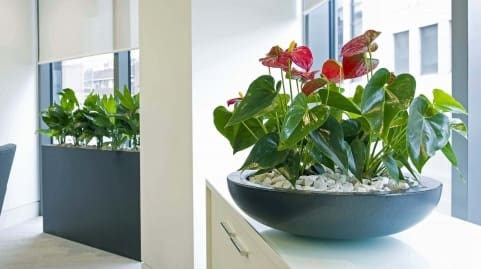
Every business is looking for the ‘slight edge’ to give them a competitive advantage. But how about if I told you that you could become 15 % more productive by doing one small, low-cost thing?
What if I also told you that doing the same thing would make your employees happier and more creative too? Would you put it into action immediately?
It’s true, and it’s backed up by plenty of research and science.
Dr Craig Knight from Exeter University and his fellow psychologists, who have been studying the issue for 10 years, concluded that employees were 15% more productive when “lean” workplaces were filled with just a few houseplants, as employees who actively engage with their surroundings are better workers.
The study says that offices devoid of natural elements and distractions are “the most toxic space” you can put a human into and reports that workers perform better when household plants are added to workplaces.
Collaborating with academics from four universities in Australia, the UK and the Netherlands, Knight said he had wondered for years why the fashion for spartan offices has been so dominant in the business world, and the obvious benefits of office plants ignored. “If you put an ant into a ‘lean’ jam jar, or a gorilla in a zoo into a ‘lean’ cage – they’re miserable beasties,” he said. People in “lean” offices are no different, he added.
Essentially planting in the workplace makes you more productive because it connects you back to nature, this innate desire, which is hardwired into our DNA is called Biophilia. If you take a human out of ‘nature’ and put them in a clinical, space devoid of natural elements and colour and you will increase stress and anxiety levels.
Researchers extensively studied workplaces over an 18 month period, including a call centre in the Netherlands and a large City auditor in London to see how even a small number of plants could rapidly improve performance.
The City auditors, which Knight declined to name, had spent “a lot of money” on their office, he said. “They had very expensive desks … banners that were just to do with the company … it was a beautifully sparse environment.”
Yet when plants were brought into the offices (one plant per square metre), employee performance on memory retention and other basic tests improved substantially.
“What was important was that everybody could see a plant from their desk. If you are working in an environment where there’s something to get you psychologically engaged you are happier and you work better,” Knight said.
He hopes the project, the first of its kind carried out in functioning offices, will bury the lean office practice for which he said there was no scientific support.
Prof Alex Haslam, from the University of Queensland’s School of Psychology, who co-authored the study, added: “The ‘lean’ philosophy has been influential across a wide range of organisational domains. Our research questions this widespread conviction that less is more. Sometimes less is just less.
Research source:
https://psycnet.apa.org/psycinfo/2014-30837-001/
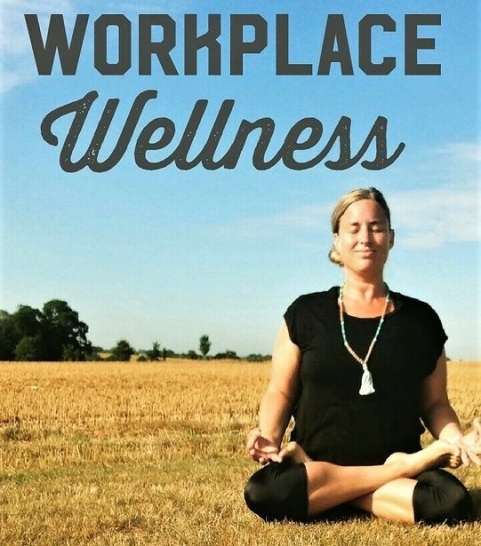
How do you measure the happiness and wellbeing of your employees? Do you know how your staff are really feeling when they’re in the office and how they feel after leaving work?
In today’s fast-paced, technology-fuelled, budget-conscious offices it’s no wonder that employees are feeling the stresses and pressures of our modern workplace more than ever before. That’s why as a business you value your employees as your most important assets and treat them accordingly. After all, a happy workplace is a productive and successful workplace and your investment in your employee’s wellbeing will reap rewards for everyone.
Boosting happiness, morale and productivity in the workplace can be easy, fun, and you don’t need to spend a huge amount of money to make some simple changes with a big impact. We’ve chosen 10 of our favourite suggestions below to help you create a modern workplace with perks that staff will enjoy.
Above are just some of the many ways you can help improve employee wellbeing at work. Your employees will agree that these types of perks are very much appreciated and you may even consider asking for their input on other ideas that are meaningful for them.
Promoting wellness in the workplace is crucial in today’s world more than ever before. Our hope is that we’ve given you some unique suggestions for building a strong and supported working environment, benefitting employees and businesses alike.
If you’d like further suggestions, ideas or a free quote on how Planteria Group can help support wellbeing with plants and flowers for your business please contact us.
According to a recent 20 page report published by NHS Health at Work on healthy workplaces, health and wellbeing are defined as follows:
Health relates to a person’s physical and mental condition. Wellbeing is the subjective state of being healthy, happy, contented, comfortable and satisfied with one’s quality of life. Mental wellbeing relates to a person’s emotional and psychological wellbeing. This includes self-esteem and the ability to socialise and cope in the face of adversity. It also includes being able to develop potential, work productively and creatively, build strong and positive relationships with others and contribute to the community.
Other more traditional suggestions made in the NHS report (NICE’s guideline on workplace health) for supporting employee health and wellbeing include:
Sources:
Health at Work
NICE’s guideline on workplace health: management practices, recommendations 1.8.1, 1.8.2 and 1.9.1