
It looks like you are visiting this site
from outside the UK region.

Go to US site

Trends shaping the 2026 office

Trends shaping the 2026 office

The workplace is evolving faster than ever. As we step into the new year, offices are no longer just physical spaces. We have identified four influential trends are shaping what the workplace will look like in 2026.

1. Neuro-Inclusive and Sensory-Aware Design

One size never fits all in office design, and now companies are finally embracing that fact at a neurological level.

Neuro-inclusive design means creating spaces and experiences that are accessible and user-friendly for everyone, covering the entire neurodiversity spectrum. This could be extroverts who thrive on interaction to neurodivergent individuals who may need low-stimulation zones.

This trend shows as offices providing more varied sensory settings:

  • Truly quiet rooms or library zones for deep work,
  • Touchdown spaces with gentle background noise,
  • Soft lighting options and,
  • Areas with adjustable sensory elements to accommodate different comfort levels.

Oktra’s Future Workplace Report points to the importance of such features, noting that future workplaces should offer wellbeing spaces that cater to neurodiverse employees. Some workplaces even include ‘sensory deprivation rooms’ for complete silence and decompression.

The goal is to enable each individual to find an environment that fits their mode of working and neurological profile on any given day.

Major design firms are already championing neuro-inclusive principles. HOK calls for workplaces that celebrate neurological differences rather than treating atypical needs as an afterthought.

Expect to see more offices with designated quiet zones, no interruption seating and support for different working styles.

Small touches, like offering noise-cancelling headphones and having alternate communication methods can make a big difference. Ultimately, designing with sensory wellbeing in mind benefits everyone. It leads to environments that are less chaotic, more thoughtful and adjustable to personal comfort.

In a 2026 workplace that may host five generations and a spectrum of neurodivergent conditions, this will be key to helping all employees thrive.

Planteria group
One of the wellness room at Goodwin Proctor, designed as part of their WELL certification to provide a space for rest and recuperation.

2. Sustainability

For most employees, sustainability in office design is a baseline expectation. 61% of workers say eco-friendly, sustainable materials are important to their satisfaction with the office. This aligns with a broader shift in sentiment. Sustainability is now tied to individual principles and talent attraction.

Employees, especially younger ones, want their company’s office to reflect their own values of environmental responsibility. Features like energy-efficient lighting, water-saving fixtures, recycling and compost programs are becoming standard in new office designs.

Beyond materials and energy, companies are also pursuing credentials to prove their commitment. Green building certifications (LEED, BREEAM, etc.) are well-known, but the focus is expanding to health-oriented certifications like WELL and Fitwel. These certifications encompass both sustainability and human wellness metrics.

Workplaces are now tracking air quality and ventilation in real time. AI and smart sensors give companies the insights they need to maintain healthy indoor environments.

Supporting biodiversity is becoming an important priority. Many organisations are now planting pollinator-friendly species on terraces and rooftops. Branded pollinator habitats are emerging as a visible sign of commitment.

The percentage of floor space dedicated to plants or natural elements is increasing. By 2026, sustainable design will be part of the DNA of the workplace. We expect B Corp status or WELL certification for spaces to continue growing in popularity.

Tomorrow’s offices will be expected to care for both people and the planet.  Responsible design now means balancing sustainability with wellbeing.

Planting and pots at endava, london by planteria
Sustainable pots, such as a the recycled Capi pot (left), are increasingly being included in office planting schemes.

3. Measurable WellBeing

Alongside sustainability, the idea of measurable wellbeing in workplaces is gaining traction.

It’s no longer enough to assume an office is working well for employees. Leading companies want to track and prove it through concrete metrics. This is driving adoption of building standards like the WELL Building Standard and Fitwel. These standards provide frameworks and certifications for how well a space supports human health.

Offices pursuing WELL certification, must meet criteria across areas such as air, water, light, fitness, comfort and mind. Fitwel, emphasises things like nutritious food access, physical activity and health policies.

Find out more on how plants can contribute to WELL Certification.

What’s notable is that offices with these certifications demonstrate increased employee satisfaction. Early data shows that people in WELL-certified workplaces report a 26% increase in wellbeing.

In practical terms, ‘measurable wellbeing’ means offices are being designed and run with constant attention to health metrics. For example, indoor air quality sensors might track CO₂ and pollutant levels in real time. Lighting systems might be tuned to circadian rhythms and measured for appropriate lux levels at different times of day. Acoustic quality can be measured and adjusted if certain areas are too noisy for concentration.  Even things like the ratio of green space per occupant or the use of staircases can be quantified.

Employee feedback is increasingly part of the equation. Regular pulse surveys or smart building apps allow workers to rate comfort, cleanliness, noise and more. In 2026, we expect offices to prominently feature their wellness metrics (much like a building might display its energy usage).

The best workplaces will treat wellbeing as a deliverable. We expect organisations to use standards like WELL and Fitwel as blueprints to ensure the office truly supports its human occupants.

Planteria group
Goodwin Proctors London HQ achieved BREEAM Excellent and WELL Gold certifications.

4. Hospitality Influence: Offices with a Boutique Vibe

The design of offices is increasingly taking cues from the hospitality industry. We’re seeing hotel lounges, inviting cafés and boutique hotel lobbies all translated into the workplace context.

This trend recognises that employees, much like guests, want to feel welcomed and comfortable in a space. Landlords and employers are therefore transforming offices to have more of a hospitality vibeAmenities are similar to high-end hotels or coffeehouses rather than traditional corporate offices.

In modern offices it’s now common to see in-house cafés and barista bars, casual lounge areas with artisanal furniture and more. Event programming like yoga classes, networking mixers and wreath-making workshops are becoming popular – all things one might expect to find at a boutique hotel.

Planteria group
A Planteria arranged plant giveaway for a leading social media company.

The reasoning is simple: if the office is an enjoyable destination, people will want to be there.

A key aspect of this hospitality approach is focusing on the experience. It’s about crafting thoughtful experiences that earn the commute. A recent Harvard study on workplace loneliness highlighted that meaningful social connection happens through inclusive activities and comfortable spaces.

Planteria group
The canteen area at Experian's London office.

Organisations are investing in community events, wellness programs and beautifully designed multi-purpose spaces. Spaces where people can both work and unwind.

The hospitality influence also means service quality in offices is rising. We expect offices to feel more like a members’ club or coworking lounge. Places with their own vibrant identity and a focus on how people experience it each day.

Employees are customers of the workplace. To attract them (and retain them), the office must compete with the comfort of home and the allure of third places.  

modern office FAQ'S

The major trends are neuro-inclusive and sensory-aware design, sustainability, measurable wellbeing and hospitality-influenced workplaces. Together they focus on comfort, health and creating offices people want to use.

It means designing spaces that work for a wide range of neurological needs, from extroverts who enjoy buzz to neurodivergent employees who may need calm, low-stimulus areas. It often includes quiet rooms, soft lighting, varied sensory zones and flexible seating.

Companies are recognising that people work best in different environments. Offering a choice of sensory settings supports focus, reduces stress and helps employees manage their own comfort throughout the day.

Sustainability is now a baseline expectation. Offices are using eco-friendly materials, energy-efficient systems, better ventilation and recycling programmes. Many workplaces are also adding plants, pollinator habitats and pursuing certifications such as LEED, BREEAM, WELL and Fitwel.

They give companies a clear framework for designing healthy, sustainable spaces. They also provide measurable standards, helping organisations track air quality, light, comfort, acoustics and other wellbeing metrics.

It refers to tracking how well a workplace supports health through data. This can include air-quality sensors, lighting levels, acoustic scores, green space ratios and employee feedback. Many companies now treat wellbeing as something to prove, not assume.

Early data suggests they do. People working in WELL-certified offices report higher satisfaction, including a noted 26% increase in wellbeing.

The hospitality influence comes from a simple idea: if the office feels inviting, people will want to use it. Modern workplaces now include café-style spaces, lounges, comfortable furniture and a stronger focus on service and experience.

Examples include barista bars, boutique-style lounges, wellness rooms, community events, workshops and multi-purpose social spaces. These features help build connection and make the commute feel worthwhile.

Plants support all four trends. They improve sensory comfort, enhance sustainability, contribute to WELL criteria and help create warmer, more hospitality-inspired spaces. Many offices are now dedicating more floor space to greenery and using sustainable pots and planting systems.

Our perspective on the future of the workplace

Our perspective on the future of the workplace

Planteria Group brings a distinct perspective to the future of the workplace, one rooted in biophilic design and purposeful planting.

As specialists in corporate planting, we believe plants are no longer just decoration.  They enhance wellbeing, define space and express identity. It’s about integrating nature into the workplace in ways that inspire and connect people.

Our workplace programme, Engage & Bloom, helps organisations use planting as a tool to inspire, engage and strengthen connections at work. This reflects a key insight: biophilic elements can influence how employees feel, behave and interact within an office.

So, what does experience-led planting look like in practice? First, it treats plants as wellbeing enhancers. We use the calming and uplifting effects of greenery to create environments where people feel more at ease and attentive. Countless studies show that plants reduce stress and even improve perceived air quality. Our designs often use planting to introduce softness and tranquillity. The plants become a form of visual and sensory comfort, tempering the hard edges of modern interiors with organic shapes and greenery. 

Secondly, Planteria uses planting as natural architecture. A way to shape the flow and identity of a space. Plants can act as living partitions. They can divide zones without the need for walls or create focal points that draw people into communal areas. These elements add character and ‘instagrammable’ moments to the workplace, contributing to the hospitality vibe.  

Importantly, planting schemes are often tailored to reflect a company’s culture or brand identity. In a recent project for Rabobank’s London offices, our team chose plants that linked back to the company’s Dutch heritage. 

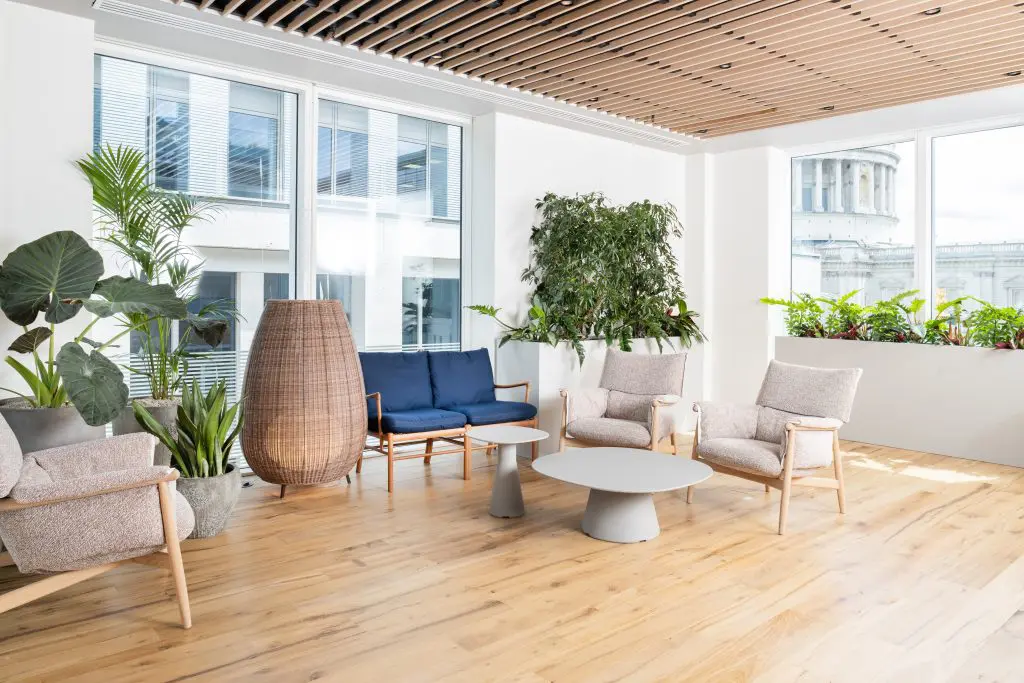
Bright office breakout space with sofas and timber ceiling detail.

For Legal & General, we used the Umbrella Plant to reflect their umbrella logo. The result is an office that tells a story. 

Planteria group

These mini case studies illustrate how design can reinforce a sense of belonging and identity. When people see their company’s ethos reflected in their physical workplace, it deepens their emotional connection to it.

Of course, an experience-led approach must also walk the talk on sustainability and this is where Planteria Group introduces its sustainability focused planting. From Ecoponic, peat-free substrate, to Walking Plant Technicians. From being zero to landfill and choosing locally sourced plants. Clients get the assurance that their plants are maintained in a way that protects the planet.

By combining biophilic expertise, design creativity and sustainable practices, Planteria Group holds planting as a key part of the workplace experience. Plants are used to improve lighting and acoustics. They mark transitions between focused library zones and vibrant café zones. They boost mood, reduce stress and reinforce what a company stands for.  

The goal is simple: to make the office a place where people want to be. It all connects back to our purpose: we harness the power of nature to create inspiring spaces.

The Future Office Is Human

At its heart, the future of the office is about putting humans first.

The lesson from the past few years is that employees, not employers, now drive the conversation about how and where work gets done. And what employees say they want is simple: they want workplaces that feel good to be in.

That means:

  • Spaces where they can connect with colleagues and culture,
  • Environments that keep them comfortable and healthy and,
  • An atmosphere that resonates with purpose and positivity.

Companies have learned that you can’t bring people back to their desks through mandates alone. It’s about earning their presence by creating an experience they value.  Designing offices that are inclusive, flexible and enriching. The best workplaces now complement the freedom of remote work.

The human-centric office thrives on authentic care for people’s needs. Employees choose offices that give them a sense of community, one that allows them to concentrate in comfort and align with their values. In these spaces engagement rises, culture strengthens and innovation happens organically. Connection, comfort and purpose directly correlate with outcomes like job satisfaction, wellness and retention.  And threading throughout this is nature, arguably the lifeblood of the future workplace.

Planteria group
The Dojo offices in Bristol were full of vibrant plants to support their lively, engaging company culture.

Biophilic design is one of the most effective ways to infuse offices with warmth, life and humanity. Greenery and sunlight reduces stress levels and improves cognitive function.  It makes people not only happier, but more productive. Even in a tech-driven age, our basic human wiring craves a connection to nature.

From collaborative lounges filled with plants to quiet pods designed for every kind of brain. From climate-neutral buildings filled with social energy to calm, sensory-balanced spaces for focus. The office of tomorrow is being built around what people really want and need.

At its core, it’s about feeling good. Feeling connected, comfortable and part of something meaningful.

In the end, the future office is about an experience that says to employees, ‘We value you.’ Create a space where people feel valued and they will value being there. The future office is human, and that is a future worth looking forward to.

modern office FAQ'S

It is the use of planting to shape how a workplace feels and functions. Plants are chosen and positioned to improve comfort, wellbeing, social connection and the overall experience of being in the office.

Greenery reduces stress, supports focus and makes spaces feel more comfortable. Studies consistently show that plants can help lower anxiety and improve how people perceive indoor air quality, which leads to calmer, more attentive employees.

Yes. Planting affects mood, comfort and how people use space. For example, well-placed greenery can encourage people to gather in shared areas, or help individuals feel at ease in quieter zones.

Plants can act as natural partitions, guide circulation routes and define zones without walls. They soften hard edges, create focal points and add character to social spaces.

Absolutely. Plant choices, colours and arrangements can be linked to a company’s identity. Examples include using species tied to a country’s heritage or selecting plants that echo brand symbols.

Biophilic design connects people with nature. This improves wellbeing, reduces stress and supports cognitive function. In a hybrid world, offices must offer something home working cannot. Nature plays a core role in making workplaces feel good to be in.

When an office has zones for collaboration, focus and relaxation, planting helps signal these differences. Greenery marks transitions between spaces, improves acoustics and gives each zone a clear identity, helping people choose where to work.

Planteria uses peat-free, soil-free Ecoponic substrate, selects locally grown plants and runs a zero-to-landfill approach. The Walking Plant Technician model also cuts van mileage for maintenance visits, reducing environmental impact.

When employees feel connected to their environment, they engage more with colleagues and wider company values. Planting creates warmth, encourages interaction and helps people feel part of something shared.

Workplaces today must earn the commute. Design now focuses on comfort, connection and purpose. Planting supports all three, making offices healthier, more welcoming and more aligned with what employees expect from a modern workplace.

What matters most to employees today?

What matters most to employees today?

Since the pandemic, the purpose of the office has changed. The conversation has shifted from mandating a “return” to offering a “reason” for people to come in.

In the UK, 71% of workers are actively seeking flexible or hybrid roles. Hybrid work has become the new baseline expectation. The workforce has tasted the freedom and comfort of remote work and they won’t return to the office without good reason.

Those reasons, increasingly, are about quality of experience. Employees now expect the office to offer what their home cannot: effortless connection with colleagues, and an environment as comfortable as their own living room.  

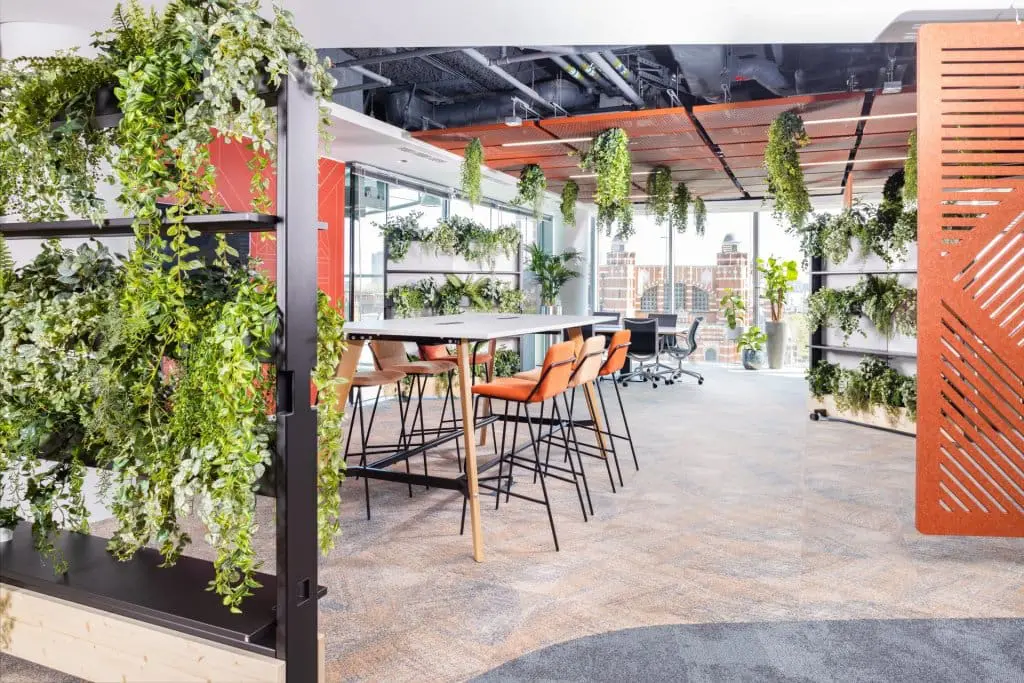
Beautiful replica hanging planting at experian, london

Instead of mandating returns, organisations are redesigning workplaces to entice them back. The focus is on wellness, social interaction and purposeful design.  

The modern office must earn the commute by delivering an experience that balances the comfort of home with the community of the office.  

Hybrid work is here to stay. It might seem like the opposite of office work, but in reality, it’s only raised the bar for what the on-site environment must deliver.

What Matters Most to Employees Today

What do today’s employees actually value in a physical workplace? 

Recent research (from Gensler’s Global Workplace Survey 2025 to Oktra’s Future Workplace Report and Deloitte’s 2025 Gen Z & Millennial Survey) reveals clear themes.  

Workers’ priorities have evolved, homing in on fundamentals: 

  1. Feeling connected,
  2. Feeling comfortable,
  3. Having flexibility,
  4. Being in touch with nature and, 
  5. Seeing their values reflected in the space

Below we unpack these top employee expectations.

1. Calm and Comfort

For all the fanfare about office perks in years past (think pingpong tables and bean bags), workers today are far more concerned with basic comfort and functionality.  

What makes an office appealing is a sense of calm, comfortable efficiency: Good acoustics, pleasant lighting, effective climate control, ergonomic furniture and
spaces that allow focus.

In a recent design survey, 95% of participants said physical comfort (lighting, temperature, air quality, noise levels and ergonomics) was very or extremely important to feeling at home in an office.

This means investing in the indoor environmental quality of workplaces. Employees notice when these needs are met. By getting these basics right, companies create a backdrop of comfort and calm that allows people to do their best work. Layer on thoughtful details like focus rooms, comfortable furnishings and biophilic elements – the office soon feels less like a corporate machine and more like a place you actually want to spend time.

Planteria group
The EE workplace in Tyneside.

2. Access to Nature

The average person in the UK spends just 7% of their time (86 minutes) outdoors during the work week. We truly live in a nature-starved generation.

This has created another modern office demand: access to nature and natural elements in the workplace.

Biophilic design has moved from trend to mainstream. Its benefits are both intuitive and well-documented.

Research points out that biophilic design has a direct positive impact on health, wellbeing, productivity and even creativity. It also often reduces stress and absenteeism in the process.

Planteria group

One study found that 10% of employee absences could be attributed to a lack of connection to nature in the office environment.

In Oktra’s 2023 survey of young office workers, respondents expressed a strong desire for green and outdoor spaces at work. They recognised the ‘huge wellbeing benefits’ these bring.

Oktra identified that ‘workers want green spaces to support their wellbeing’. Their design of the future workplace included a ‘public park’ zone (a lush space with plants and natural light) right inside the office.

Daylight and greenery are fundamental to human nature. They reduce stress, improve mood and concentration and enhance creativity.

Including nature in the office is no longer optional. Workplace certifications, such as WELL or BREEAM, require buildings to include the natural environment.

Planteria group
Fora Wells Mews was designed to replicate a "home-like atmosphere for its occupants".

3. Flexibility

Freedom to choose how and where to work has become a defining employee expectation – even within the office itself. Having experienced the autonomy of remote work, people now look for a similar level of flexibility on-site.

Rather than rows of identical desks, employees prefer a variety of spaces to choose from. The modern office includes quiet nooks, collaboration, standing desks, lounge areas and more. The office should function as an ecosystem of different settings that individuals can select based on their task and mood.

Gensler’s data shows that in recently renovated workplaces, 76% of employees feel they have a choice in where to work on any given day. Those new offices provide better access to diverse space types, from informal meeting areas to private focus rooms.

Flexibility also extends to when and how people come into the office. Many employees now expect the freedom to decide which days they commute in, based on the value they’ll get. They might come in for team meeting days or social events. Working from elsewhere when they need deep focus or personal time. Over three-quarters of workers said professional development and learning opportunities were as important as socialising in motivating them to go to the office. The future office must accommodate this ebb and flow; that means flexible layouts, policies like unassigned seating and an agile mindset about occupancy.

There’s no one-size-fits-all solution. Employers should empower people with a choice of settings and a network of spaces that suit different needs.  

Planteria group
A stunning flexible space created for Convene, Sancroft

4. Purpose and Identity

Modern employees increasingly want their workplace to mean something. A space that reflects a sense of purpose, culture and identity that they can connect with.

This isn’t about posters of company values on the wall. It’s offices that tangibly express what the organisation stands for. Employees need to feel aligned with a greater mission.

Deloitte’s 2025 survey of Gen Z and Millennials highlights how critical this is. 89% of Gen Z and 92% of Millennials say that finding purpose and meaning in their work is important to their job satisfaction and well-being.

When young employees feel that their employer’s values match their own, they are far more likely to be happy and engaged at work. 52% of Gen Z employees who were satisfied that their organisation’s values aligned with theirs, described themselves as happy. Versus only 31% happiness among those who felt a ‘values disconnect’.

Planteria group

Alignment between personal and company purpose clearly boosts morale and loyalty. Office space can play a powerful role in reinforcing that alignment.

Work environments that celebrate the company’s identity help employees feel at home culturally. This is often through branding, storytelling and design which nods to its heritage or history.

Planteria group
For EE Tyneside, we incorporated the company colours into the planting mix.

A company dedicated to sustainability might use reclaimed and upcycled materials in its office. Some companies incorporate their social impact projects into artwork and create an atmosphere that mirrors its values.

Office lounge seating with sofas, green wall, and modern décor.
For Rabobank, we chose to use the Philodenron Prince of Orange, a plant that carries special significance. Its name connects back to the Netherlands and the House of Orange, reflecting the bank’s Dutch roots.

When people walk into a workspace and immediately sense ‘this is who we are’, it builds pride and connection. On the flip side, a generic or overly corporate office can sap meaning from the daily experience. Companies that do this best listen to their people and shape strategy around them. This ensures the workplace resonates with employees’ own ideals and ambitions. 

modern office FAQ'S

The shift to remote and hybrid work showed people they could work effectively outside the office. As a result, employees now need a strong reason to commute. The office is no longer the default place to work. It must offer things home cannot, such as connection with colleagues, better collaboration and a more engaging environment.

Research points to five core priorities: feeling connected, feeling comfortable, having flexibility, access to nature and seeing their values reflected in the space. These fundamentals matter more than perks or novelty features.

Workers spend long hours indoors, so basics like lighting, temperature, acoustics and ergonomics directly affect their wellbeing and productivity. Surveys show 95 percent of people rate physical comfort as very or extremely important. When comfort is right, people settle more easily, focus better and stay longer.

Good acoustic control, pleasant lighting, stable climate control and supportive furniture are key. Spaces for focused work, small details like soft furnishings and the presence of natural elements also help create a calm, settled atmosphere.

Most UK workers spend very little time outdoors during the week. Exposure to nature – through plants, views, materials or daylight – reduces stress, strengthens wellbeing and can improve mood and creativity. Some studies even link poor access to nature with higher absenteeism. Biophilic design is now widely expected rather than a niche trend.

Research shows that natural elements improve concentration, reduce stress and support overall mental health. Greenery and daylight help people feel more grounded and alert. This is why frameworks like WELL and BREEAM include nature-focused criteria.

It means giving employees a choice of where and how to work. This includes varied work settings such as quiet rooms, collaboration areas, lounge spaces and standing desks. It also refers to flexible policies around when people come in, allowing them to choose office days based on meetings, learning or social connection.

People became used to autonomy during remote work. They want the same sense of choice in the office. When employees can pick spaces that suit their work style and tasks, they feel more in control, work more effectively and are more likely to enjoy their time on-site.

Employees want to feel that the workplace reflects the mission and values of their organisation. When the space expresses culture, heritage or social commitments, people report higher satisfaction and stronger connection. When there is a mismatch, engagement drops.

Through design choices that reflect what the organisation stands for. This could be using certain materials, showcasing stories, embedding brand colours or referencing cultural roots. It works best when it feels authentic and when employees recognise their own values in the environment.

Pollinator Habitats for Workplaces

Pollinator Habitats for Workplaces

More workplaces are looking for meaningful ways to support biodiversity. From rooftop terraces to courtyards, facilities managers and designers are being asked to show how the built environment can help the natural one.

Employees increasingly want to see action too.  Visible, tangible initiatives that they can connect with, and even share on social media. Supporting pollinators is one of the simplest and most effective steps a workplace can take.

Rooftop pollinator habitat installation featuring stacked hexagonal frames filled with bamboo and wood, next to a red modern building.

Introducing pollinator habitats

Our bespoke pollinator habitats (sometimes called ‘bee hotels’ or ‘bug hotels’) provide a safe nesting place for solitary bees and other beneficial insects.

They combine a clear sustainability benefit with striking design, making them popular with staff and visitors alike. Because we can create them in custom shapes (letters, logos, or abstract forms) they also become part of the identity of a workplace.

Pollinator habitats are filled with natural materials such as drilled wood, pinecones and twigs. These create the perfect cavities for solitary bees to lay their eggs and for other insects like ladybirds, lacewings, and hoverflies to shelter.

By hosting these insects, workplaces are actively helping to maintain pollination in surrounding green spaces and urban planting schemes.

about the habitats

  • Handcrafted in the UK from sustainably grown wood.

  • Durable and long-lasting, designed to withstand the elements

  • No paint or stain required thanks to cedar’s natural resistance to decay.

  • Customisable in shape, size, and branding to suit your building and project.

  • Low maintenance once installed.

We can design them in custom shapes, letters, or logos to reflect your building identity and brand. This makes them stand out as a feature staff notice, talk about, and share online. Whether you want your company initials, a recognisable symbol, or a bespoke design for a specific site, we’ll create a habitat that’s both functional and unique.

We’ve already designed and supplied branded pollinator habitats for organisations including Lloyds Banking Group, Buckinghamshire New University (BNU), Natwest and many more…

Why support native pollinators?

Native pollinators are under pressure from habitat loss, pesticides, and climate change. They play a vital role in food production, biodiversity, and healthy ecosystems.

By providing safe nesting and foraging opportunities, you contribute to your organisation’s sustainability goals and Biodiversity Net Gain commitments.

Pairing with pollinator-friendly planting

Pollinator habitats are most effective when combined with the right planting. Our pollinator-friendly schemes will be make bespoke for your location and environment.  Often they can feature flowering perennials, wildflowers, or herbs to ensure that bees and other insects have both food and shelter. Together, planting and habitats create a joined-up approach to supporting biodiversity on site.

Planteria group

Pollinator habitats are a symbol of your commitment to sustainability and a way to get people talking about your workplace.

Whether you’re planning a new fit-out, upgrading a terrace, or looking for visible BNG action, we can help design a habitat that fits your brand and benefits the environment.

Get in touch to find out how a bespoke pollinator habitat can transform your space.

POLLINATOR HABITATS FAQ'S

A pollinator habitat, sometimes called a bee hotel or bug hotel, is a structure filled with natural materials like drilled wood, pinecones, and twigs. These create safe cavities where solitary bees can lay eggs and beneficial insects such as ladybirds, lacewings, and hoverflies can shelter.

They give native pollinators a safe place to nest in urban areas where natural habitats are scarce. At the same time, they show visible action on sustainability, something both employees and visitors value.

Mainly solitary bees, which are vital pollinators, along with ladybirds, lacewings, and hoverflies that help control pests and support biodiversity.

By creating safe nesting and foraging opportunities, habitats contribute to measurable biodiversity improvements on site, helping organisations meet their BNG and wider sustainability commitments.

Yes. They can be built in bespoke shapes, from company logos to abstract designs, so they not only support wildlife but also reflect your workplace identity.

Very little. Once installed, they are low-maintenance and continue providing shelter year after year.

Organisations such as NatWest, Lloyds Banking Group, and Buckinghamshire New University have already introduced pollinator habitats as part of their workplace sustainability programmes.

Yes. They work best when combined with pollinator-friendly planting schemes including wildflowers, herbs, and flowering perennials. Together, they provide both food and shelter for insects.

Employees often enjoy seeing wildlife supported at their workplace. The habitats also make striking features that people like to photograph and share, boosting pride and engagement in sustainability efforts.

We’ll design a habitat that suits your site, brand, and goals, whether you need a small feature for a courtyard or a large installation for a rooftop terrace.

Simply get in touch and we’ll help you design and install a bespoke pollinator habitat tailored to your workplace and sustainability objectives.

The Role of Planting in Achieving WELL Certification

The Role of Planting in Achieving WELL Certification

The WELL Building Standard has become one of the most recognised global benchmarks for health and wellbeing in the built environment. For organisations, achieving WELL certification is not only about meeting compliance but about creating spaces that actively support the people who use them.

What is the WELL Building Standard?

The WELL Building Standard is a global framework for designing and operating buildings that put human health and wellbeing at the centre. It was launched by the International WELL Building Institute (IWBI) in 2014 and has since been adopted in offices, schools, healthcare, and residential projects worldwide.

Unlike certifications that focus mainly on energy or environmental performance, WELL looks at how the built environment affects people. The standard is organised into categories such as air, water, light, comfort, and mind; each with specific features that buildings can meet to earn points.

Certification is awarded at four levels: Bronze, Silver, Gold, and Platinum. To achieve a higher rating, projects must meet mandatory “preconditions” and then add extra “optimisation” features that earn points. 

HOW CAN PLANTING CONTRIBUTE TO WELL CERTIFICATION?

Within the WELL framework it directly supports both the mandatory requirements and the optional points needed for higher levels of certification. By bringing nature into the workplace, businesses can address several WELL categories at once, including air quality, mental health, and restorative environments.

At the most basic level, plants are required to meet the standard’s preconditions for incorporating the natural environment. Beyond that, they also contribute to optimisations that can take a building from standard certification to Platinum. 

Planting can be the difference between meeting the minimum requirements and achieving the highest level of WELL certification.

WAYS PLANTERIA CAN HELP YOU ACHIEVE WELL CERTIFICATION

Below are the ways planting is required for WELL certification, as well as how it can be used to gain extra points for projects aiming for Platinum.

MANDATORY FEATURES

(Needed to get WELL standard)

To achieve the base standard of WELL building, the following plant related features are mandatory.

Planteria group
INCORPORATING THE NATURAL ENVIRONMENT

(MO2 Nature & Place)

Must include either Plants (potted plants, plant beds, living walls), water feature or Nature views.

Planteria group
SUPPORTIVE MENTAL HEALTH PROGRAMS

(M01 Mental Health Promotion)

Education or awareness efforts on mental health & wellbeing (Planteria offer training on biophilia and using nature to aid wellbeing.)

Dedicated space for restoration & relaxation (Recommended including planting)

EXTRA POINTS AVAILABLE

(Needed to achieve platinum)

To achieve Platinum standard, you need to make up a specific number of points.  This can be achieved with planting through the following ways.

Planteria group
ENCOURAGE STAIR USE

(V03 Circulation Network)

Natural design elements i.e. plants, water features or images of nature can encourage staff to take the stairs.

Planteria group
WELLNESS PROMOTION

(C07 Enhanced Health & Wellness Promotion)

Offer education of the WELL concepts. Education or awareness efforts on mental health & wellbeing (Planteria offer training on biophilia and using nature to aid wellbeing.)

Planteria group
RESTORATION & RELIEF SPACES

(M07 Restorative Spaces)

Promote access to restoration and relief spaces

Planteria group
EXTERIOR BUILDING WALLS

(V05 Site Planning & Selection)

Incorporate biophilic design elements (i.e. plants, water features, nature patterns, natural building materials on all exterior building walls

Planteria group
INCORPORATING NATURE INSIDE

(M09 Enhanced Access to Nature)

To meet this criteria, you must provide a combination of indoor plants (e.g. potted plants, plant beds, living walls) water features or nature views:

  • Within direct line of sight of at least 75% of all workstations and meeting room seats
  • Within 10m of all workstations and meeting room seats

EXAMPLES IN PRACTICE

Planteria has already supported projects that have achieved WELL certification by integrating planting into their design.

JLL Birmingham
(WELL Platinum Certified)

A mix of freestanding planters, cabinet‑top arrangements, and overhead plant displays helped transform this low‑carbon workspace. Planting contributed to the project’s Platinum certification by meeting “Nature & Place” features and enhancing restorative areas.

Goodwin
(Aiming for WELL Gold)

For Goodwin’s London HQ, Planteria delivered a biophilic scheme inspired by “West Coast warmth.” Highlights included a 4 m atrium tree, integrated joinery planting, and a rooftop wildflower wall that supports pollinators. These elements supported both BREEAM Excellent and WELL Gold aspirations.

Rabobank
(WELL Platinum Certified)

Bespoke joinery planting, curved troughs, and freestanding planters softened the office layout. A signature Philodendron ‘Prince of Orange’ mix was chosen to reflect brand identity, while preserved moss art reinforced the bank’s values.

WELL certification is about designing spaces that prioritise people’s health and wellbeing. Planting plays a vital role in this journey. 

By integrating greenery thoughtfully, businesses can create workplaces that not only achieve certification but also foster happier, healthier, and more productive teams.
Planteria’s experience across WELL projects shows that planting is a strategic choice that supports both people and performance.

NEW OFFICE PLANS?

WELL CERTIFICATION FAQ'S

WELL Certification is a global building standard focused on health and wellbeing. It measures how a workplace supports people’s physical and mental health, covering air, water, light, movement, comfort, and connection to nature.


Plants directly support the “Nature & Place” feature, a mandatory part of WELL. They bring natural elements indoors, which helps reduce stress, improve air quality, and create restorative spaces.


Yes. Thoughtful planting can contribute to multiple WELL features, from mental wellbeing to comfort and air quality. This means greenery can not only meet the basic requirements but also help boost a project’s overall score.
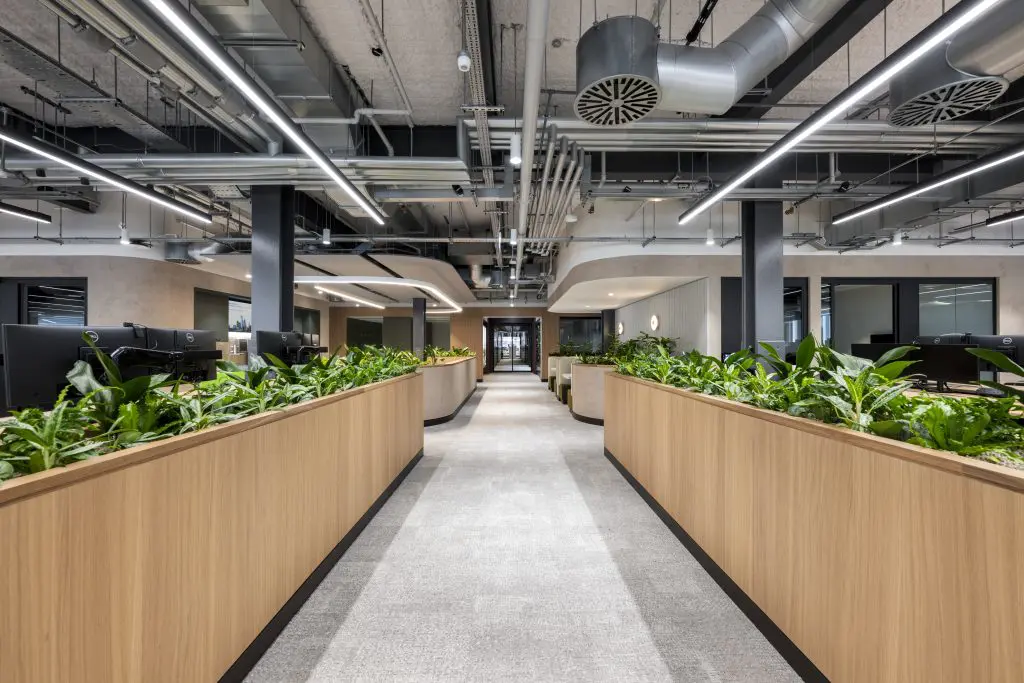
 

Studies show plants can lower stress, support concentration, and encourage positive moods. In workplaces, this translates into happier teams, reduced absence, and better productivity.


The choice depends on light levels, layout, and maintenance needs. Common WELL project selections include resilient species like Kentia palms, Ficus, and Strelitzia, along with living walls for strong visual impact.


Yes, in some form. To achieve WELL Certification, projects must include visible natural elements. Planting is the most effective and flexible way to meet this requirement.


Planteria designs and installs tailored planting schemes that align with WELL features. Our experience across certified projects means we know how to integrate greenery strategically to support both people and performance.


Planting delivers long-term value well beyond certification. Healthy greenery continues to improve air quality, wellbeing, and workplace atmosphere long after the certificate is awarded.

Outside Spaces and How to Make the Most of Them

Outside spaces at the workplace can often be forgotten about, but we’re looking to change that.  An outside space can be a place for relaxation, re-energising, and creativity.  We strive to encourage more businesses to incorporate popular biophilic trends by blurring the lines between indoors and out – and we love to discuss the benefits of doing so.

Here, you can learn about some of the best ways to use your outdoors spaces, as well as how to bring a piece of the outdoors into your establishment with indoor office plants.

Planteria group

Flexible Meeting Spaces

If you’re working in close proximity to a park or garden, using this space to hold meetings could prove to be great for morale – especially during warm weather.  Of course, we wouldn’t recommend hosting any meetings that will include information that is confidential to your clients, but taking a break from the office to discuss internal changes, processes or brainstorming will maintain efficiency with time, and may even help your workers to stay productive later into the working day.


Informal Lunch Area

Many offices have difficulty keeping their indoor air quality at healthy levels, so encouraging staff to take a break in the outdoors can improve  health and concentration. Particle pollution is known to poorly affect physical and mental health, and indoor spaces are typically ten times worse for this pollution than outdoors. Taking a break from particle pollution can do wonders for the help and headspace of your staff, so if it’s a nice day – why not suggest a picnic? Ideally, if you do have some viable outdoor space at your office, providing table and chairs to create an alfresco area which can be used for eating, taking a coffee break or having an informal meeting is an excellent idea.

Planteria group

Breakout!

Help to boost health and wellbeing, by turning your outdoor space into a useable attractive area for a quick spell outside for formalised lunchtimes. When under duress a break outside can help staff to reset and return with a fresh can-do attitude, whether they’ve just struggled with an intense call with a client or business partner, or a busy morning with back-to-back activity. Plants and nature have plenty of restorative qualities. Your business could easily be enjoying these benefits with minimal cost.  The added benefit of topping up vitamin D levels in the sunshine and taking in the view of green plants will also help to improve immune systems to work optimally and keep your workforce healthier and happier.

Planteria group

Bringing the Outdoors IN

In many cases, a green attractive outdoor space may not be within a lunchtime walking distance of the office.  And you may not be lucky enough to have accessible outdoor space of your own.  In this case, you may be looking to bring aspects of the outdoors into your workspace so that staff and guests can still reap some of the benefits of natural elements and plants.

Looking around your office, you may find some areas that can easily be converted into a green space. Think about you dining area, or communal areas such as locker tops, or break out rooms.  Here are some popular methods that modern businesses use to bring biophilic benefits into their place of work:

Entrances

Often overlooked but integral to the first impressions of your business, the entrance can be a fabulous place to start adding some greenery.  Not only important for your guests, a green entrance will suggest positivity to your workers as they enter and leave your establishment.

Planteria group

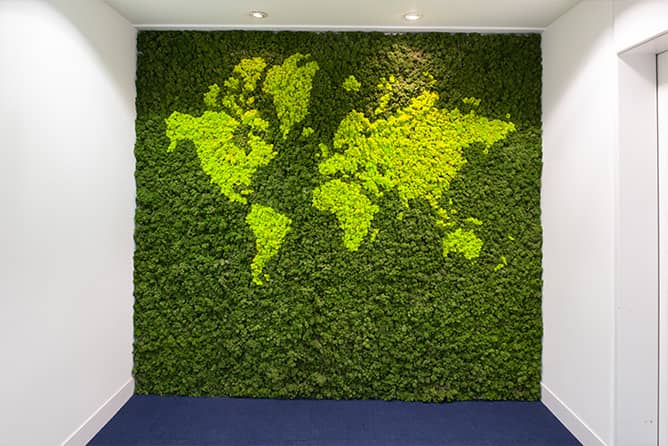
There are a number of methods for increasing your kerb-appeal, including window boxes and external green walls, but you might also choose to add an internal moss wall to your lobby area, large and unique planting options by the door, and table posies in waiting areas.

If you’re interested about installing a moss wall or green living wall for your business, we recommend reading our blogs on this topic:

Can I have a Living Wall?

It’s Alive! Buildings with Living Walls

Moss Walls: Q & A


Roof

Green roofing is a brilliant idea – looking out for your office window, a green roof nearby brings brilliant rural landscapes a little closer to city-orientated businesses. Our brains respond very positively to colour, and views to nature so the sight of a verdant green roof could prove to be quite inspiring, boosting productivity and creativity.

There may be a group near you that you can help to get involved with green initiatives. A BID (Business Improvement District) will typically group neighbouring businesses in an effort to improve their local working area together, and sometimes, this might include making their views greener by collaboratively installing green roofs.

Planteria group

Balcony and Terraces

Balconies and terraces can be a great place for workers to enjoy a brief respite in the fresh air, but you can bring nature even closer by installing some beautiful window boxes or planters to add to the relaxing vibe and make them visually beautiful.

Planteria group

Could your business be making more of outside spaces, or is it more feasible for you to create some green spaces inside your own office area?  We love all things biophilic and can help you with any green design queries that you might have, so speak to one of our friendly team about your ideas soon.

Can I have a Living Wall?  And What ‘Green Wall’ alternatives are there?

Without a doubt, living walls look stunning and provide large swathes of real planting from floor to ceiling, creating a real impact…

A living wall can have numerous benefits in business environments; they can help to make staff more productive in the workplace and are equally important in improving the perception of your brand. In this article, you can find out the main points to consider when thinking about a living wall for your space, and why it could be important for your staff or guests.

Green wall for cta

Can I have a living wall?

Almost definitely yes! Or at least, the effect that a living wall can give. We create bespoke walls for your requirements, though there will be some spaces more suited to live living walls than others.

A living wall works best in a well-lit space with plenty of room and fresh air circulating. For example, entrance atriums and large reception areas with hard or concrete floors. It is ideal to install them when a building is being constructed so that the irrigation system can be put in and the living wall placed on top. This can also off-set some of the cost, as the wall won’t need plastering and painting.

If you have a carpeted area or a space with lower light levels, such as a restaurant or traditional carpeted office reception, you could consider an artificial living wall instead. These look beautiful and give a very similar effect, creating the same kind of wow factor. For office spaces, moss walls also make an excellent option for giving a high impact finish, they are easy to retrofit and require minimal ongoing maintenance.

Another option to include real, live planting without the commitment and expense of a full living wall, is to opt for live dividers or panels. These are self-contained green modular products and give a great effect. These can be replanted on a regular basis to give a different look and so can be treated like art installations. You can also use them to give seasonal variation to your location…

Tall green wall in a clean white entry space

Where is the best location for different types of green walls?

The best type of wall for you will depend on your location and the requirements of the plants you select. For example, some plants need more light than others so if you are planning to place your living wall in a bright and airy reception, you will have lots of options for the type of plants you can use.  For dark areas, you may need a growing light. You can also opt for moss walls or artificial living walls as these are perfect options for many spaces. Moss walls look exquisite when executed by professional plant technicians like Planteria. With lots of colour options and three different types of moss to choose from; bun moss, flat moss or reindeer moss, there are lots of variations to make your wall unique. You can also include your logo or a message and have something bespoke and specific to your company.

Here’s some more reading material on living walls to get you inspired for your new project:

It’s Alive! Buildings with Living Walls

Moss Walls: Q & A


What is A living picture and what types of living walls are there?

A living picture is a self-contained piece of art with a frame and a central section of planting. Living pictures look beautiful and can be hung singularly or in groups.  Also available in this type of product are living panels and dividers. These are easy to maintain and a cheaper option than a full-scale living wall. There are lots of options for different types of planting and it can be regularly changed to give different effects throughout the year. If you move offices, you can even take these with you which you can’t do with a traditional built-in living wall.

Planteria group

When would I opt for Moss wall?

We supply sixteen different colours of preserved moss which can be used to beautifully create bespoke walls and even replicate your logo. Most moss is not recommended for use in exterior positions, but for interiors it is easy to manage and control. It is lightweight and fairly straightforward to install, making it ideal for most office environment.

Planteria group

Why would I choose an artificial living wall?

An artificial living wall brings many of the design benefits of a real living wall, with far less maintenance or ongoing costs associated with a real living wall. Obviously, an artificial plant does not grow, and you won’t reap the benefits of the air cleansing and CO2 absorption that you get with real planting. You also need to consider that artificial planting, made from plastics, is not as environmentally friendly as the real deal. However, just like interior furnishings, they last a long time and can be moved with you if you are moving offices, so this should be weighed up in your considerations.

Moss wall plants living wall broccoli and cauliflower

Which are best and why?

There is no right answer to this question as whether you opt for a traditional built in living wall with its own Irrigation system, an artificial living wall, a living picture,  panel, divider, or moss wall, will largely depend on your vision for your premises and the constraints of your environment and budget.

When planning in your green wall, you need to ask your plant provider questions like:

  • Is this right for my space?
  • How much will it cost to install?
  • What will the monthly cost of ongoing maintenance be?
  • What possible issues might occur that I need to keep in mind for the future?

Big living wall in reception area biophillia biophilia

If you would like to discuss your location and options to help you decide which is best for you, please get in touch with Planteria group today for a free consultation and quotation service.

4 Key Design Tactics for Hotels and Hospitality


In today’s competitive marketplace, we know that people have higher expectations of customer service and the aesthetic of a venue. Connect to the hearts and minds of your guests by providing them with a real ‘experience’, elevate their mood and change the dynamic of your space to bring about many benefits, including increasing your revenues. It’s all about creating the right environment.

In this article, we look at some interesting findings and recommend some design tactics based on research for businesses looking to cultivate the perfect guest experience. If you’ve ever wondered how much a room with a view is worth, or how to design a first-class lobby, then read on…


Your Lobby – Your Showcase

A high dwell rate in your lobby or reception area will tell you two things; that you’ve created a luxurious space and that your guests are engaging with the experience you’ve created.

Let’s break this down into more meaningful observations; It’s well understood that guests and tourists book a hotel to explore the surrounding area. In other words, they’re happy if there is bed and board but are more interested in spending time enjoying the surrounding area than hanging out at the hotel. But, if you are improving the dwell rate of your lobby, then you are successfully adding to the value of your guest’s experience, showing that your hotel is an attraction too. If you offer a concierge service or promote local tourism and trips in your lobby, then you are also increasing the chance that these guests will book through your hotel, which will bring in an additional income stream.Https://www. Pinterest. Co. Uk/pin/538672805428432061/

Biophilic Hotel Lobby

Guest perception and the overall experience a guest has at your hotel is of paramount importance. In almost all cases, the lobby will be the second impression of their stay with you. Their first impression will be the hotel entrance and façade; the second will be your lobby when they check in. These experiences are formative for setting the guest’s view of the quality and service of your premises, and if yours is a listed building then there may be very little you can do to personalise the exterior so you should concentrate on the lobby.

You also want to be sure that the check-in and check-out process is a pleasant one so that guests are keen to recommend you to others when they return home. This makes the lobby a very important space for every hotel, and a high dwell rate shows that you are doing it right.

1) How to Increase Your Lobby’s Dwell Rate

You can improve the dwell rate of your lobby through a variety of means, such as by ensuring that seating is comfortable, inviting, and creating an ambience of cool sophistication. Did you know that implementing biophilic design into your lobby can have a huge effect on your guests’ perceptions?

In a study conducted by Terrapin Bright Green and Human Spaces, it was found that ‘the dwell rate of biophilic hotel lobbies is 36% higher than in conventional lobbies’. If you aren’t up to speed with the meaning behind biophilic design, we recommend that you read our white paper on biophilia. Biophilic design is all about incorporating nature into the built environment, which helps us to feel more grounded, balanced and relaxed.

Bill Browning, the founding partner of Terrapin Bright Green, notes that ‘many brands are rediscovering that lobbies can function as more than just transitory space, […] they can also increase revenue’. If you want to stay ahead of your competitors, then you can’t afford to neglect your lobby any longer.

‘In short, guests like to spend more time in spaces with connections to nature’. – Bill Browning

When thinking about improving your lobby space, consider plants, green walls, water features, fish tanks and natural light to create a natural oasis of calming tranquillity. Add some ambient music and a bar or barista, and you have a winning combination of somewhere to relax and do some people watching, rather than just a transitory space to transact business and move out of.


2) Craft a Unique Guest Experience

Biophilic hotel design and décor is a strong factor in creating a unique and memorable guest experience but becoming a biophilic hotel is more than a single vase of flowers on the main desk. Biophilia is about returning the human to nature where they feel most comfortable, so you also need to consider comfortable furnishings for guests to relax in, colour schemes, and choosing natural fabrics and materials like wood will all add to the biophilic design elements.

According to Terrapin Bright Green, you should consider putting luscious living walls in busy areas with high traffic, and we would also recommend posy flower arrangements and flowers for restaurants to create a cohesive biophilic atmosphere throughout your hotel. If you are struggling with your budget, then some smart placement could be the solution to your worries:

‘When budget constraints limit opportunities for using a uniquely biophilic material or product, limited applications can be just as effective when thoughtfully incorporated’.

Biophilic Design in Hospitality, p. 36.

3) Receive More Positive Reviews

To ensure that your hotel continues to receive a high occupancy rate, you want to be sure that your guests are giving you great reviews. Would you have guessed that by adding nature to your hotel design you can influence the kind of reviews that your guests will be leaving you? Terrapin Bright Green report that:

‘while the websites of both hotel types [conventional versus biophilic] discuss “experience” the same amount, guest reviews of biophilic hotels mention “experience” twice as often as reviews of conventional hotels’.

Biophilic Design in Hospitality, p. 25.

This could mean that a biophilic hotel is more memorable than a conventional hotel because guests have more to say about their experiences. This could also be linked to the added health and wellness benefits that being around plants and natural elements brings.


4) Water Features

Humans have an affinity with nature, and with water in particular so sea or lake views have a powerful effect on our emotions. Hotels.com published a study confirming that there is an 18% price difference for rooms offering a full view to water and other scenic views.

‘Hotel guest rooms with a view to water are priced on average 11%-18% higher than rooms without a view’.

Biophilic Design in Hospitality, p. 8.

Of course, not all hotels are going to be able to provide a stunning view, but they can incorporate other natural elements into the hotel design such as indoor orchids, an orangery or a garden room, to augment guests’ experiences.

In short, start making your space work for you and your guests, starting with your lobby. We suggest prioritising quality over quantity and aim to work with your surrounding area instead of against it. For any help and advice concerning plants and biophilic designs, contact us at Planteria Group.

Planters, Containers and Your Office Aesthetic

Xnewsthumbresizex481

When we talk about biophilia, we are referring to how adding plants and nature to your working environment can help staff to feel happy, creative and more productive all at the same time, but did you know that changing up the container of a plant can drastically change its appearance? In this article, we consider the effects that different containers can bring to plants and how we can match them to your business’ aesthetic.

Planting Can Change How You Feel & Behave

Smart biophilic design can create a workplace which improves employee performance, health and wellbeing. For many, the aesthetic of their office may seem like a luxury that should be the last thing to be considered in current financial climates, but when it comes to biophilic design, you should be asking yourself whether your business can afford not to implement these strategies.

It’s well known that some of the biggest businesses in the world use biophilic design to maximise their output. Google, Amazon and Apple are all filled to the brim with plants, living walls and health schemes, and when you consider the statistics that plants in the office make you 15% more productive, you can understand why. Can your company afford to be losing out on that 15%?

By adding just a few desk plants to your office environment, you can positively alter the aesthetic to benefit your employees. It’s not all down to desk plants, however, as you should also try to maximise natural light, natural materials and scenic views if you’re lucky enough to have any.

If you have any further questions regarding biophilia, we recommend that you read one of our blogs on the subject:

Biophilia – What Is It and Why Is It Important?

Biophilic Design in the Workplace

Biophilia White Paper


How Containers Can Change Plants

Plants come in all shapes and sizes, and the containers they come in can also substantially alter their image, whether you’re looking for plants which add a bit of fun and colour, or something a little more sophisticated which exudes style in the lobby or meeting room, we have it all.

For example, a group of bespoke ‘statement’ planters, like the ones in the image at the top of this blog, in a variety of finishes and in a complimentary colour palette can provide the perfect finishing touch to a space and can tie a design scheme together perfectly. Whilst some fresh white planters with a mix of different plant specimens can add light and vibrancy to an office that might otherwise feel too corporate.

We can source almost any plant or container, so you are limited only by your imagination. We can even match containers and planters to your company’s corporate colour-scheme.

Move on to the next section for some examples of beautiful plant containers that you could enjoy from your office soon:


Attractive Containers Made to Inspire

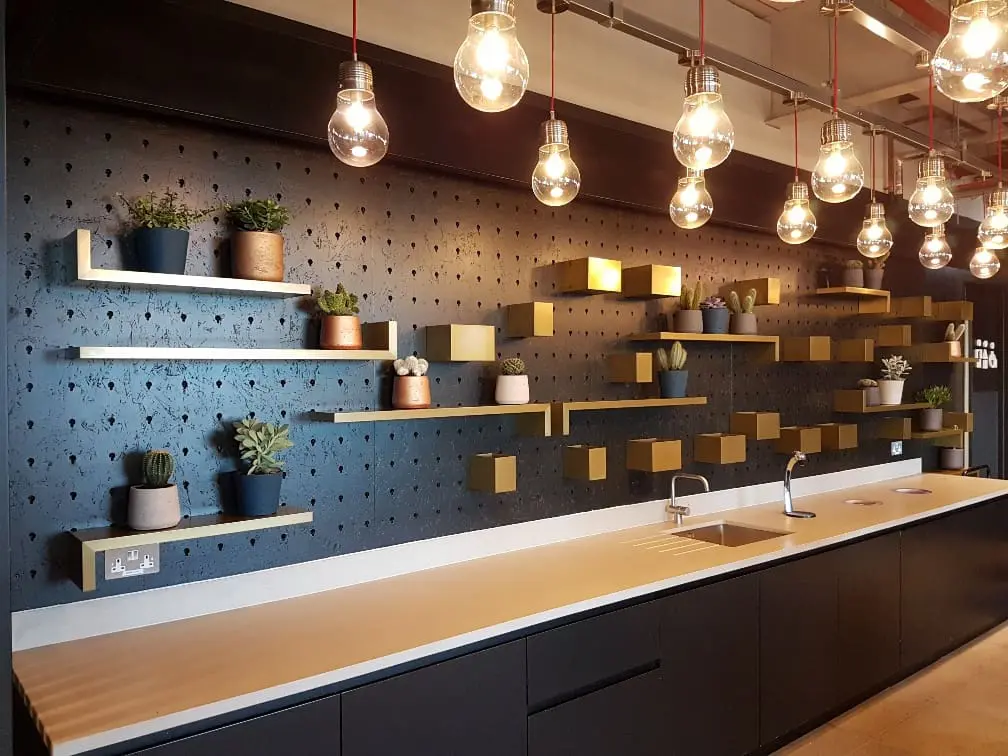
Planters and containers come in all shapes and sizes. Tiny planters can be dotted around on desks and reception areas to create a homely feel, adding detail that shows you care, and allowing all your colleagues to benefit from biophilia. Small planters are perfect for succulents which are very popular at the moment and come in a wide variety, and in different shades. A selection has been used in the workspace below, with stunning effect, in this ‘industrial design’ style using a palette of black, stone and copper:

– Artistic Design Using Mixed Planting

Succulents in tiny pots office biophiliaThese plants work especially well on a smaller budget, and they show just how important quality products and design planning are when incorporating plants in your décor.
– The Perfect Partner to the ‘Industrial Design’ TrendPlant rack office biophilia

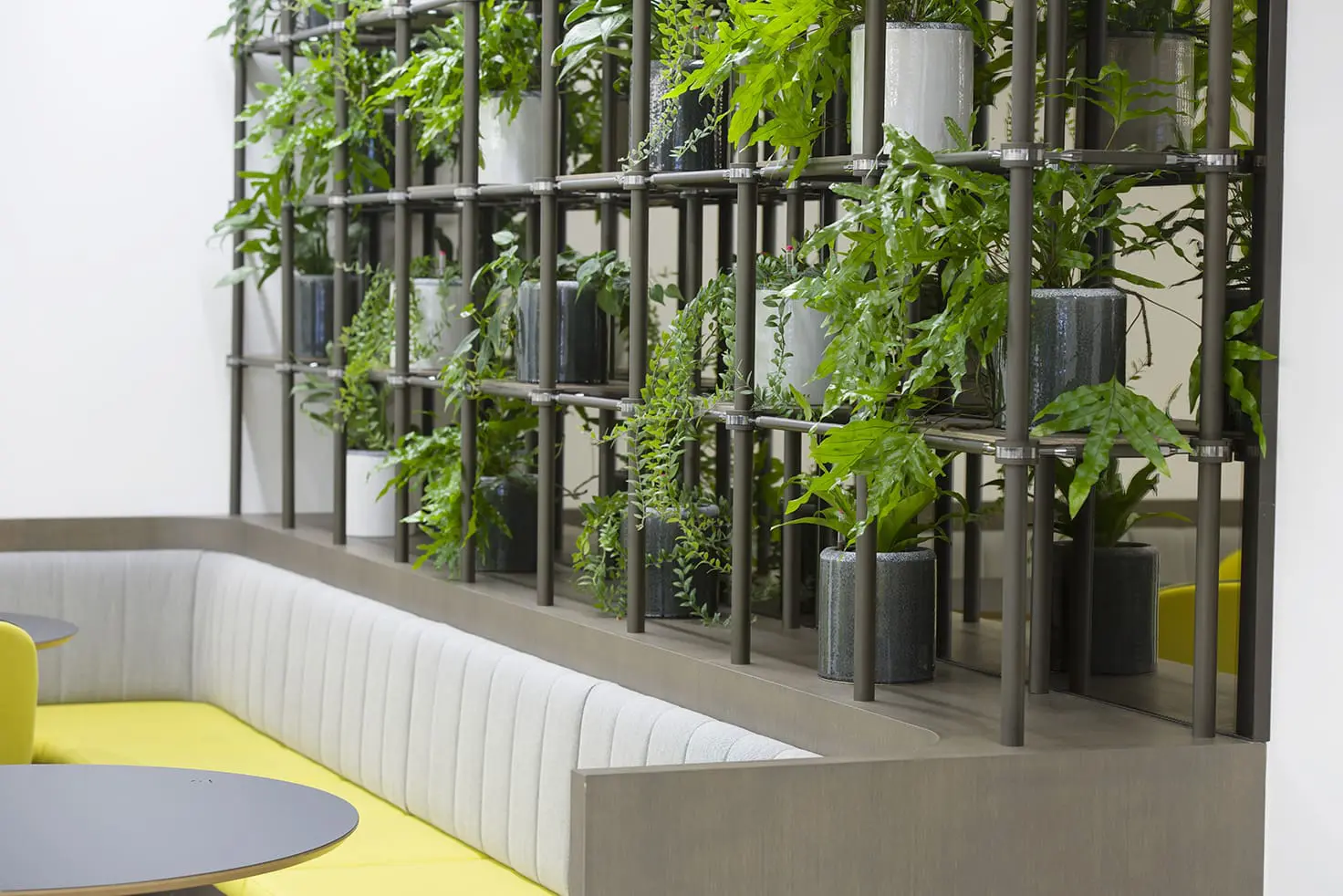
Staying with the Industrial Design trend, this image showcases the benefits of vertical storage for getting those biophilic themes into your office or social space. This plethora of planting is bright, vibrant and friendly, which is sure to motivate and brighten the day of anyone using the area. The containers for these plants are uniform which juxtaposes with the individual nature of each plant in the frame, contrasting the symmetry against the soft natural greenery.

The use of mirrors at the back of the space also maximises the amount of light in the area and gives the illusion of doubling the number of plants, further proving that quality of product and smart planning can go a very long way to creating the perfect biophilic atmosphere.

– Pots on LegsSelection of pots on legs

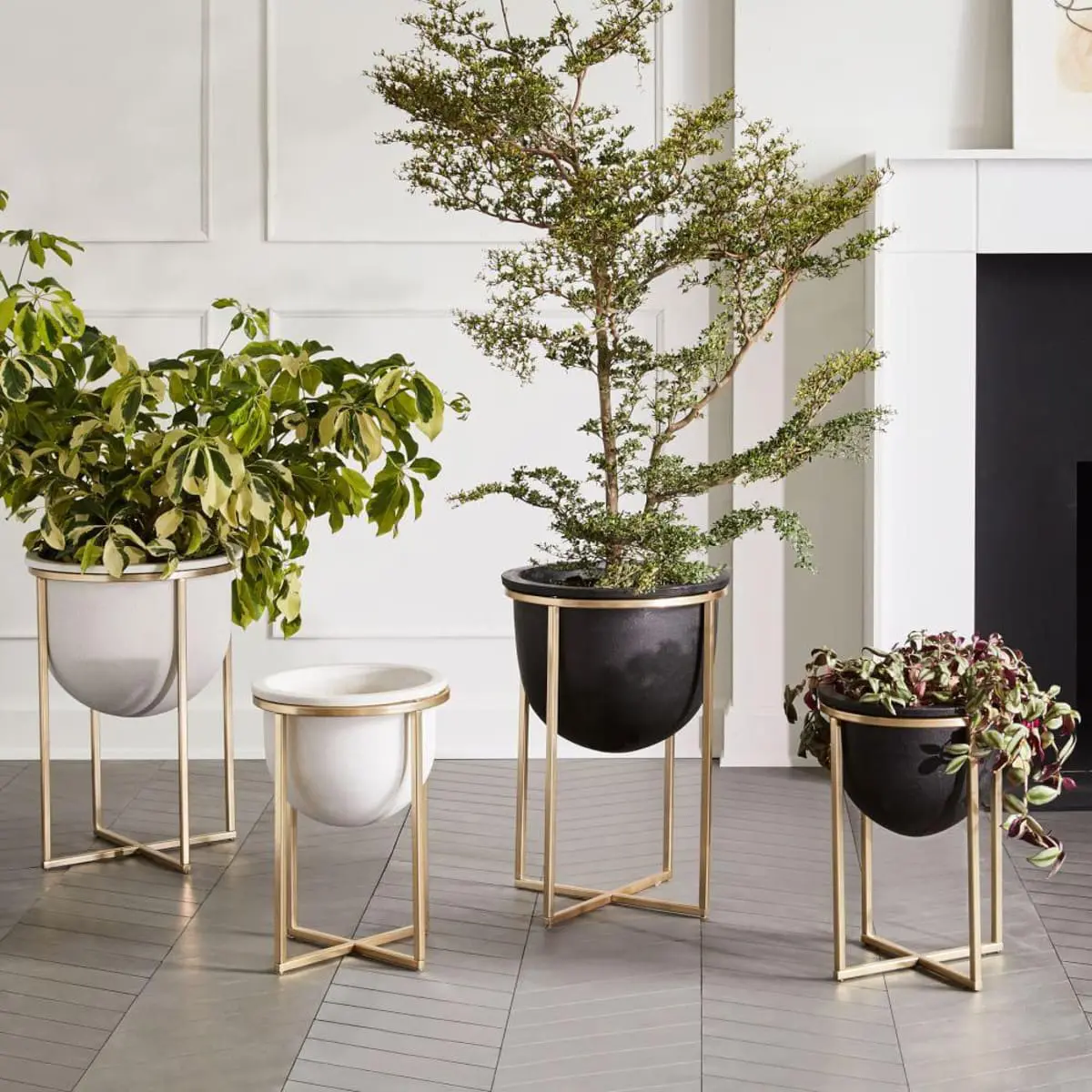
Pots with Legs are all the rage! We love them too. These containers stand out, and you can choose from brass, wood or metal for contrast to the pot colour. Plants are elevated to a new height and given the same status as a prized piece of art. This trend brings a sense of class to the plants, giving them a modern edge that would look stylish in almost any room. There are plenty of innovative ideas, so don’t doubt that we can find something to suit your setting.

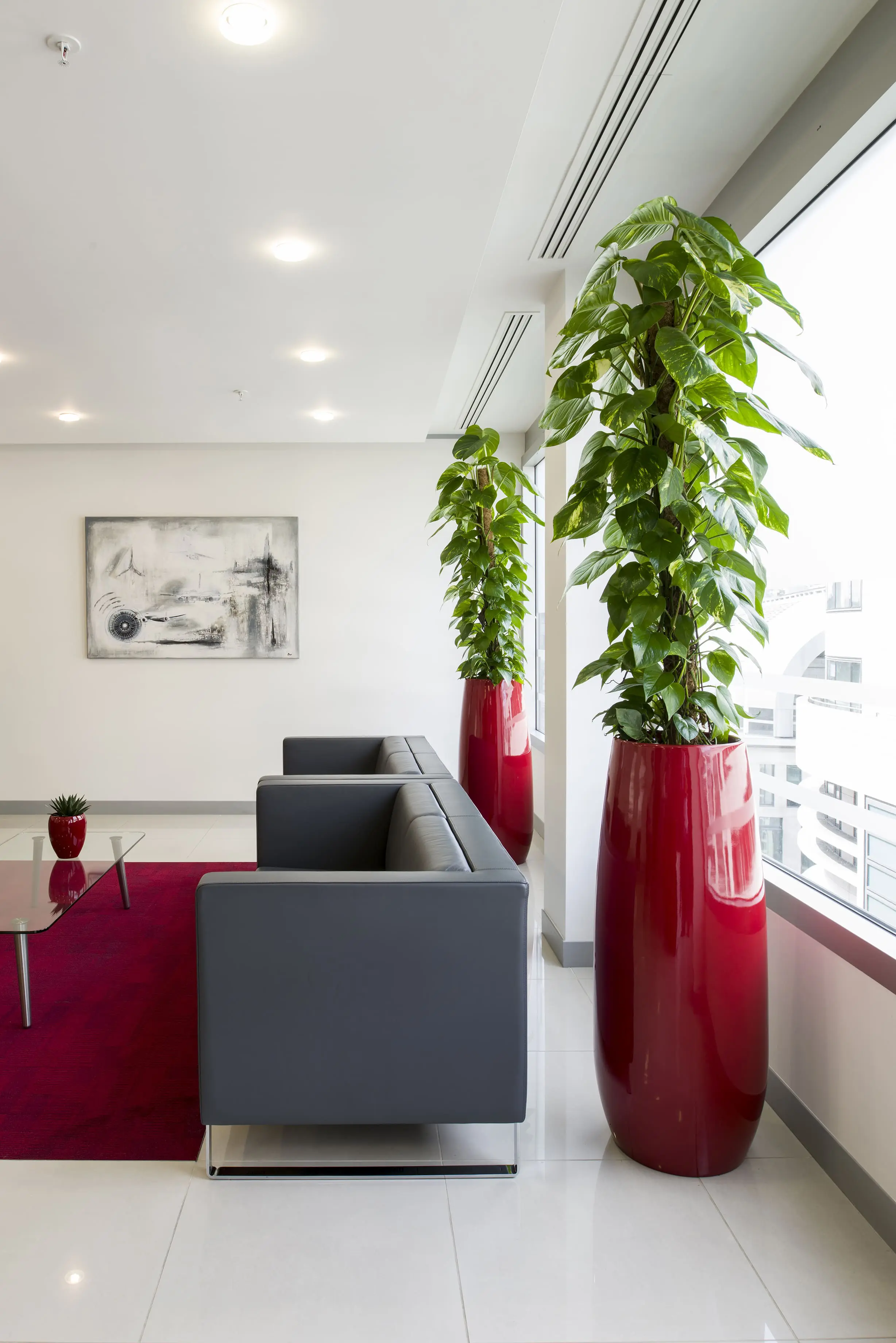
Office with two large red plant pots

We can provide a range of planters and containers in any colour and a variety of sizes. The only thing limiting you is your imagination, and we can offer you our design assistance to help overcome any struggles with space or budget. Simply contact us for more information regarding our indoor plants.