

Goodwin
How Planteria Helped Bring Goodwin’s HQ to Life
A planting scheme that did more than fill space; it brought identity, cohesion, and ecological value to one of London’s most ambitious legal workplace moves.
rooted in design
the project
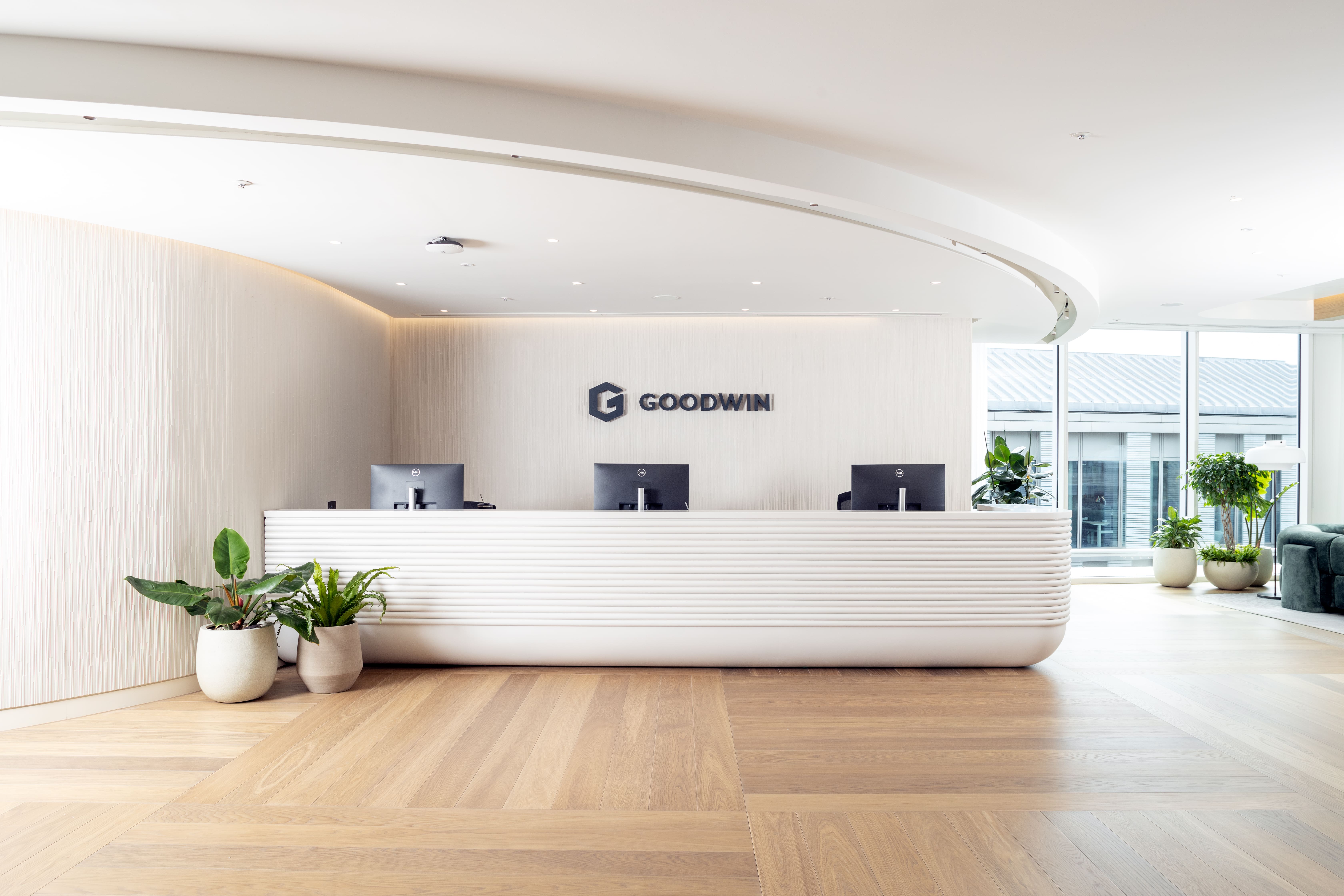
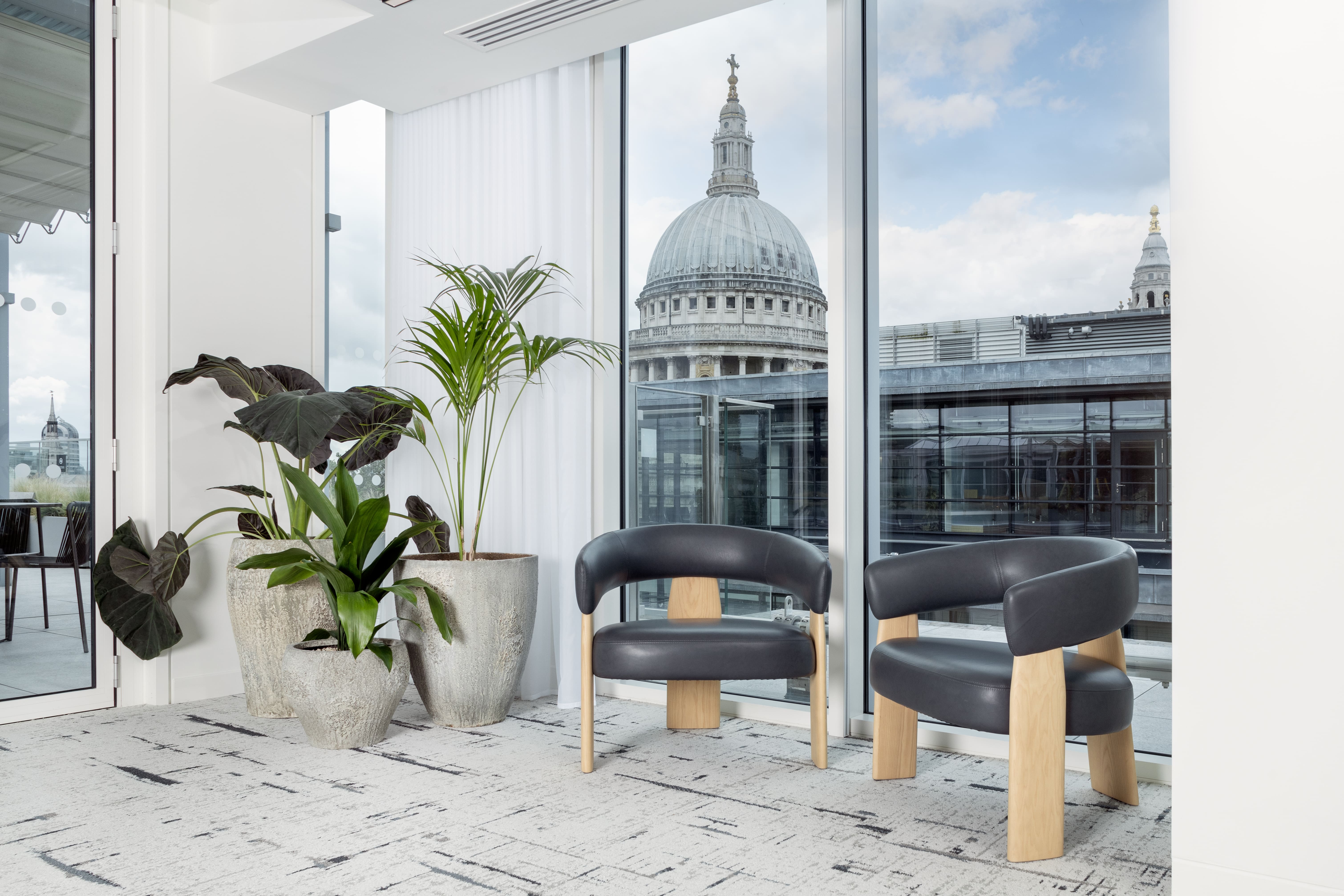
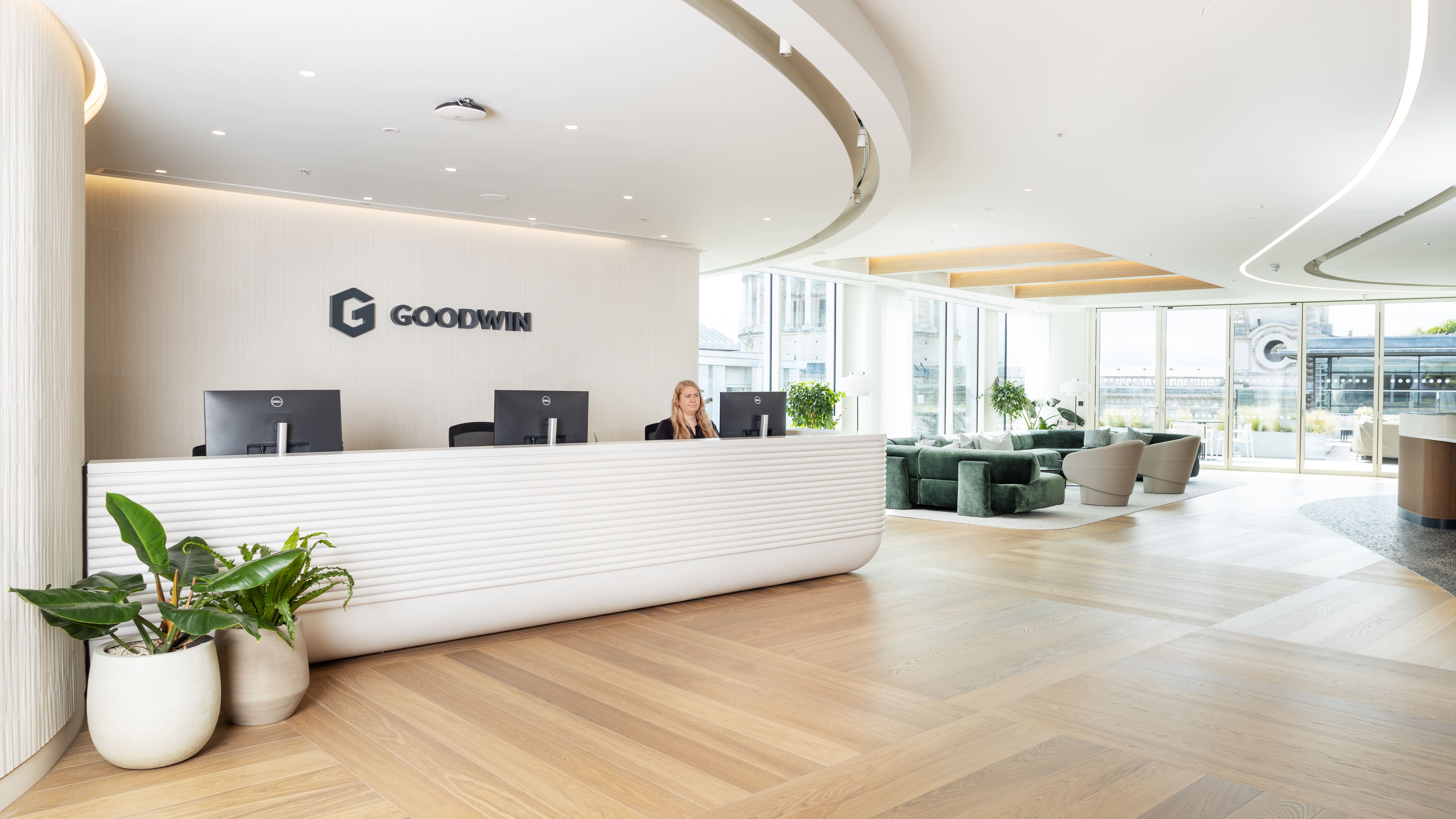
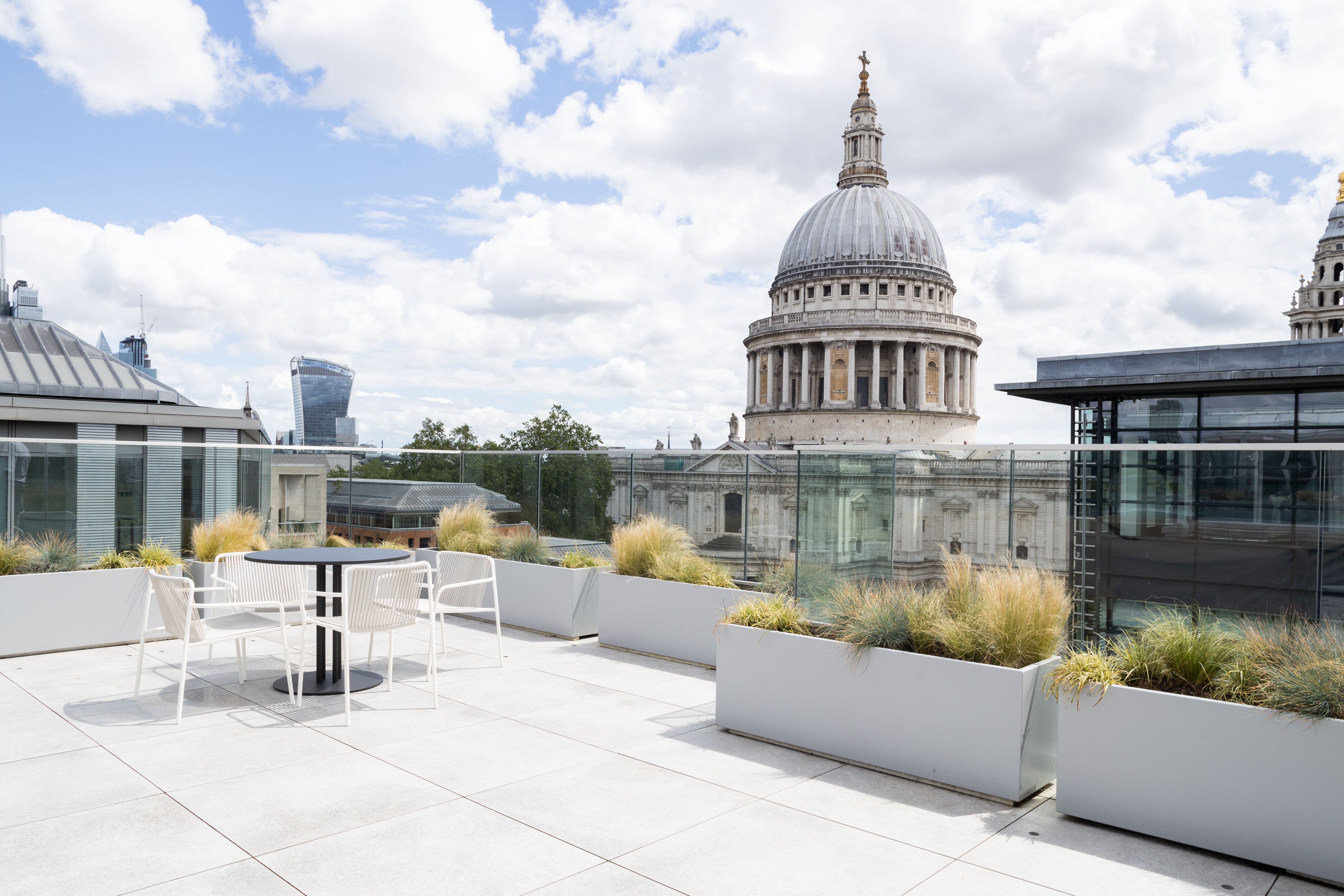
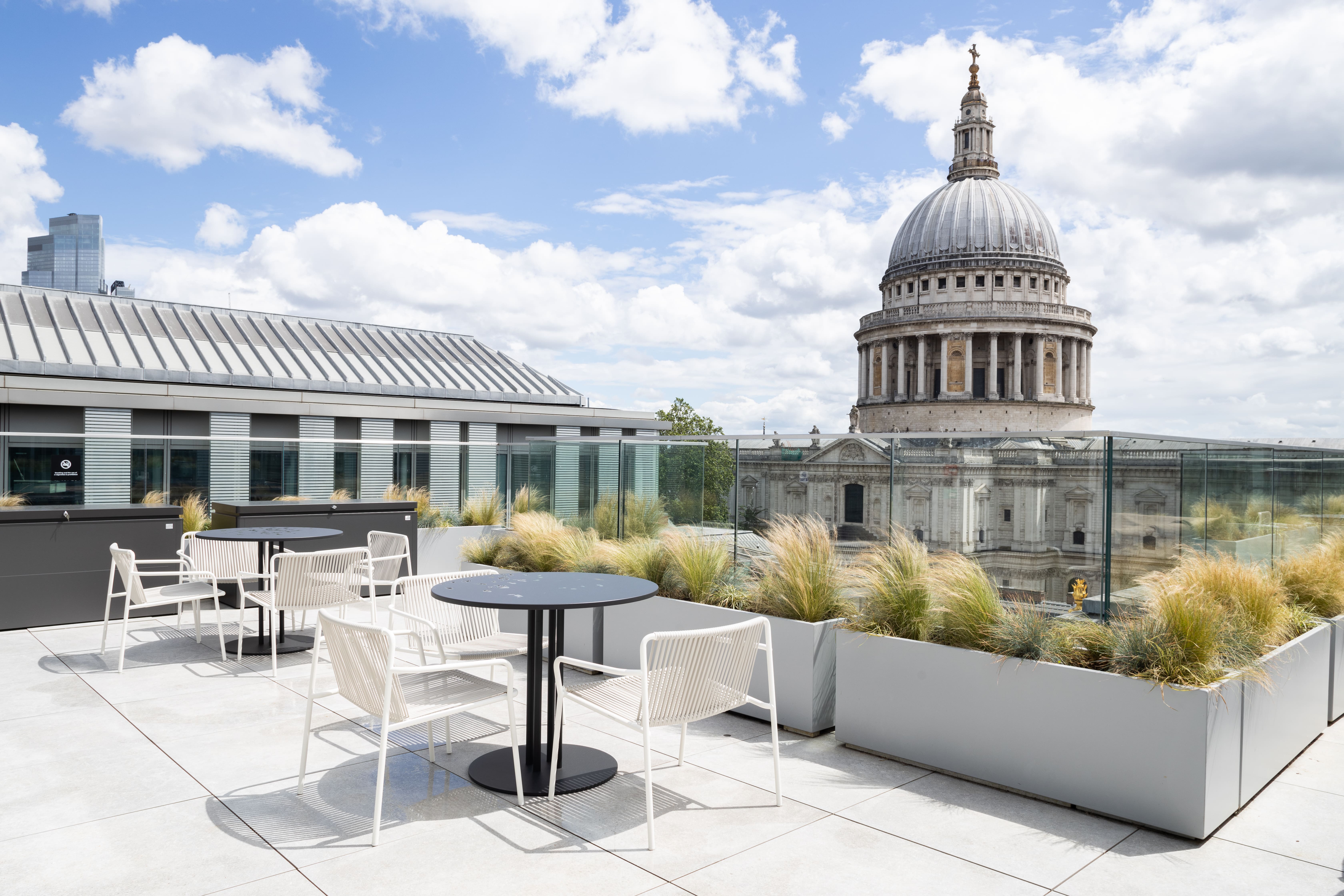
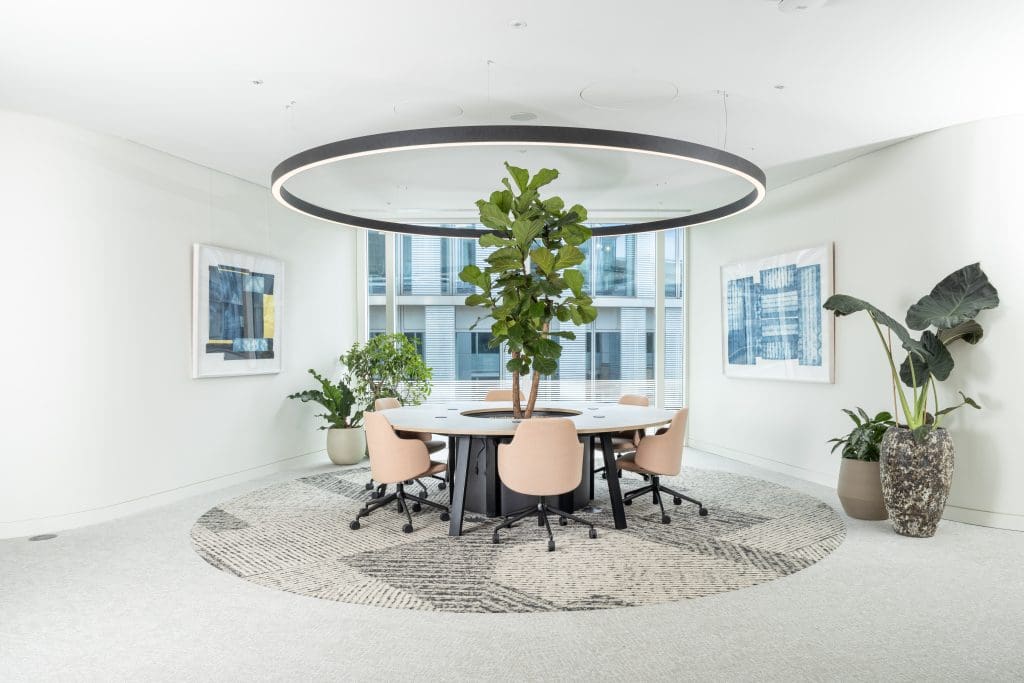
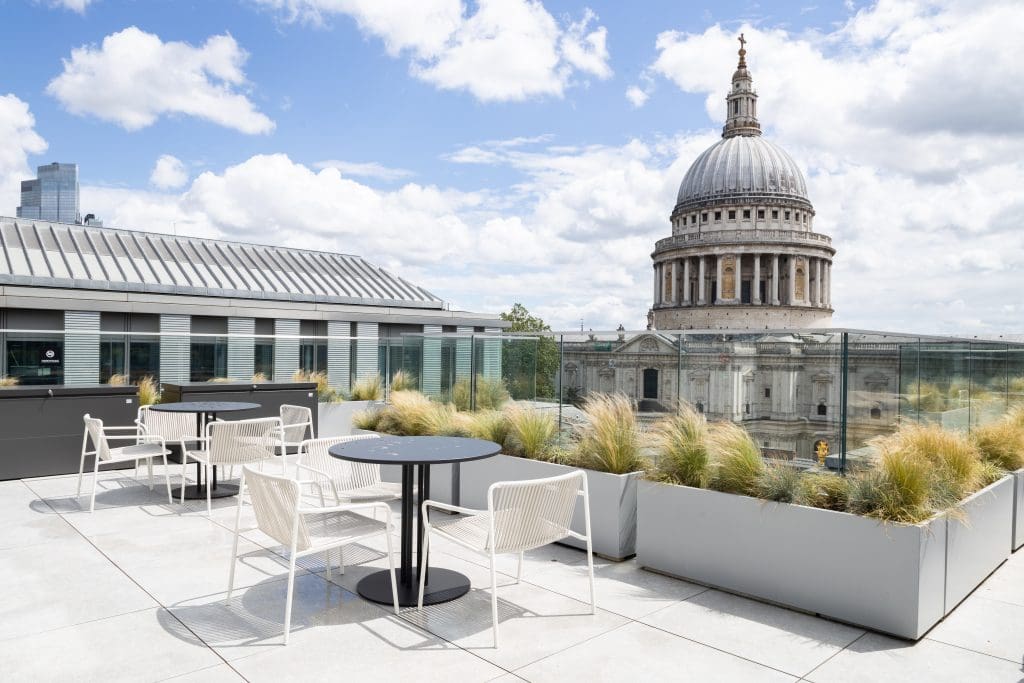
When global law firm Goodwin Procter relocated to the Sancroft Building on Paternoster Square, they weren’t just upgrading offices. They were uniting three separate sites into one flagship headquarters. Designed by tp bennett and delivered alongside Gardiner & Theobald, the space spans the top three floors of the building, including a private rooftop terrace with sweeping views of St Paul’s Cathedral.
With ambitions to achieve BREEAM Excellent and WELL Gold certifications, the project called for more than decorative greenery. Planteria was brought in at the design stage to create a biophilic scheme that would work with the architectural vision, support ecological goals, and shape the lived experience of 350 legal professionals.
Design vision:
Bringing the West Coast to London
From the outset, Planteria was asked to help bring a design vision to life.
tp bennett had set a thematic direction: West Coast warmth – an environment evoking California’s blend of laid-back elegance, soft texture, and organic calm. Our role was to translate that into living design.
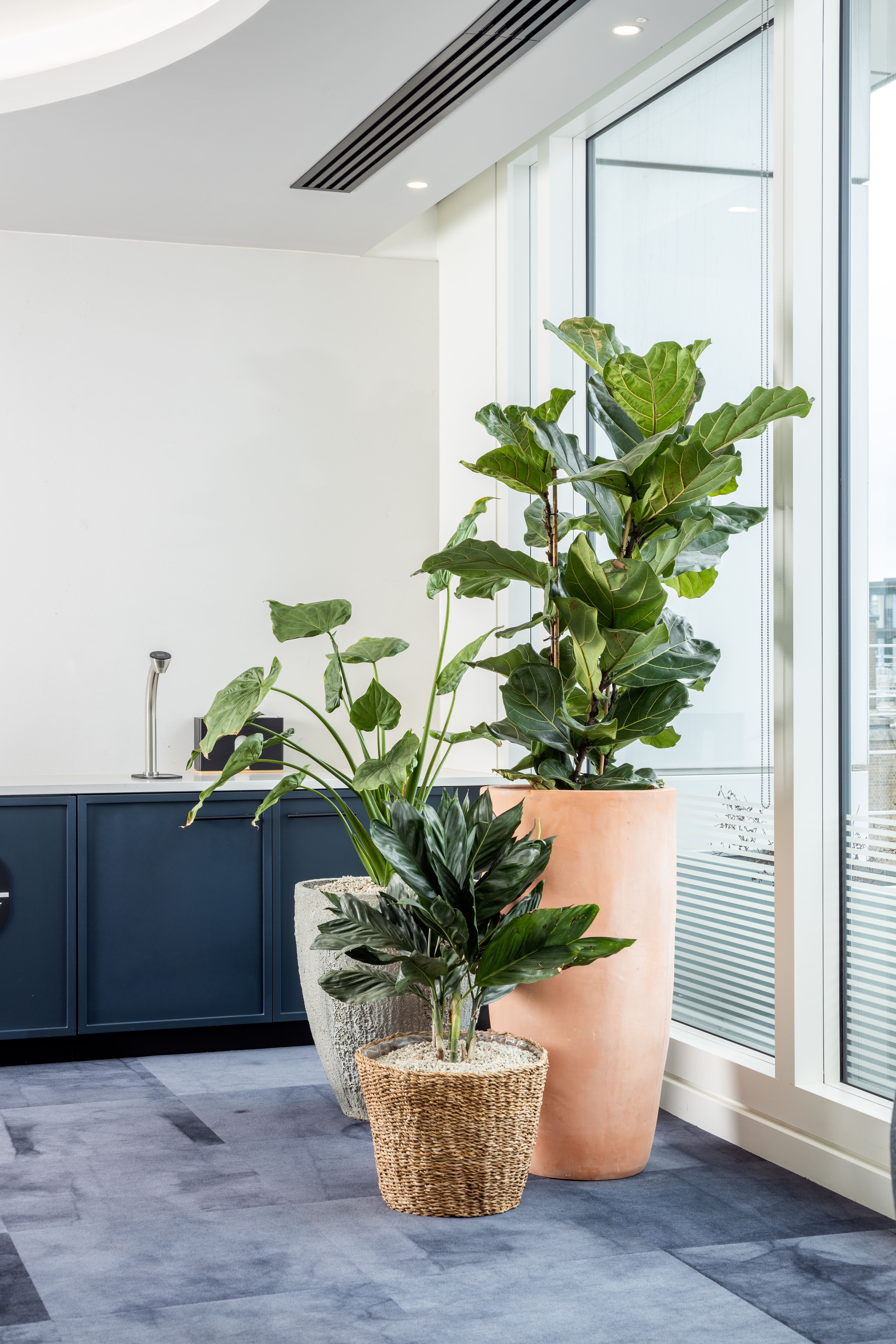
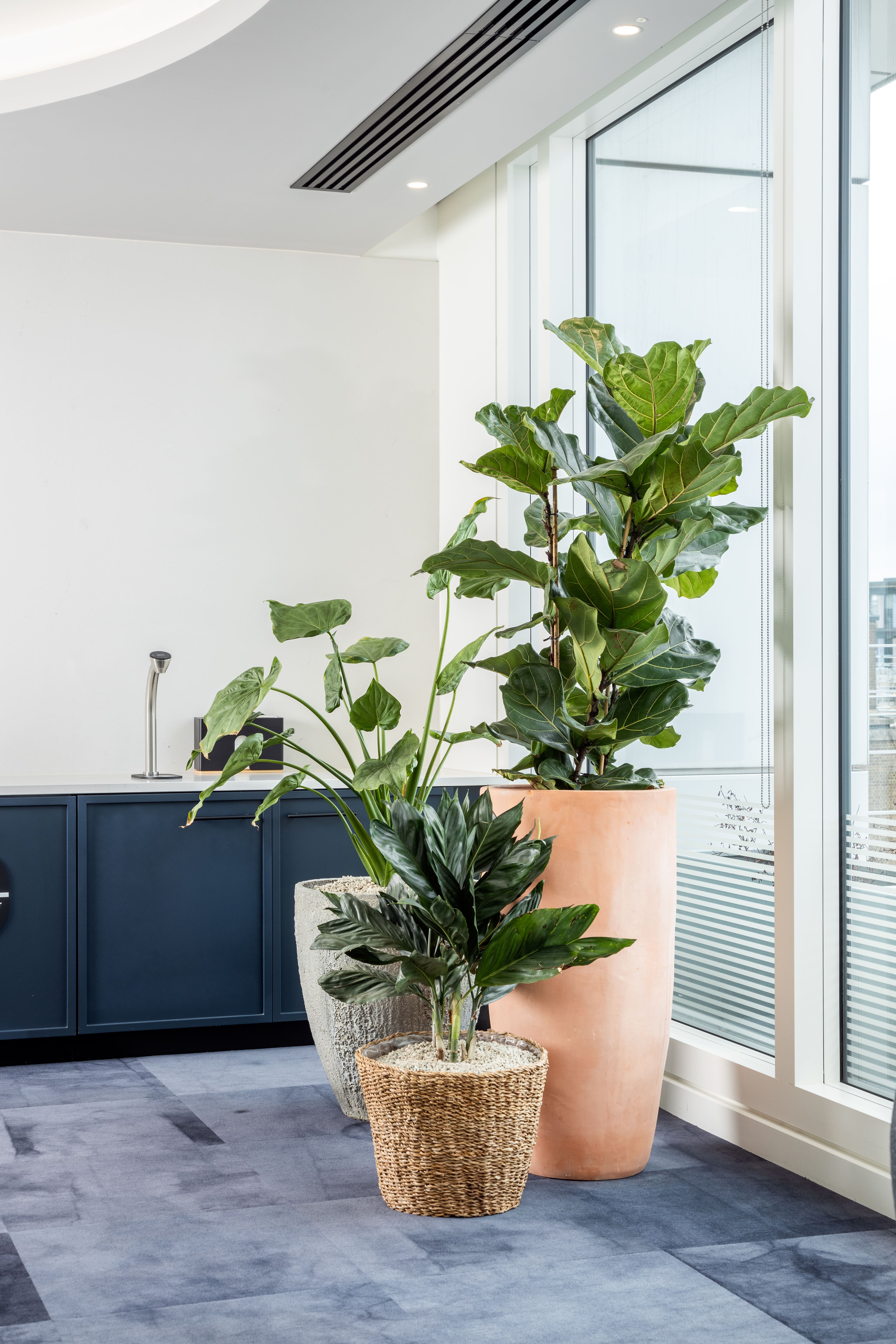
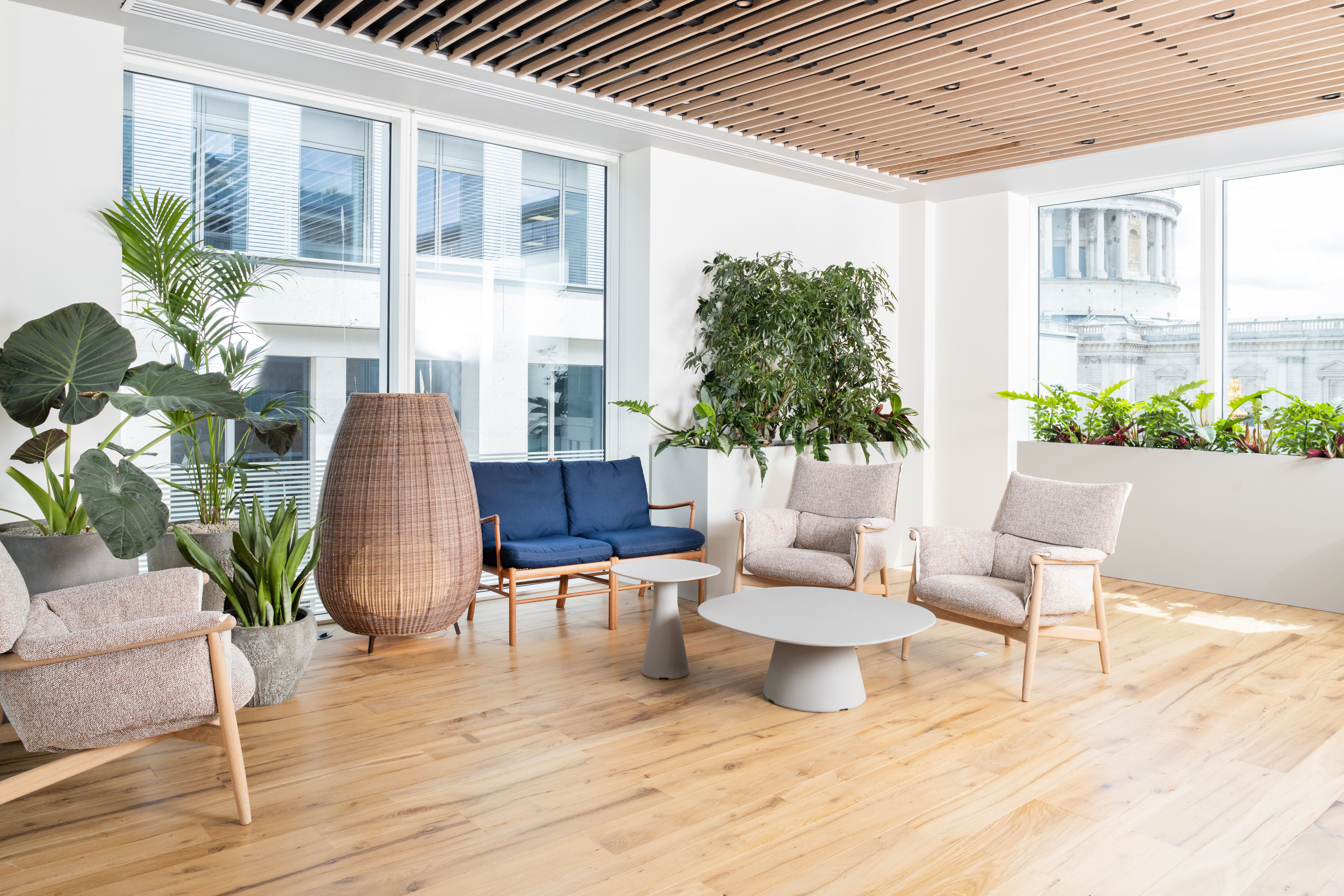
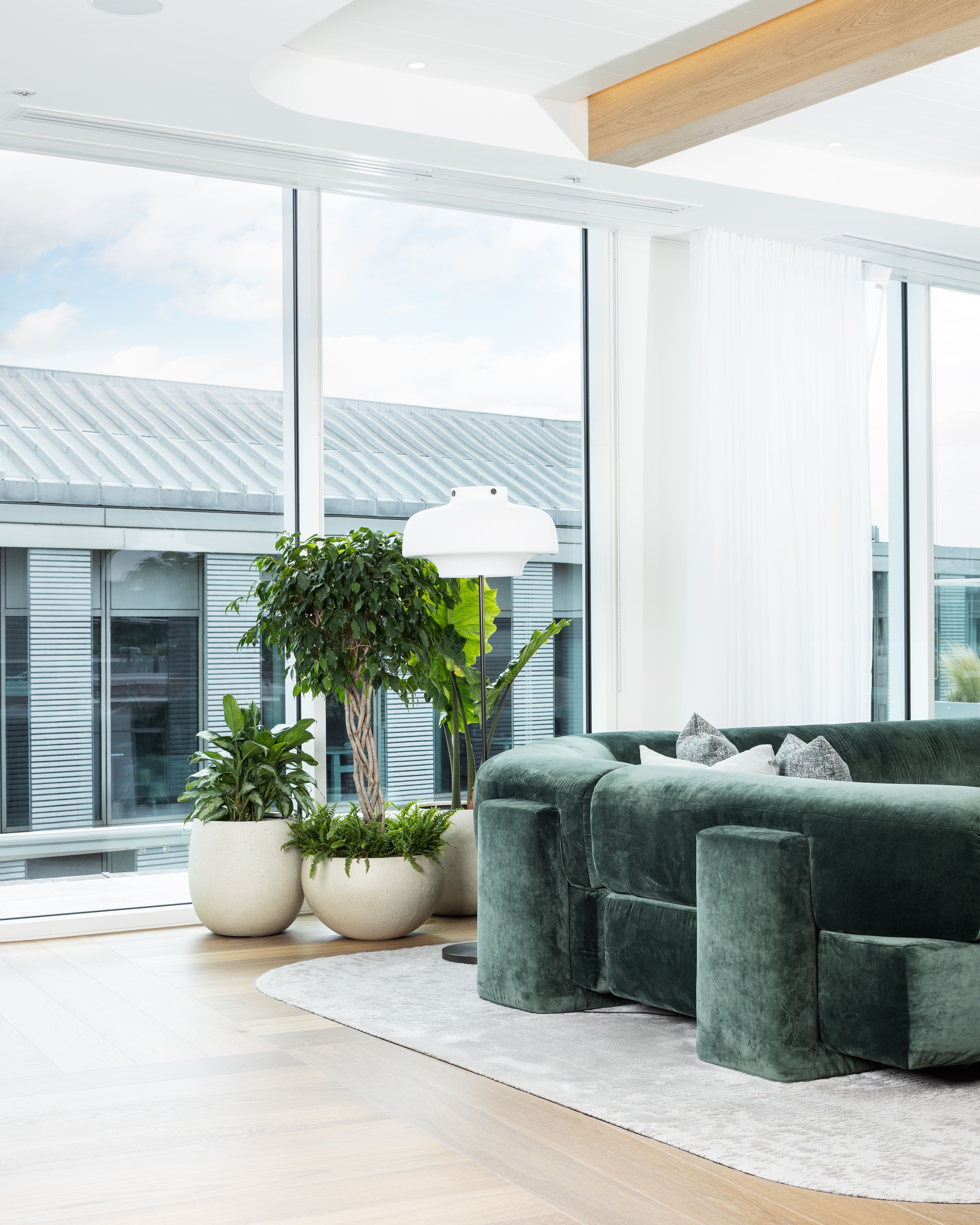
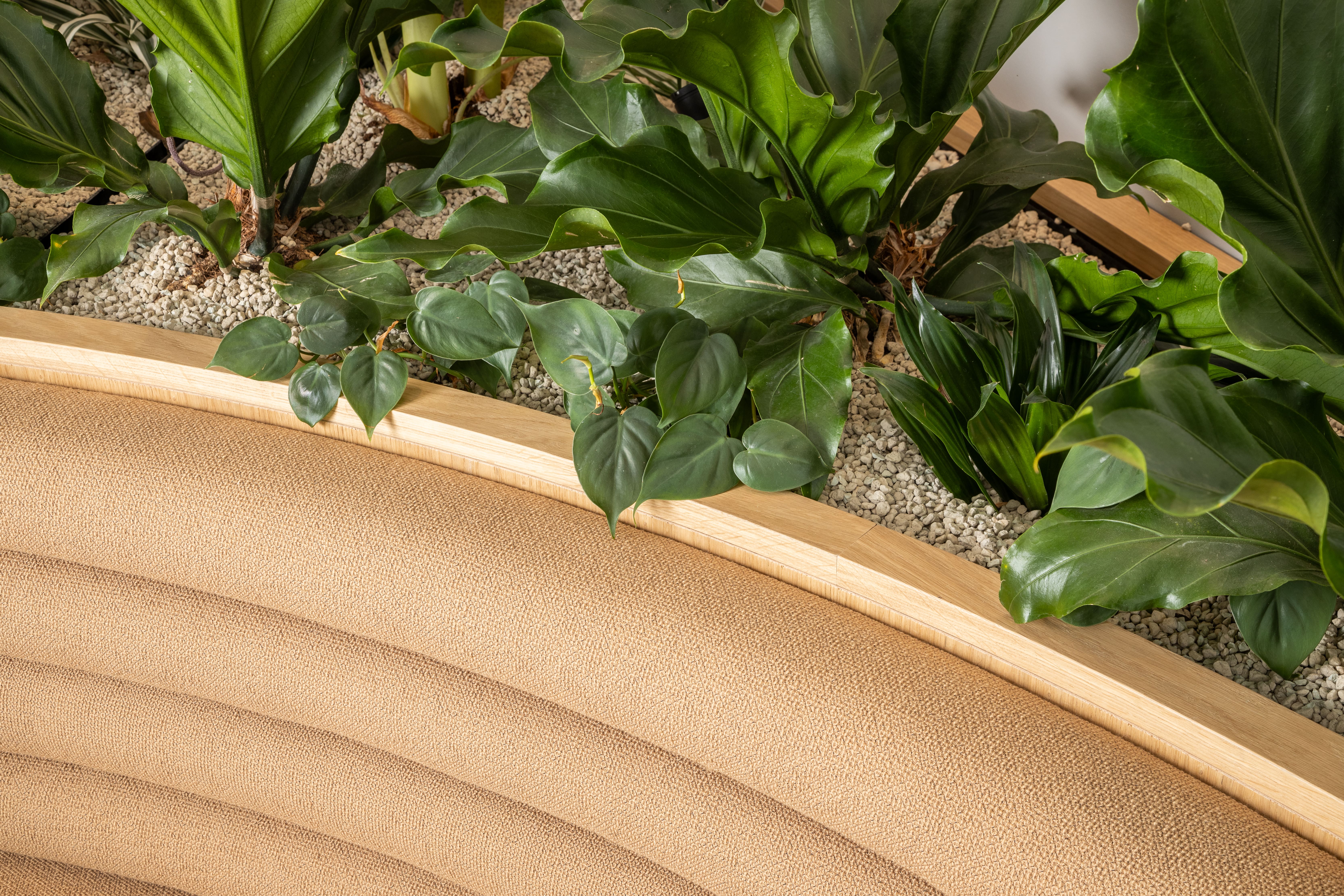
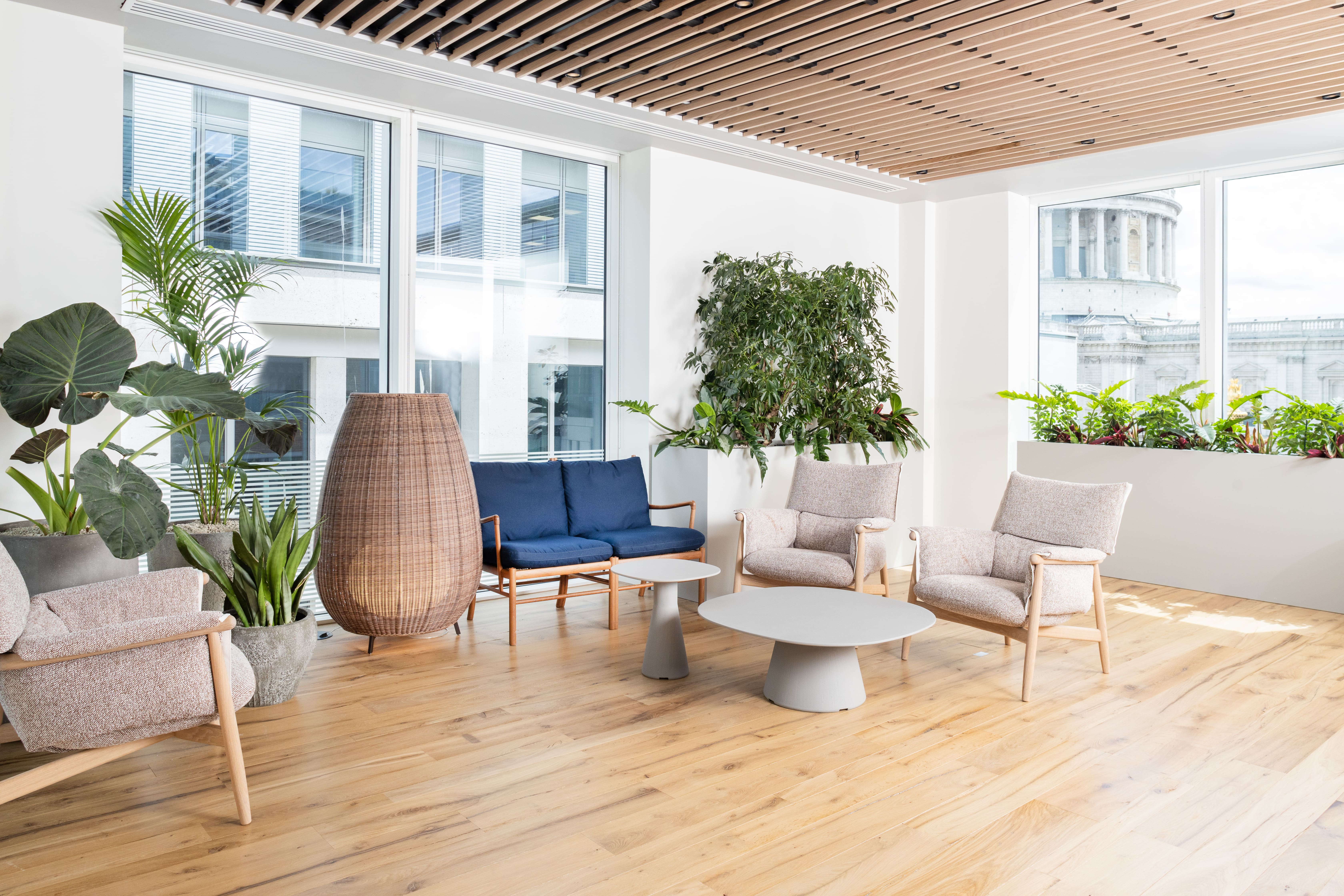
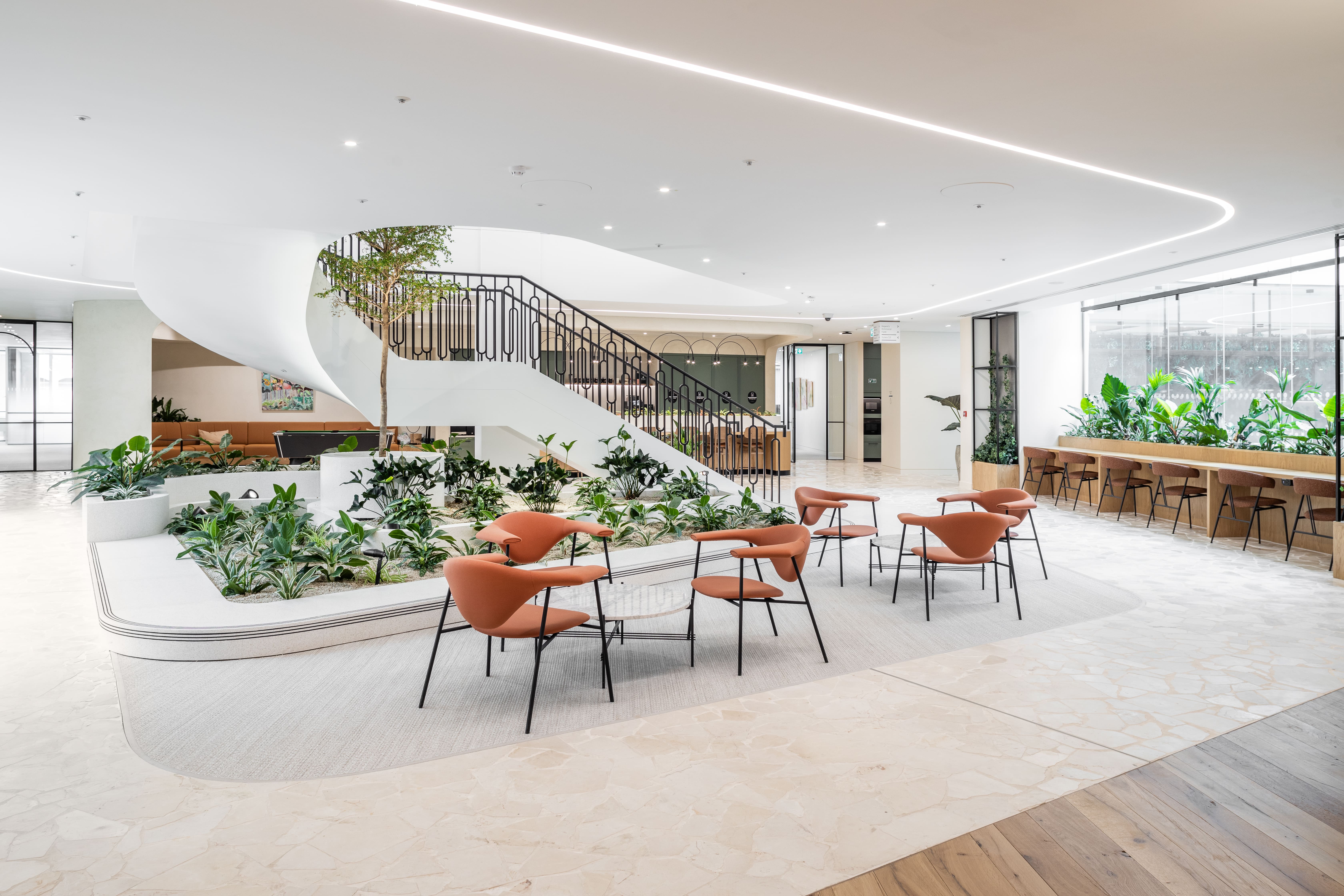
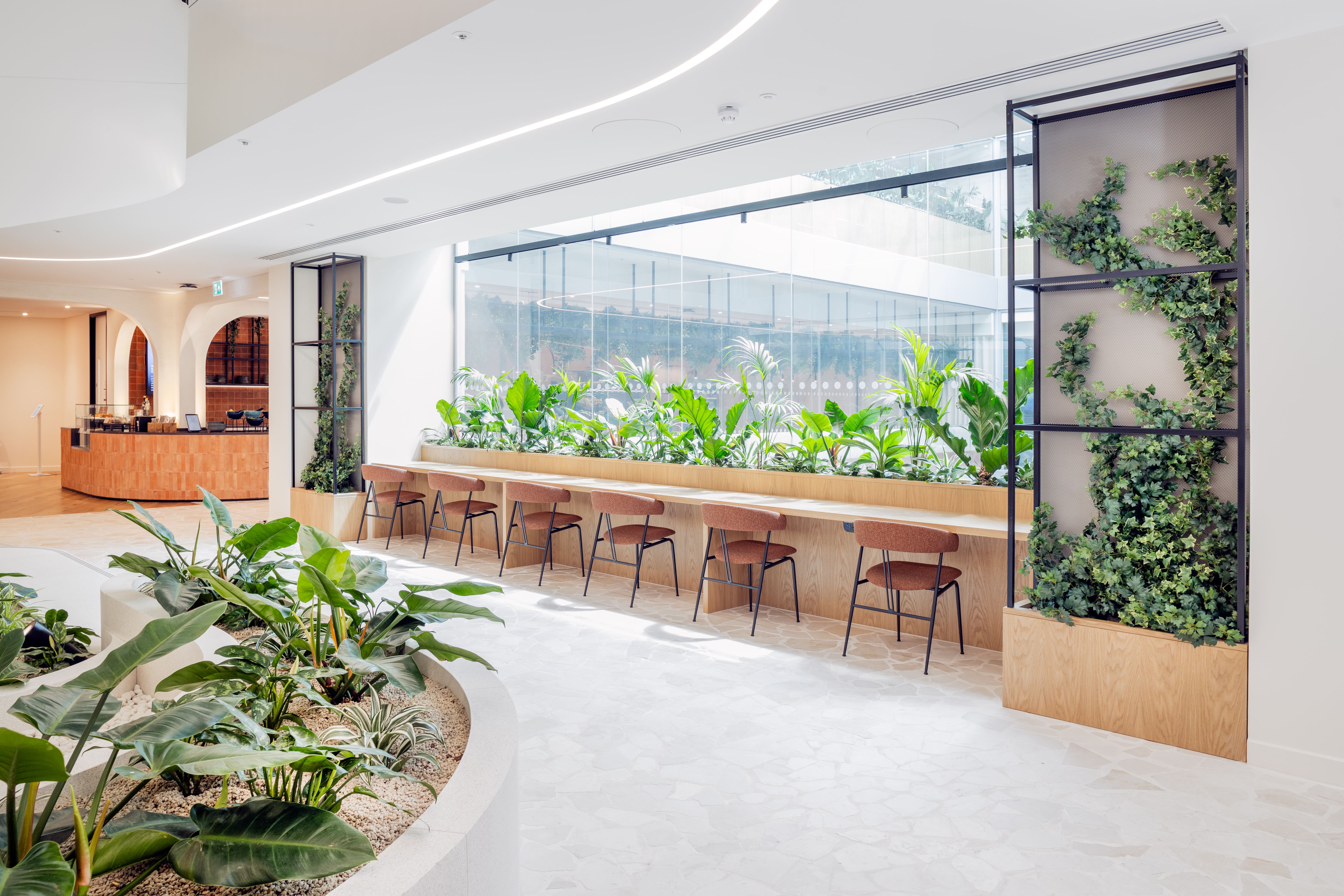
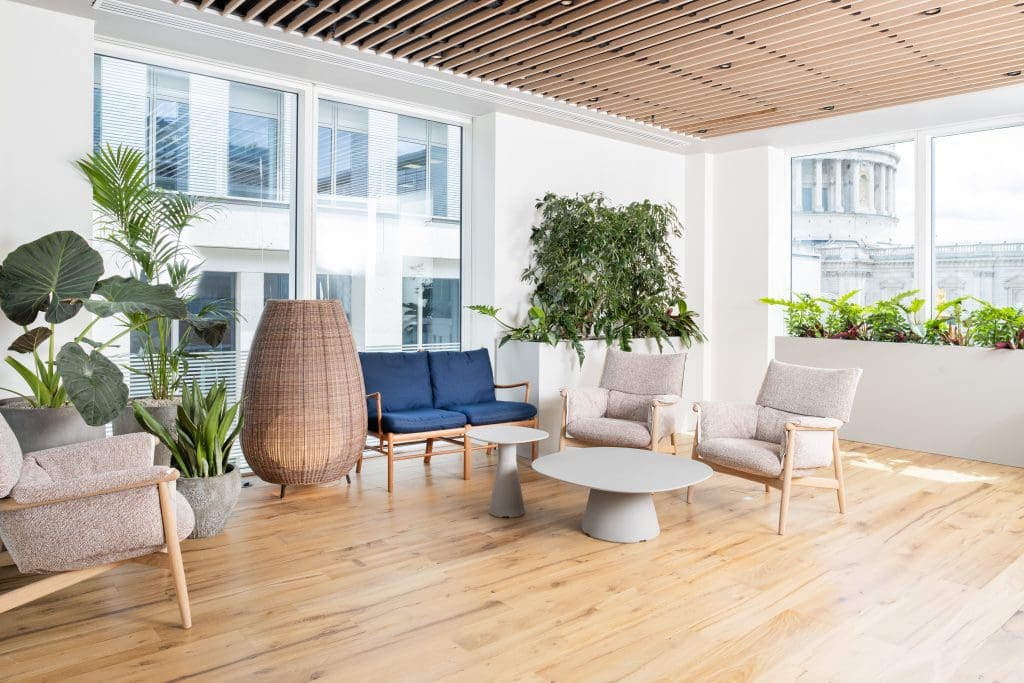
We took inspiration from a typical ‘West Coast garden’, combining smaller shrub-like species with larger, leafy plants to capture the relaxed, natural diversity of the region. Ferns and Philodendrons added softness and depth, while species like Alocasia and Bucida Buceras brought structure and clarity.
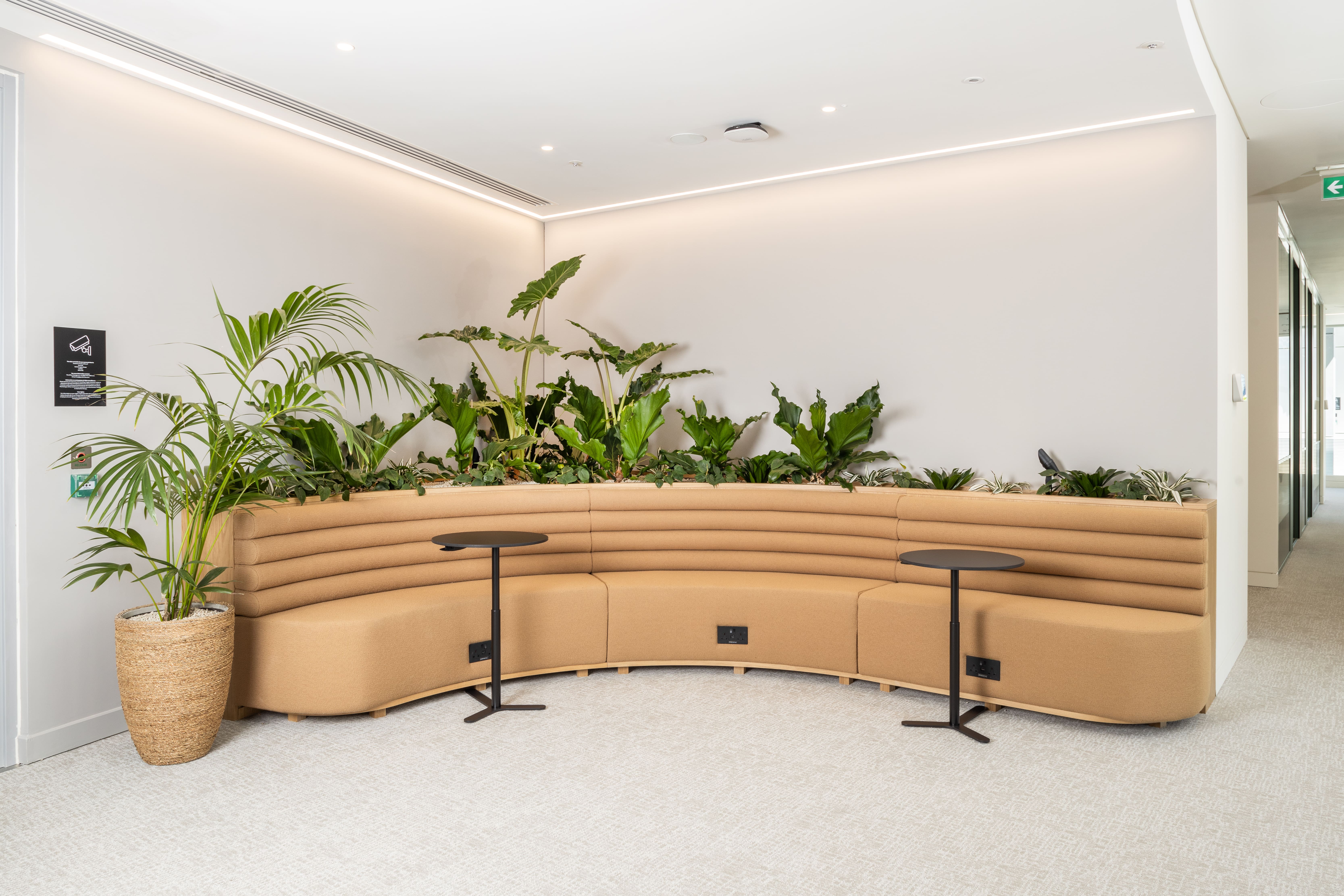
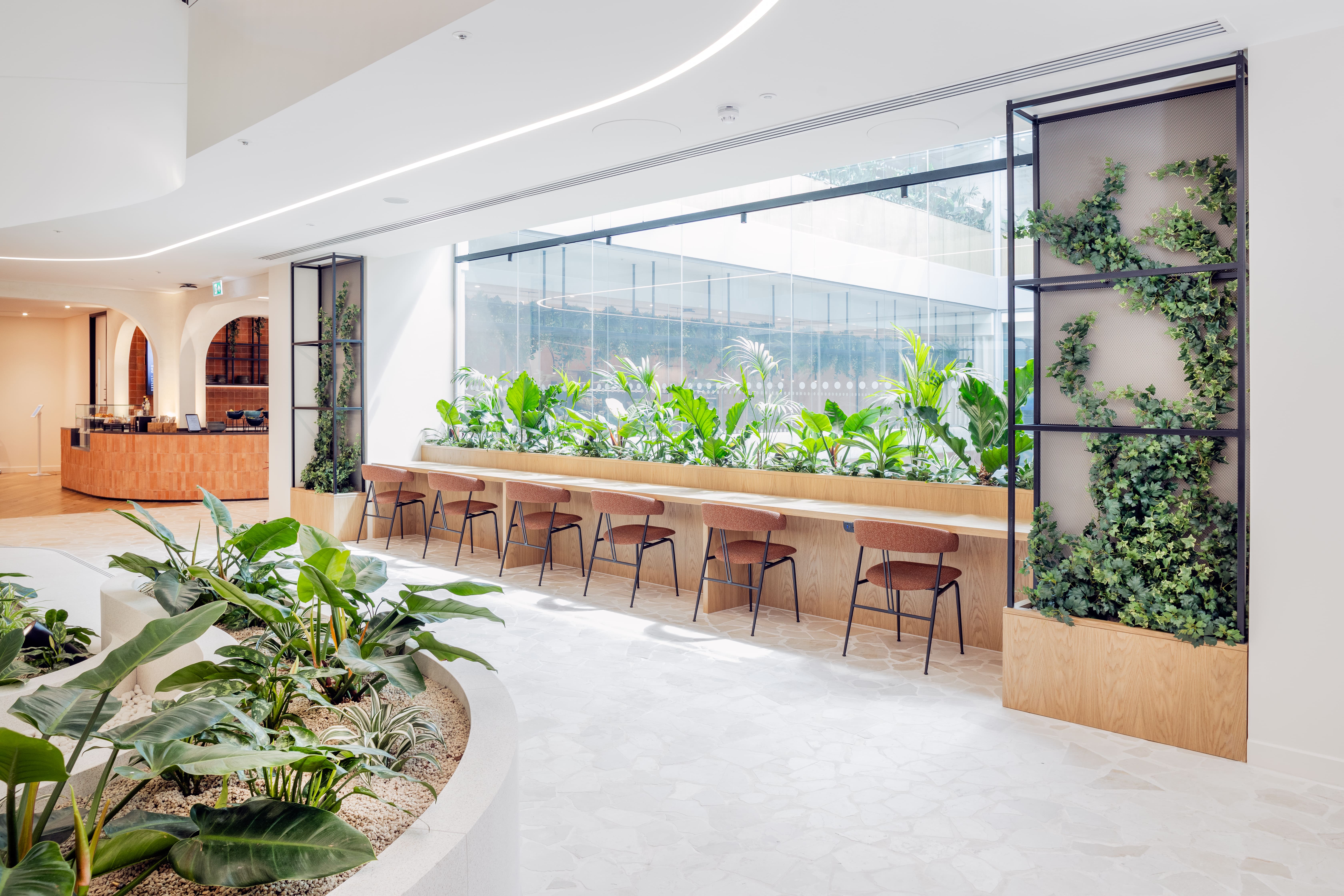
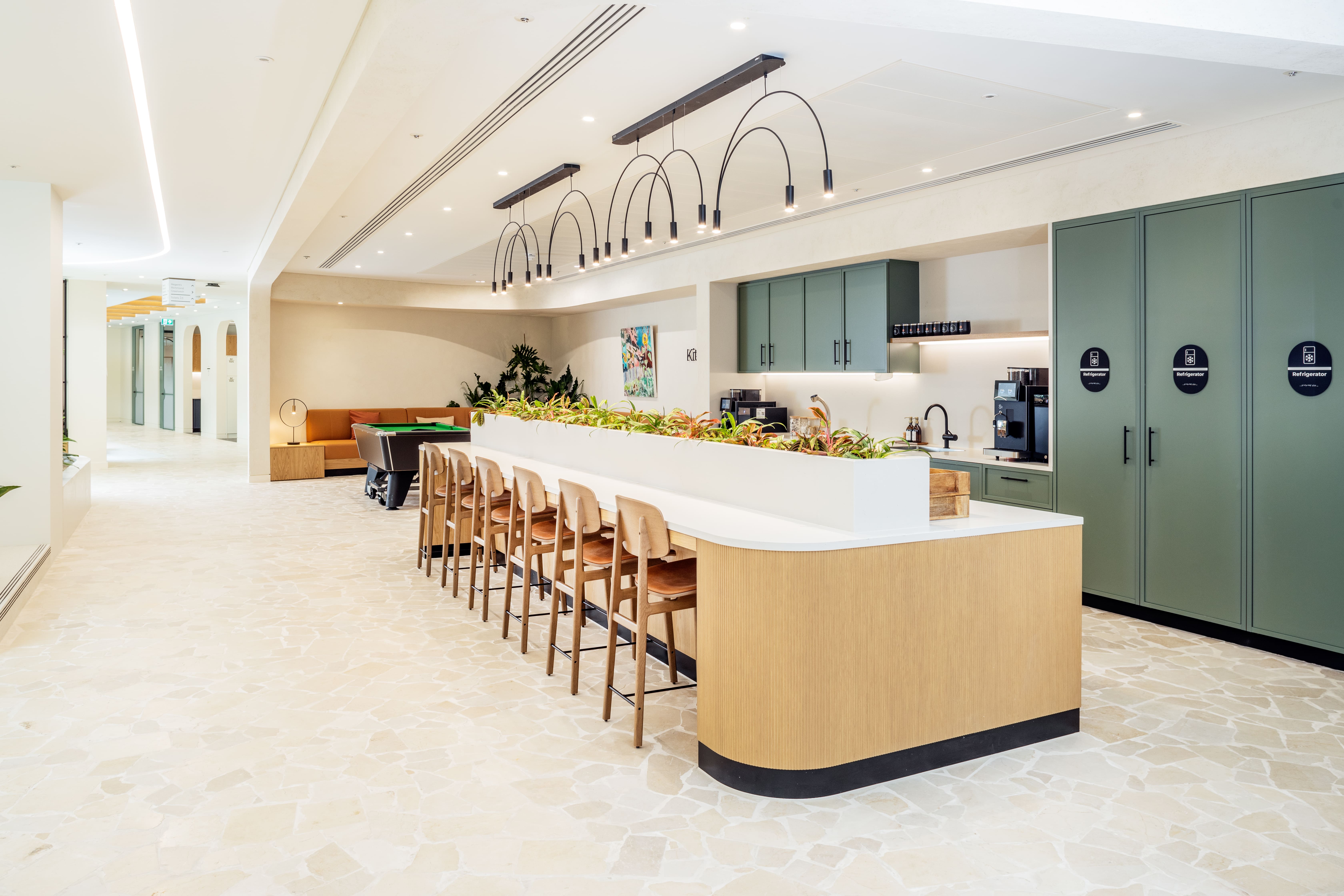
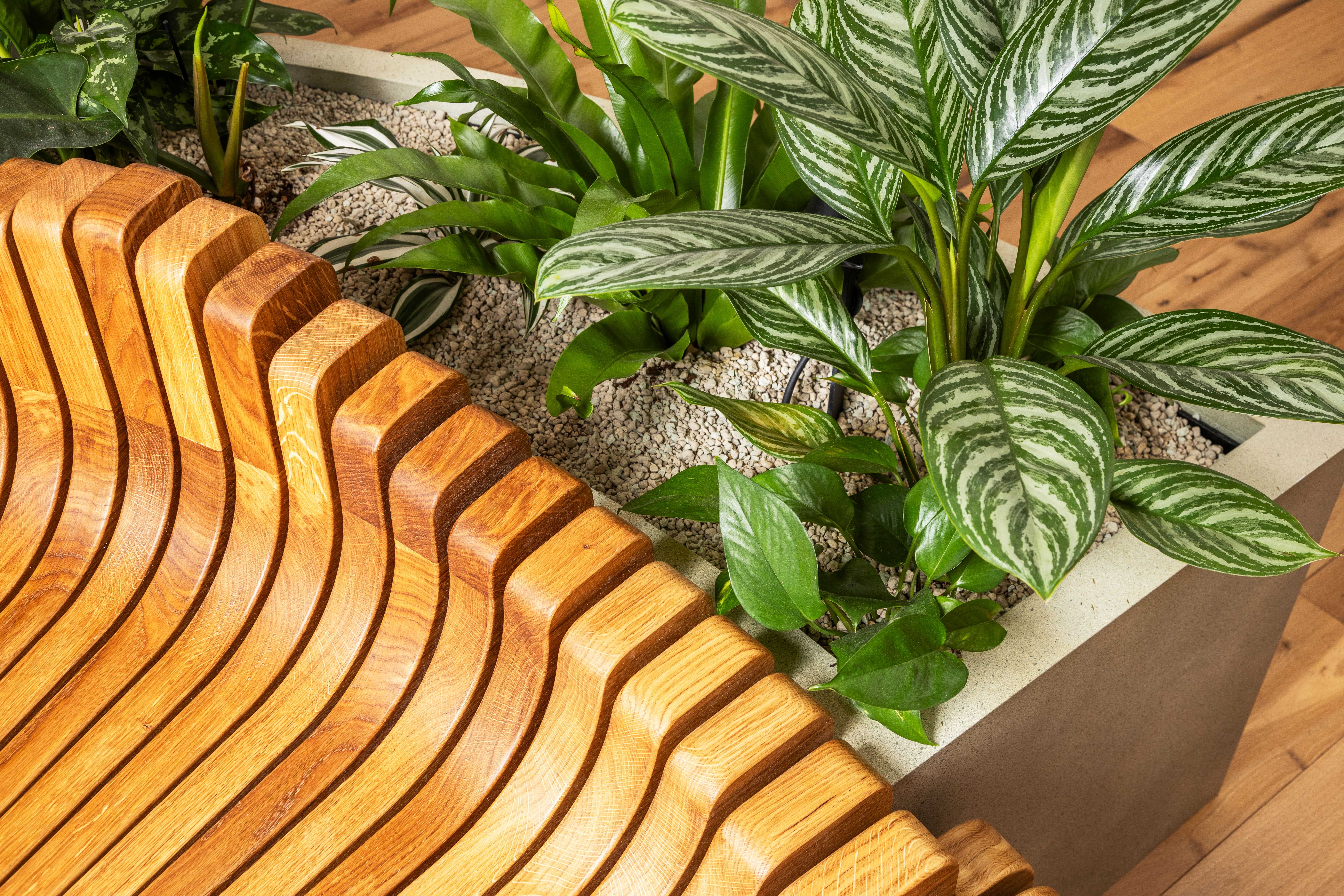
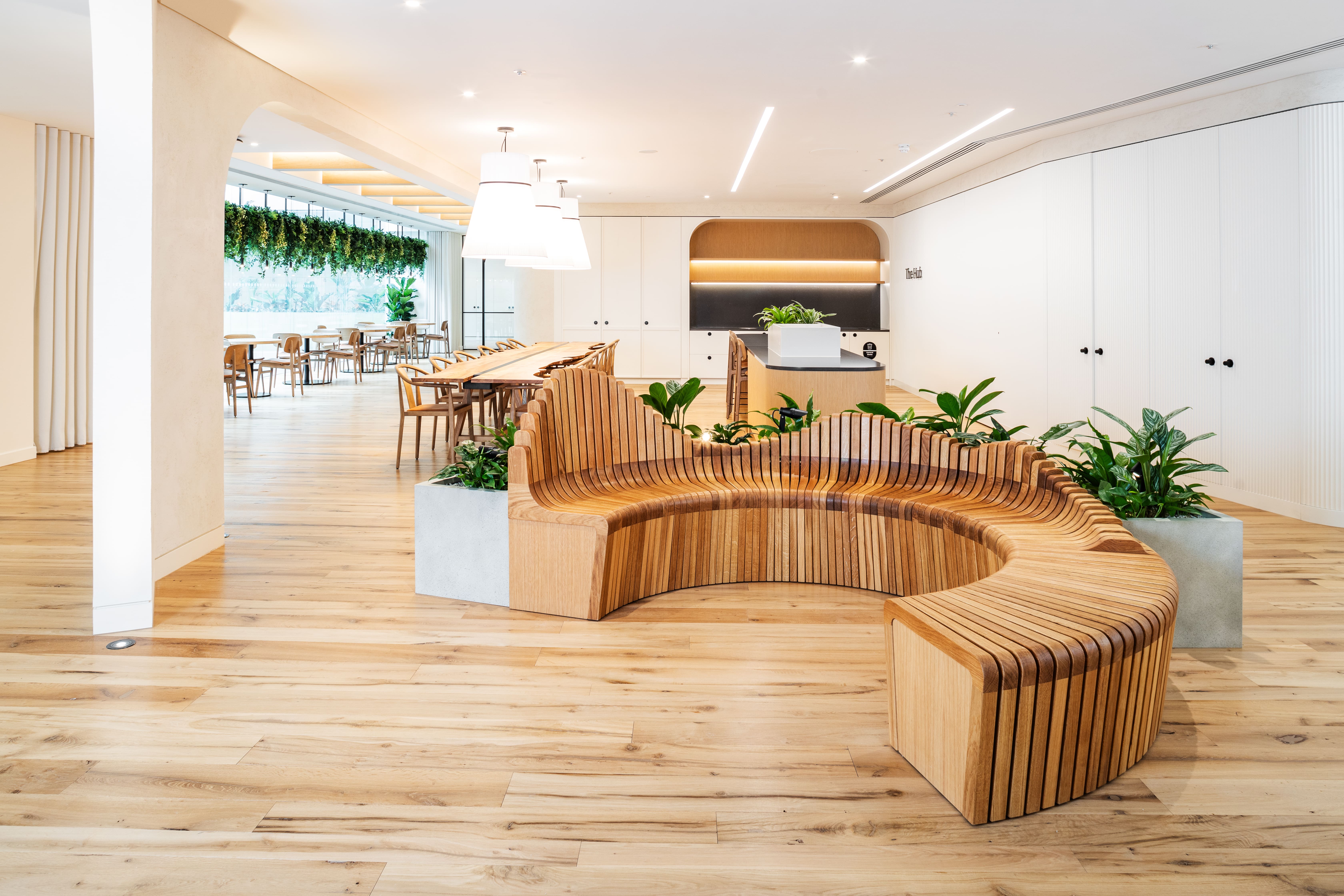
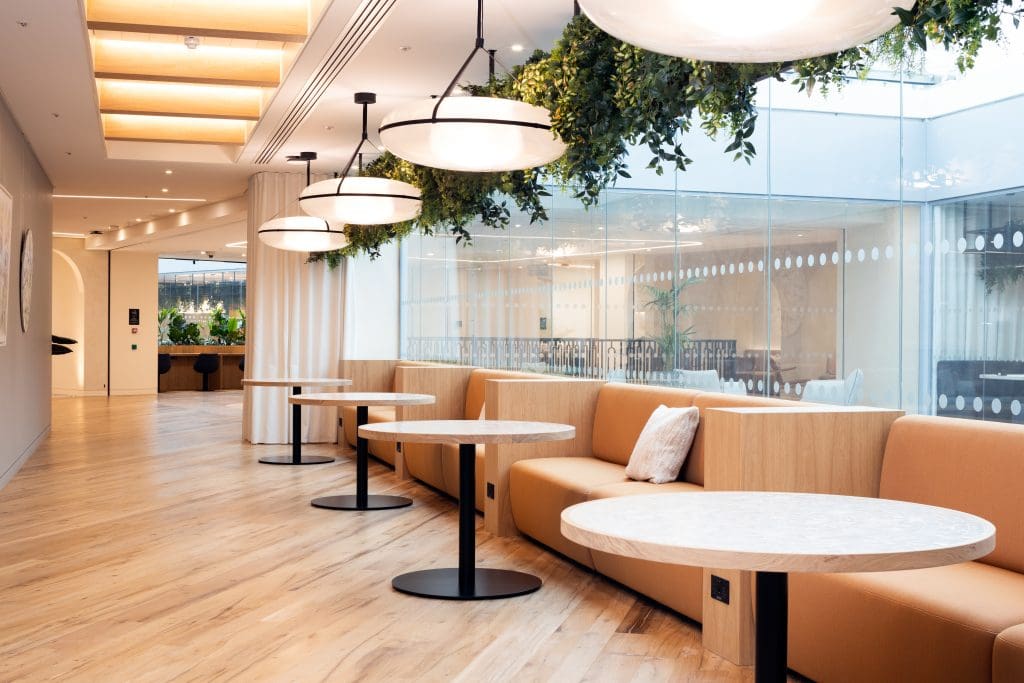
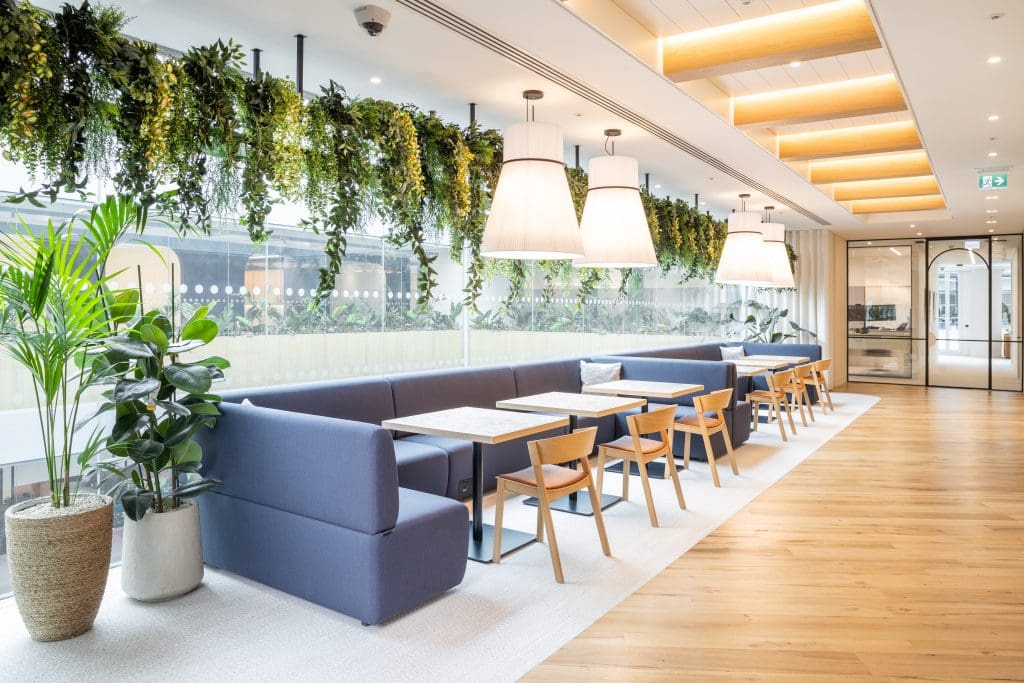
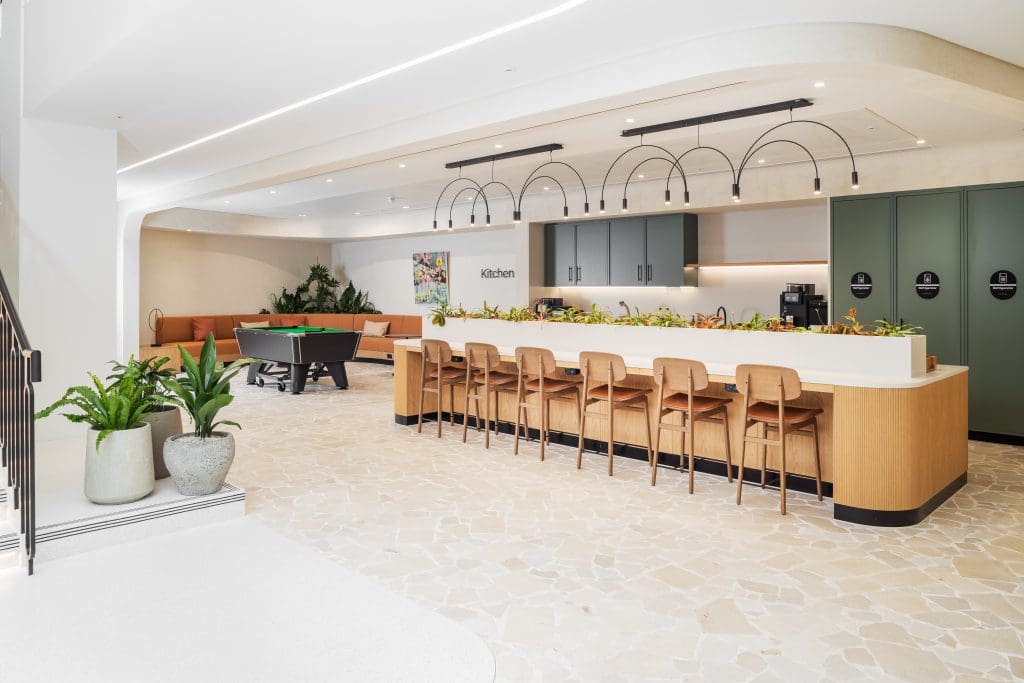
Our Ecoponic substrate played a key role beneath the surface, supporting plant health while aligning with the natural theme. Joinery planting was layered and natural, designed to mirror overlapping forms of growth rather than overly tidy layouts. Colour highlights were subtle and intentional, acting as accents rather than decoration.
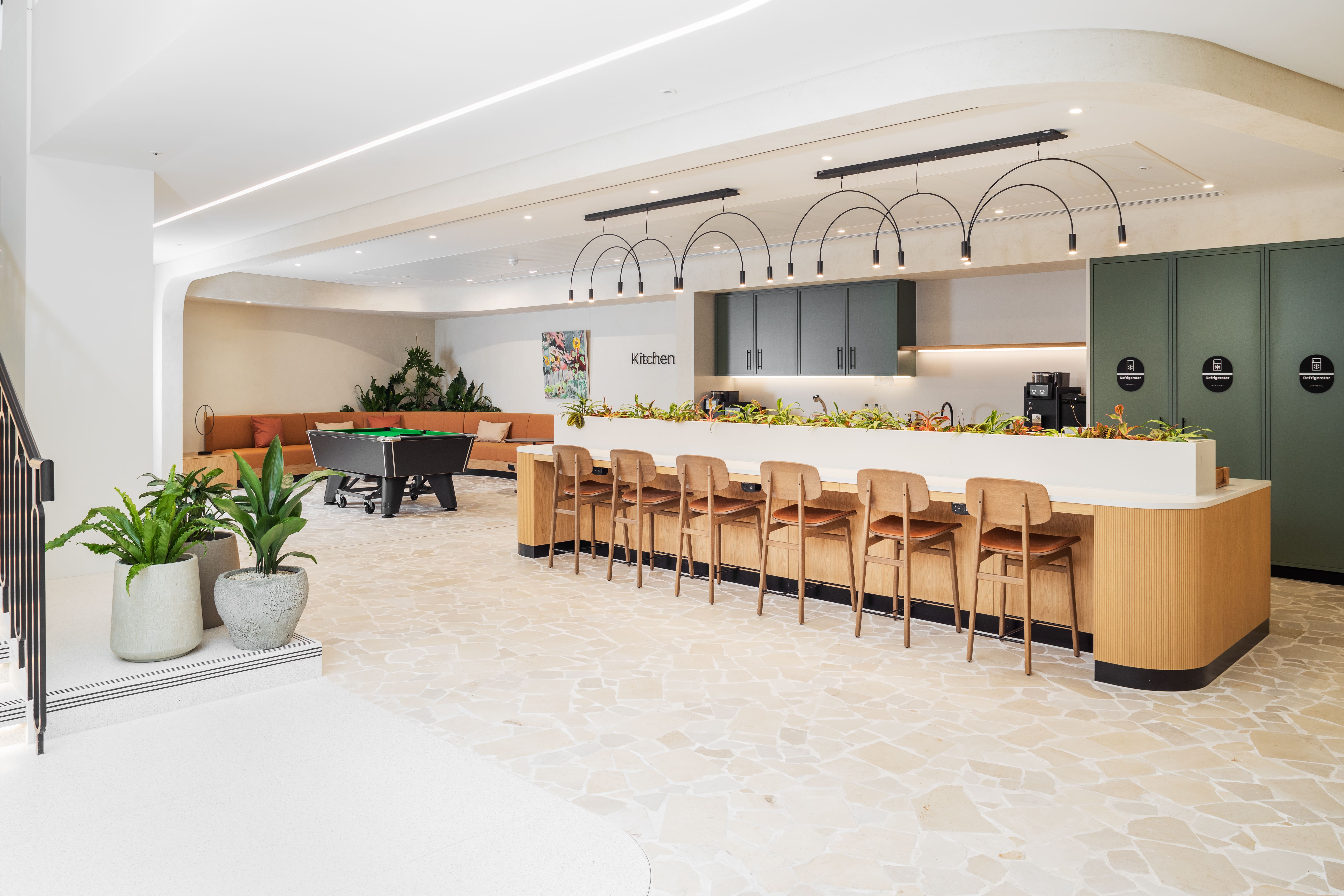
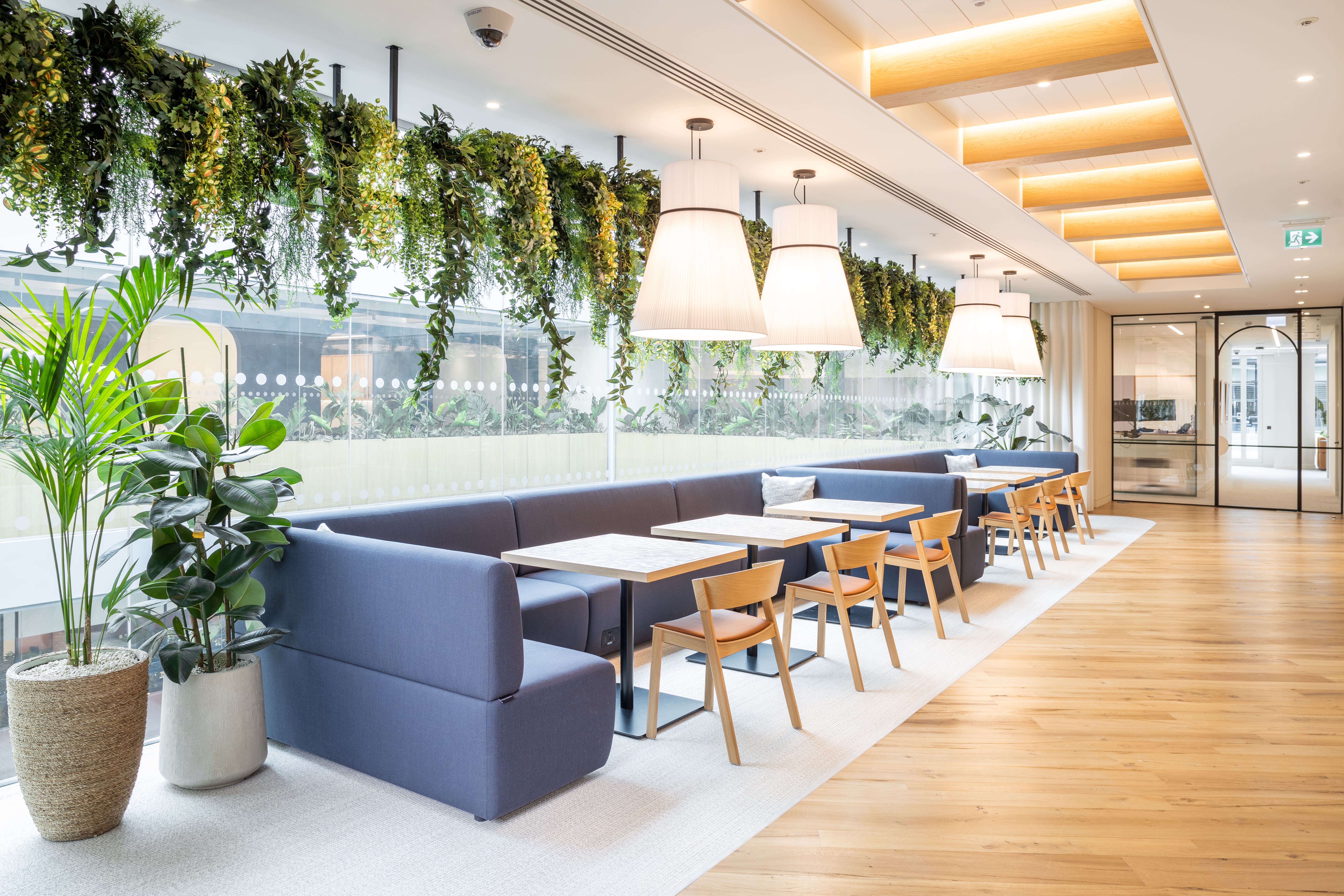
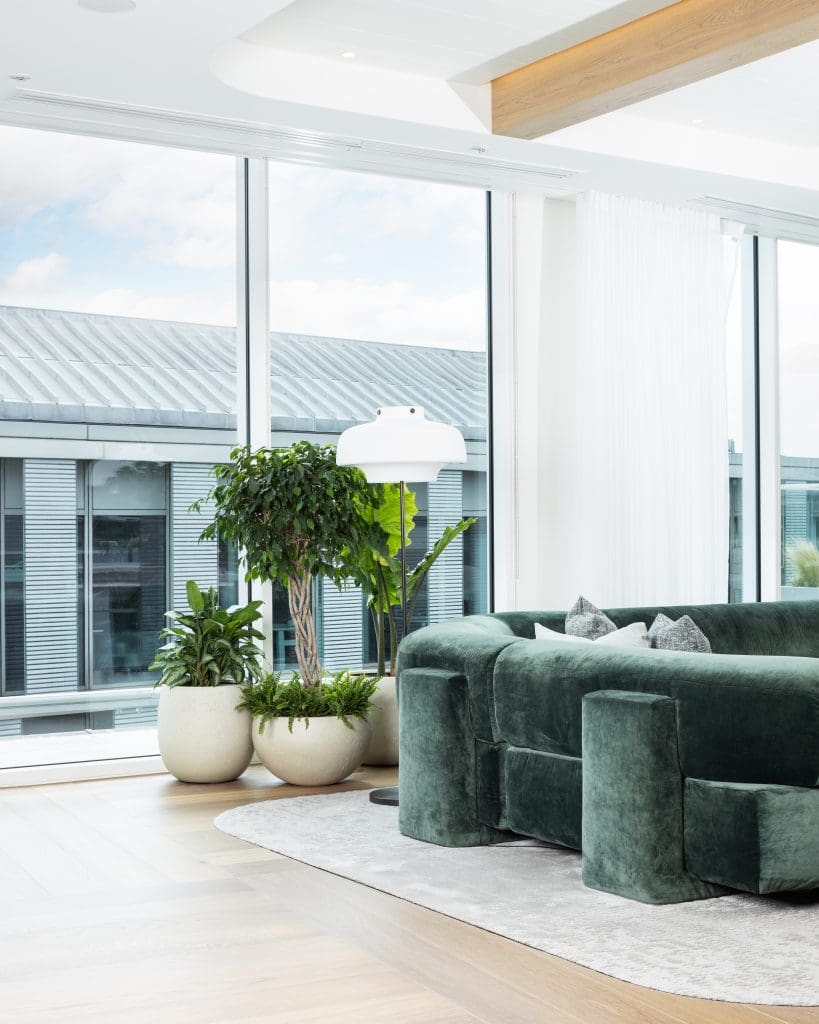
Density was planned carefully. In some areas, volume softened open zones. In others, trailing plants framed views without interrupting flow. The result was planting that didn’t just complement the scheme; it made the scheme believable.
“We weren’t just matching colours. We were building atmosphere.”
distinct, by design.
Signature Features
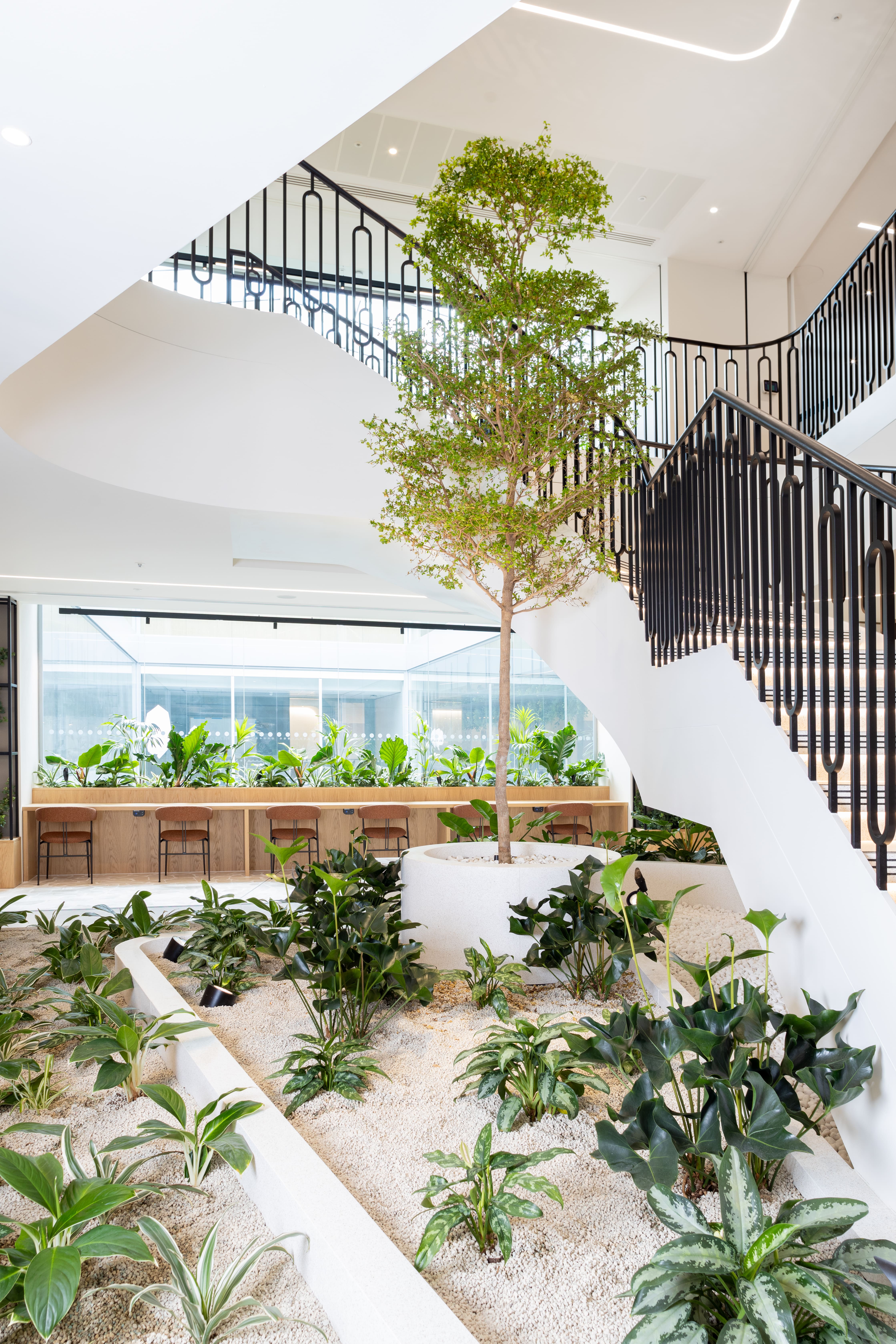
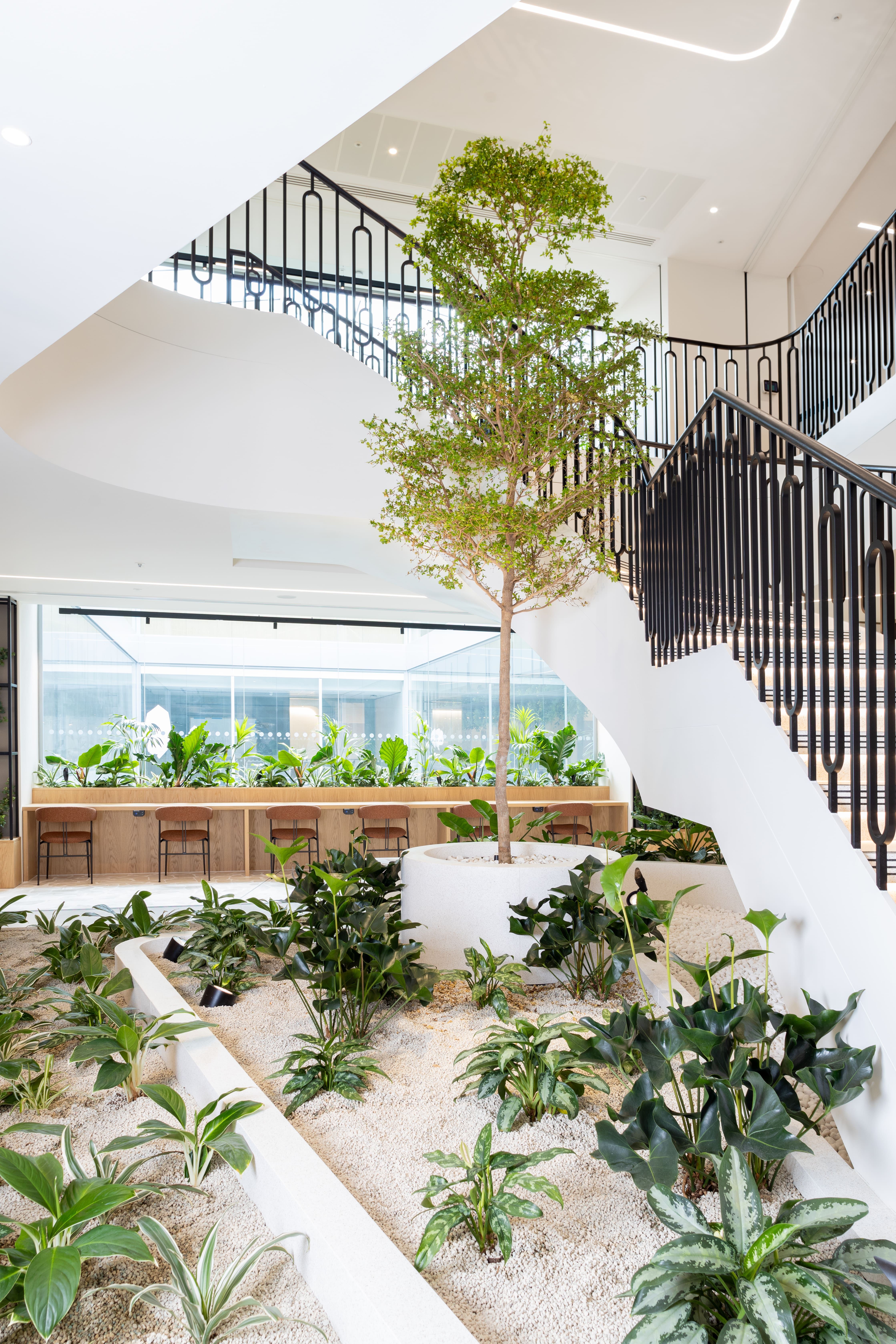
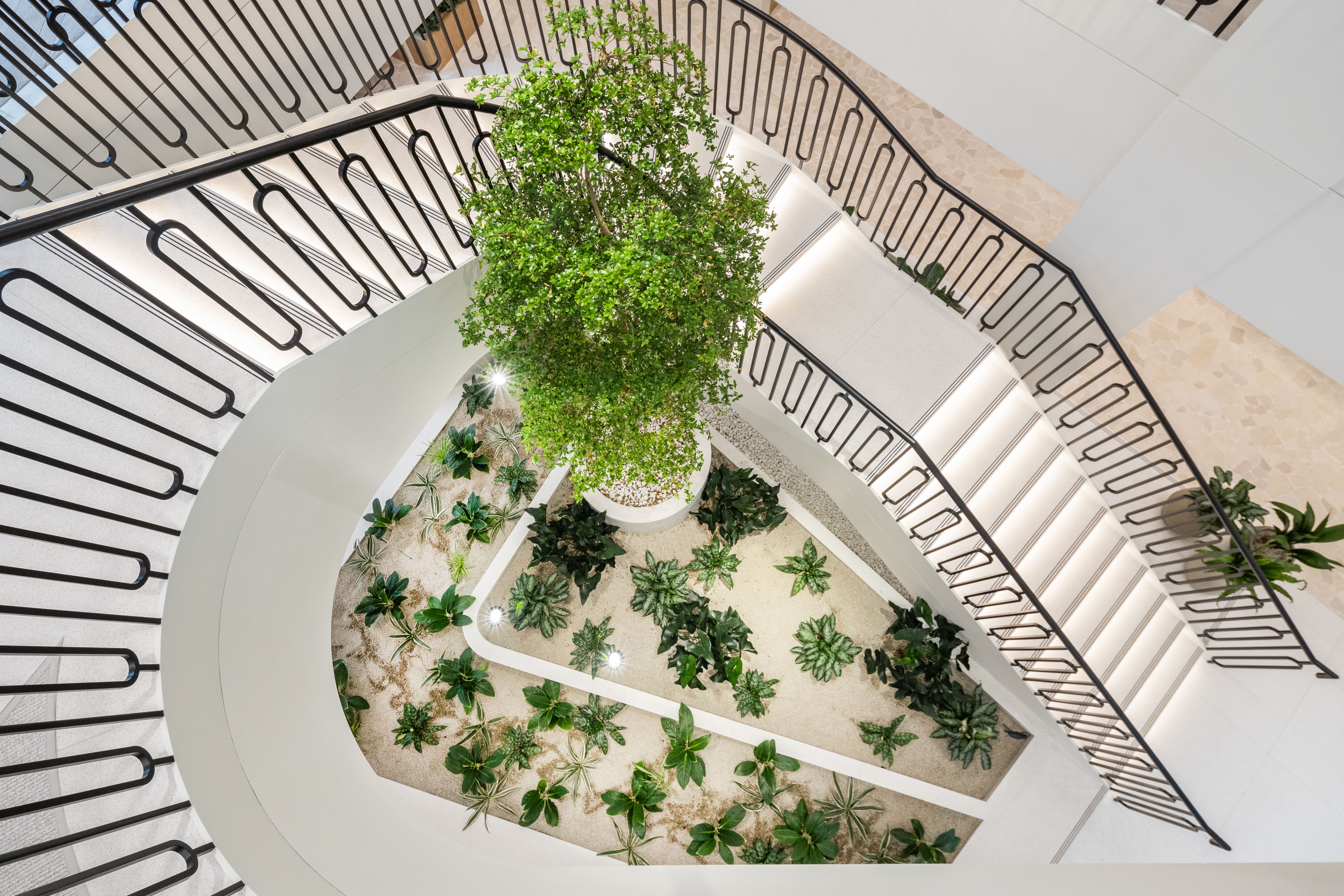
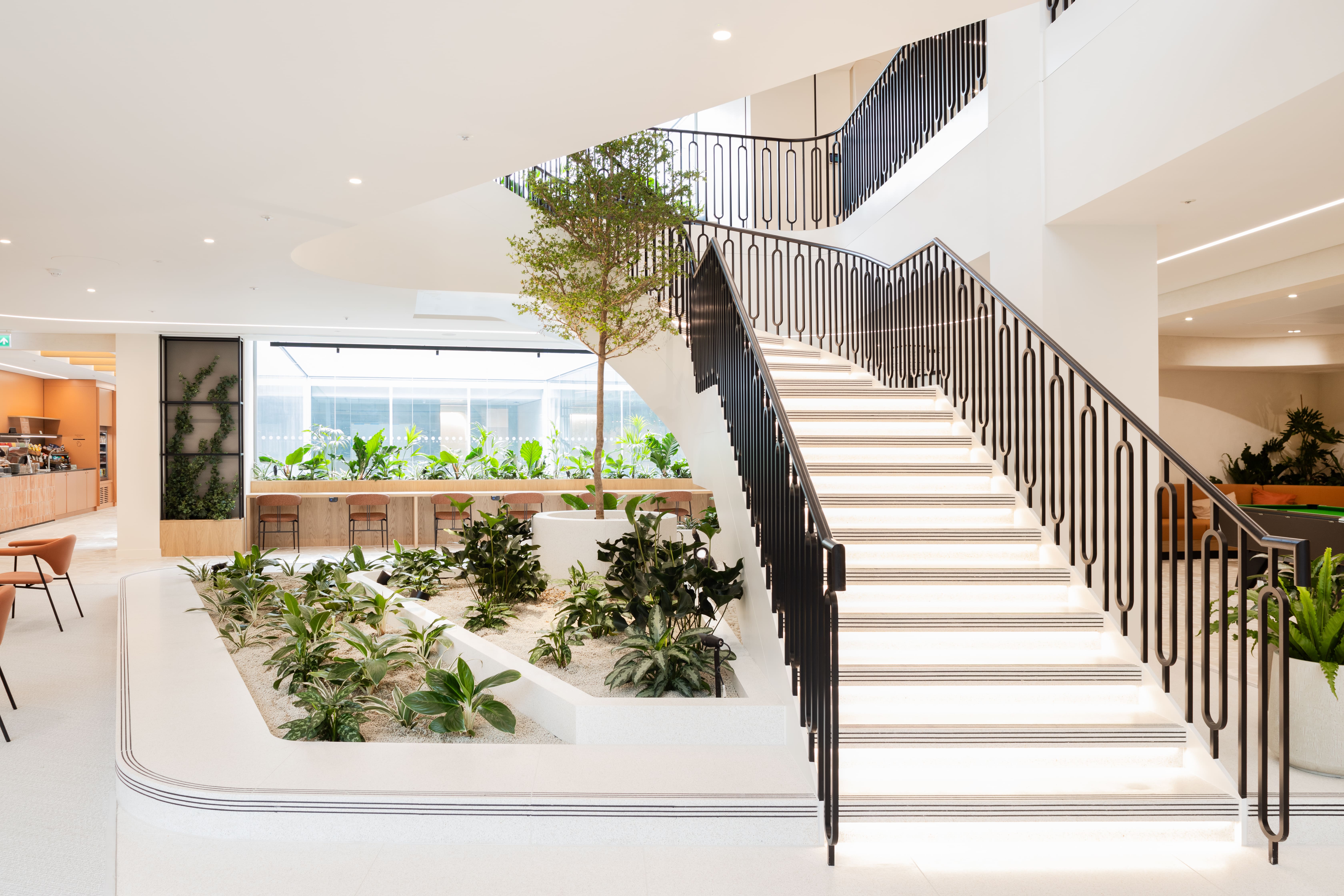
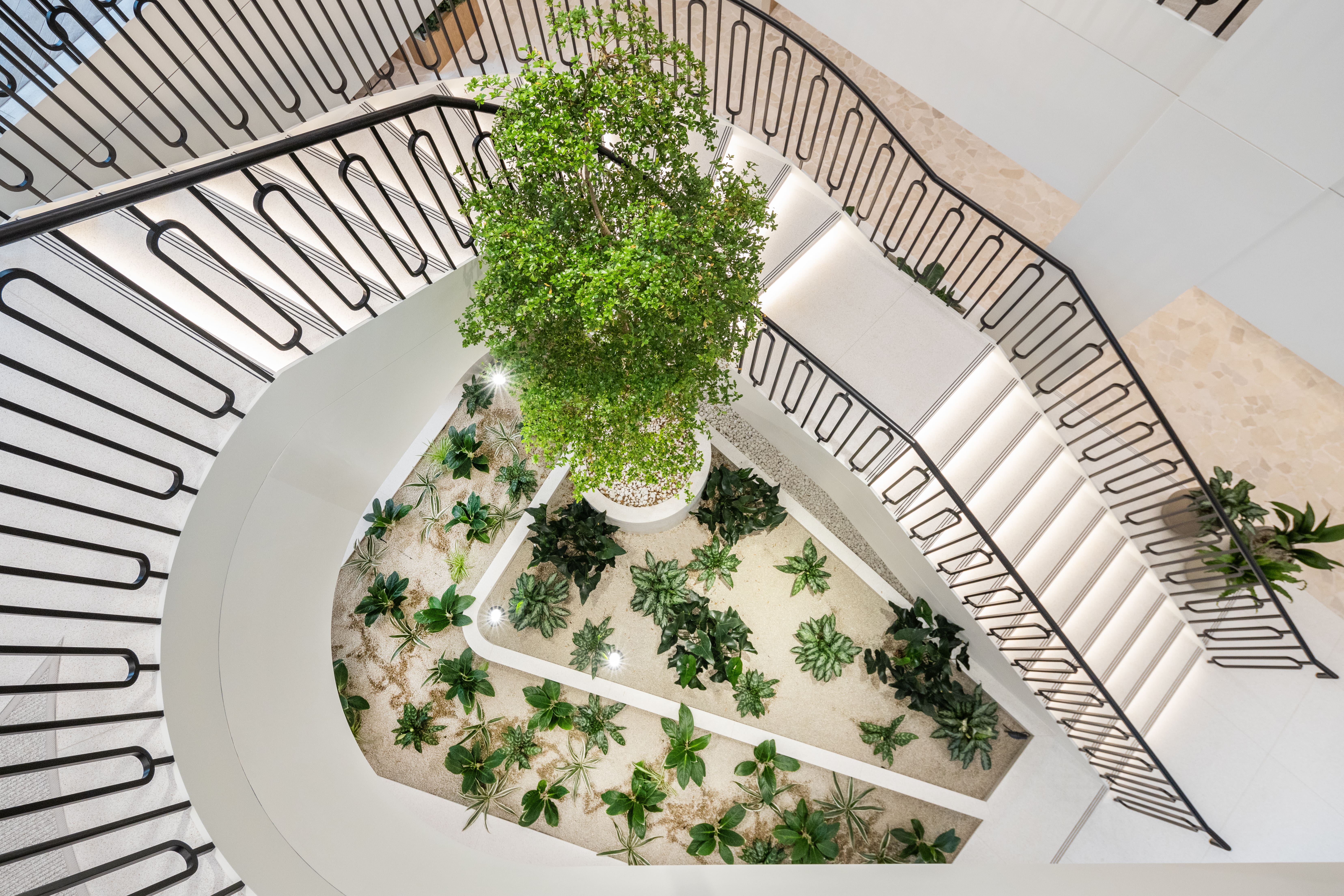
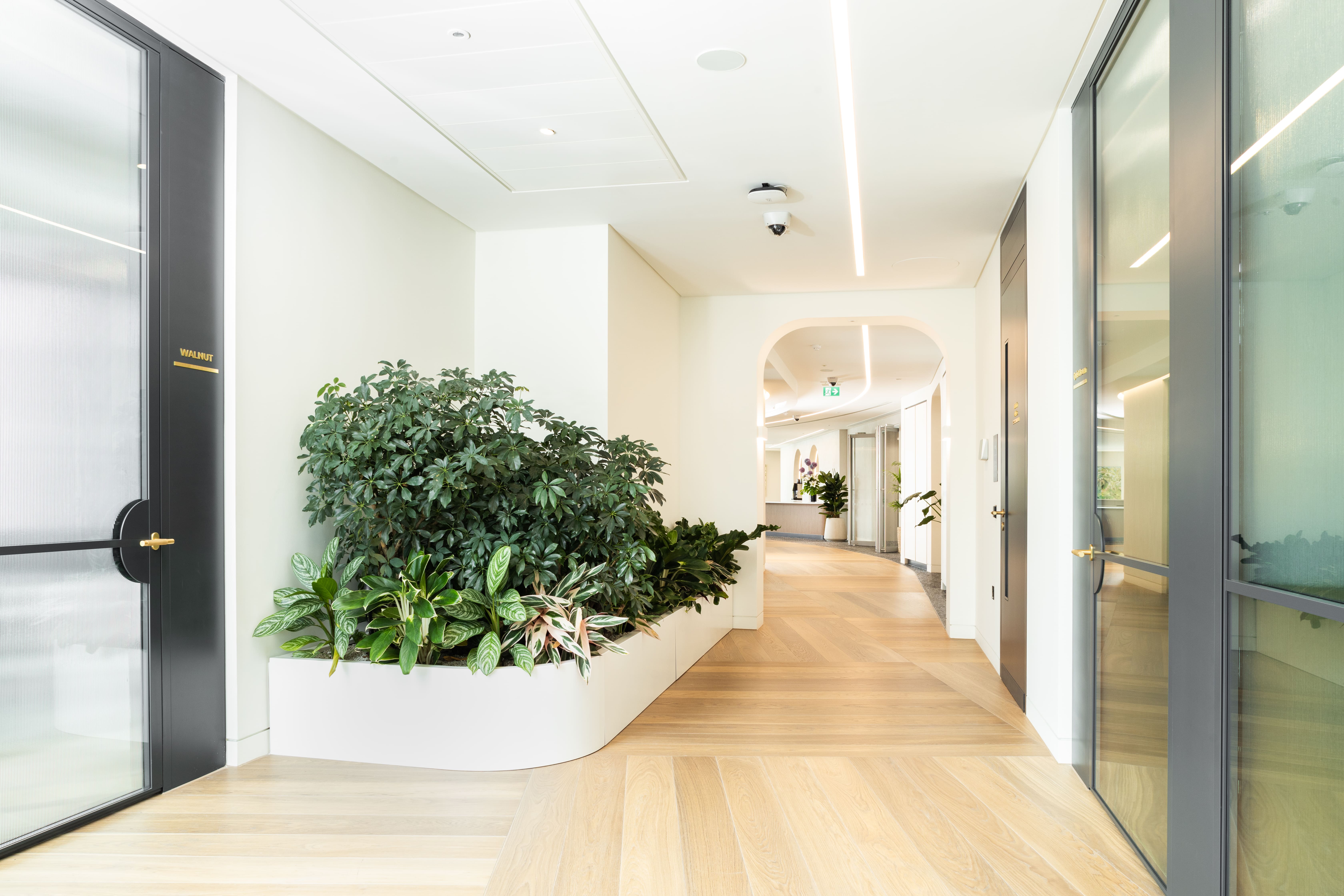
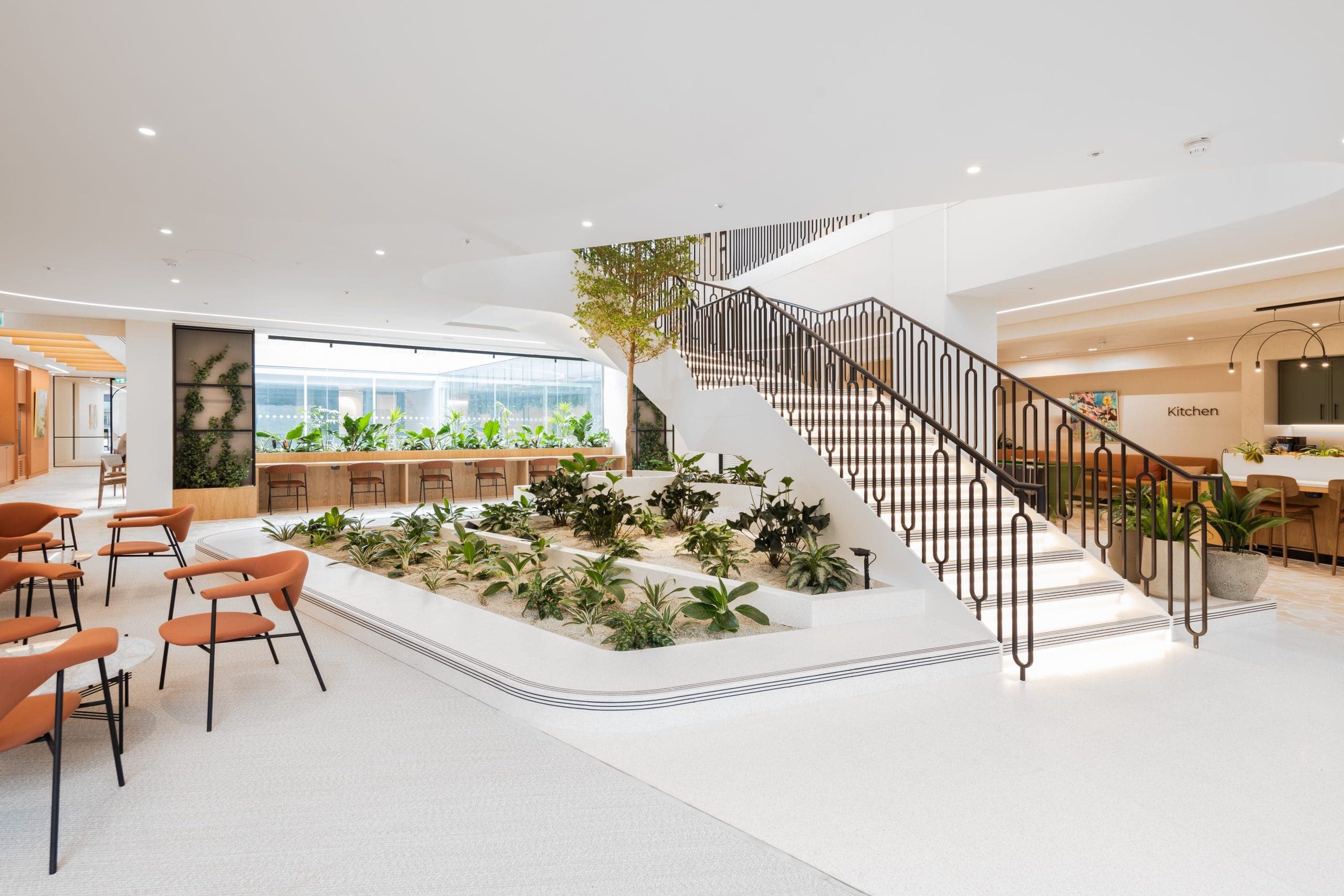
The Atrium Tree: A 4m Bucida Buceras anchors the central staircase, connecting two floors with a vertical line and echoing the soft arches found throughout the interior. This detail reflects the dome of nearby St Paul’s.
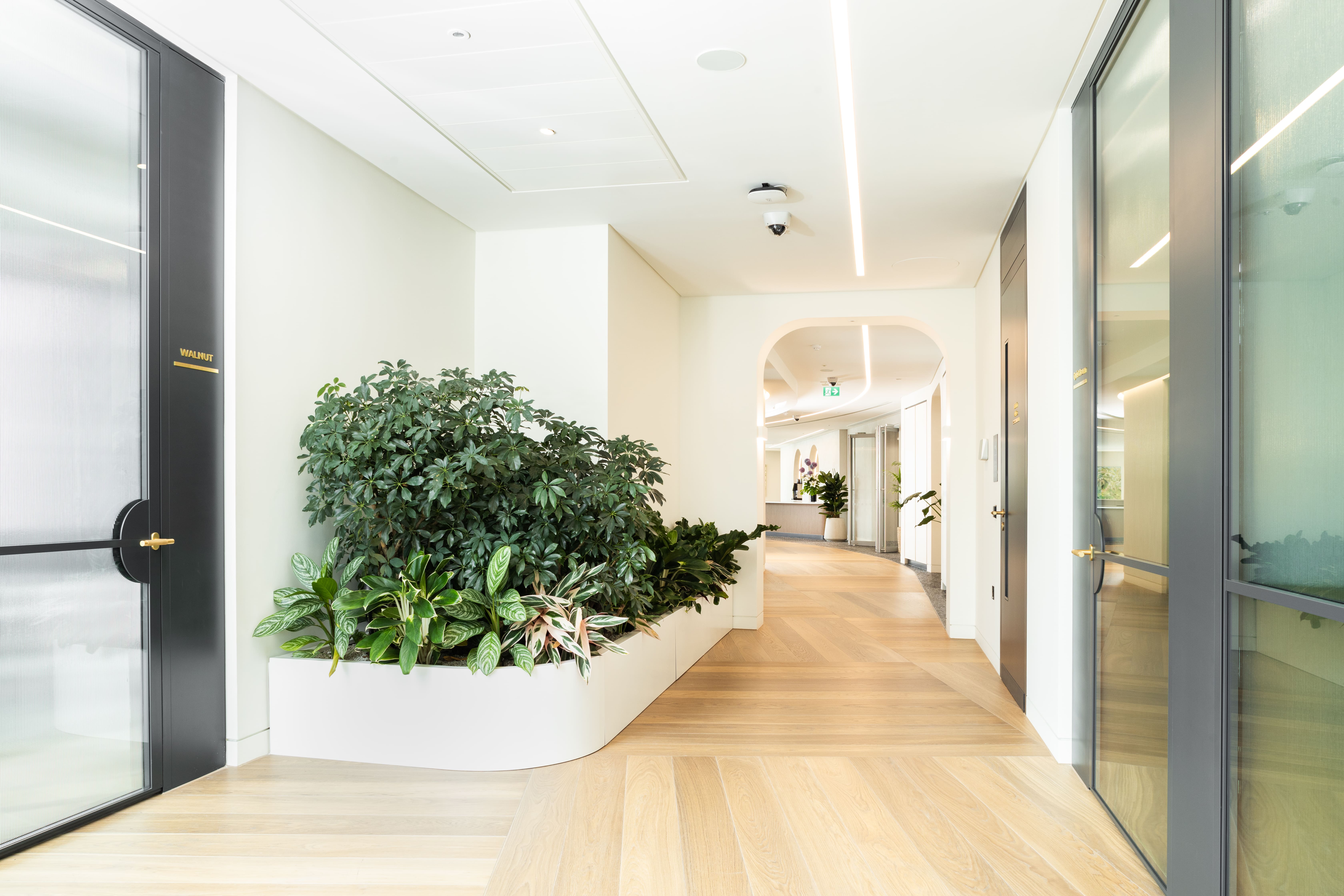
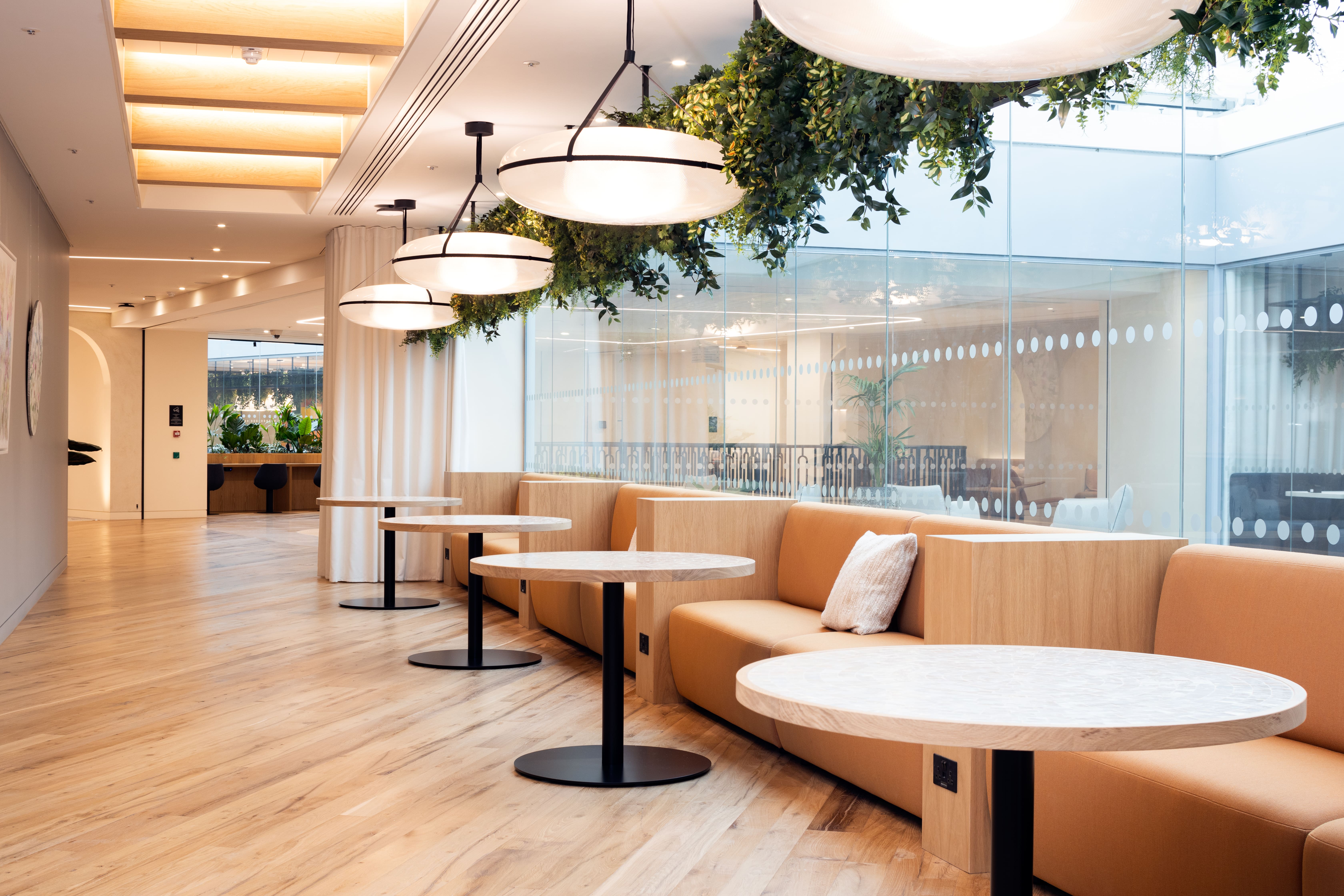
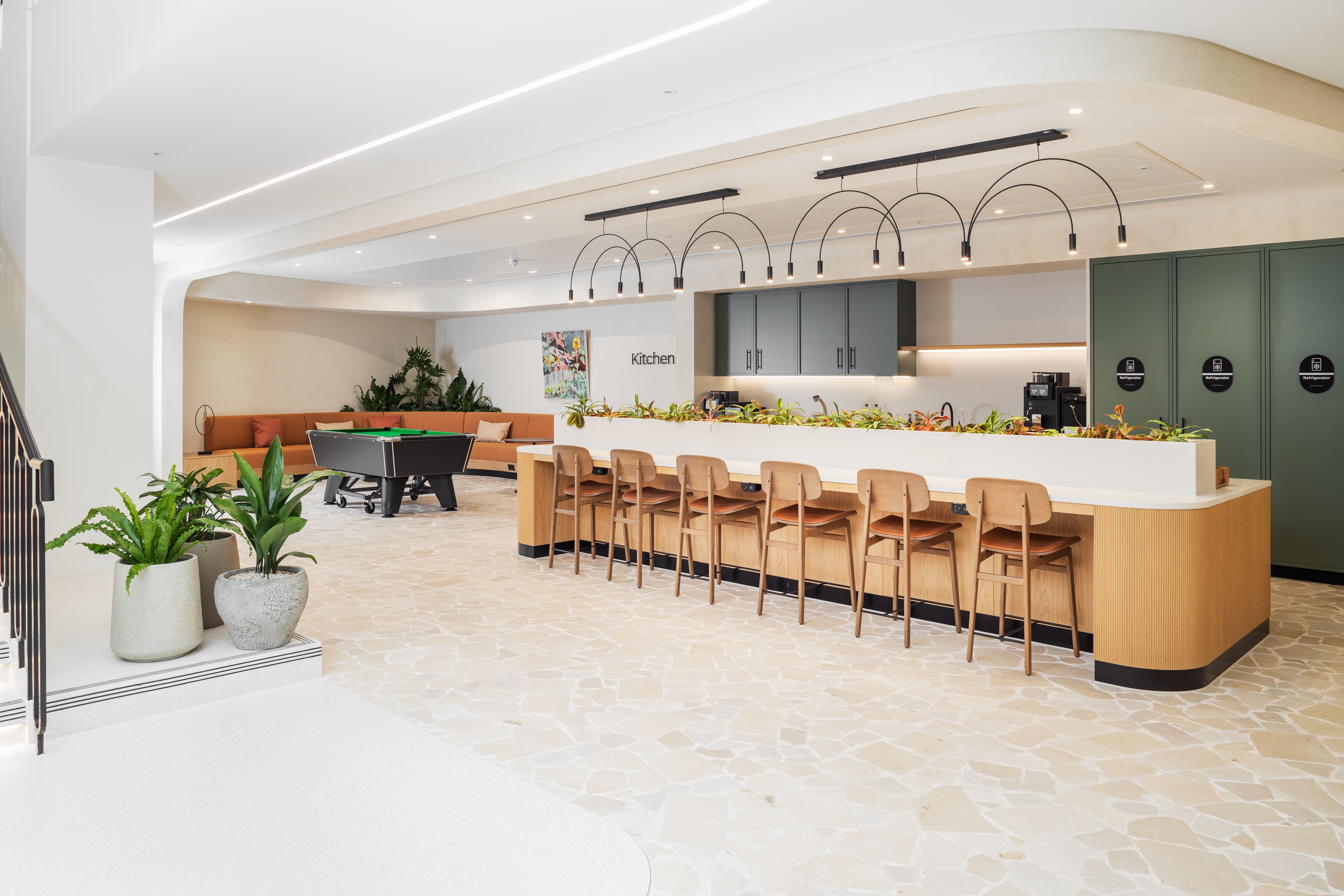
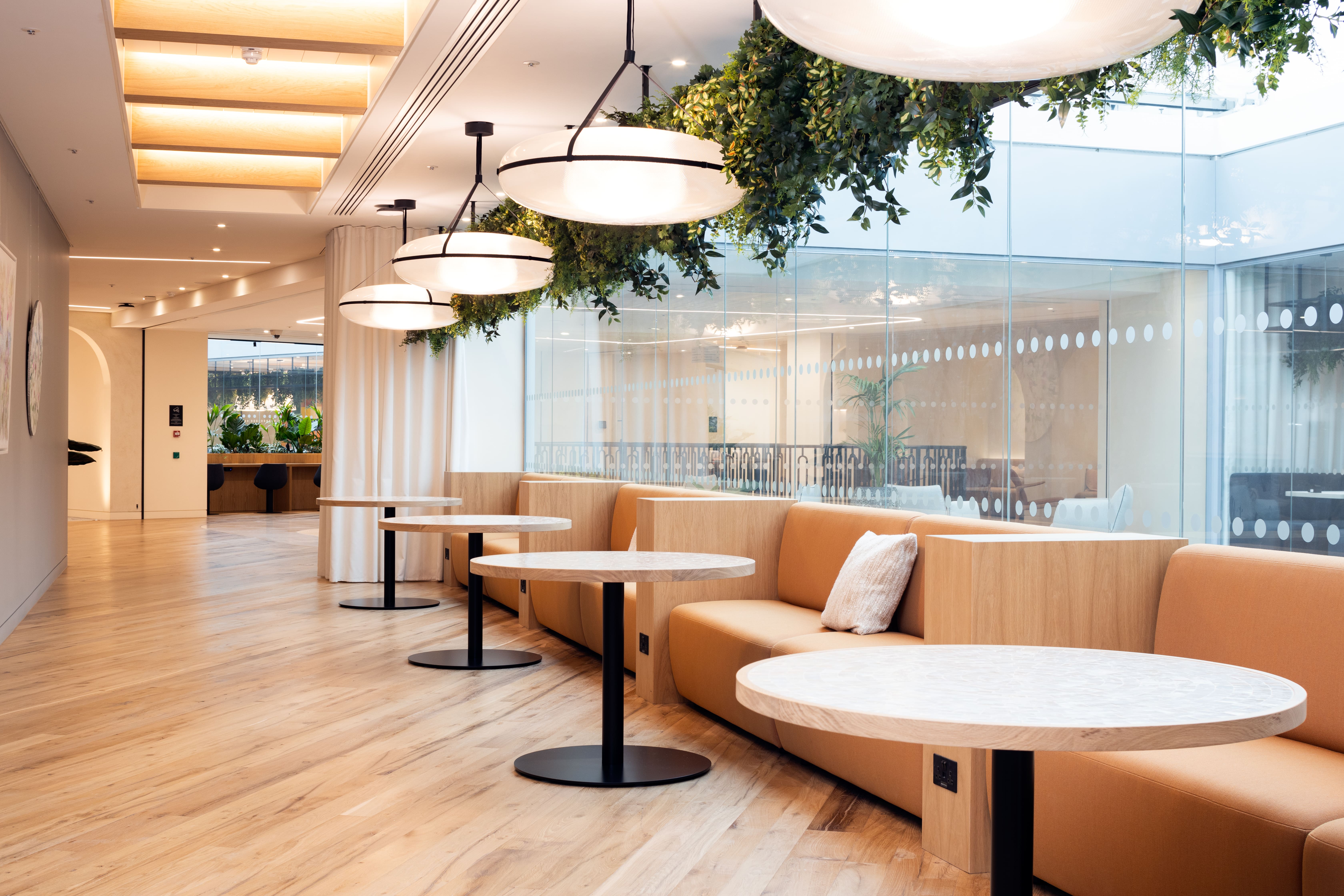
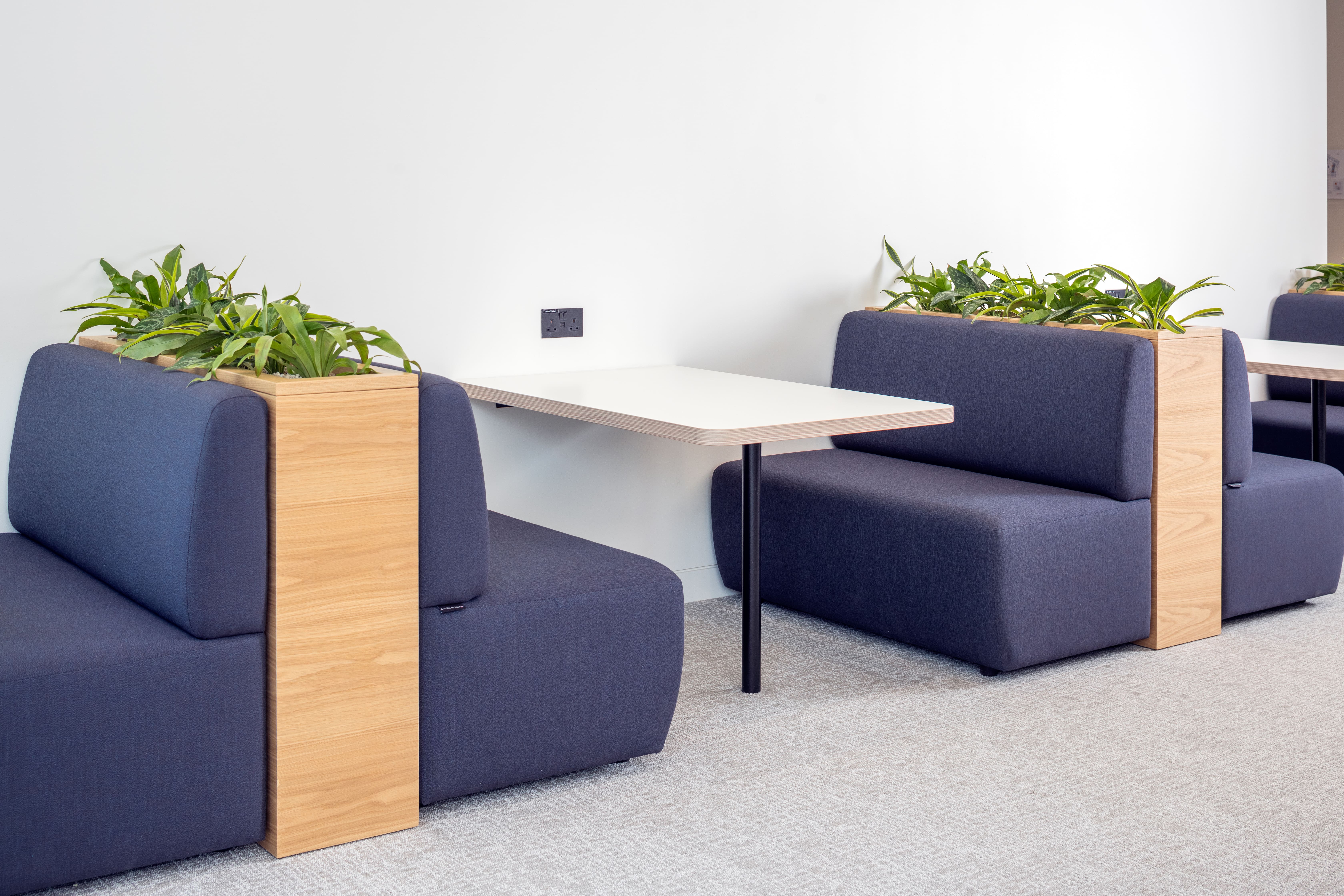
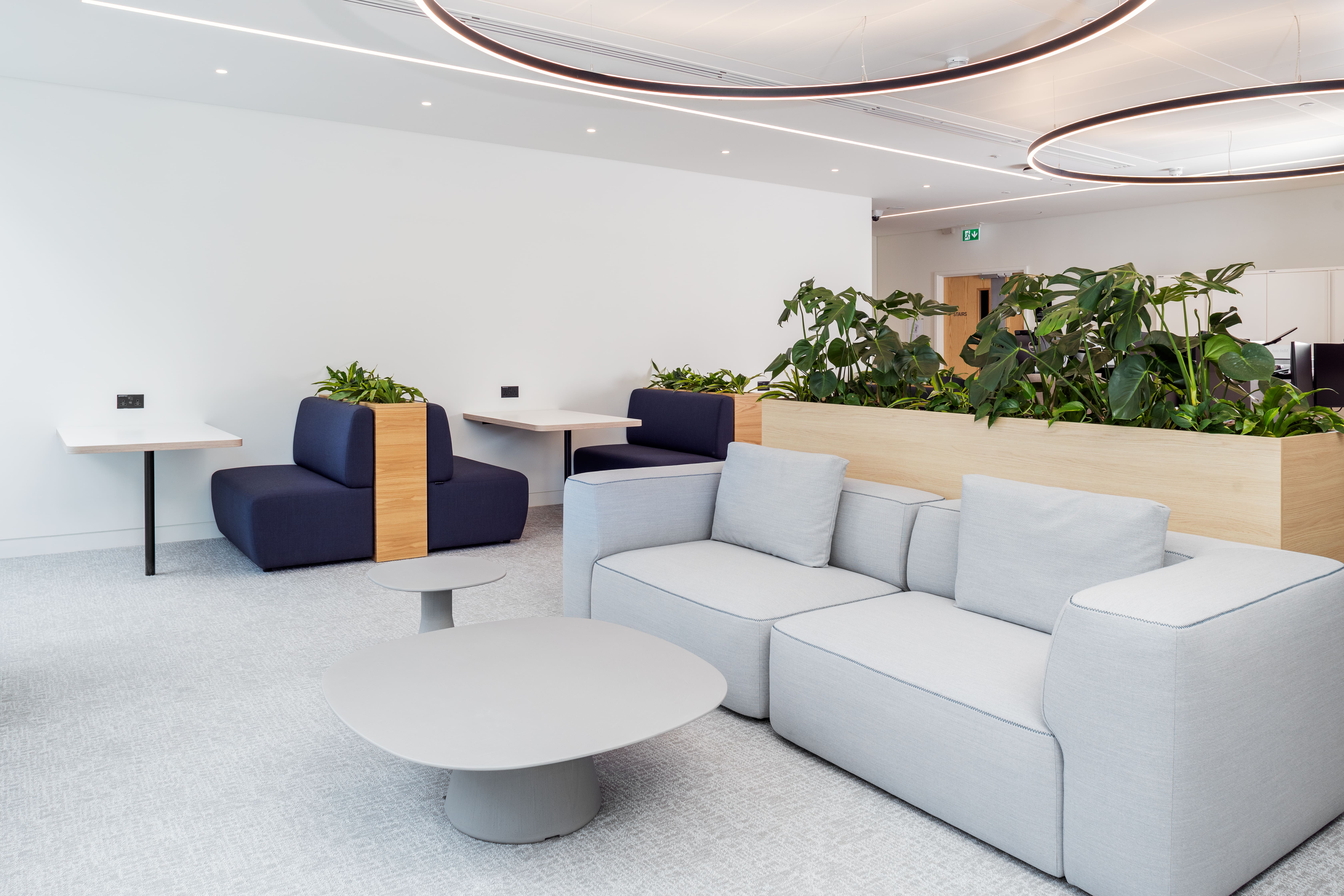
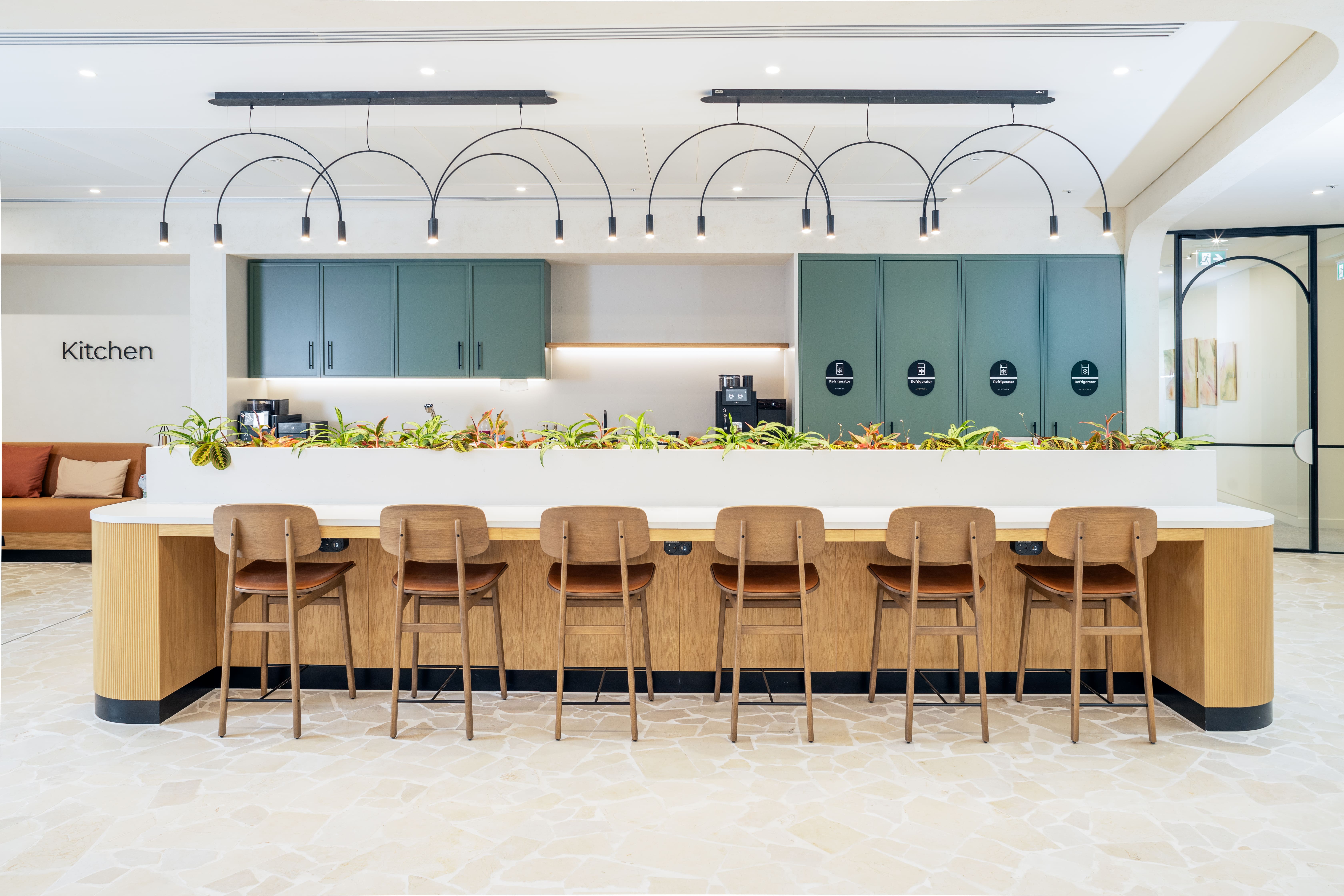
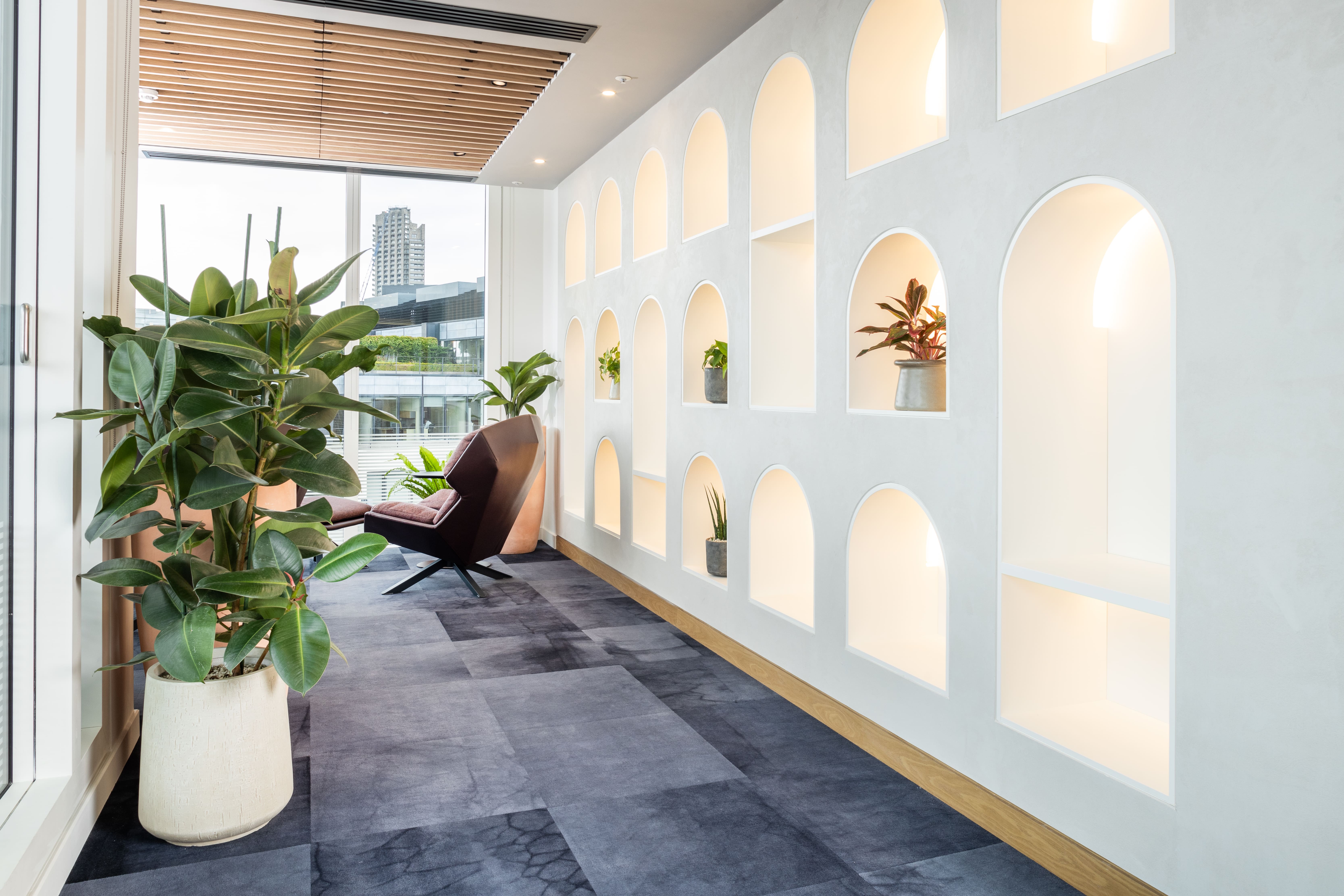
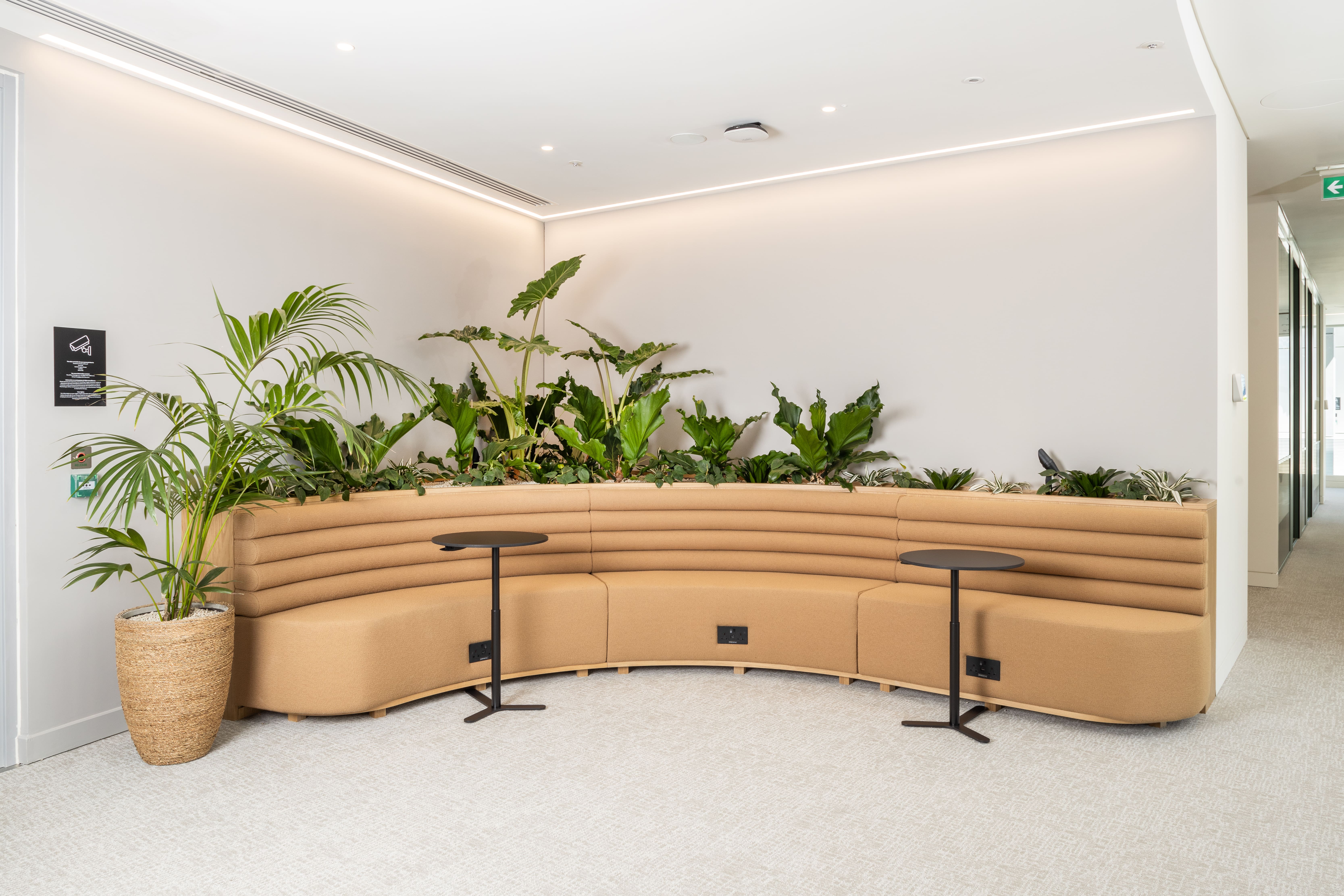
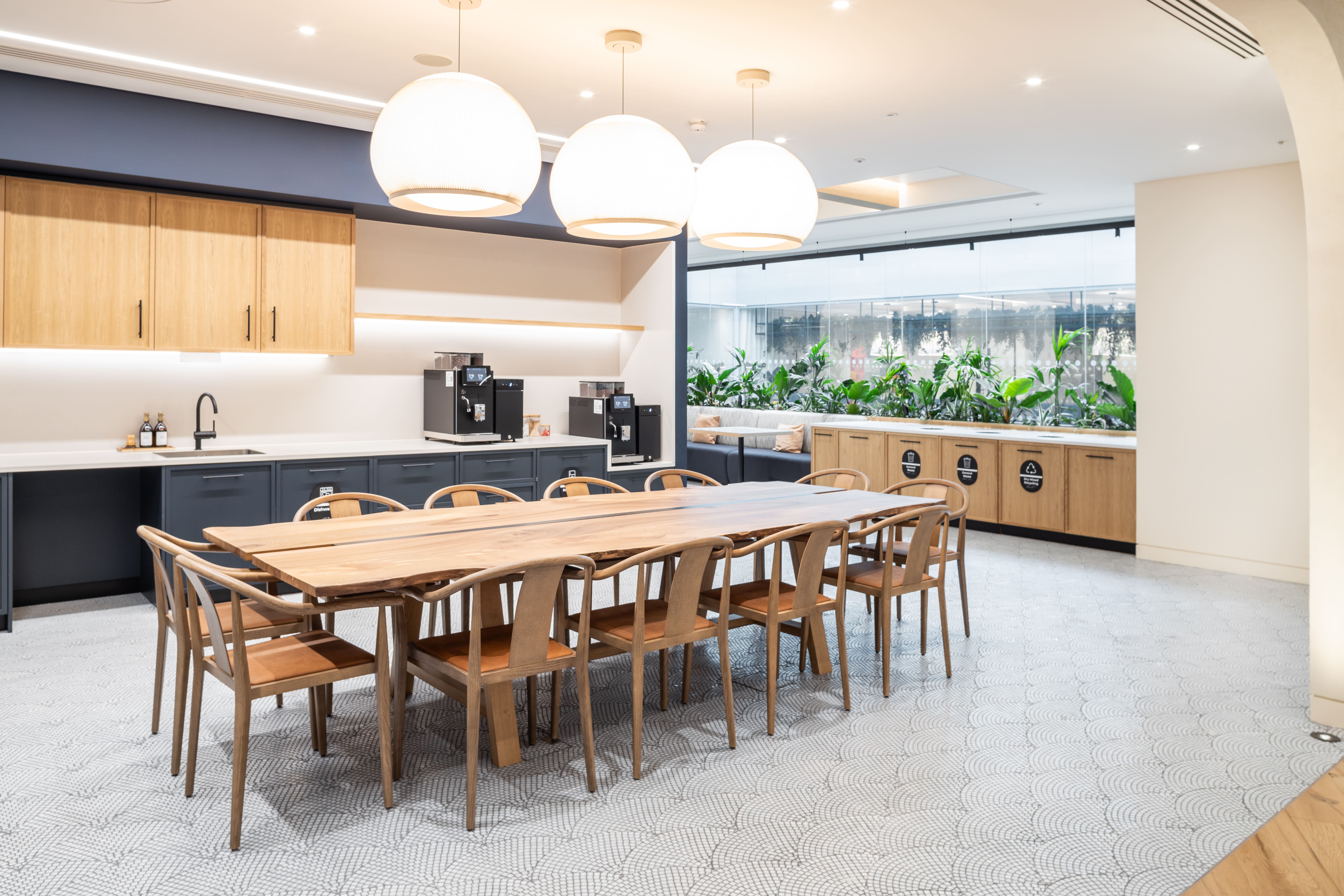
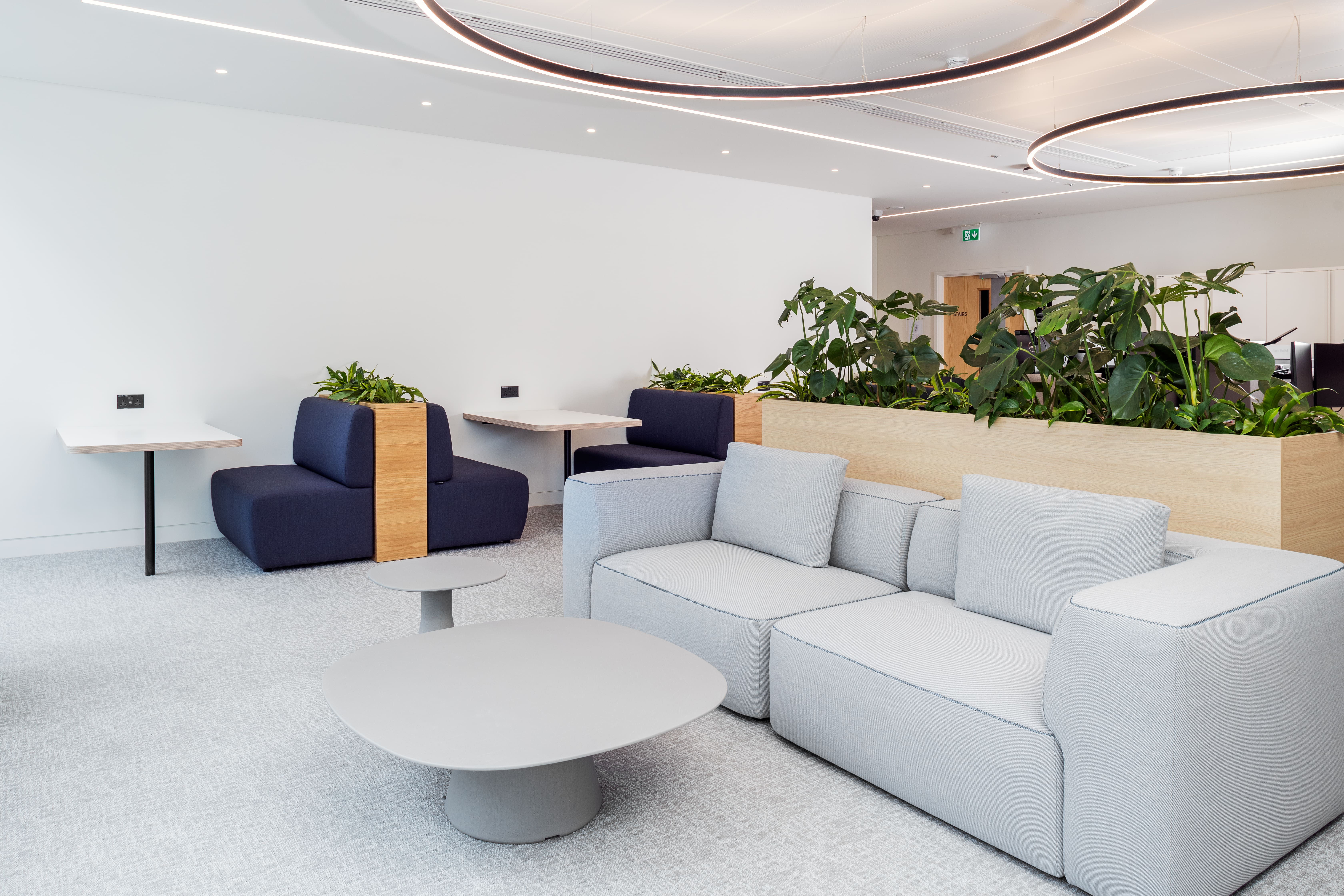
Integrated Joinery Planting: From banquette seating to shelving and storage, planting was built in from the start. It adds rhythm and softens the formality of a legal workplace.
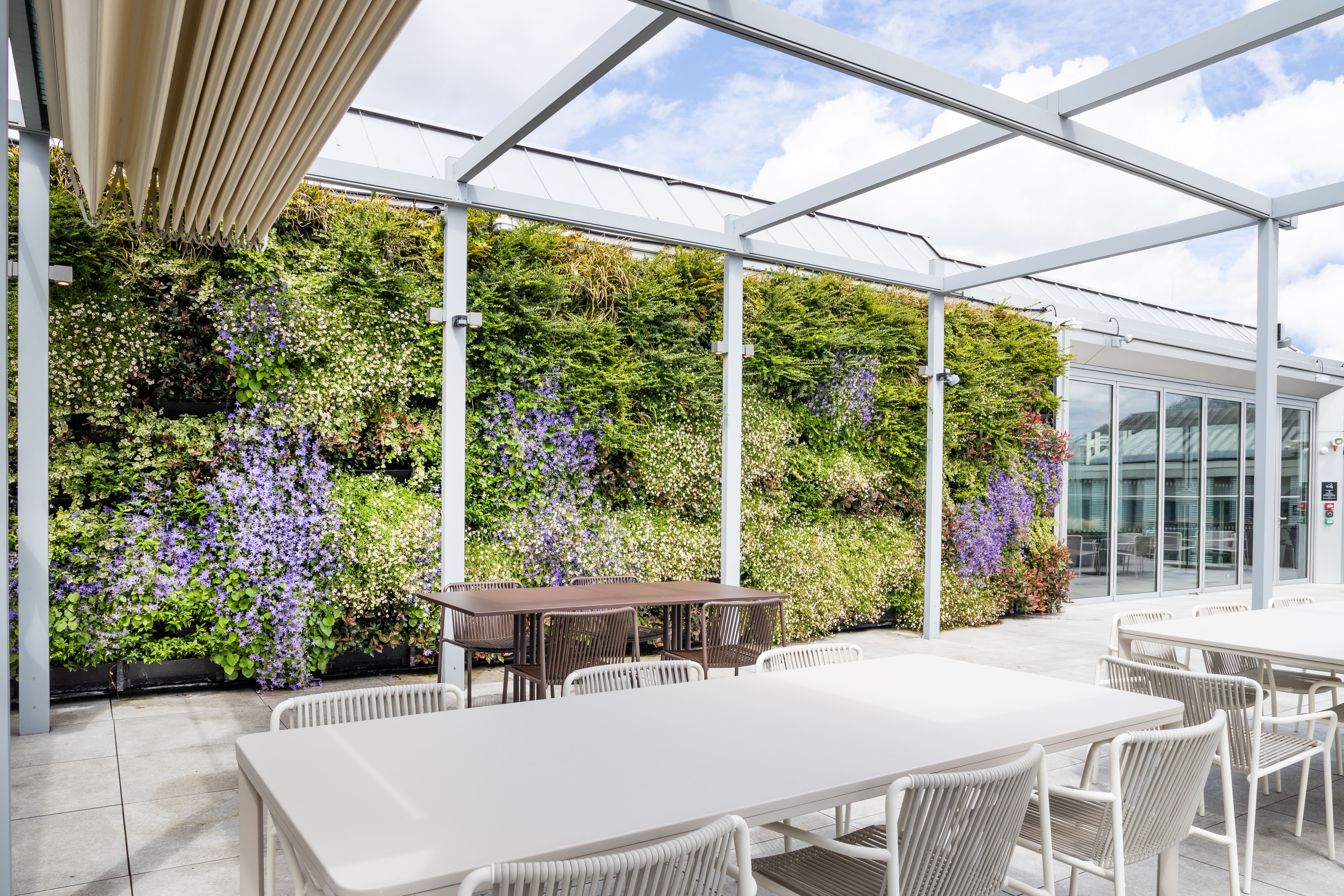
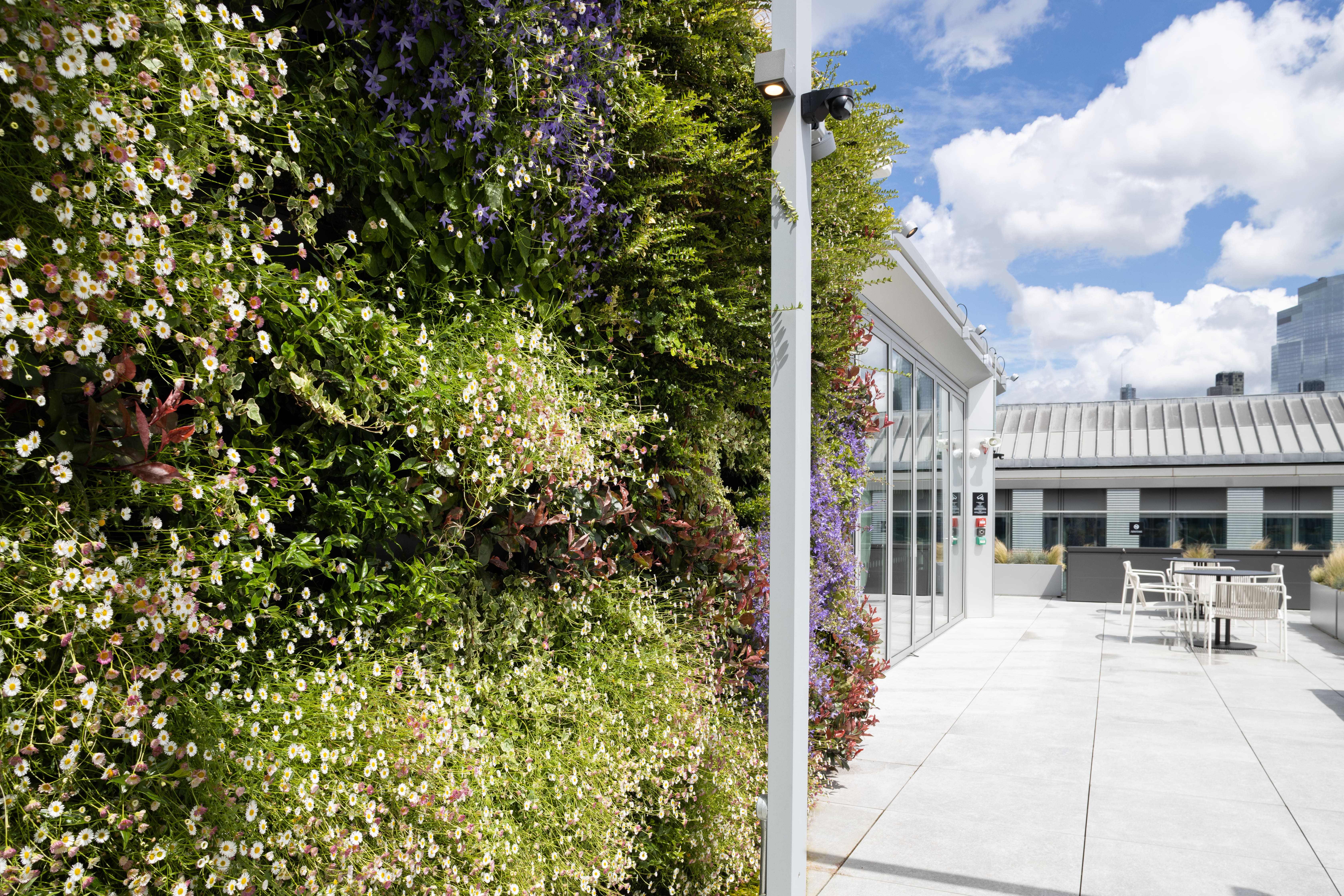
Rooftop Living Wall: Installed on the private terrace overlooking St Paul’s, the wildflower wall supports pollinators. During photography, bees were working the wall with visible pollen sacs – clear proof of impact.
Details That Matter
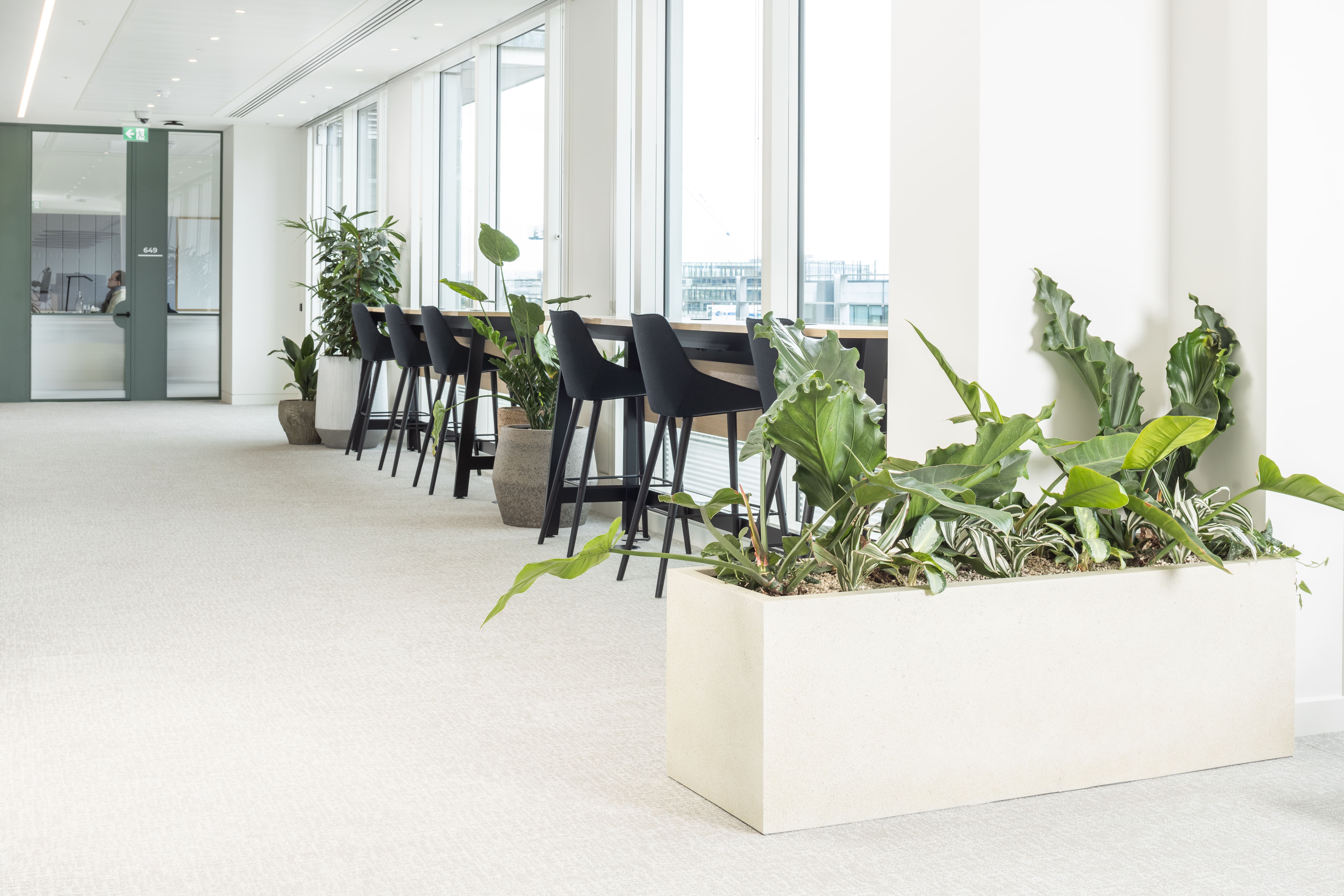
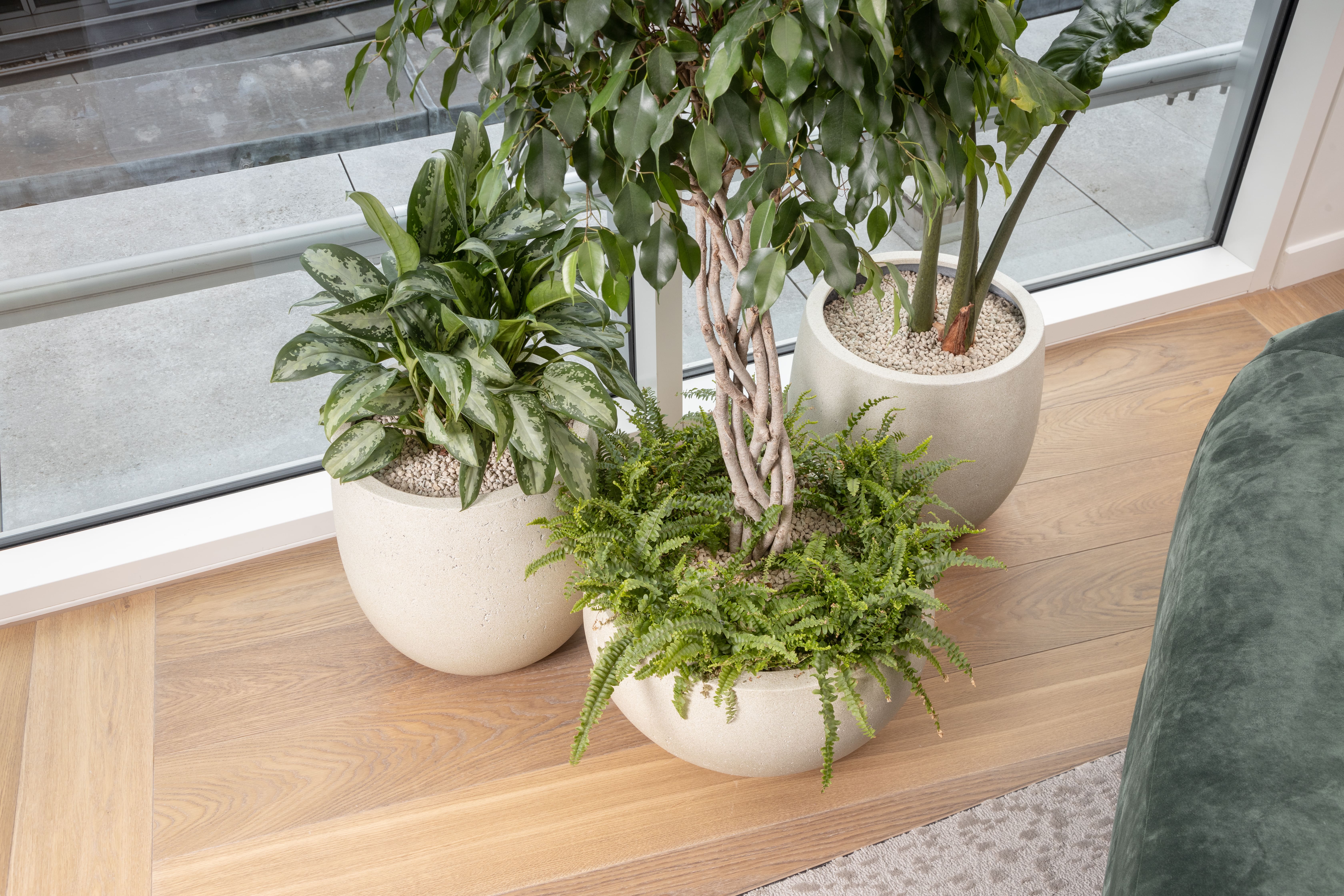
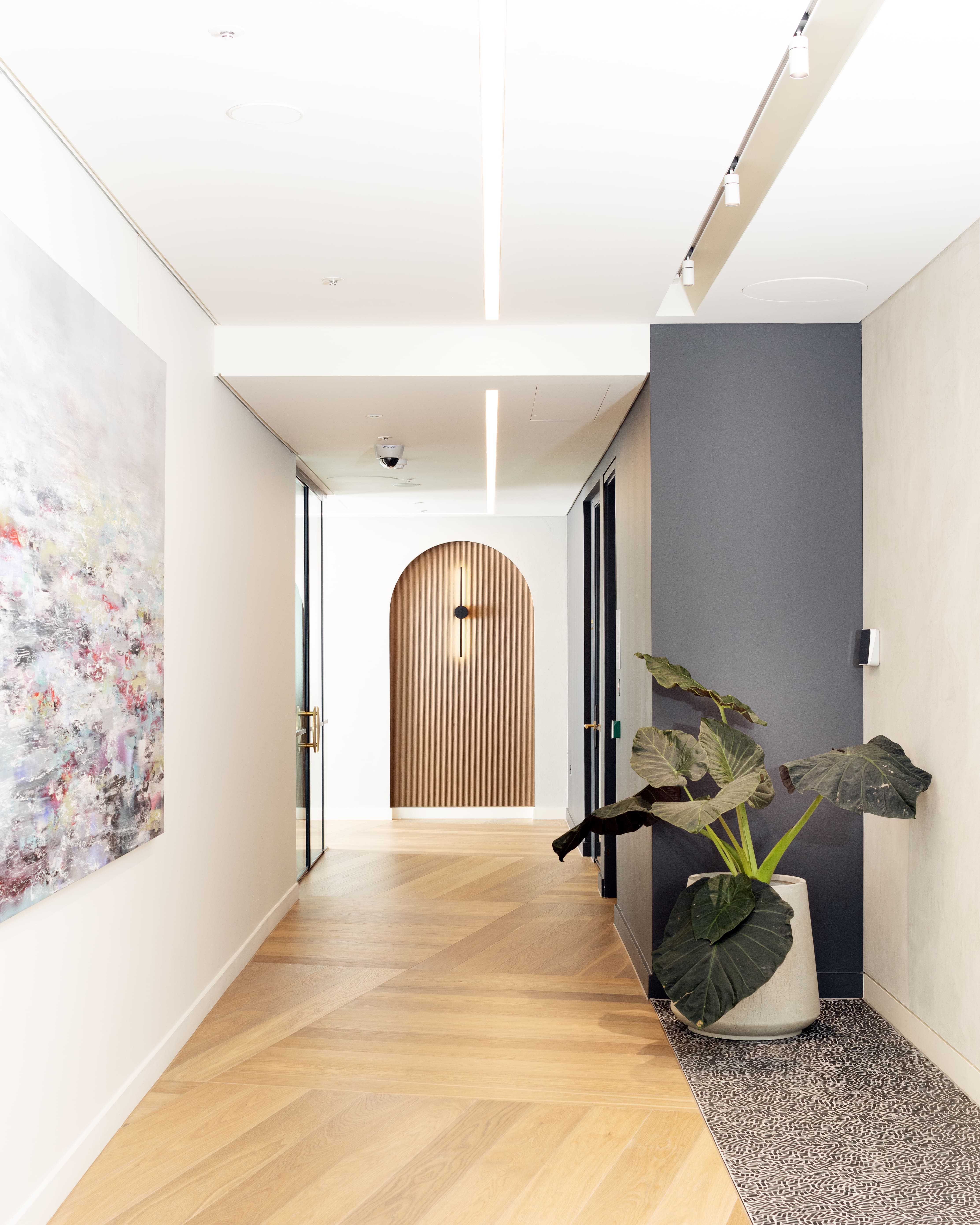
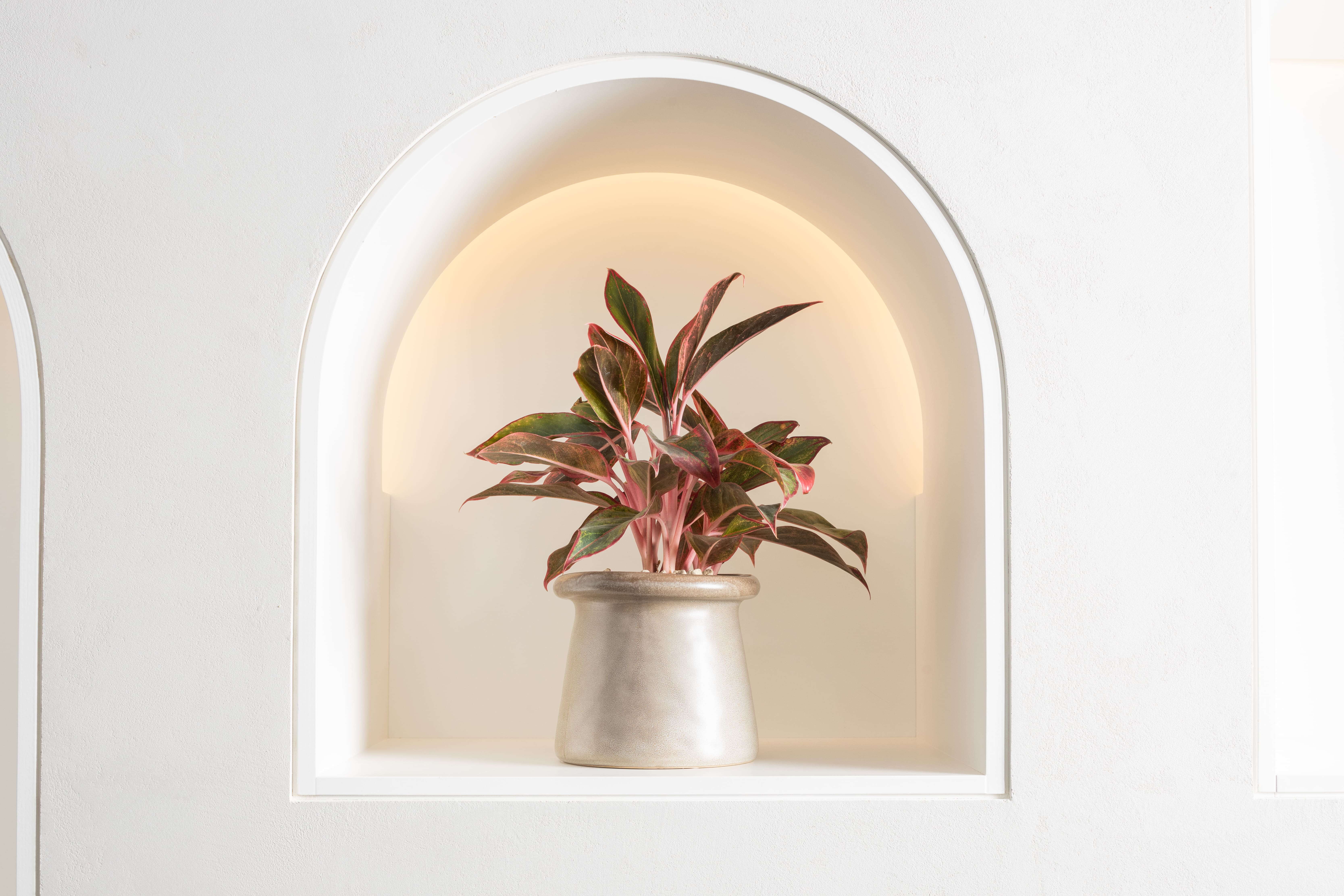
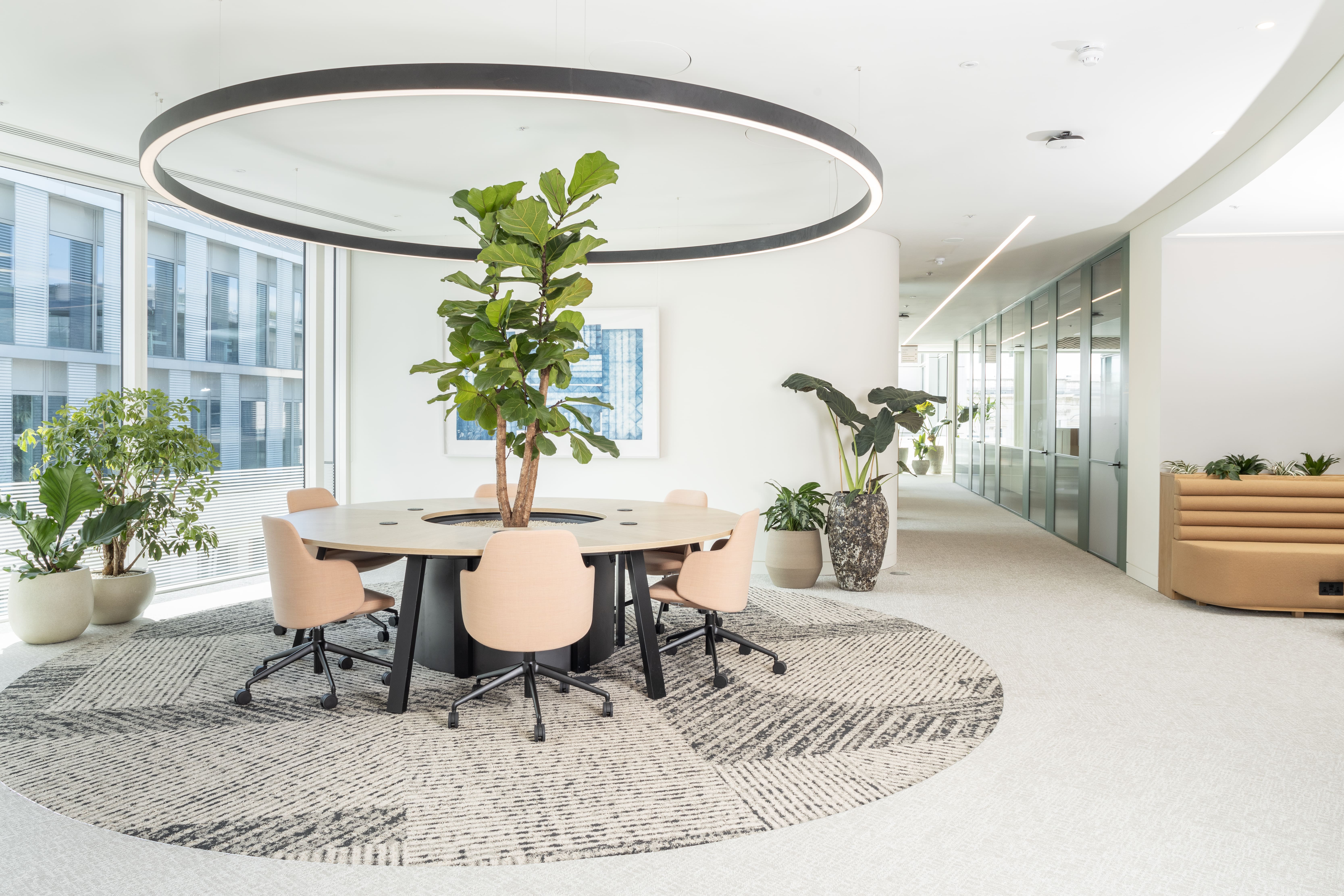
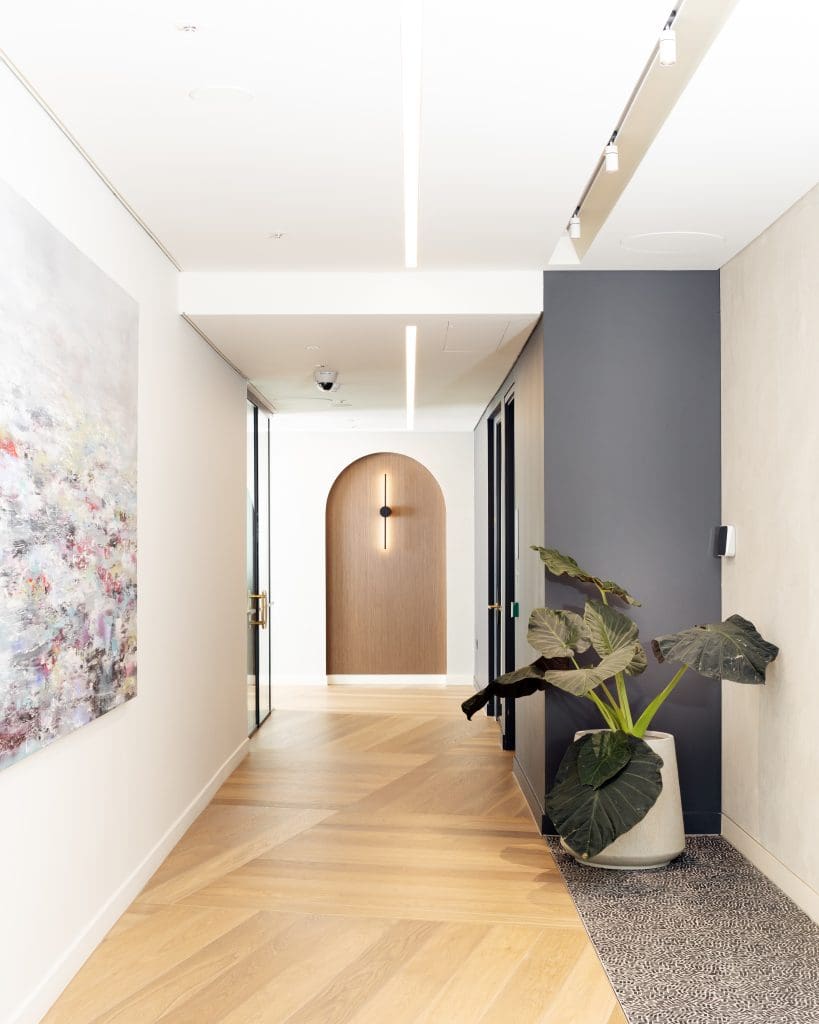
Planters and pots were matched to joinery and surface tones to maintain visual balance.
An Ecoponic soil-free substrate was used throughout. It reduces water use, avoids peat, and helps keep pests away.
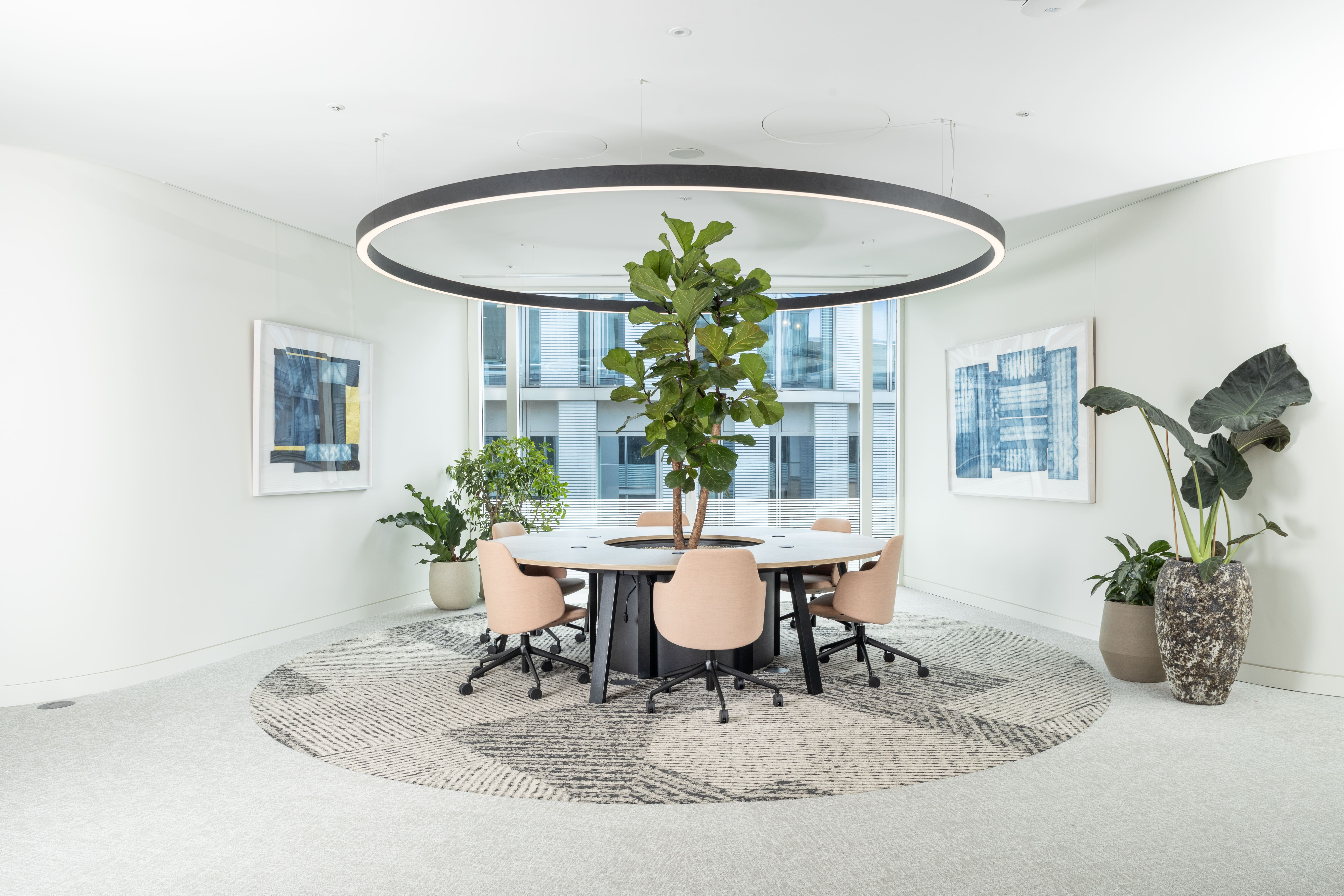
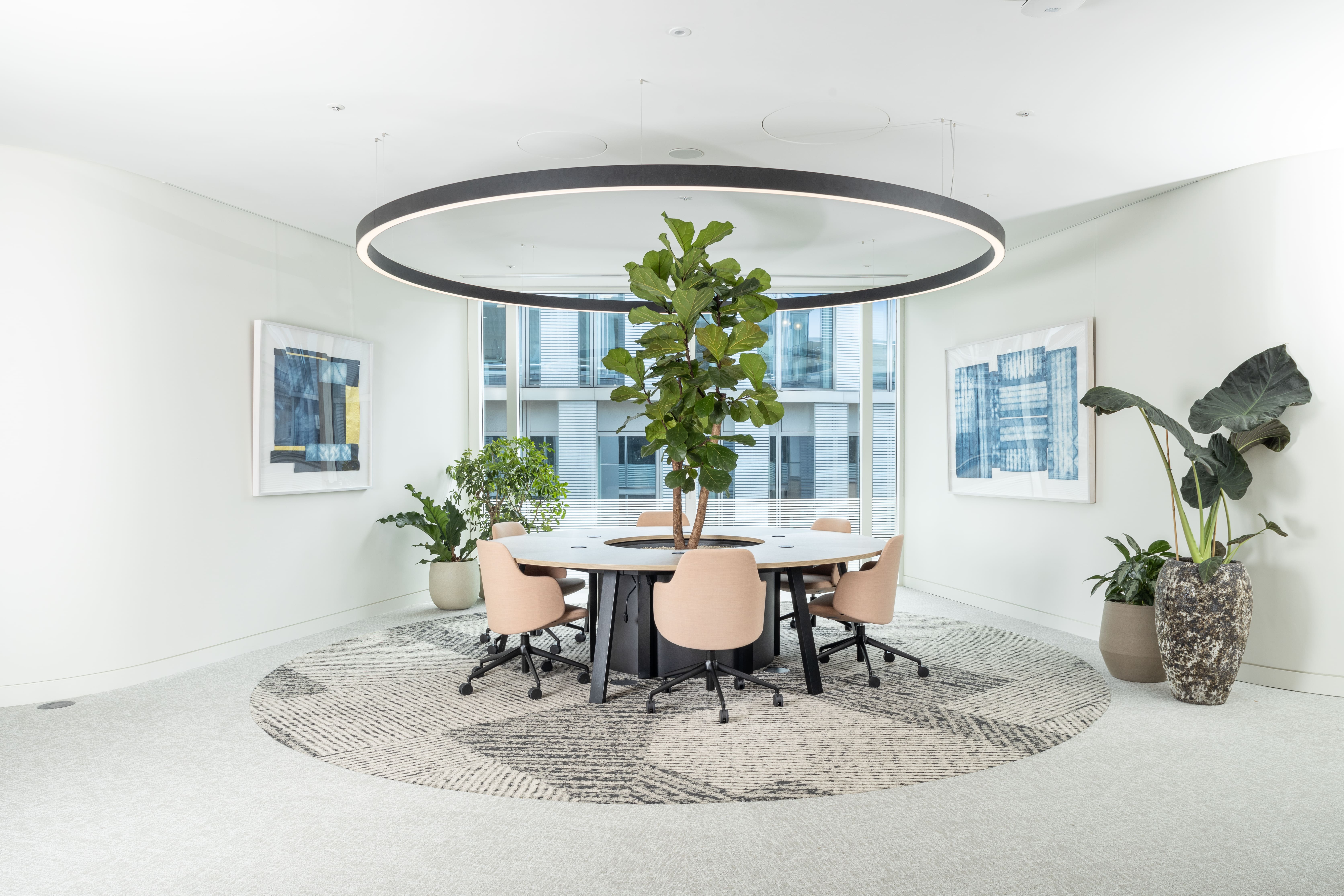
Meeting rooms were named after iconic trees from around the world, each chosen to represent one of Goodwin’s international locations. Examples include Sequoia for California, Sycamore for the UK, Ginkgo for Philadelphia, Locust for Paris, and Tembusu for Singapore. Each tree came with its own story, tying together nature, place, and meaning. It’s a small but thoughtful nod to identity.
the reaction
Feedback from staff was overwhelmingly positive. One visitor wrote on LinkedIn: “It looks so beautiful I thought it was AI-generated.” Another said the space was “even prettier than I imagined”, while a Goodwin team member commented: “They weren’t kidding… the view from the terrace really is incredible.”
Clients, collaborators, and visitors echoed the response in dozens of social posts. Goodwin partners called the project “a significant milestone,” and Gardiner & Theobald described it as “a wonderful workspace… looks amazing.”
the result
Planteria’s early involvement avoided rework and last-minute compromises, especially around lighting, material tone, and flow. By helping shape the biophilic strategy from the beginning, we made planting part of the design language.
This project delivered more than visual value. It brought emotional response, ecological function, and cultural meaning. It also strengthened our long-term relationships with both the architect and the client.
by planteria
more than plants
This project reflects Planteria’s belief that planting should be part of the experience. From early-stage strategy to final install, we helped shape something people remember.