

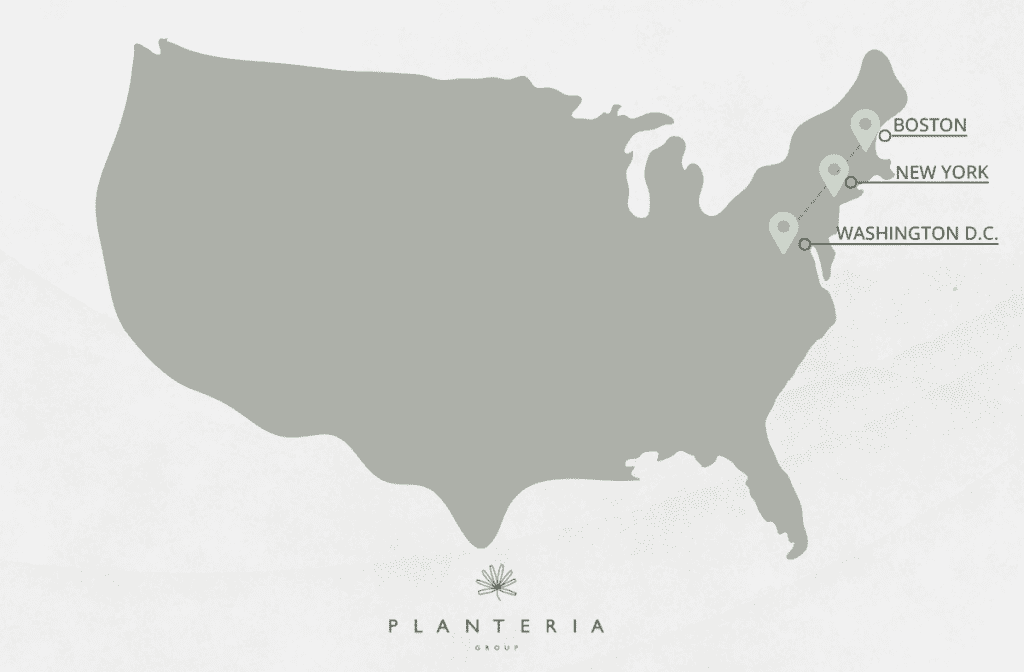







It looks like you are visiting this site
from outside the UK region.

Go to US site

The Most Sustainable Planting Scheme

The Most Sustainable Planting Scheme

At Planteria, sustainability isn’t just words on paper – it’s built into everything we do.

From the way we transport our technicians to the materials we use in our planting schemes, we’re committed to reducing environmental impact at every stage.

Here’s how we’re leading the industry with the most sustainable planting scheme available today.

The Most Sustainable Planting Scheme

whats included

Planteria group

Walking Plant Technicians

100% Public Transport

While electric and hybrid vehicles are a step forward, we believe there’s an even smarter way to cut emissions and ease congestion.

That’s why we introduced our ‘walking technicians’—a team that travels entirely on foot or by public transport. No vans. No traffic. Just a more efficient and sustainable way to work.

They’re backed by one central shuttle, which delivers any replacement plants or equipment needed for the day. The result? We save more than 25,000 miles of van travel every year. That’s fewer emissions, less fuel, and cleaner air for everyone.

It’s a simple idea, but one that’s making a real difference.

Modus office plants

Ecoponic Substrate

Saving our vulnerable peat-lands

Regular compost used for growing plants can contain up to 90% peat.

This peat is dug up from peatlands.  These natural wetlands are absolute vital for not only plants and wildlife, but also storing carbon.  It takes 1,000 years for one metre of peat to form!  But over 80% of the UK peatlands are already damaged.  

Our vulnerable peatlands are being excavated at the expense of our fragile environment.

Peatlands cover only around 3% of the world’s land area, but they store 30% of soil carbon.

A loss of only 5% of UK peatland carbon would be equal to the UK’s annual greenhouse gas emissions.

Sunset over a uk peat field - home to a host of wildlife and carbon storage.

At Planteria we knew we had to do our bit to protect our vulnerable peatlands and the wildlife that call them home.   We can now offer a zero-peat alternative to soil.  

We call it Ecoponic. 

what is ecoponic?

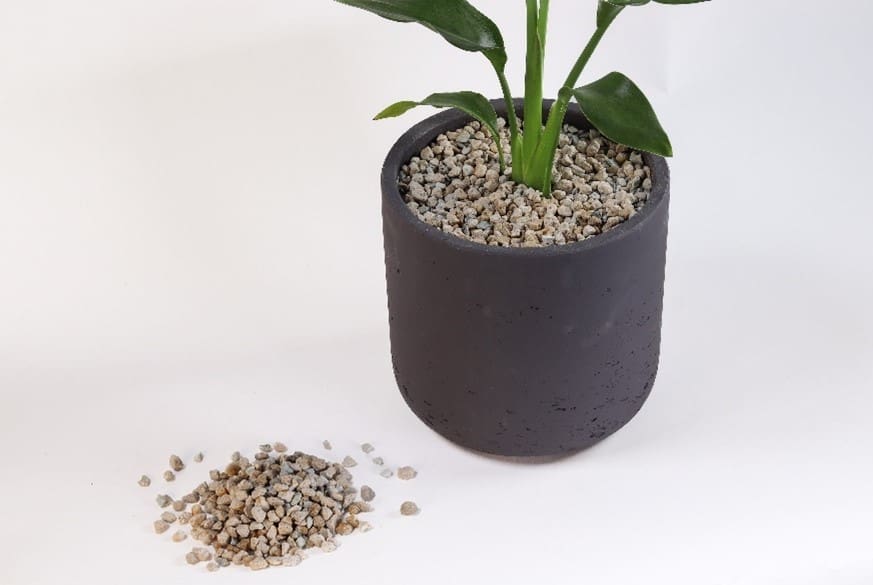
Officially classified as a Vulcaponic Substrate – it’s a recipe of pumice, zeolite and the perfect mixture of fertiliser for optimum plant growth.

Now almost 100% of the plant displays that go through our warehouse are planted in Ecoponic.  

Ecoponic logo
Ecoponic substrate

Peat Free

Peat is commonly found in compost due to its water retention and nutritional qualities.  The natural wetlands where Peat is found is critical to the survival of plants and wildlife. Not only that, but peat bogs store huge amounts of carbon which must be kept in the ground to avoid contributing to climate change.  

Ecoponic is 100% soil free.  This helps to protect our vulnerable peatlands – protecting wildlife and reducing carbon emissions. 

Reduced Water use

Ecoponic is very efficient at storing water.  It can absorb up to 44% of it’s weight in water.  During the watering, the grains absorbed it and no water remains in the pot. The roots slowly absorb the moisture from the substrate. This not only benefits the plant, it also reduces the amount of water used.

Less chance of flies or pests

Flies and pests can be an incredibly annoying problem in an office environment.  As Ecoponic contains no organic material, there is almost no chance of soil-borne pests. 

Infinite Lifecycle

It is permanently structurally stable (it will not break down or compact) this keeps the soil more airy and allows the roots to absorb enough oxygen.     

Ecoponic can be reused and recycled infinitely.

Planteria group

Recycled & Sustainable Planting Containers

We offer a wide range of planting containers designed with sustainability in mind—each one made using recycled or low-impact materials to reduce waste and lower your carbon footprint.

Planteria group

Pots made 100% from recycled waste

Planteria group

Pots made from recycled materials including marine debris, artificial grass, textiles and more

Planteria group

Pots produced using 100% wind energy


Planteria group

Living wall system largely made from recycled clothing

Planteria group

Planters made from upcycled pallets

Planteria group

Plants donated to the local community

We regularly donate surplus plants and flowers to local groups, schools, and those who need them most. Over the years, we’ve supported several schools by helping them green their classrooms and create outdoor nature areas for pupils to enjoy.

Our plants and pots are also popular in the community. Locals often give old containers a new life, reusing and repurposing them so the plants can keep growing in new homes. It’s a simple way to share the benefits of greenery while reducing waste.

Planteria group

Ecovadis

As part of our commitment to society, our people and the environment, Planteria has completed a thorough assessment of its business sustainability practices through EcoVadis, a global leader in business sustainability assessments. The EcoVadis assessment includes 21 sustainability criteria across four core themes: Environment, Labor & Human Rights, Ethics and Sustainable Procurement.

We are pleased to announce that we have received our EcoVadis rating in 2025.

Planteria group

plant grow pots 100% recycled

Zero waste to landfill

We are a zero waste to landfill company, and we take that seriously at every stage of our work.

In the Netherlands alone, over 3 billion plastic plant grow pots are used each year. Most planting companies send these pots to general waste, claiming they are too difficult to recycle due to mixed materials or contamination.

At Planteria, we do things differently. Every single grow pot that comes through our nursery is sorted and recycled properly. We work with specialist recycling partners to make sure these plastics stay out of landfill and are given a new purpose.

It takes more effort, but it’s the right thing to do. And it’s one more way we reduce waste across our supply chain.

Planteria group

pollinator friendly planting

Planting for the planet

Planting to support biodiversity is more than just good for the environment — it’s a great way to bring people together. It offers a hands-on opportunity for staff to get involved, whether by helping choose the plants, taking part in planting days, or simply enjoying the wildlife that follows.

We’ve seen it spark real interest and conversation across teams. It brings life to terraces and outdoor areas, turning them into spaces people want to spend time in. The result is not just a boost for nature, but a lift in staff engagement and well-being too

Planteria group
Planteria group

habitats for nature

making the office a destination (for nature)

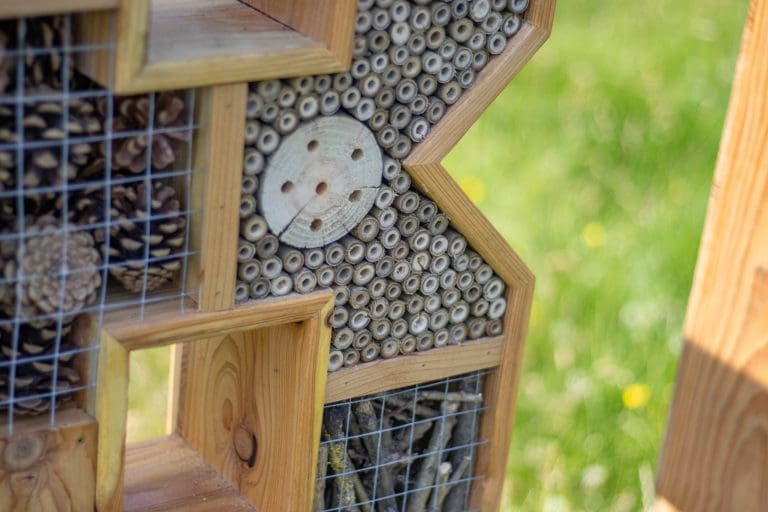
Make your site a destination for pollinators with our bespoke pollinator habitats.  Handcrafted, bespoke made here in the UK with sustainably grown wood from managed forests.  Custom made in the shape of your logo, name or nearly any shape you chose!

We can also craft the perfect design for you, incorporating sustainable and nature supporting products such as bee baths, bird boxes, worm buffets, bird feeders and more. 

This is the perfect pairing for our bee friendly planting schemes.  

Find out more here.

The most sustainable planting scheme FAQ's

Our approach tackles sustainability at every stage, from zero-peat planting substrates and recycled pots to walking technicians and zero waste to landfill. It’s a complete system, not just a single eco-feature.


Ecoponic is a peat-free, soil-free substrate made from pumice and zeolite. It stores water efficiently, reduces pest problems, and protects peatlands - vital carbon sinks that take millennia to form. Unlike soil, Ecoponic doesn’t break down, meaning it can be reused indefinitely.


Most European indoor plants are imported from the Netherlands, creating long supply chains. Our UK-grown plants drastically reduce transport miles, lowering emissions while supporting local jobs and the British economy.


Planteria’s ‘walking technicians’ travel on foot or by public transport instead of in vans. This cuts over 25,000 miles of vehicle travel each year, reducing congestion, emissions, and fuel consumption, especially in urban centres.


Yes. We offer a wide range of pots made from recycled waste, marine debris, upcycled pallets, textiles, and even wind-powered manufacturing processes. Some living walls are made from old clothing.


We ensure all plastic grow pots are properly sorted and recycled through specialist partners. Unlike others in the industry, we don’t send any waste to landfill, even the hard-to-recycle bits.


We offer pollinator-friendly planting schemes and custom-built habitats like bee hotels and bird boxes. These not only support local wildlife but also create beautiful, engaging outdoor spaces for staff.


Absolutely. Our biodiversity planting schemes often include staff planting days or team input into plant selection. It’s a great way to boost engagement while supporting the planet.


EcoVadis is a respected global sustainability rating system. Planteria’s 2025 assessment covered our performance in environment, ethics, human rights, and sustainable sourcing, offering third-party validation of our commitment.


Yes. We regularly donate surplus plants and containers to schools, community groups, and those in need. It reduces waste and helps spread the benefits of greenery far beyond the office.

Yes, we handcraft bespoke habitats from sustainable UK-grown wood. We can design them in the shape of your company logo or create themed nature zones with bird boxes, bee baths, and more.

Read More

Discover ways to enhance your office environment with our expert insights on biophilic design, wellbeing, sustainability and the world of plants.

The Science and Strategies Behind Engage & Bloom

The Science and Strategies Behind Engage & Bloom

Harnessing nature for workplace wellness and engagement

This resource explores the science and strategies behind Planteria Group’s Engage & Bloom workplace experience programme. It will show how the programme provides employees, organisations and facilities managers with several key benefits from both a commercial and wellbeing standpoint.

Key theories and frameworks are identified, demonstrating the scientific and strategic theory that underpins the Engage & Bloom programme.

Planteria group

An Introduction to Engage & Bloom

Engage & Bloom is a science-backed employee experience
programme that is centred on the principles of biophilia and its scientifically
proven benefits in terms of productivity and wellbeing. Such benefits are
achieved through harnessing the power of nature to create inspirational spaces.

The Engage & Bloom programme teaches clients how to look
after their plants at home, as well as inspiring them in the world of planting
and nature through a range of engaging experiences, including workshops,
interactive QR codes, and educational pieces. 

Workplace experience program by planteria group

The Modern Workplace Challenge

The modern workplace presents numerous challenges to ensure employees are working at an optimal level that benefits both the individual and the wider organisation. Since 1950, research suggests that we have gradually become more disconnected from nature and the benefits it provides.

A 2023 study by the UK Government identified that people spend 80-90% of their time indoors. To make matters worse research suggests that on average an office worker spends 12 hours per day looking at a screen.

Offices commonly experience a disconnect from nature, due to urban environments and sterile interior settings, as well as the growing importance of technology that has often acted as a substitute for nature as a source of recreation and entertainment. 

Increasing Importance of Well-being and Engagement for Productivity

Engage & Bloom is based on the concept of biophilia, which refers to a human being’s innate desire to connect with nature. This is further reinforced by numerous scientific findings, notably an experiment conducted by the Chelsea Flower Show.

This experiment invited participants to take part in a study that measured their creativity, happiness, and productivity across a variety of different workplace designs. The results found that allowing staff to make design decisions in a workspace enhanced with office plants can:

·       Increase well-being by 47%

·       Increase creativity by 45%

·       Increase productivity by 38%

These findings highlight the significant benefits that simply being around plants can have on employees. However, the interactivity of the Engage & Bloom programme enables organisations and their employees to harness these benefits to an even more powerful extent.

The Innate Human Connection to Nature: Biophilia

Biophilia is described as ‘an innate love for the natural world, supposed to be felt universally by humankind.’ The biophilia hypothesis is based upon the belief that humans have an inbuilt tendency to seek connection with nature and other forms of life.

In fact, the word biophilia is a combination of two ancient Greek words: bio (meaning life) and philia (meaning love). The term was first used by German social psychologist Erich Fromm, who claimed that biophilia manifests as the ‘wish to further growth, whether in a person, plant, idea, or social group.’

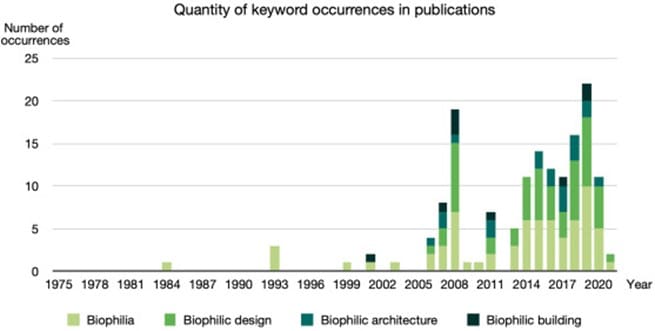
The growing awareness and popularity of biophilic design is indicated in the below graph, which demonstrates how the word biophilia, along with related keywords, has seen a significant spike in how frequently it is mentioned in publications, particularly from 2008 onwards.

Planteria group

Engage & Bloom is a solution that combines both science and strategy through engaging workplace activities. As well as improving productivity and wellbeing, Engage & Bloom also promotes teamwork and fosters connections with nature and one another.

The Engage & Bloom programme applies Fromm’s concept of growth in terms of people, plants, and social groups by giving individuals the opportunity to enjoy a shared experience that connects them with plants and nature both on an individual and group level.

Planteria group

The Science of Wellness in the Workplace

Workplace wellbeing encompasses how employees feel at work and about work, with a focus on developing and displaying healthy behaviours.

More specifically, it can include some of the following elements:

  •         A positive working environment
  •         Job satisfaction and purposefulness
  •         Good leadership and management
  •         Pay and reward
  •         Personal development
  •     Physical and mental health

Planteria group

Impact of Stress, Poor Air Quality and Sterile Environments on Staff

Factors such as stress, poor air quality, and sterile environments can all have a negative impact on workplace wellbeing. Poor workplace mental health has been estimated to cost UK businesses an incredible £45bn each year. Furthermore, Lumien data reveals how wellbeing impacts employees 27% of the time, and as a result, companies are losing 17% productivity.

Annually, this equates to £5,318.45 per employee, representing a significant organisational cost that could be mitigated through the implementation of wellbeing-focused initiatives.

Scientific Evidence Supporting Biophilia

Taking an evidence-based approach to workplace wellbeing allows employers to understand their employees wants and needs, along with areas of improvement.

According to the Mental Health Foundation, 45% of people reported that visiting green spaces helped them to cope. Likewise, Harvard research finds that spending 20 to 30 minutes in an outdoor setting where people feel they are interacting with nature can lower stress hormone levels.

Planteria group

Cognitive and Productivity Benefits of Greenery in Offices

The concept of biophilia is supported by various studies and frameworks, including Kaplan’s Attention Restoration Theory which found that exposure to nature reduces mental fatigue, as well as helping improve focus and our ability to concentrate.

Likewise, Ulrech’s 1981 Stress Reduction Theory claims that natural environments promote recovery from stress, while urban environments tend to hinder it. 

Planteria group

The Psychological Basis of Nature Engagement

According to the National Library of Medicine, individuals have less mental distress, less anxiety and depression, greater wellbeing and healthier cortisol profiles when living in areas with more greenspace.

This is reinforced by NHS research, which found that people who spend at least two hours a week in nature experience better health and higher psychological wellbeing than those who do not visit nature at all during an average week.

Planteria group

Sensory Benefits of Plant Interaction

Sensory planting encourages an increasingly engaging and
meaningful experience with plants, stimulating senses, including smell, sound,
touch, and sight.

According to the RHS, selecting plants that are particularly
good for your senses can improve mood and general wellbeing. 

Examples of plants with sensory benefits include:

·       Fragrant flowers, such as lavender, jasmine, and rose

·       Herbs, including mint, basil, and rosemary

·       Plants with a particularly textural appearance include lamb’s ear, ferns, and ornamental grasses.

·       Vibrantly coloured plants that satisfy the visual sense

·       Edible plants such as strawberry plants

Planteria group
Our Vertical Horizons towers can be used to grow herbs, salads and edible produce in the office.

Employee Engagement: Why it Matters

In their 2023 State of the Global Workplace Report, analytics and advisory firm Gallup found that nearly 6 in 10 employees are feeling disengaged at work. Traits of disengaged employees can include demotivation, missed deadlines, disinterest in team activities, and avoidance in taking initiative.

Such behaviours have also been described by the term ‘quiet quitting,’ whereby a disengaged employee only fulfils the bare minimum of their duties.   

Planteria group

The Impact of Disengagement

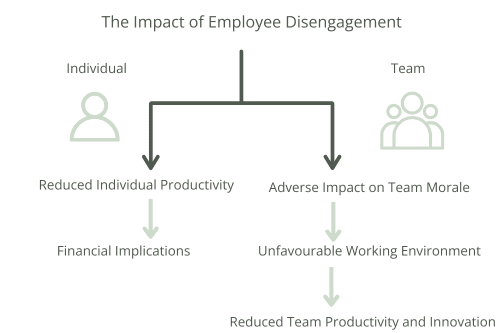
Employee disengagement can result in several issues, both for an individual’s wellbeing and the organisation. Decreased productivity is a key risk of disengaged employees, along with high absenteeism and turnover rates and the subsequent recruitment and training costs.

The 2023 State of the Global Workplace report found that disengaged employees are estimated to cost the global economy $8.8 trillion dollars, which represents 9% of global GDP. As well as the financial implications, employee disengagement also results in an adverse impact on team morale, which may cause an overall reduction in workplace productivity and innovation due to an unfavourable working environment. 

Planteria group

The Role of Nature in Engagement

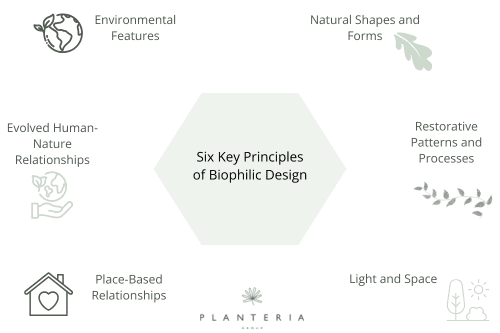
Biophilic design can be classified into six key principles illustrated below:

Planteria group

The last two principles provide a clear insight into how biophilic design can foster a sense of purpose and belonging. Place-based relationships refer to the link between culture and ecology. This is based upon a human’s sense of connection with familiar surroundings and feelings of protection or stewardship towards such places, known as Place Attachment Theory.

A study published in the Journal of Environmental Psychology investigated the connection between green buildings and place attachment. It found that biophilic design and opportunities for connection to nature were amongst the most important aspects for supporting Place Attachment Theory and can enhance individual wellbeing, quality of life, as well as increase pro-environmental behaviours and community resilience.

When coupled with the attachment to nature and health and wellbeing benefits that biophilic design provides, it is clear to see the powerful impact that spaces with a strong biophilic element can have on an individual’s sense of belonging within that space. 

Planteria group

How Interactive Experiences with Plants Create Meaningful Connections

Direct contact with vegetation represents one of the most successful ways of promoting human connection in design. Dr. Stephen Kellert claims that human evolution and survival require the management of natural environments, particularly with regards to sensory elements. Moreover, DelSesto highlights the variety of often overlooked ways that we interact with plants in daily life.

From clothing to writing materials, plants are used to produce essential daily items. What’s more, the exchange of plants as a mark of celebration or condolence highlights their powerful role in landmark events in our lives.

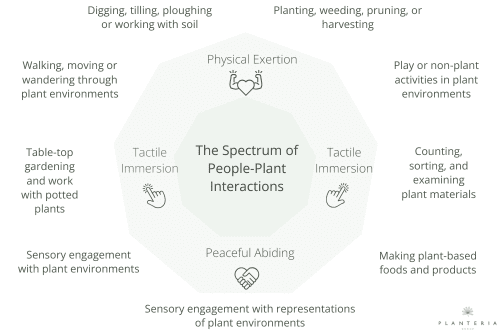
DelSesto’s below spectrum categorises people-plant interactions into key groupings: physical exertion, tactile immersion, and peaceful abiding. Different aspects can align particularly strongly with some of the identified benefits of biophilia. For example, interactions classified under the ‘peaceful abiding’ grouping are likely to be closely aligned to the benefits of stress reduction, while those classed as ‘tactile immersion’ may be particularly effective at boosting engagement and concentration.

Planteria group

Strategies Behind Engage & Bloom: Tailored Solutions for Every Workplace

Engage & Bloom comprises three modular packages, allowing tailored solutions for every workplace. In addition to an informative biophilic webinar, employees can dial in live and speak to our ‘Plant Doctor’ who will advise on care and maintenance of specific plants. 

Furthermore, there is the opportunity to identify and learn about plant species simply by scanning a plant’s QR code, which brings up the relevant page of the Plantopedia. Silver and gold packages also include interactive and engaging biophilic-based workshops, which can encompass activities such as wreath making, floristry, and orchid arrangement.

Planteria group

Flexible Solutions to Suit Workplace Needs

Engage & Bloom is focused on creating tailored solutions for every workplace. The flexibility of several key offerings within the programme allows employers to implement activities in accordance with their workplace’s needs and schedules.

Plant giveaways, biophilic webinars, and workshops can be scheduled at a convenient time and location for the business, whether it is on-site or at a separate location as part of an out-of-office event.

Engagement Through Experience

According to Michigan State University, there are many activities workplaces can implement to improve group cohesion and build trust.

Such activities often give employees the chance to interact with colleagues in a different way and reveal different aspects of their personalities that may not come out during normal work interactions.

Other advantages of team building include:

  •     Boosting employee engagement
  •     Encouraging communication
  •     Mitigating  conflict
  •     Increasing  collaboration

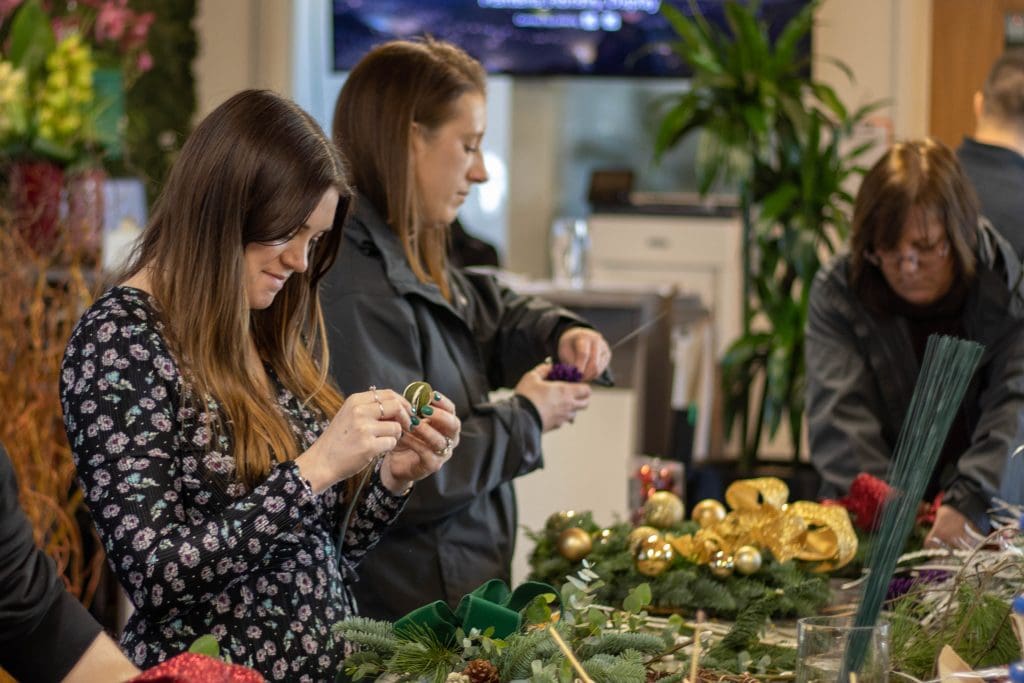
Engage & Bloom workshops provide an opportunity for employees to experience these benefits, whether working directly together or enjoying a shared experience alongside each other to produce wreaths, orchid displays, and floristry bouquets.

As noted by McKinsey & Company, being amongst nature helps with attention span, creativity, well-being, and happiness and should act as a foundational resource for both individual and team development.

How Interactive Learning Builds Deeper Connection

Referring to DelSesto’s spectrum of people-plant interactions, the different activities within the Engage & Bloom programme can be classified within this framework. Floristry bouquets, moss art, orchid and wreath making workshops are categorised under the ‘tactile immersion’ category due to employees’ physical interaction with plant materials.

Other aspects of the Engage & Bloom programme, such as plant giveaways, dial-in plant clinics, and identifying plant species using a QR code and Plantopedia are categorised under the ‘peaceful abiding’ category, due to their focus on sensory engagement with plant environments and representations of plant environments. Such interactive and informative activities can promote deeper connections within the workplace.

The social element of a shared workplace activity can help employees to feel connected to one another and the activity. According to Times Higher Education, feeling connected to what is being learnt and the people one is learning alongside is what underpins engagement. They go on to state that feeling socially connected enhances an individual’s sense of belonging, which is essential to maintain motivation and feelings of safety and comfort.

Employee Satisfaction Surveys

Employee satisfaction following increased interaction with biophilia can be measured in several ways. Heightened creativity may be evident in subsequent projects and brainstorming sessions, while reported increases in productivity can also be observed.

Organisations may find that outlined objectives are being reached increasingly quickly and projects are completed ahead of schedule. In terms of wellbeing, employers may observe a positive change in the overall mood and atmosphere within the workplace

Client Success Stories

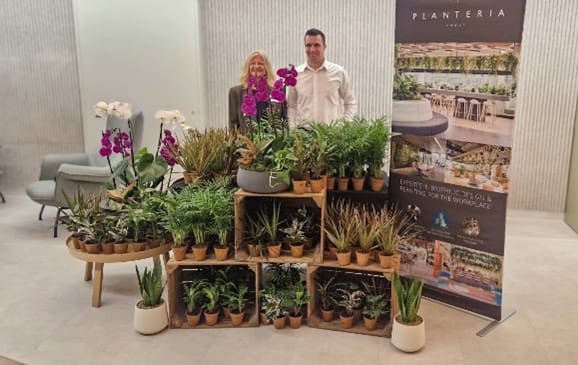
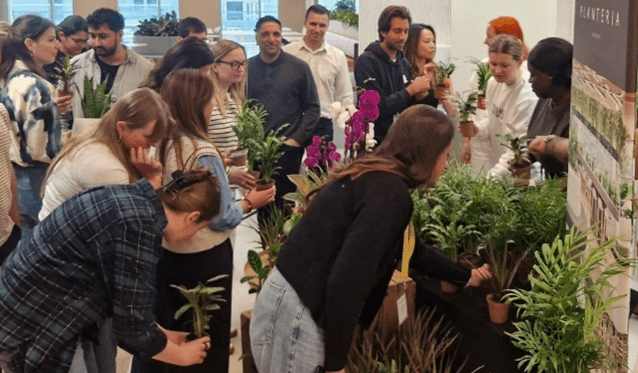
Recently, we brought the Engage & Bloom program to a leading social media platform’s London office. Employees fully embraced the experience, from learning about plant care to taking home their own plant, the event left lasting impressions and fostered stronger connections with nature in the workplace. 

The client shared the following feedback after the event: “I’m so happy that you shared some beautiful pictures with me today. The plants look amazing, and I was extremely happy to see the engagement with our members; they looked happy. Well done to the Planteria team!”.

Planteria group
Planteria group
Planteria group

Case Studies

Engage & Bloom activities have been successfully implemented in a diverse range of workplaces and industries.

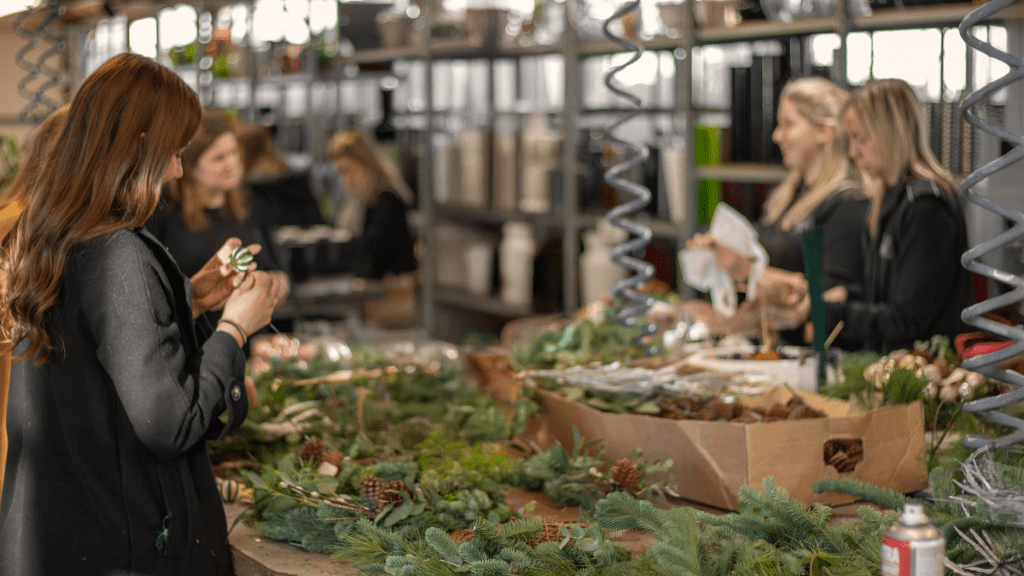
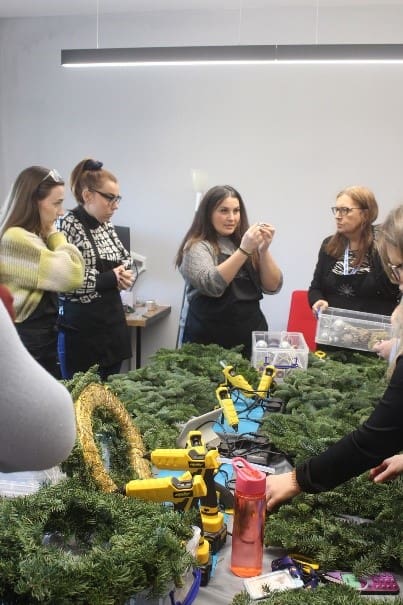
Wreath making makes a particularly popular seasonal workshop that can be adapted to the season, whether it is over the festive period, autumn, or spring. As such, materials can also be adapted to suit the season, theme, and even the organisation’s brand colours, creating a truly personalised experience for each individual workplace.

Planteria group
Planteria group
Planteria group

Quantifiable Benefits for Staff Engagement and Wellness

Awareness and application of biophilia within the workplace, through biophilic design elements in the office and Engage & Bloom engagement activities can be quantifiably measured using numerous metrics.

The outlined body of scientific research strongly suggests that organisations would see a reduction in absenteeism and the number of cases of reported stress and wellbeing-related issues when biophilic design and activities are regularly implemented within the workplace.

Implementing Engage & Bloom

According to the KPMG 2024 CEO Outlook Report, the majority of UK CEOs expect companies to shift towards a full return to office work within the next three years. As such, it is important for facilities professionals to look at ways to create calming and inviting workplaces.

The implementation of biophilic design principles is a key way to achieve this and demonstrate the facilities manager’s commitment to wellbeing and engagement. Introducing new and innovative biophilic initiatives can help facilities managers to further strengthen their client relationships and demonstrate proactive awareness of scientific and strategically backed initiatives that benefit their clients.

Preparing for an Engage & Bloom Rollout

The Engage & Bloom team will contact you to book in your events on a date that is convenient to your team.  They will talk through the options with you and help you choose the best event type to suit your team, goals and/or the time of year. 

For example, the wreath building workshop is most popular in Quarter 4 – as staff get to take home their own handcrafted wreath ready to decorate their home for Christmas.The Engage & Bloom team will identify what sort of space they need to hold the workshop or activities. 

We recommend sending out company-wide communications for the larger events or specific invitations to the workshops.  Allow staff enough time to ensure they are in the office on the specific days.  The anticipation of a fun and engaging event can be a engagement piece in itself – reminding them that the company is committed to their wellbeing and have them looking forward to the event.

Planteria group

Partnership with Planteria Group

Planteria Group is committed to delivering tailored solutions for each individual workplace. With three packages available, employers can choose the one that is best aligned to their budgetary and organisational needs, with each package consisting of several Engage & Bloom initiatives. Silver and Gold packages also let organisations choose between 2-4 yearly workshops, with the opportunity to pick from several different workshop options and tailor them to suit their organisation’s needs.

Conclusion

Engage & Bloom is rooted in a scientific foundation. It’s based upon the key principles identified in Kaplan’s Attention Restoration Theory regarding nature exposure reducing mental fatigue.  It is also based on Ulrech’s 1981 Stress Reduction Theory and its belief that natural environments promote recovery from stress.

Engage & Bloom harnesses the power of nature in the form of interactive initiatives that improve cohesion, build trust, and encourage enhanced team relationships.

As highlighted, the implementation of an Engage & Bloom workplace experience programme provides several key benefits, both in terms of individual employee wellbeing, productivity, and creativity. Additionally, there are a multitude of wider organisational benefits, including reduced absenteeism, labour turnover, and heightened team morale.

Discover tailored solutions that provide organisational, individual, and team benefits. Let us help you transform your workplace today.

About Planteria Group

Planteria is the UK’s leading office plant company, operating as an independent, family-run business of experts for more than 40 years and maintaining over 90,000 plant displays nationwide. We are committed to creating best-in-class biophilic design and have worked on some of the UK’s most prestigious projects. 

You’ll find our work in offices, showrooms, and public buildings across the UK. Our Services: Design, installation and maintenance of planting for workplaces.  Interior and exterior biophilic design, living walls and moss walls. We also offer corporate floristry and seasonal decorations, including orchids, Christmas trees and more workplace experience services via our Engage & Bloom Programme.

Contact Information

ENGAGE & BLOOM TEAM

T: 0345 505 3333

E: engageandbloom@planteriagroup.com

Read More

Discover ways to enhance your office environment with our expert insights on biophilic design, wellbeing, sustainability and the world of plants.

15 Things to Consider When Choosing Plants for Your New Office

15 Things to Consider When Choosing Plants for Your New Office

It can be difficult to know where to begin when deciding which plants to choose for your office, so we’ve put together 15 essential factors to keep in mind.

Whether you’re moving into a new building or refurbishing your existing space, introducing greenery is a simple yet impactful way of enhancing your office. Plus, plants are scientifically proven to provide plenty of other important benefits.

For business owners they increase the value of your property and help attract talent. For your staff they increase wellbeing, creativity, and increase productivity by up to 15%.

Planteria group

1. Lighting Conditions

Lighting is one of the most important factors in determining which plants will thrive in your office. Before you decide which plants to go for, we like to establish the light you have available in your office, particularly the amount of natural light. You can then choose plants that are a good match for your lighting conditions.

For example, pothos, philodendron, rubber plants, and fiddle-leaf figs are all ideal for well-lit spaces, while in darker environments options will be more limited.  However plants like the ZZ plants (Zamioculcas zamiifolia) and snake plant (Sansevieria) can thrive in low-light. There are also important considerations such as the colour of the light (very important for plant growth) and light schedules (some plants need periods of darkness). 

Planteria group

2. Space Availability

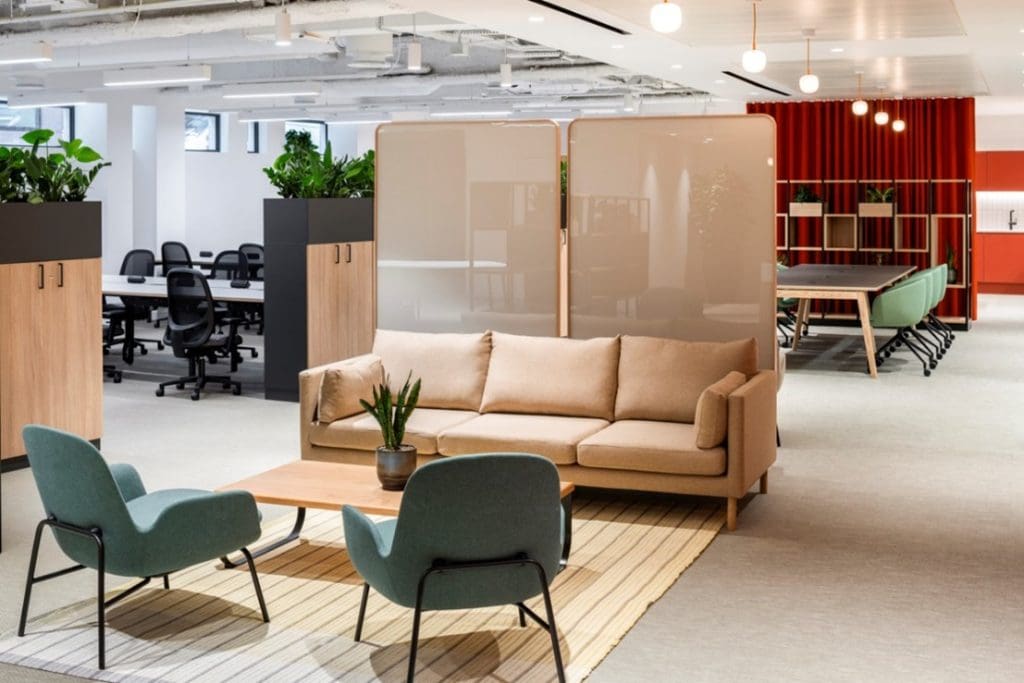
Make the most of your office planting by considering all aspects of the space. While floorstanding plants can be an obvious starting point, consider other alternatives, including hanging planting and small desktop plants that add an uplifting feel to workstations.

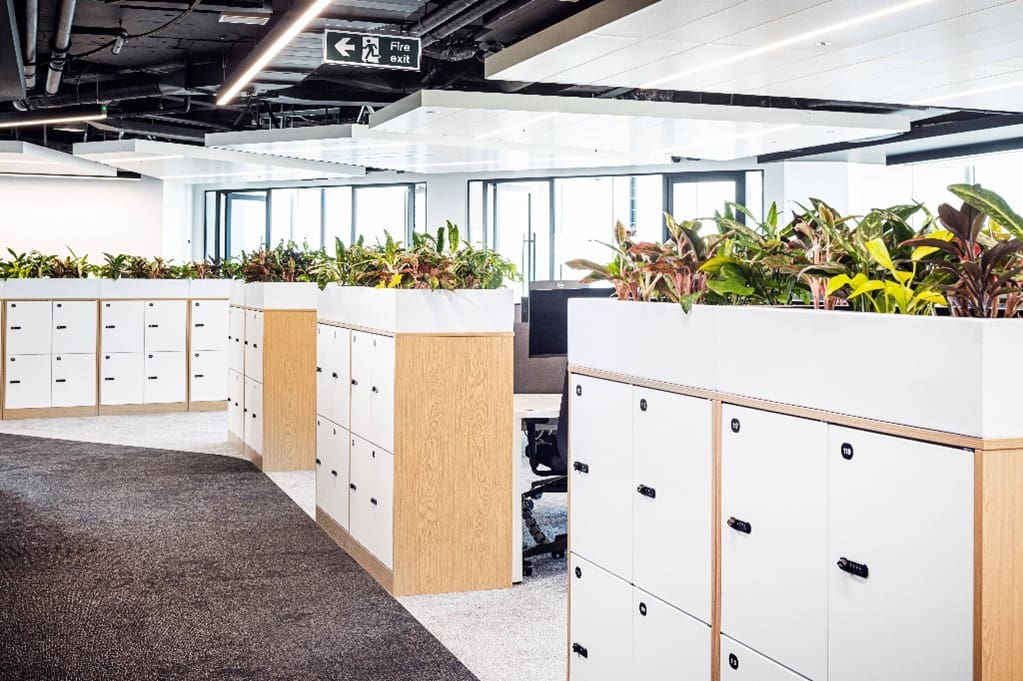
You may also like to choose a trailing plant that will cascade down from shelves, creating an eye-catching feature. At Planteria, our team enjoys developing innovative and bespoke planting solutions. For the below project we added planters to the tops of lockers, transforming a practical office essential into a decorative feature.

Planteria group

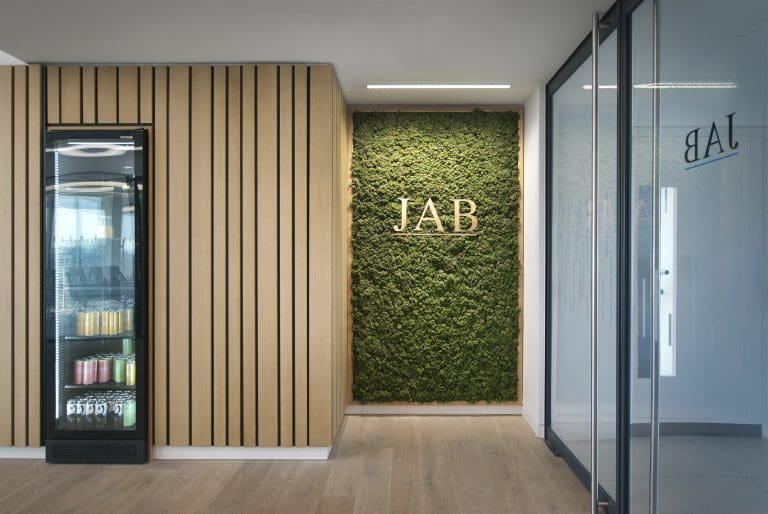
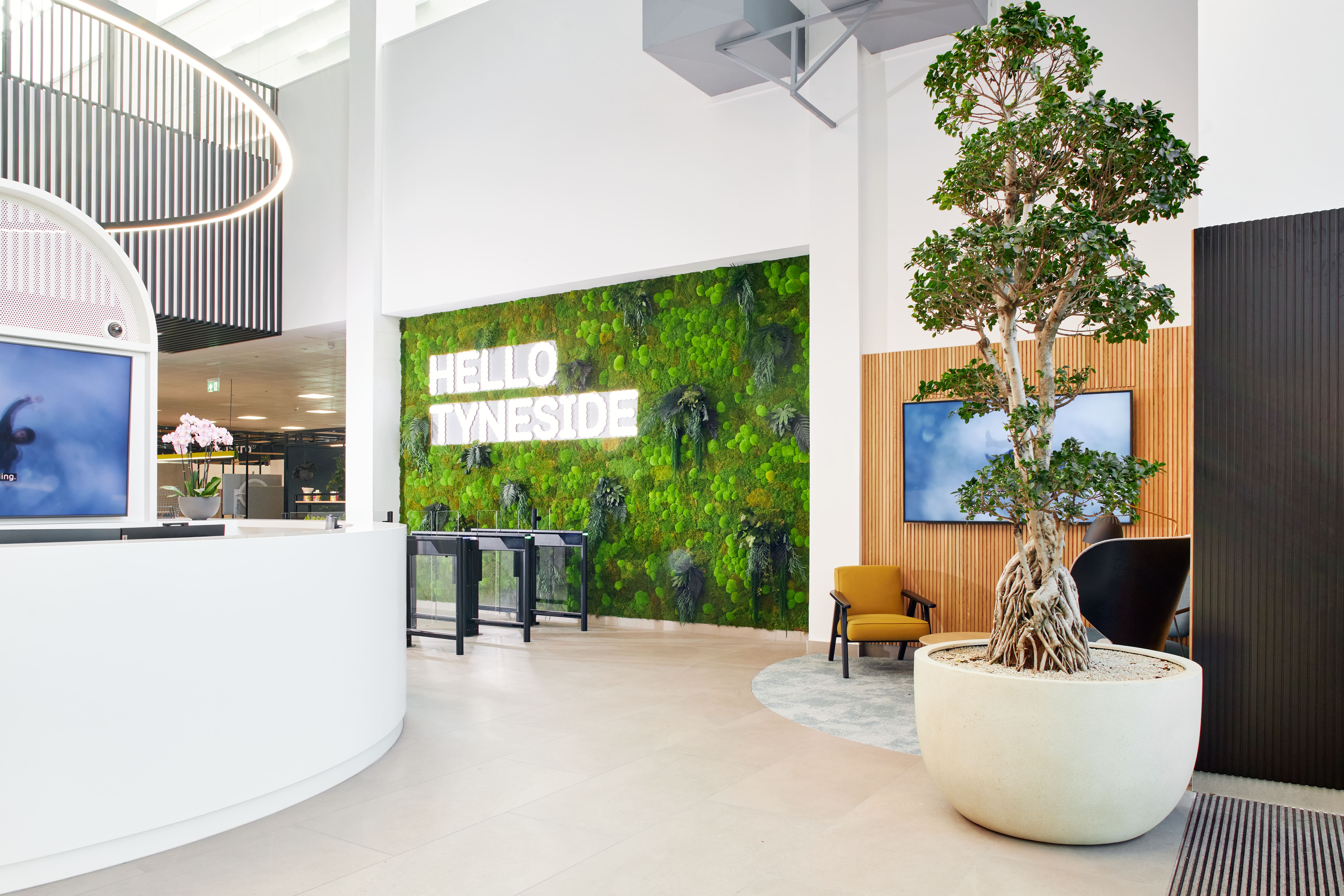
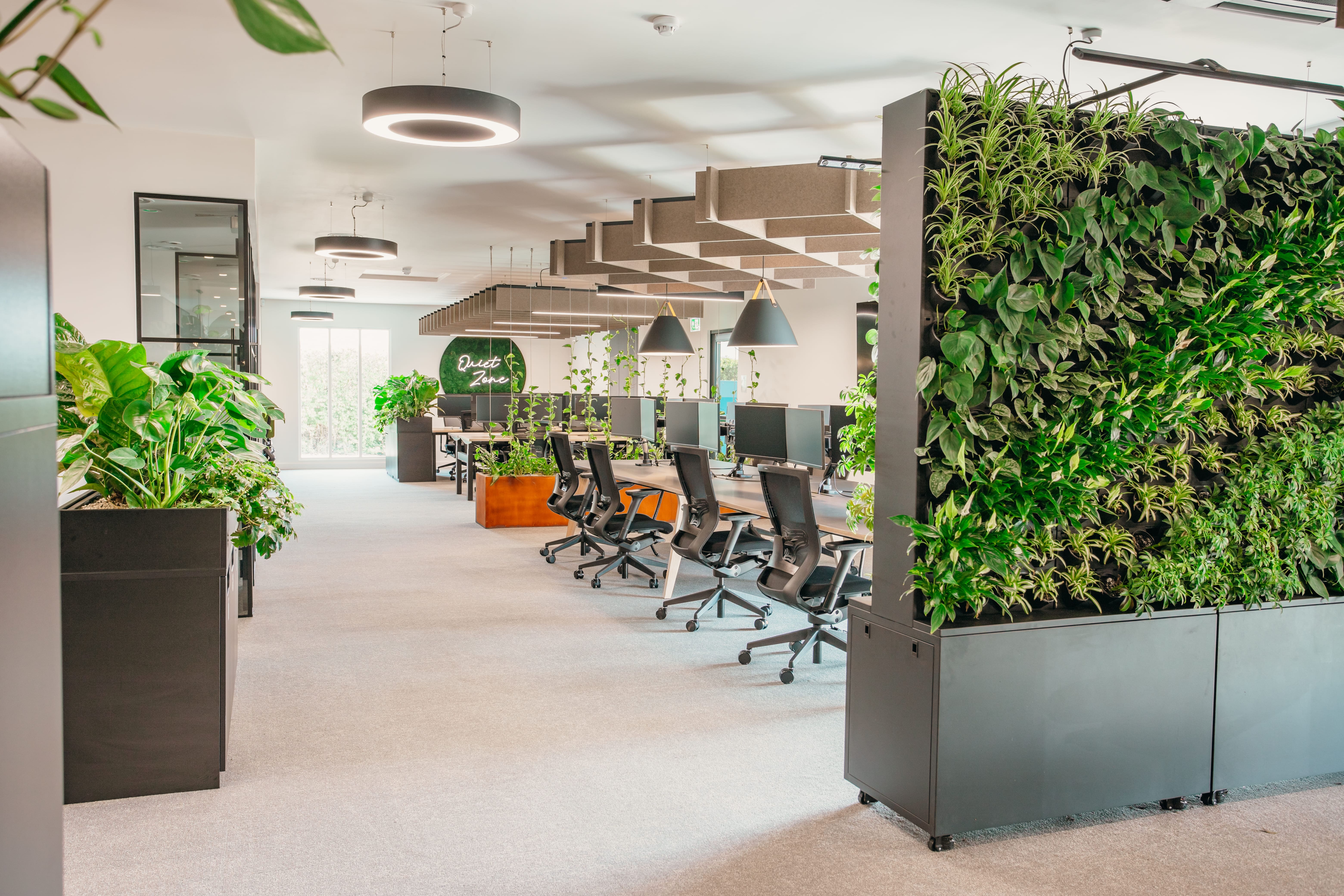
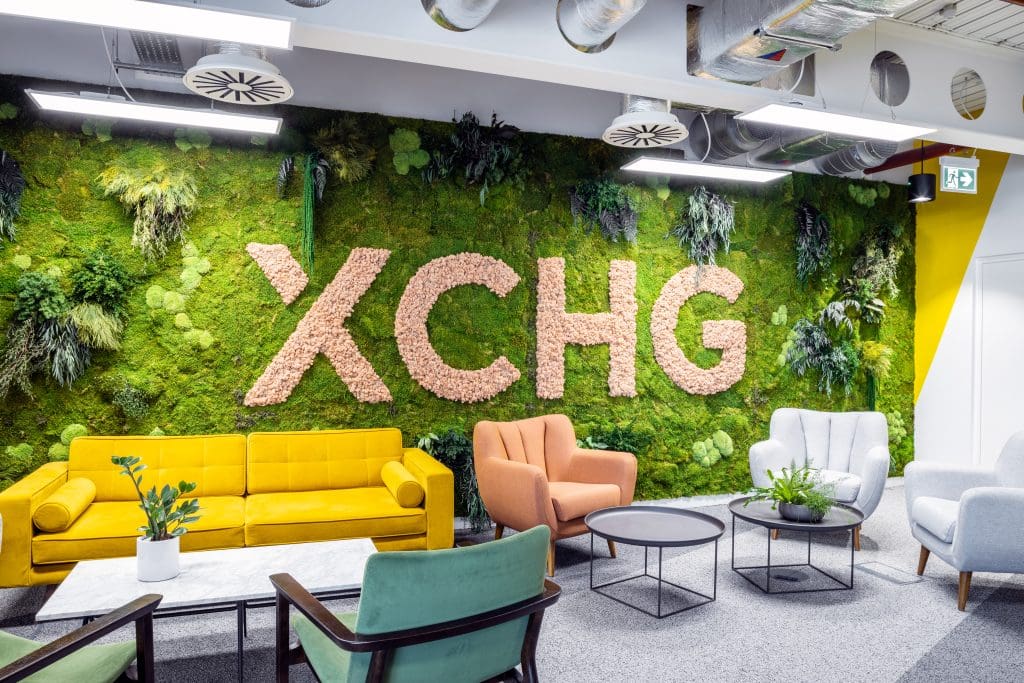
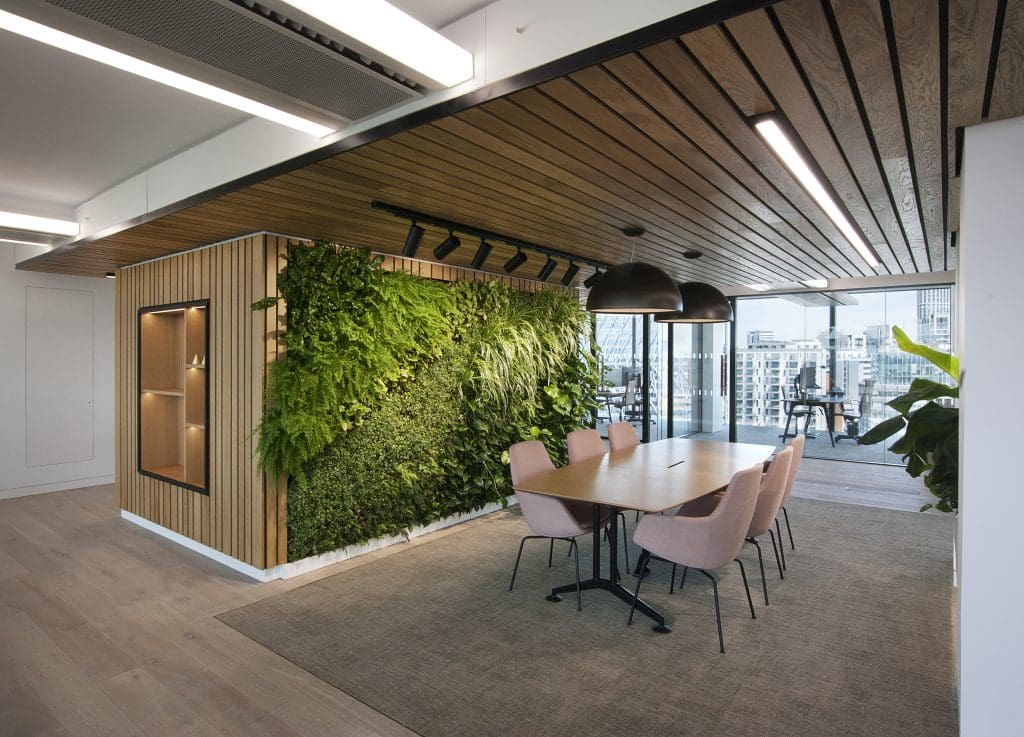
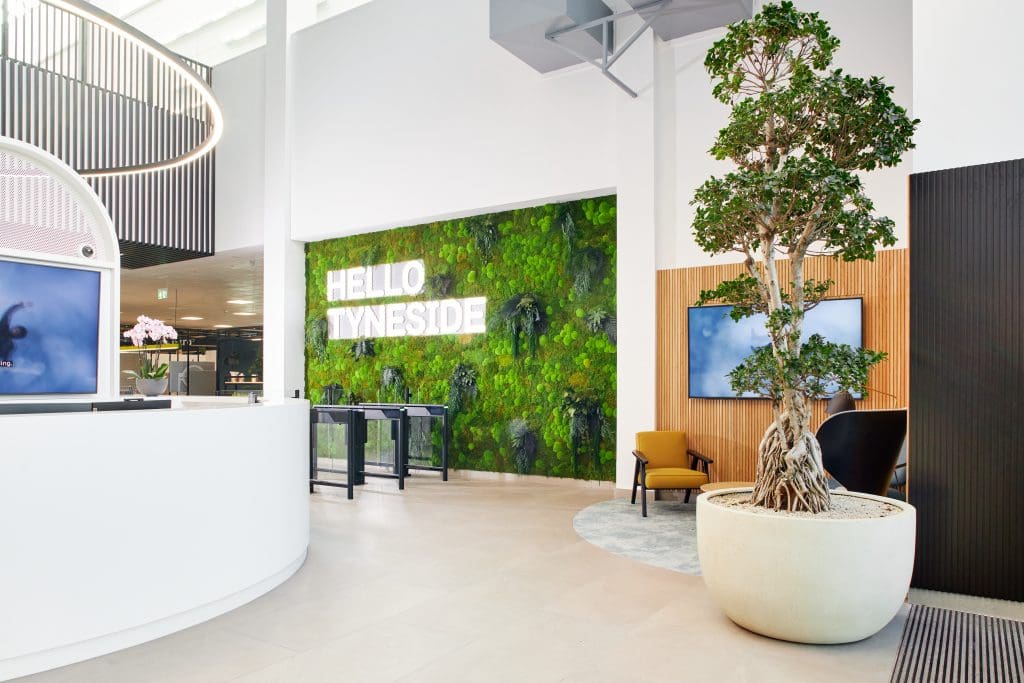
A moss wall can create true wow factor in your office. As well as looking incredibly impressive, moss walls reduce noise levels- perfect for loud office environments. Similarly, a living wall is an impactful office planting solution that won’t take up any floorspace. Consider a professionally designed and installed living wall that reflects your company and brand, even potentially incorporating your logo. Installing a living wall in a customer-facing area also creates a memorable first impression for guests.

Planteria group

As well as plants, introducing fresh flowers into your office will have an undoubtedly uplifting effect on your employees. Assemble bouquets yourself or make it a team bonding activity. If you’d prefer to leave it to a professional, the Planteria floristry team can assemble and deliver regular bouquets to your office. 

As well as creating an inviting and vibrant workspace for staff, they also help build a positive first impression for guests. For a simple yet striking option, choose an orchid. When combined with moss and flowers, they make an elegant addition to any office and are available in various sizes.

Planteria group

3. Sustainability

Sustainability is an important consideration with almost any purchase, and office plants are no different. Consider ways to make your office planting scheme more environmentally friendly. For example, Ecoponic is a pure mineral mixture of pumice and zeolite that acts as an alternative to soil. Ecoponic offers numerous benefits, including:

  •             Permanent structural stability that keeps soil airy and enables root absorption
  •            Optimal air pore volume, creating ideal conditions for growing
  •             Circular, allowing it to be re-used and recycled infinitely
  •            Peat-free, protecting vulnerable peatlands, wildlife and reducing emissions
  •            Efficiency in water storage and absorption
  •             Reduced likelihood of flies or pests due to a lack of organic material

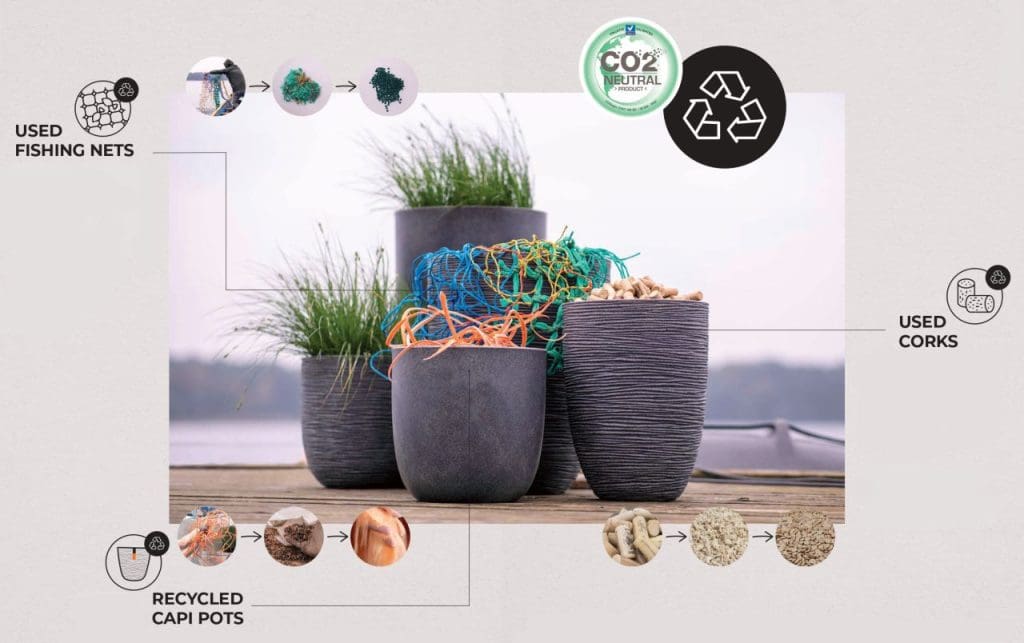
As well as planting material, pots also provide an opportunity to make a more sustainable choice. Elho pots are made from 100% recycled plastic using wind energy. Plus, they’re recyclable. Likewise, Capi produces various sustainable planting solutions. Capi Waste Line products are made from recycled cork and marine debris. 

Capi’s Nature range includes beige pots made from recycled sawdust, green designs made from recycled artificial grass and black options made from recycled textiles. When it comes to maintenance, Planteria also have a team of Walking Plant Technicians who visit client offices on foot to reduce emissions.

Planteria group

4. Creating a Story

Adding plants to your office space gives you an opportunity to be creative and incorporate meaningful links and references to your business. Our design team will create a planting scheme that matches your brand’s colours for a cohesive look and feel. 

The below example shows how our Planteria design team took inspiration from Experian’s branding guidelines:

Planteria group

Shades of purple and pink were infused into the cabinet top planting, naturally blending the company’s branding with the greenery. Most of the pots were chosen in neutral colours, accented with hints of blue tones to link back into Experian’s branding.

You may also wish to draw inspiration from your logo or product/service offering when planning your planting scheme. 

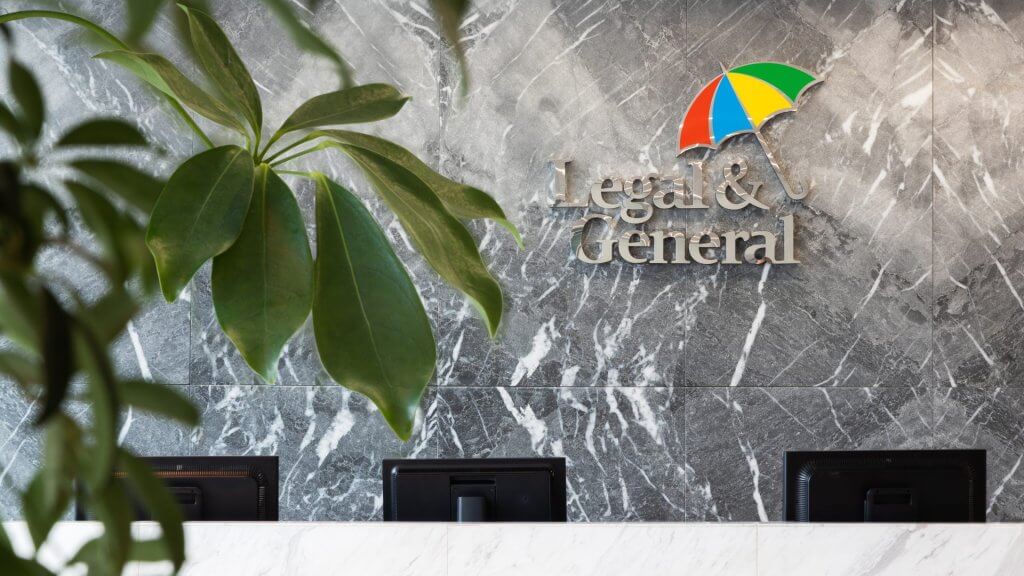
For example, when designing a scheme for a Legal & General whose logo featured an umbrella, we installed umbrella trees as a subtle yet clever nod to their brand.

Planteria group
Planteria group

5. Maintenance Requirements

While it’s natural to think about how your plants initially look, it’s crucial to consider how much maintenance they will require on an ongoing basis. Keeping your plants healthy and safe from pests can be a big task. 

Most businesses opt to appoint a plant maintenance contractor where specialist plant technicians will visit and tend to your plants. These services normally offer free replacements for plants that are unwell, dead or growing too tall. 

If you’re short on time and prefer to take care of your plants in-house, it makes sense to consider low-maintenance options, including ZZ plants, aloe vera, or philodendrons, which are great choices for those with busy schedules.

Planteria group

6. Size of the Plant

Before you go ahead and purchase your plants, it’s important to consider their size. Not just at the time you’re buying them, but the size they may potentially grow to. Larger plants can help to fill empty and expansive spaces but may overwhelm smaller rooms. 

Likewise, a very small plant in a large space can look disproportionate. If you have limited space, consider smaller plants or even desk-sized options such as succulents or air plants.

Planteria group

7. Air Quality Benefits

One of the most advantages of office plants is their ability to improve air quality. Some plants, like the philodendron selloum, dracaena warneckei, ficus benjamina and aglaonema greyound are known for their air-purifying properties, helping to remove toxins.

If you are wanting to make a significant difference to the air quality, it will require a large number of plants.  A living wall is a brilliant way of naturally increasing oxygen levels and air quality.

Planteria group

8. Employee Preference

Why not share the process of choosing your office plants with your employees? Ask their preferences and get them involved in the process. After all, they will be surrounded by the plants every day. Involving employees in the process can also make them feel more accountable for the plants when it comes to taking care of them.

Plus, it demonstrates your commitment to their wellbeing and creating an office space that they will enjoy working in.

Planteria group

9. Cost and Budget

Plants come in a variety of price ranges, depending on their size, rarity, and species. Be sure to set a budget before you begin choosing your plants so you can select your plants in alignment with your budget.

While more affordable plants like snake plants and spider plants are great budget-friendly options, if you’re working with a larger project, you may wish to opt for larger or more exotic plants that add a unique focal point to your space, especially when they’re positioned in a key area, such as centrally in the office or in the reception area.

Planteria group

10. Safety Considerations

If you regularly have young children or pets in your office, it’s important to choose plants that are non-toxic. Some common office plants, like the aloe vera plant, are safe, while others, such as dieffenbachia or poinsettias, can be toxic if ingested. 

Always check if a plant is pet-friendly before introducing it to the office if you know animals are going to be around.

Planteria group

11. Aesthetic Appeal

Looks aren’t everything when it comes to plants, but they do play a very important part. Consider the colour, leaf shapes, and sizes and how they will fit in with your office décor. If you’d like to create a minimalistic and contemporary office space, opt for sleek, modern plants like snake plants or bonsais.

For a vibrant or tropical aesthetic, choose plants with large, bold foliage such as monstera or fiddle-leaf figs. If adding plants is part of an office-wide refurbishment, consider making a moodboard beforehand so you can get a clear idea of the aesthetic you’re aiming for and which plants have been used in similar spaces.

Planteria group

12. Growth Rate

The growth rate of a plant will impact how often you need to repot it or trim it. If you prefer a more contained plant, choose slow-growing options that require minimal maintenance. For example, blue star fern, calathea and philodendron.

Some plants, like the ficus benjamina grow quickly and may require more frequent attention. Knowing the growth rate helps prevent your plant from outgrowing its space too quickly and allows you to stay on top of whatever maintenance is needed.

Planteria group

13. Temperature Tolereance

Plants have varying tolerances to temperature, so it’s essential to match them to your office’s climate. Remember to check the temperature and humidity levels in your office before choosing plants. 

Always got the heating on? opt for cacti and succulents that generally prefer warm, dry conditions. If your office is a cooler climate, choose ZZ plants, aspidistra and Phoenix date palms that can thrive, even in cooler, more humid environments. 

Planteria group

14. Pots and Containers

It’s not just the plant you need to consider; pots and containers have an important part to play in enhancing the visual appeal of your plant while also promoting healthy growth. Choose pots with proper drainage to prevent root rot.

Additionally, consider how the container fits with the overall aesthetic of the office. Ceramic, concrete, and modern metallic pots can provide a sleek look, while wooden or woven baskets create a natural and laidback feel. Likewise, square and rectangular planters and pots have a modern and streamlined appearance, while round shapes give an organic feel.

Planteria group

15. Seasonal Changes

Finally, it’s worth considering the impact that the different seasons will have on the plants you choose. Some plants may require additional maintenance during certain times of the year. Seasonality is also a consideration in terms of how your plants look too, with potential changes in leaf colour, volume and flowers across the different seasons.

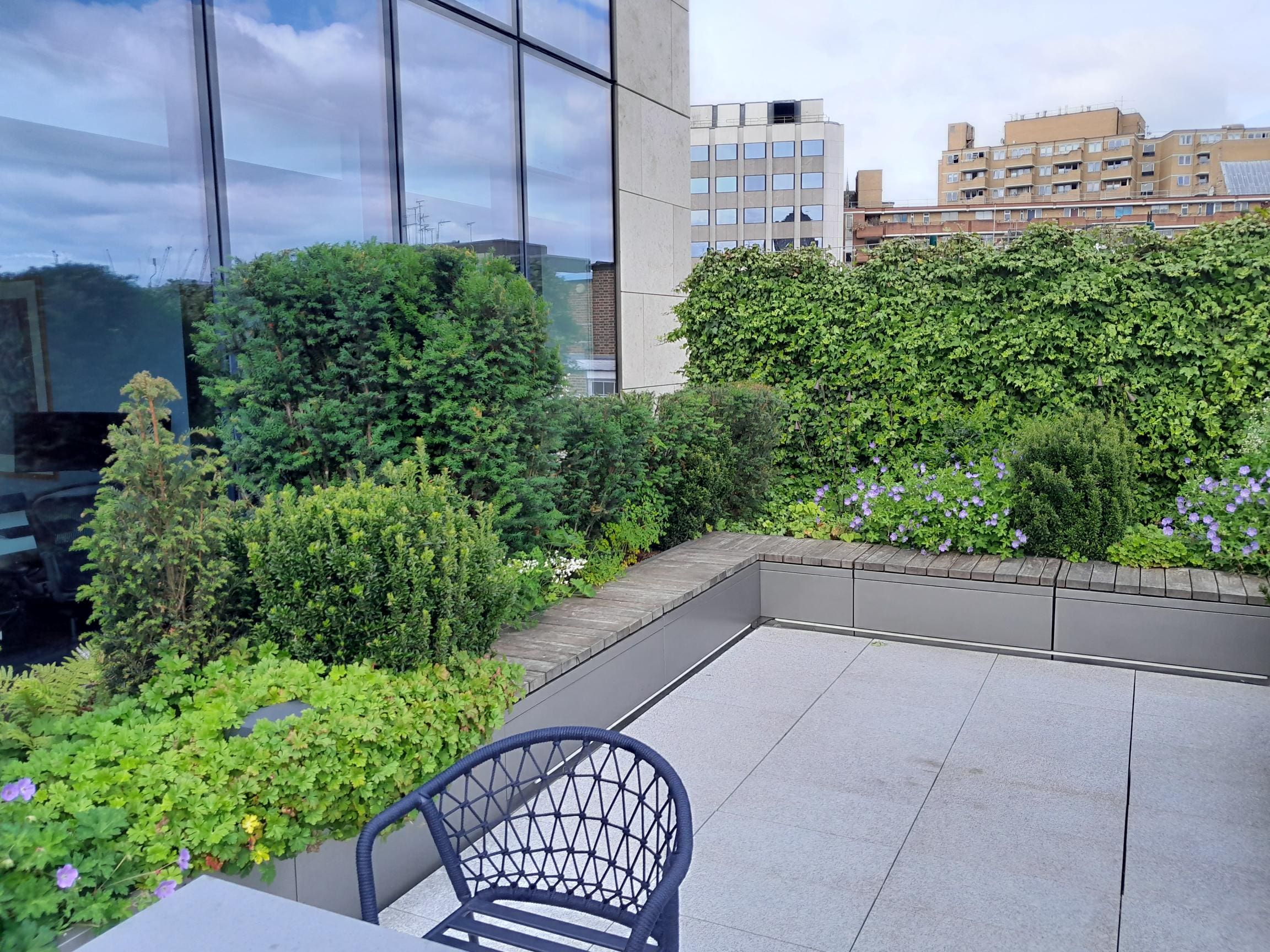
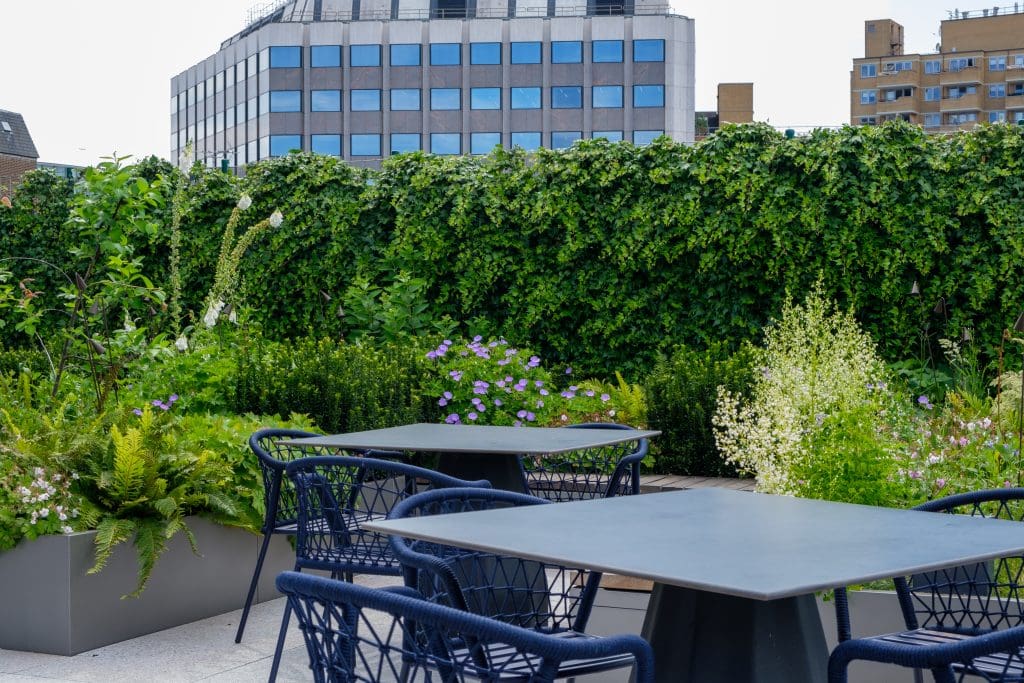
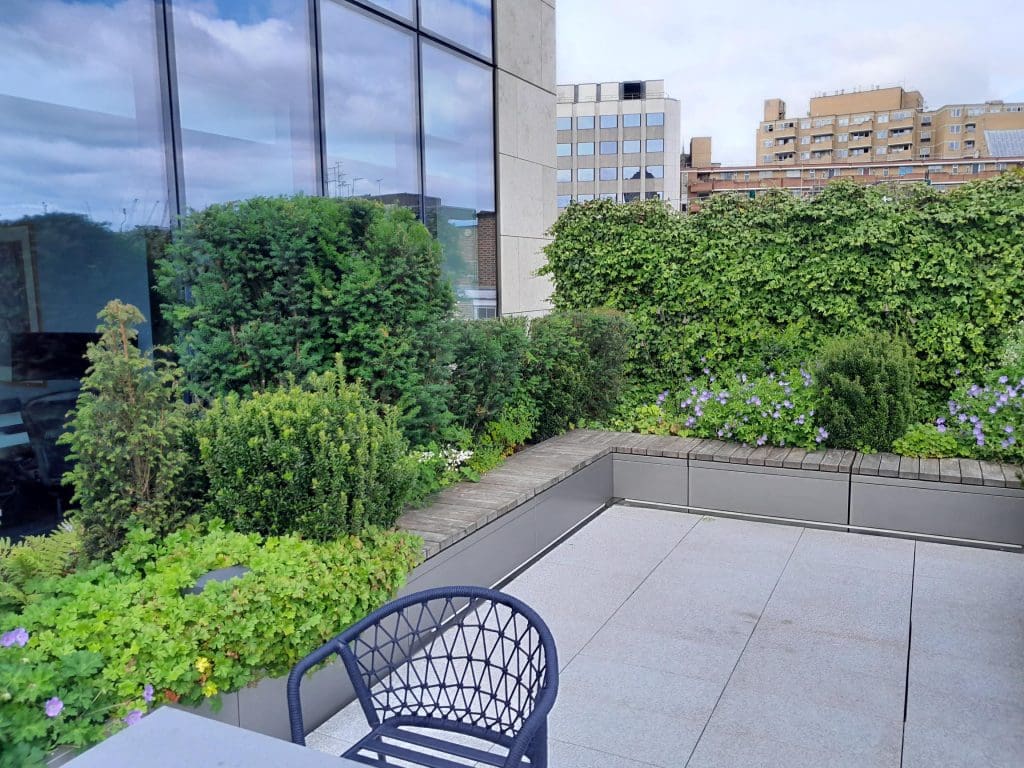
As well as considering planting inside your office, don’t forget about the exterior. Whether it’s at the front entrance or a terrace an exterior planting scheme allows you to enjoy greenery and seasonal blooms in your outdoor environment.

Planteria group

Conclusion

Picking the right plants for your office can depend on several features, in terms of both visual appearance and practical considerations. Keeping these 15 factors in mind allows you to choose a selection of plants that will suit your space and be suitably maintained, creating a healthier, more enjoyable workspace for all.

If you’re short on time or would prefer to leave it to a professional, consider contacting the friendly Planteria team. We can take care of everything from coming up with a design that suits your space to installation and ongoing maintenance.

Get in touch today to see how we can transform your office space.

Jll birmingham, a group of team members sitting in the auditorium

Read More

Discover ways to enhance your office environment with our expert insights on biophilic design, wellbeing, sustainability and the world of plants.

Office Space Saving Plant Ideas

Bouquet of yellow flowers and a laptop on an office desk

Managing budgets for office plants

A Facilities Manager may understand the phrase ‘squeezing a quart into a pint pot’ better than anyone else, and its hard to find office plant space saving tips. With office space, especially in City Centre locations at an all-time high, the careful planning and use of space is high on the agenda. For 2024 in the city centre of London rent is £77.50* per sq. ft with other areas also calculated by Oktra. Decisions about moving are not taken lightly and in times of growth, fitting more staff into your building can be like doing a 2000 piece jigsaw puzzle, painstaking and complicated! Modern-day Facilities Managers should perhaps be called ‘Workplace Managers’ as they now hold a much more holistic role, working closely with other senior colleagues to deliver a service to stakeholders that meet business objectives. It is no longer just about providing a safe, clean, fit-for-purpose environment where everything works well; it is now about providing competitive advantage, creating a strong brand image, employee engagement and retention. It is about corporate responsibility, green infrastructure, well-being and optimal productivity.

Why should you consider adding plants to your office space?

It has long been recognised that corporate planting is a key feature for the modern workplace with many benefits. Whether that means roof terrace space, ‘Green Infrastructure’ to break up the concrete jungle of an inner-city location, or planting solutions for interiors to bring tranquillity and beauty inside. Corporate planting is no longer just a ‘nice to have’, it has become essential. Including plants in your office space can be a great way to add some life and colour to your workspace. Desk plants, in particular, can be a great addition to your office desk. Research has shown that biophilic design relieves stress, negate ‘sick building syndrome’ improving sickness absence rates, improve air quality and plants of all shapes and sizes can help to restore concentration levels. The intricate patterns of leaves and office flowers do this by holding our attention, while making no demands on us, which allows our brains to rest and recuperate. In addition to improving your mood and productivity, desk plants can also help purify the air and add visual interest to your workspace. What is the answer then?

What are some office plant space saving ideas with limited floor space?

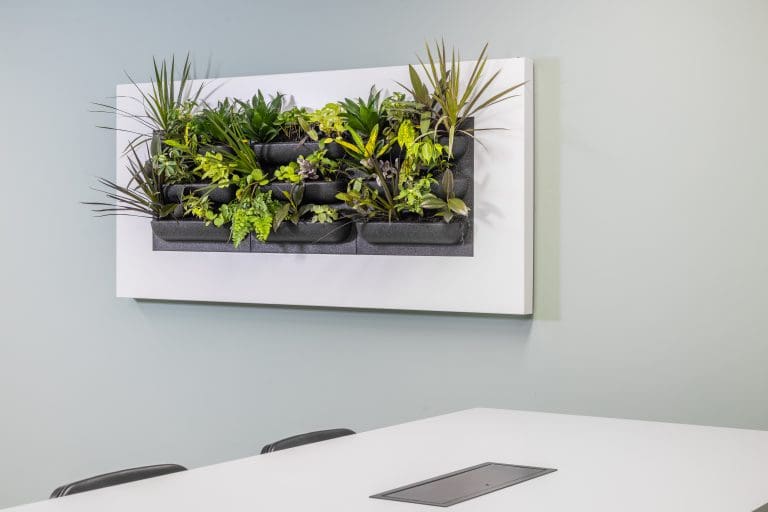
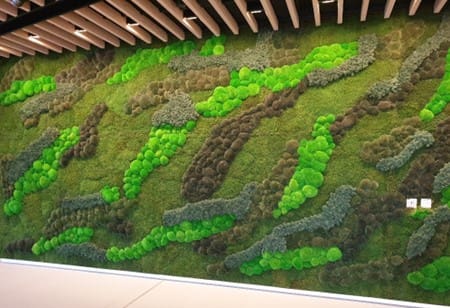
Office space saving plant ideas: moss wall Creative and innovative plant solutions are available. It’s time to think outside the proverbial box. Living walls bring a room to life and look stunning inside or out. Whole walls can be planted in striking colours and patterns, echoing your design theme or corporate logo. On a smaller scale, plants become art inside the office. Don’t hang static two dimensional pictures, instead hang living pictures, elegant frames full of lush green planting. Living pictures can be used anywhere to add the wow factor and transform a boring office wall. We are all striving to be paper free, keeping the office uncluttered, but there will always be a need for storage in the office. Stationery supplies, documents and personal belongings must have a home. Sometimes cabinets can provide structure to an open plan office, sectioning off areas so teams can work in defined spaces. Cabinets can multi-task too. Cabinet top planting can be used effectively to soften clinical open plan offices, bringing lush colour and life in to an otherwise bland space with the added benefit that it stops the clutter of left-over snow-drifts of paper from the printer and abandoned coffee cups.
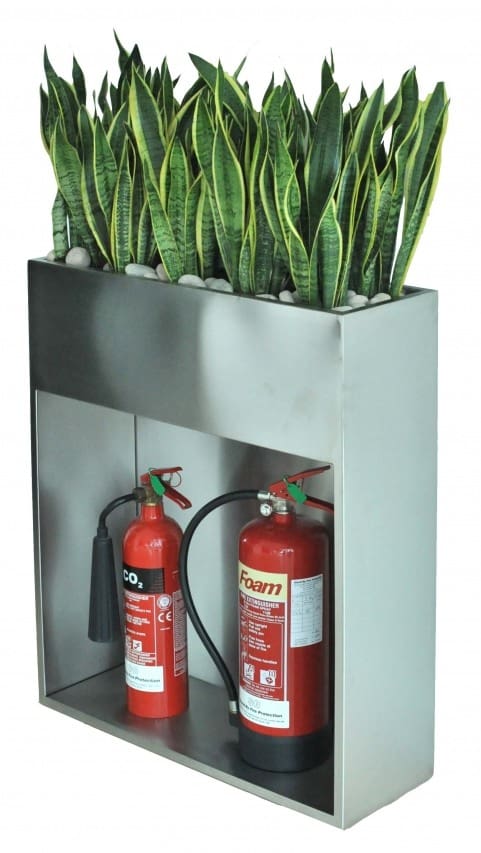
Creative office space saving plant ideas displays

Office space saving plant ideas: fire extinguisher If you’re a Facilities Manager, I expect you know the location of every fire extinguisher in your building. Do your staff know where these are too? How about a planted fire-extinguisher stand as the perfect multi-tasking furniture. It’s completely functional and it also makes an attractive office feature. One would argue that it makes the office safer as everyone will take note of the location of your firefighting equipment! Looking for something completely different? Upside-down planters give a totally different perspective. Hanging from the ceiling, they take up no extra space but they do add a fun, fresh, modern look to your décor. Working well over desk space, or to accent your communal areas, perhaps over the breakfast bar or dining tables. Now is the time to explore the myriad of possibilities and be open-minded about trying out some exciting new solutions in planting to improve your building. There’s so much choice it’s just a case of finding what works best for you.

Contact Us

When we nurture that connection by adding plants to our own environment, we feel in balance, happier and calmer. We are on a mission to raise awareness of the importance of biophilia in the built environment. We offer a single service solution for facilities management and cleaning companies, which is why we are the preferred choice for these companies. If you’d like us to present to your team office space saving plant ideas or share case studies of work we have done as well as, discuss how we can support you and give you the competitive advantage to win tenders which include planting, contact us today.   Information source:  Oktra- The Cost of Office Space in London 2024

We LOVE The Urban Jungle Trend

Having just a solitary plant by the window is no longer the norm – offices across the nation are creating their own little patches of green and incorporating plants into their interior décor.

The benefits of a green office space are many, from mental wellbeing to lower levels of stress. Green Plants for Green Buildings say that a productive office includes biophilic design or bringing the outside in. The urban jungle trend can help you accomplish this goal – and it’s a trend that we love here at Planteria.
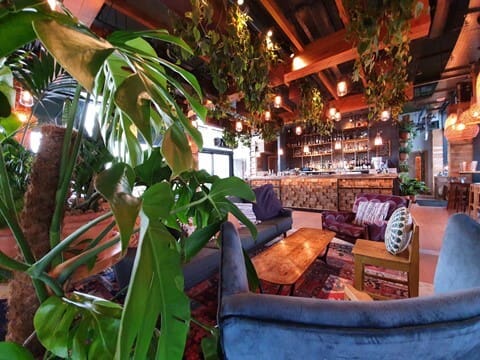
Planteria urban jungle

Why Do We Love the Urban Jungle Trend So Much?

By adding planters, plant stands, indoor plants, hanging plants and more to the office, you can create a ‘jungle’ in the building or workspace (and even at home!) that boosts people’s wellbeing and productivity.

And, at Planteria, we believe this interior trend is here to stay.

For a start, this is not a new concept, as people have been trying to create ‘jungle vibes’ in their home and place of work for a long time. If you look at the popularity of hashtags such as #urbanjungle, #junglestyle and #junglehome on Instagram, it’s clear this trend is not just a fad.

For example, there are almost 5 million posts just with the #urbanjungle tag!
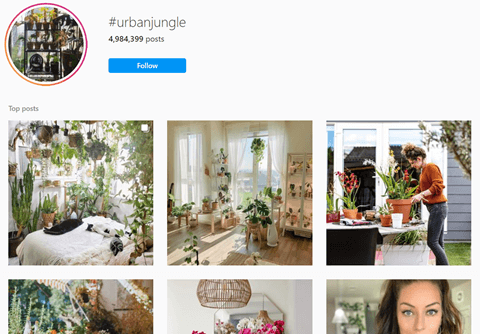
Instagram

Also, with a growing number of people living in cities (it’s estimated that, by 2050, there will be 2.4 billion more people in cities), bringing the jungle indoors is an increasingly attractive option.

It’s difficult for us to imagine life without greenery, so it’s no wonder that the urban jungle trend appeals so much to us. Plants can create a soothing atmosphere and are a brilliant addition to commercial spaces in general, including offices.
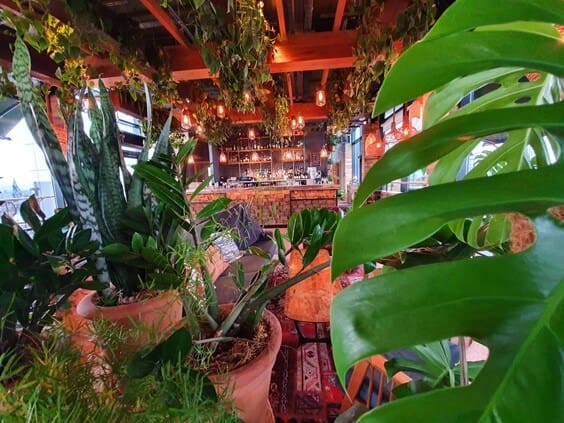
Urban jungle

After all, an office full of bright colours and vivid greens will make people feel at ease (since it meets their biophilic needs) and reduces employees’ stress levels. We also believe an indoor jungle can improve air quality, boost people’s moods and create a happier workplace, which is why we love this trend so much.

How Easy Is It to Reproduce the Trend at Work?

The short answer is that it’s incredibly easy to bring the jungle indoors with a trusted office plant supplier.

You don’t have to go as far as Amazon, who really took the jungle look to the next level by building the Spheres. These giant biodomes in their Seattle headquarters allow staff to escape the office and work surrounded by nature:

If you’re considering rewilding your interior, there are two things you must take into account:

  • That, besides the aesthetic, the space has to maintain its functionality as well.
  • And that you need to pick the right plants for your office.

So, with this in mind, make sure that the layout of your workplace still makes sense. The visual appeal and impact of the plants are undeniable, but you also want your employees and visitors to be able to easily navigate the office without obstacles in the way, for instance.

The urban jungle look is all about more plants and more coverage, so don’t skip the walls either – living walls or potted plants on walls can add to the jungle effect and maximise your floor space at the same time.
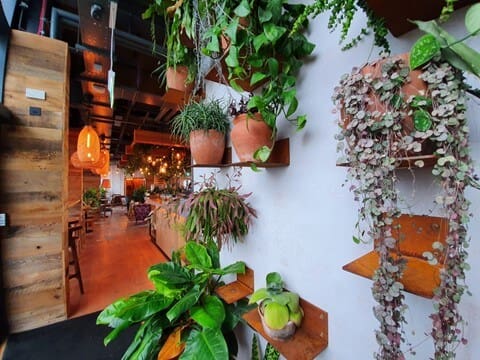
Planteria's urban jungle

Choosing the right plants for the office is also important because you want something that is easy to maintain. Plants require TLC to look their best and offices are usually busy places so, in order to keep up the jungle look, low effort plants and flowers should be top choice.  You can however leave that to us at Planteria Group and we can help pick the best ones for your space, and look after them for you too!

What’s So Fun About the Urban Jungle Trend?

Plants are a source of inspiration and this trend can help people to reconnect with nature and unleash their creativity. What’s more, plants bring life into interiors as well – if you remove all plants from a space, it’s easy to see how empty and boring it can look.

The urban jungle trend also allows people to have fun taking care of something living and to contribute to the aesthetic of their own home workspace, which appeals to many home jungle fans who prefer plants to pets, they are both cheaper and easier to care for and don’t require walking!
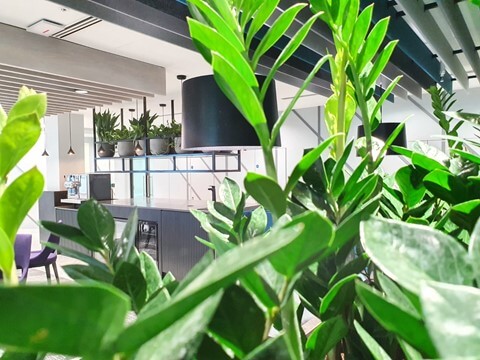
Urban jungle planteria

How Can Planteria Help?

Our expert plant technicians create solutions tailored to your workspace. We always take the building design and restrictions into consideration, which includes humidity levels, lighting and heat; this allows us to create a bespoke design that matches your unique requirements.

Our knowledge of office plants is unrivalled and we make sure to match your corporate image and select the right plants for your environment as well.

We have a wide range of plants to choose from, so you’ll be spoilt for choice with Planteria. From Dracaena Lemon Limes and Anthuriums to Sansevieria and Aglaonema Stripes, we provide beautiful plants for any type of office and sector, including hotels, restaurants and offices of every shape and size!
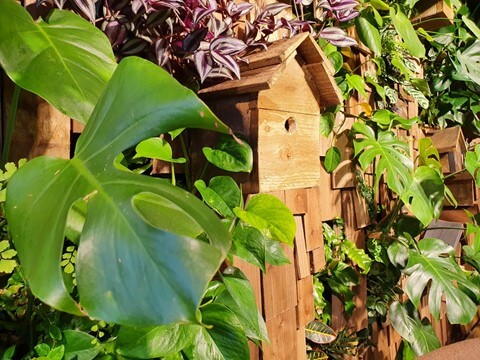
Planteria urban

We offer many options for corporate plants at Planteria, so get in touch today to learn more about them and how we can help create an urban jungle in your office.
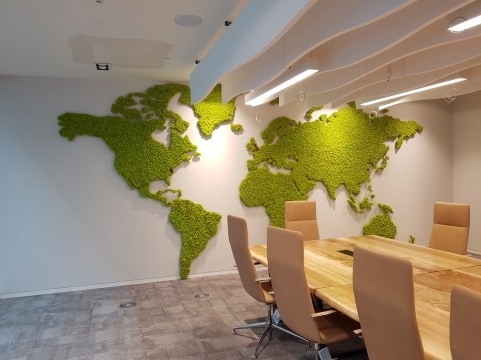
It’s Alive! Buildings With Living Walls

Xnewsthumbresizex481

Sadly, now that Halloween is over for another year, this isn’t an exposé on haunted houses, but it is about the benefits of biophilia. By adding a living wall to your building or office, you are more likely to improve your employee retention rates. This article will look at some of the benefits of having an office moss wall, whilst looking at some of the most inspiring uses of nature on buildings from around the world. Could your building be the next Churchill Arms?
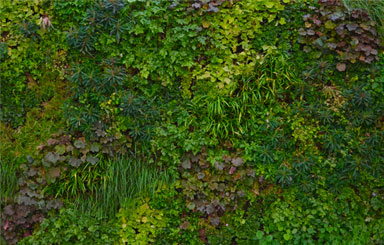
Planteria group


The Benefits of Living Walls, Moss Walls and Living Pictures

It is well known that having plants in an office has many benefits. For example they can increase motivation and productivity by up to 15%. This means that smart employers are sure to be investing money in greener office environments. Some employers, especially smaller start-ups, might worry about the amount of space required to make an office green – a legitimate concern – which is one of the reasons why an office moss wall, or a living picture is an attractive option.

Living walls make use of space that isn’t being used already; without taking up precious floor space, they still offer all the benefits of having plants in the office. Faux versions are also available, whilst not so environmentally friendly, they do have the benefit of being low maintenance and long lasting and will give the outdoors indoors look.

In the past offices were often minimalist and stark, featuring black, grey and chrome. This look suggests power and efficiency, but an austere interior does not allow for individuality and it does not encourage creativity either.

We recommend that offices steer away from this power-oppressive mindset, and instead employ more plants into their designs. This will bring an eco-friendly touch, and with a specialised office moss wall, you won’t be sacrificing the professional aesthetic of your office either.
Planteria group

There are plenty of ways to incorporate an office moss wall into your building. By looking at some of the world’s most famous living walls, you might find yourself feeling quite inspired.


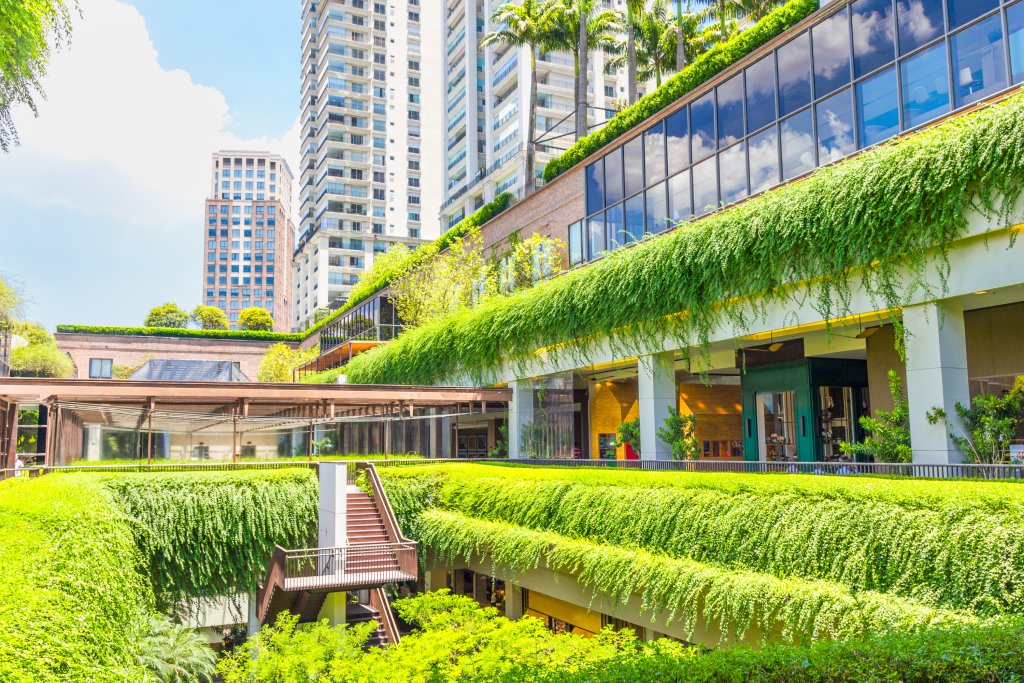
Cidade Jardim Shopping Mall (Sao Paulo, Brazil)

The Cidade Jardim shopping centre is inspired by the world’s most luxurious streets, and it makes extensive use of plants both indoors and out, and each of its stores overlooks a modern garden.

Cidade Jardim is Portuguese for ‘Garden City’, which could not be more true for this shopping centre. Climbing plants festoon the walls and balconies, and the floor gardens between the shops have natural-styled chairs for shoppers to take rest in.
Planteria group


The Churchill Arms Pub (Kensington, London, UK)

The Cidade Jardim shows how lots of plants can be used in a retail setting, but the Churchill Arms shows the draw of a spectacular planting display extravaganza that cannot be missed. Every year, The Churchill Arms beats every other establishment in London with its Christmas cheer, which has a noteworthy effect on its sales, too.

Each Christmas, punters flock to book their meal at the infamously Christmassy Churchill Arms in Kensington. It truly is a sight to behold. Consider what kind of audience your business attracts, and whether you too could benefit from showing off your Christmas cheer. When it comes to commercial Christmas Trees, you’ll be wanting the best if you want to stand out.


Edgware Road Tube Station (Marylebone, London, UK)

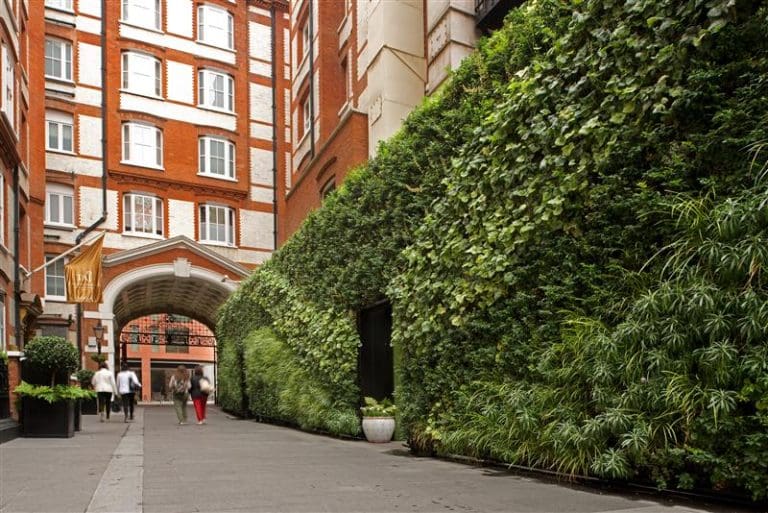
London is becoming greener and greener each year. The Churchill Arms is one example of green Christmas cheer, but living walls can thrive all year round. The Edgware Road tube station in Marylebone, London, is one such example of an outdoor living wall that is not just eco-friendly, but artful too.

Holding an amazing 14,000 plants from 15 different species, Edgeware Road is a vibrant example of how you can attract attention to your business through living walls. These plants curl around one another in waves of colour and texture that really catch the eye.


Moss Walls

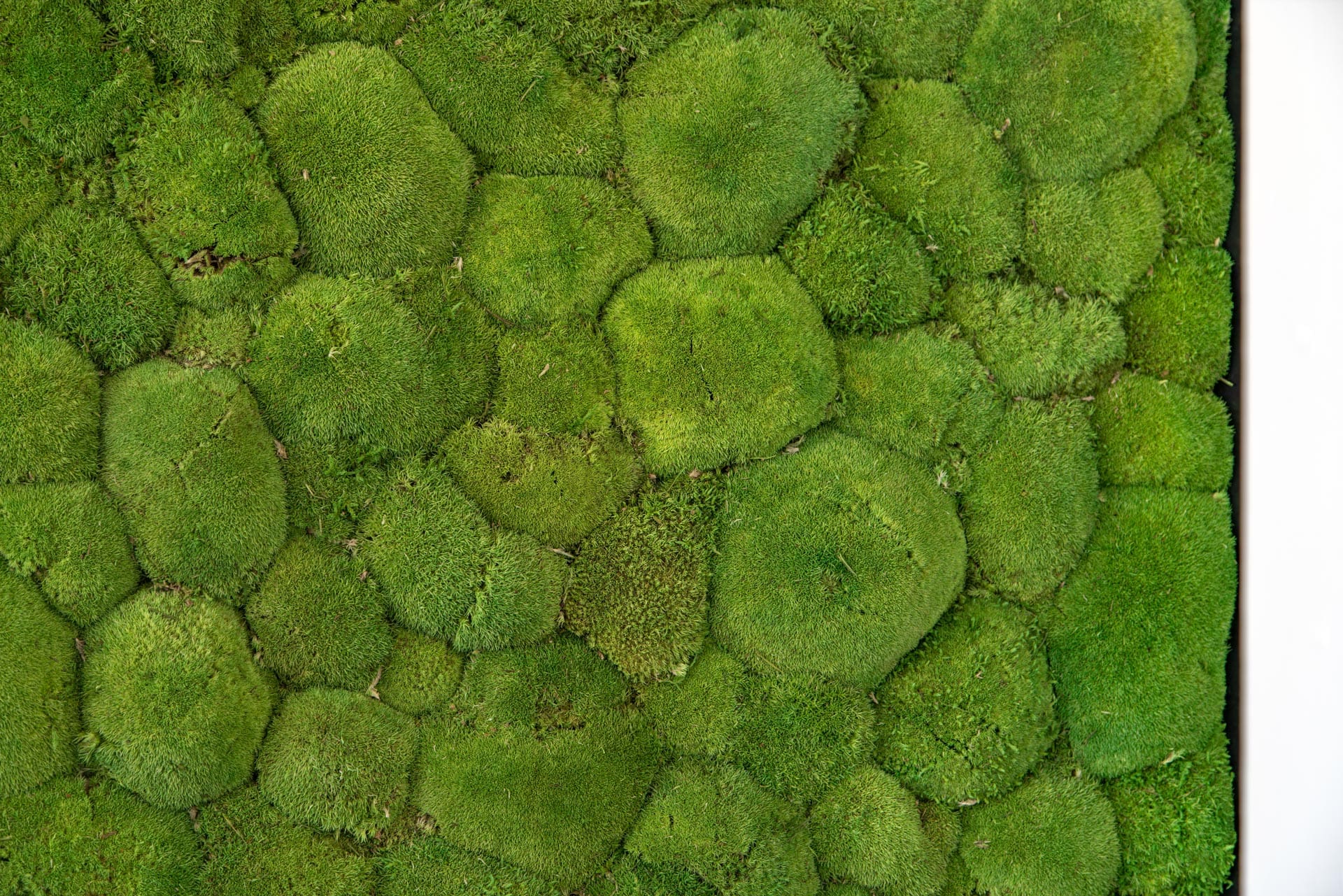
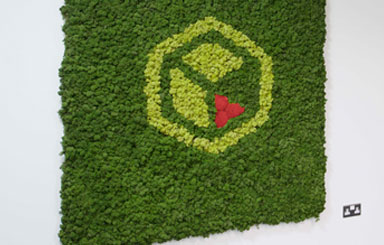
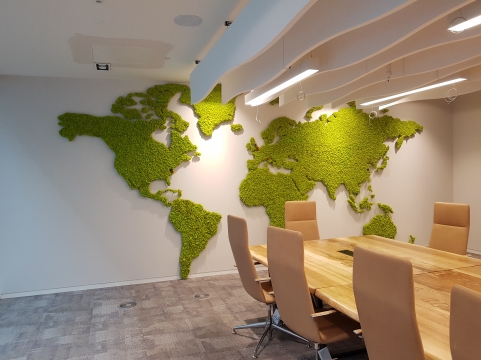
Moss walls are a fantastic option for businesses looking to make their offices greener. They are low-maintenance, space-friendly, and very decorative. Differing from other living walls, moss walls (made from preserved moss) do not require water or light and will neither grow nor decompose.

We stock moss in 16 different colours, and we’re able to create an entirely personal design for your office moss wall, such as your company logo.
Planteria group

Keep your building or office looking lively by introducing more plants. Your employees will surely benefit from it, and therefore so will your business.

If you have any questions about living walls or office moss walls, don’t hesitate to get in contact with us. Likewise, if your creativity has been sparked by some of the amazing walls we’ve covered in this article, why not request your free quote on a moss wall today?
Planters, Containers and Your Office Aesthetic

Xnewsthumbresizex481

When we talk about biophilia, we are referring to how adding plants and nature to your working environment can help staff to feel happy, creative and more productive all at the same time, but did you know that changing up the container of a plant can drastically change its appearance? In this article, we consider the effects that different containers can bring to plants and how we can match them to your business’ aesthetic.

Planting Can Change How You Feel & Behave

Smart biophilic design can create a workplace which improves employee performance, health and wellbeing. For many, the aesthetic of their office may seem like a luxury that should be the last thing to be considered in current financial climates, but when it comes to biophilic design, you should be asking yourself whether your business can afford not to implement these strategies.

It’s well known that some of the biggest businesses in the world use biophilic design to maximise their output. Google, Amazon and Apple are all filled to the brim with plants, living walls and health schemes, and when you consider the statistics that plants in the office make you 15% more productive, you can understand why. Can your company afford to be losing out on that 15%?

By adding just a few desk plants to your office environment, you can positively alter the aesthetic to benefit your employees. It’s not all down to desk plants, however, as you should also try to maximise natural light, natural materials and scenic views if you’re lucky enough to have any.

If you have any further questions regarding biophilia, we recommend that you read one of our blogs on the subject:

Biophilia – What Is It and Why Is It Important?

Biophilic Design in the Workplace

Biophilia White Paper


How Containers Can Change Plants

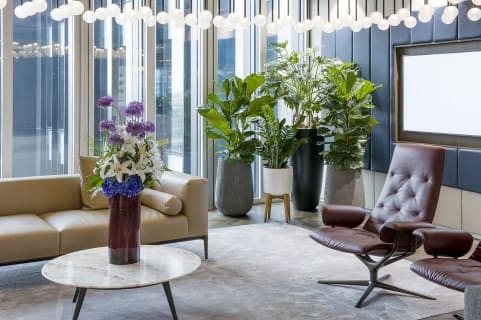
Plants come in all shapes and sizes, and the containers they come in can also substantially alter their image, whether you’re looking for plants which add a bit of fun and colour, or something a little more sophisticated which exudes style in the lobby or meeting room, we have it all.

For example, a group of bespoke ‘statement’ planters, like the ones in the image at the top of this blog, in a variety of finishes and in a complimentary colour palette can provide the perfect finishing touch to a space and can tie a design scheme together perfectly. Whilst some fresh white planters with a mix of different plant specimens can add light and vibrancy to an office that might otherwise feel too corporate.

We can source almost any plant or container, so you are limited only by your imagination. We can even match containers and planters to your company’s corporate colour-scheme.

Move on to the next section for some examples of beautiful plant containers that you could enjoy from your office soon:


Attractive Containers Made to Inspire

Planters and containers come in all shapes and sizes. Tiny planters can be dotted around on desks and reception areas to create a homely feel, adding detail that shows you care, and allowing all your colleagues to benefit from biophilia. Small planters are perfect for succulents which are very popular at the moment and come in a wide variety, and in different shades. A selection has been used in the workspace below, with stunning effect, in this ‘industrial design’ style using a palette of black, stone and copper:
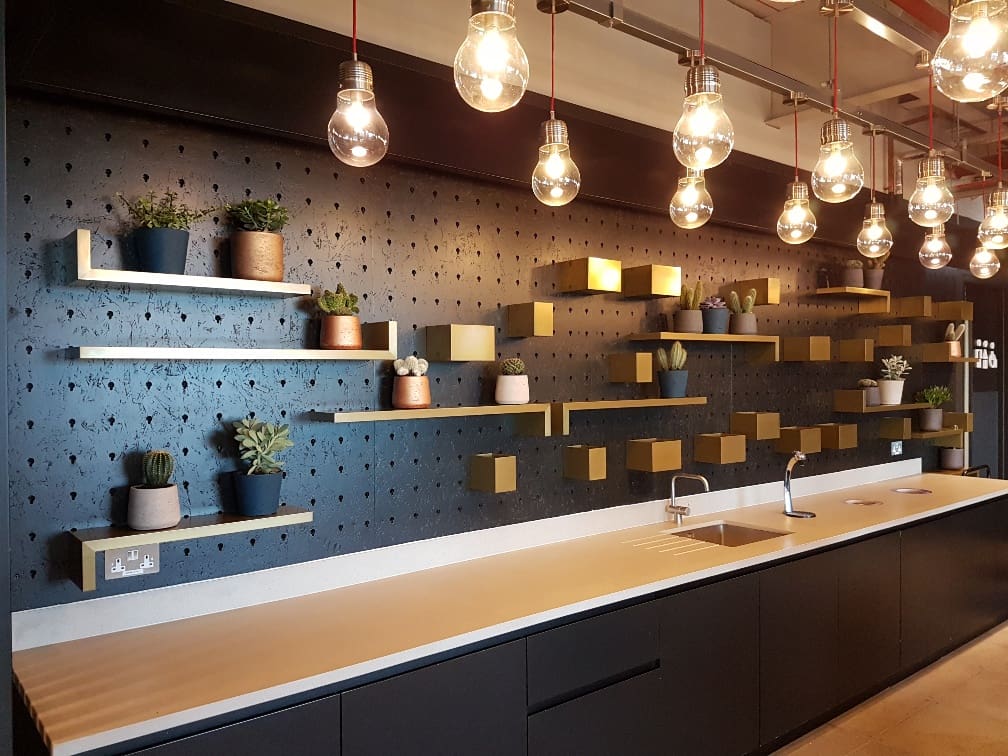
– Artistic Design Using Mixed Planting

Succulents in tiny pots office biophiliaThese plants work especially well on a smaller budget, and they show just how important quality products and design planning are when incorporating plants in your décor.
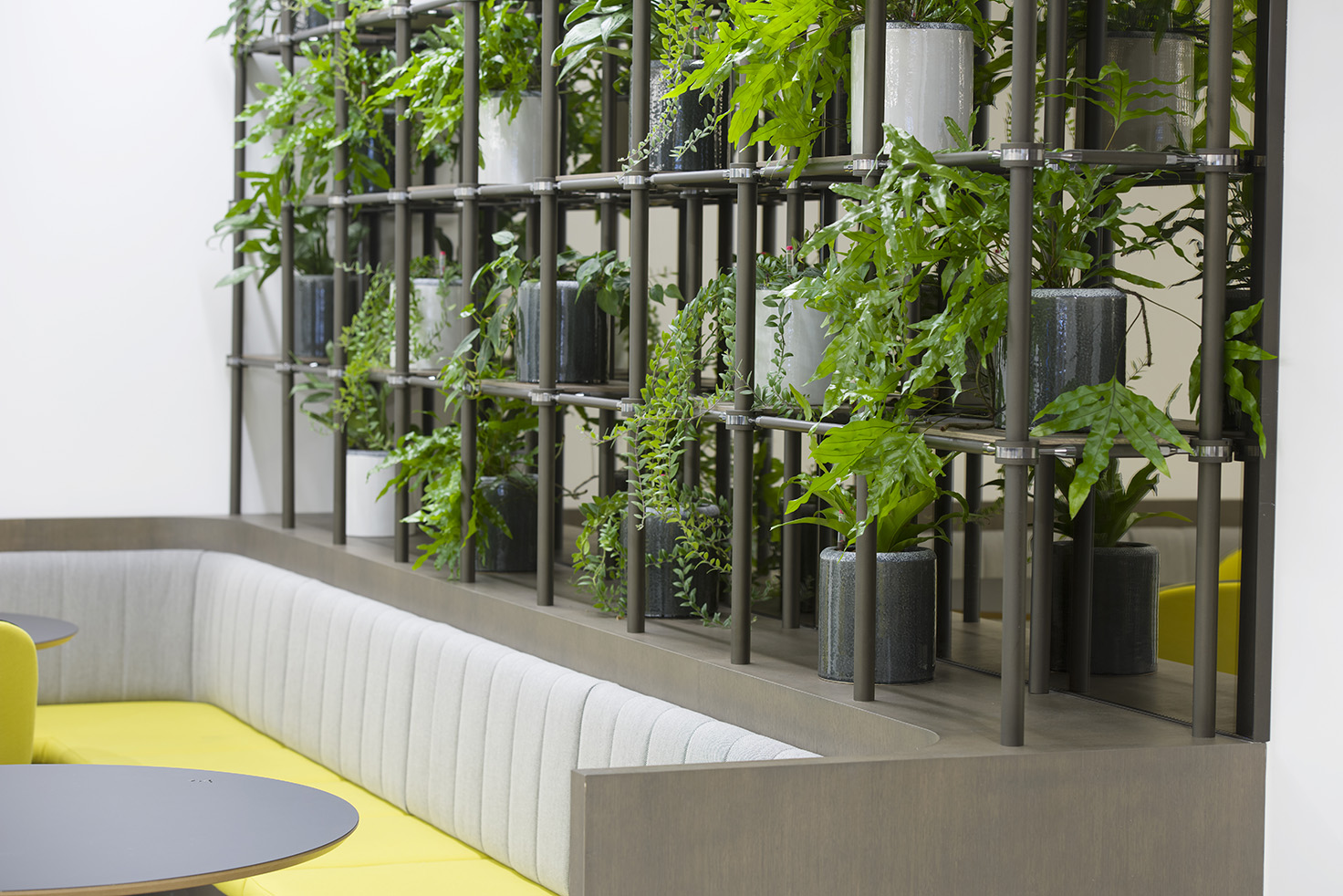
– The Perfect Partner to the ‘Industrial Design’ TrendPlant rack office biophilia

Staying with the Industrial Design trend, this image showcases the benefits of vertical storage for getting those biophilic themes into your office or social space. This plethora of planting is bright, vibrant and friendly, which is sure to motivate and brighten the day of anyone using the area. The containers for these plants are uniform which juxtaposes with the individual nature of each plant in the frame, contrasting the symmetry against the soft natural greenery.

The use of mirrors at the back of the space also maximises the amount of light in the area and gives the illusion of doubling the number of plants, further proving that quality of product and smart planning can go a very long way to creating the perfect biophilic atmosphere.
Planteria group

– Pots on Legs

Pots with Legs are all the rage! We love them too. These containers stand out, and you can choose from brass, wood or metal for contrast to the pot colour. Plants are elevated to a new height and given the same status as a prized piece of art. This trend brings a sense of class to the plants, giving them a modern edge that would look stylish in almost any room. There are plenty of innovative ideas, so don’t doubt that we can find something to suit your setting.
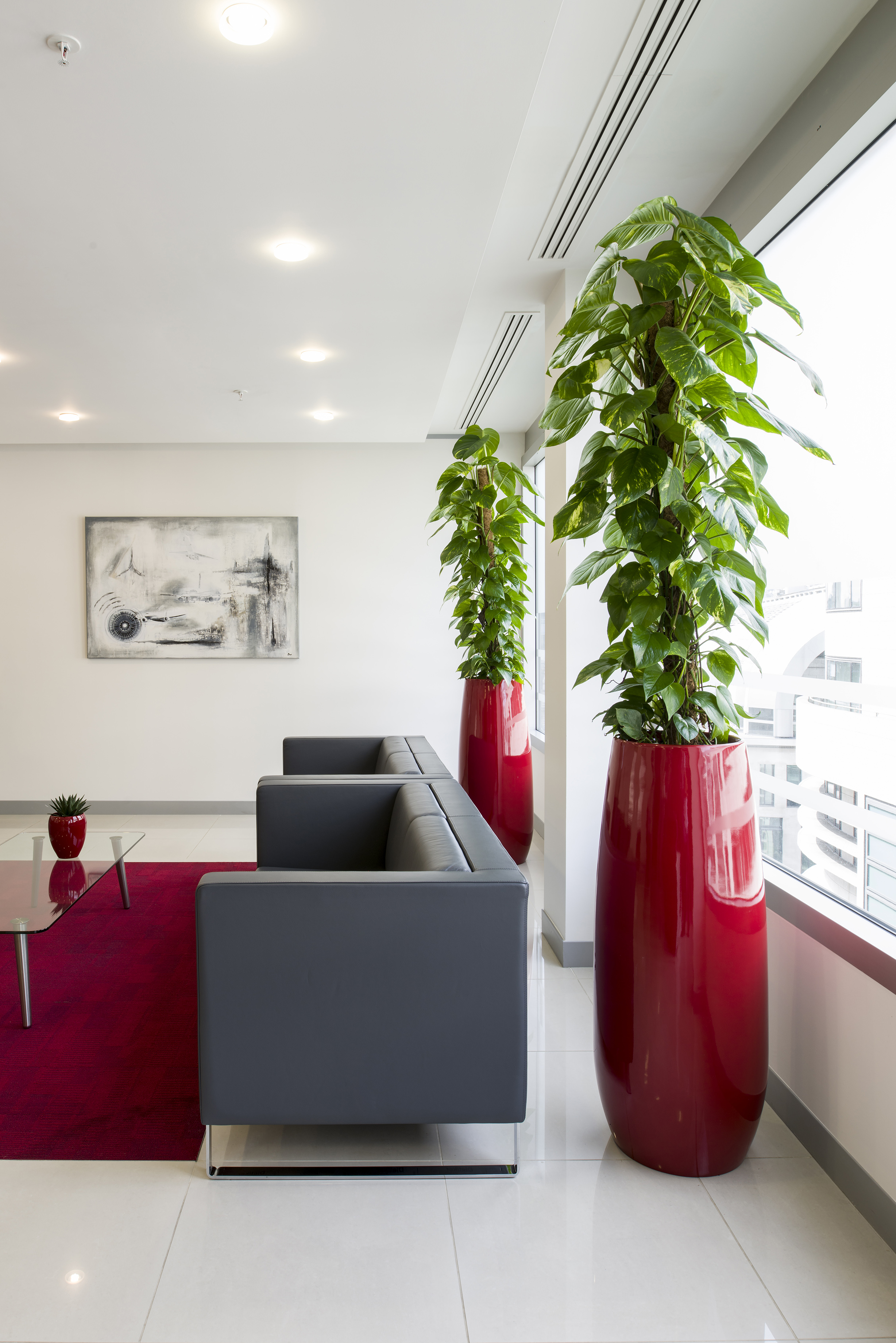
Office with two large red plant pots

We can provide a range of planters and containers in any colour and a variety of sizes. The only thing limiting you is your imagination, and we can offer you our design assistance to help overcome any struggles with space or budget. Simply contact us for more information regarding our indoor plants.

 

The Top 5 Plants for Your Office

Planteria group

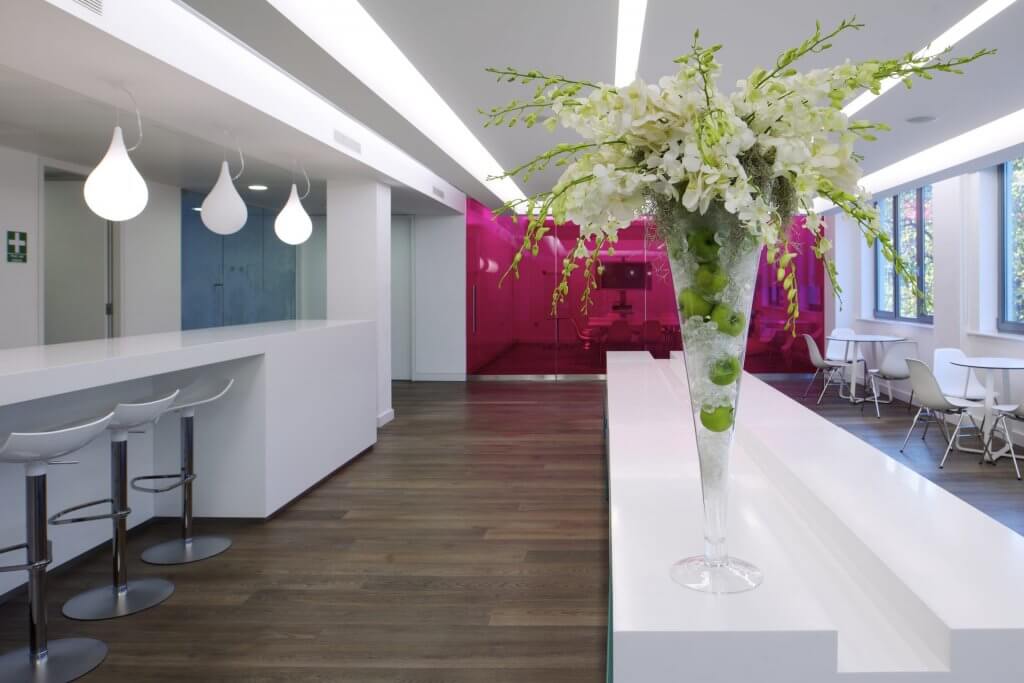
Everyone who has ever worked in an office knows that plants and flowers add to the atmosphere of a workplace. The buzz of background noise can not only be distracting, but can also increase levels of stress – particularly in open-plan offices where space is at a premium. You can reduce noise problems with plants because they absorb sound, making your office quieter and calmer.

Positioning plants in strategic locations around your office will create natural sound barriers. Even if you’re not buying plants for their sound reduction benefits, their potential to improve staff productivity and well-being means that even the smallest tree could work wonders for your office. This was discovered by a research experiment at Texas A&M University, which explored the link between flowers, plants and workplace productivity during an eight-month study.

Those taking part in the study performed creative problem solving tasks in a workplace with plants and flowers, a setting with sculptures, and an environment with no additional planting or decoration at all.
Planteria group

Participants were found to demonstrate more innovative thinking and generate more ideas and original solutions to problems in the office that included plants and flowers. Men who participated in the study generated 15% more ideas, whilst women generated more creative, flexible solutions to problems when plants and flowers were present.

With this in mind, we thought we’d share with you the top 5 office plants requested by our clients.

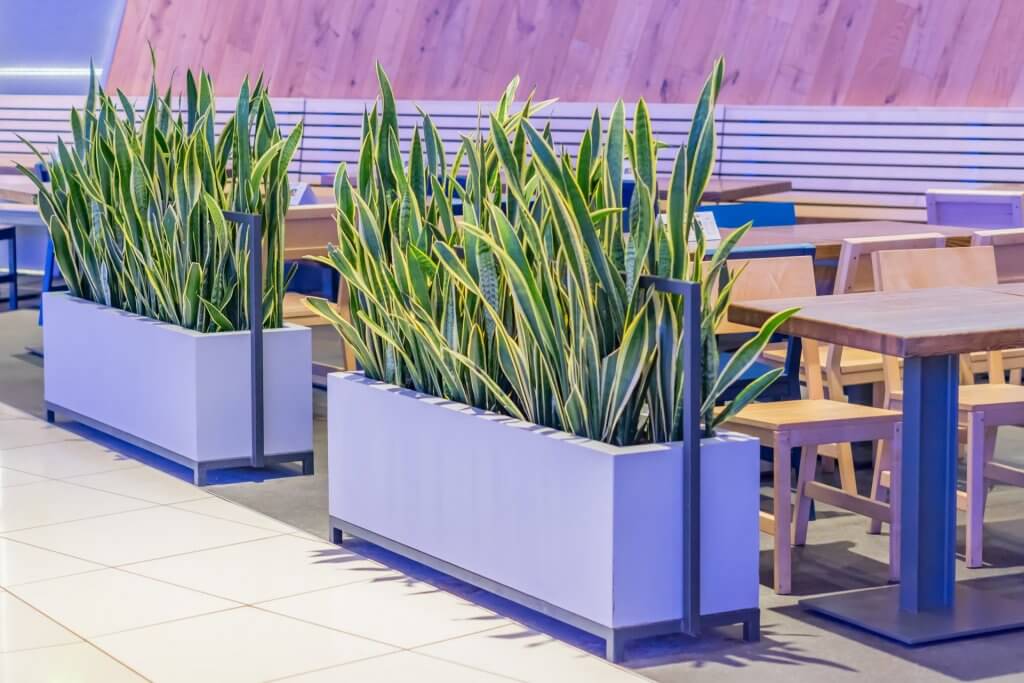
1.       Sansevieria Fernwood or Sansevieria Mikado

Sansevieria is a genus of about 70 species of flowering plants, native to Africa, Madagascar and southern Asia. Common names include snake plant, mother-in-law’s tongue, devil’s tongue, jinn’s tongue, bow string hemp and snake tongue. These are great air purifiers, making them perfect for offices.
Planteria group

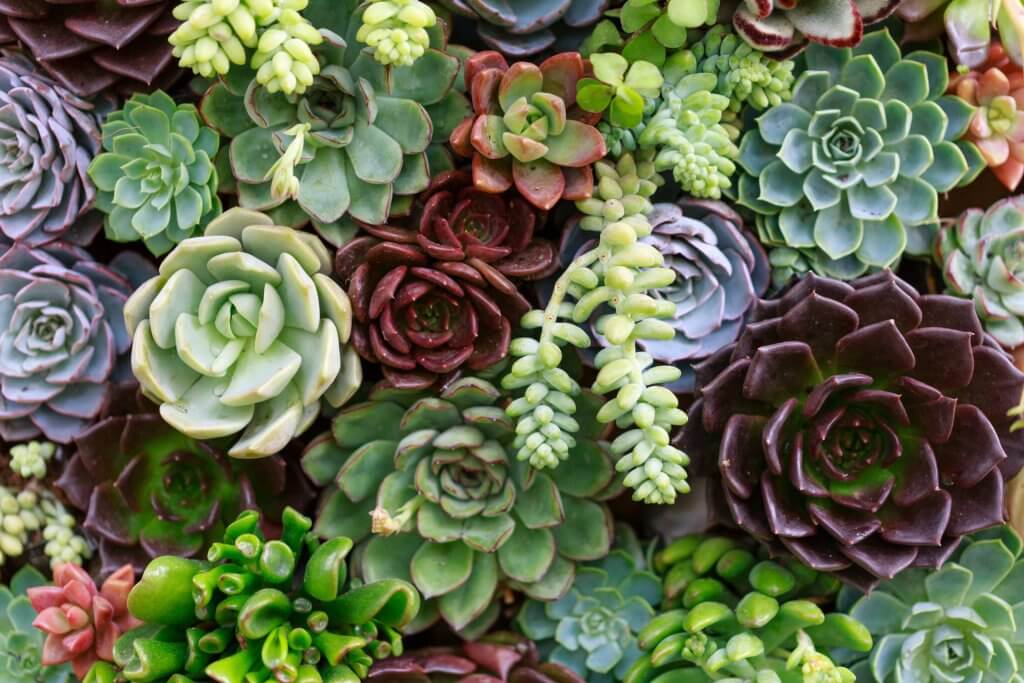
2.       Succulents

These plants have thick and fleshy leaves which are used to retain water in the arid climates where they are native. The word “succulent” comes from the Latin word sucus, meaning juice, or sap. They come in a variety of sizes, colours and shades, which can allow for many beautiful combinations.
Planteria group

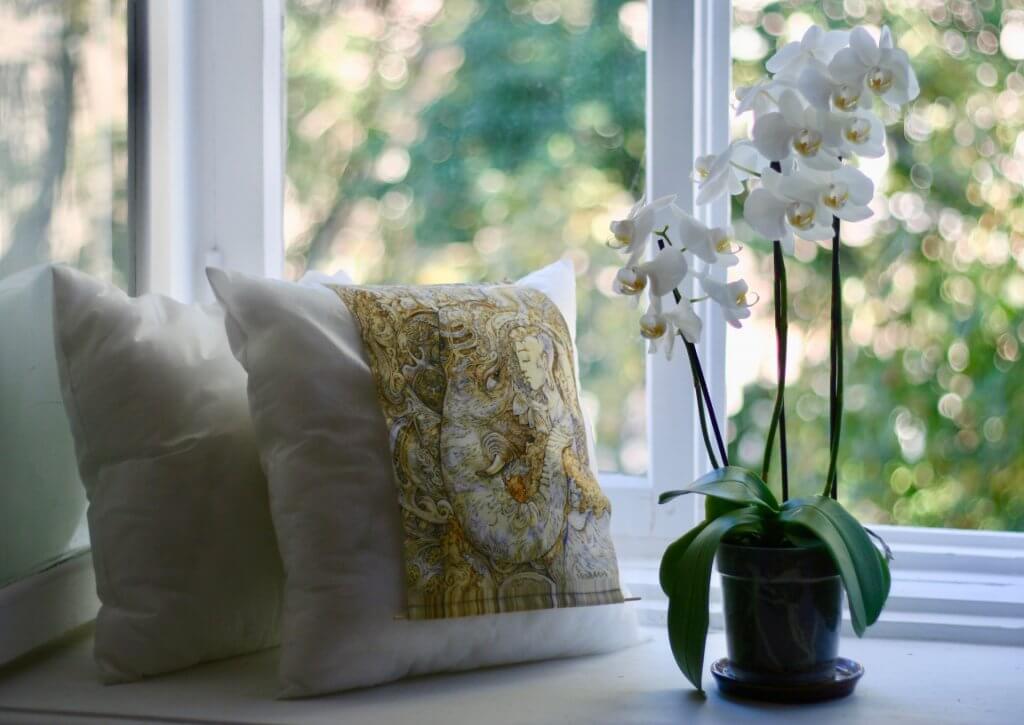
3.       Phalaenopsis Orchid

Also known as moth orchids, phalaenopsis is one of the most popular indoor orchids and is native to southern China, Taiwan, the Indian Subcontinent, Southeast Asia, New Guinea, and Queensland. These elegant plants make a real impact on an office environment, and are fairly hard to kill – great for a busy office!
Planteria group

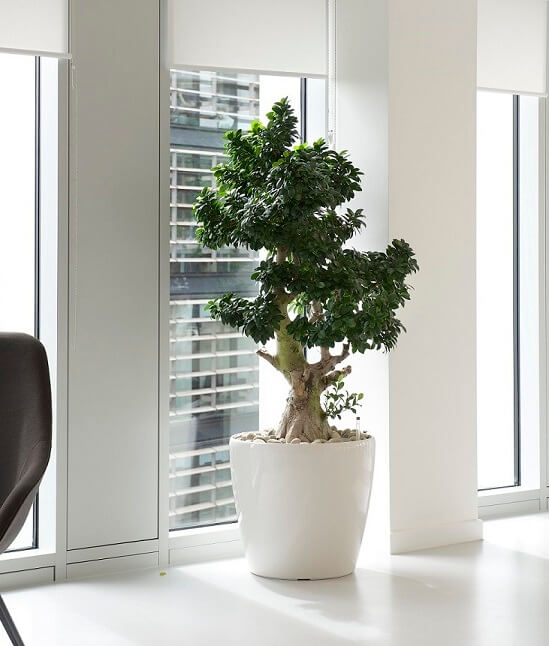
4.       Ficus Ginseng (bonsai)

Ginseng bonsai are also known as ficus retusa, Banyan fig or ficus ginseng. Bonsai art appeared over a millennium ago in the Chinese Empire and was then known as Penzai. It was later adapted by the Japanese and its popularity spread all across South-East Asia. These are probably the most famous and easily recognised bonsai trees and are easy to care for.
Planteria group

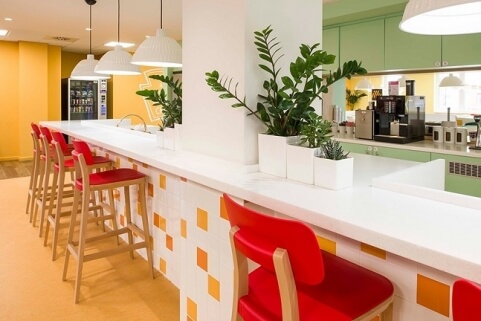
5.       Dracaena Lemon & Lime (branched)

Native throughout Africa and also known as ‘Dragon Tree Lemon and Lime’, their brightly coloured leaves are a sight for sore eyes in a dreary office on a Monday morning. These plants can get quite tall; we recommend placing one or two around the corners of your office so that they are visible without taking up too much room. 

Planteria group

Think of your interior designs as investments in your staff – you’ll start to see some returns when their productivity increases. Improving the atmosphere of your office has never been easier, there are so many varieties and styles of planting available.  So if you like the look of these ever popular favourites, you’re looking for something different, or you have haven’t a clue where to start, contact us to find out more about our office plants for hire and our selection of flowers for offices, we’ll help you pick out the perfect plants for you.
Top Tips for an Office Make-Over

Planteria group


FUNCTIONAL FITTINGS

Interior design trends for 2020 are all about functional fittings. In the home, this translates to tidy rooms with pull-out furniture like sofa-beds, futons and extending tables. In the office, this translates to adjustable desks, so you can work sitting or standing, laptops for work away from headquarters and partitions for privacy between teams.
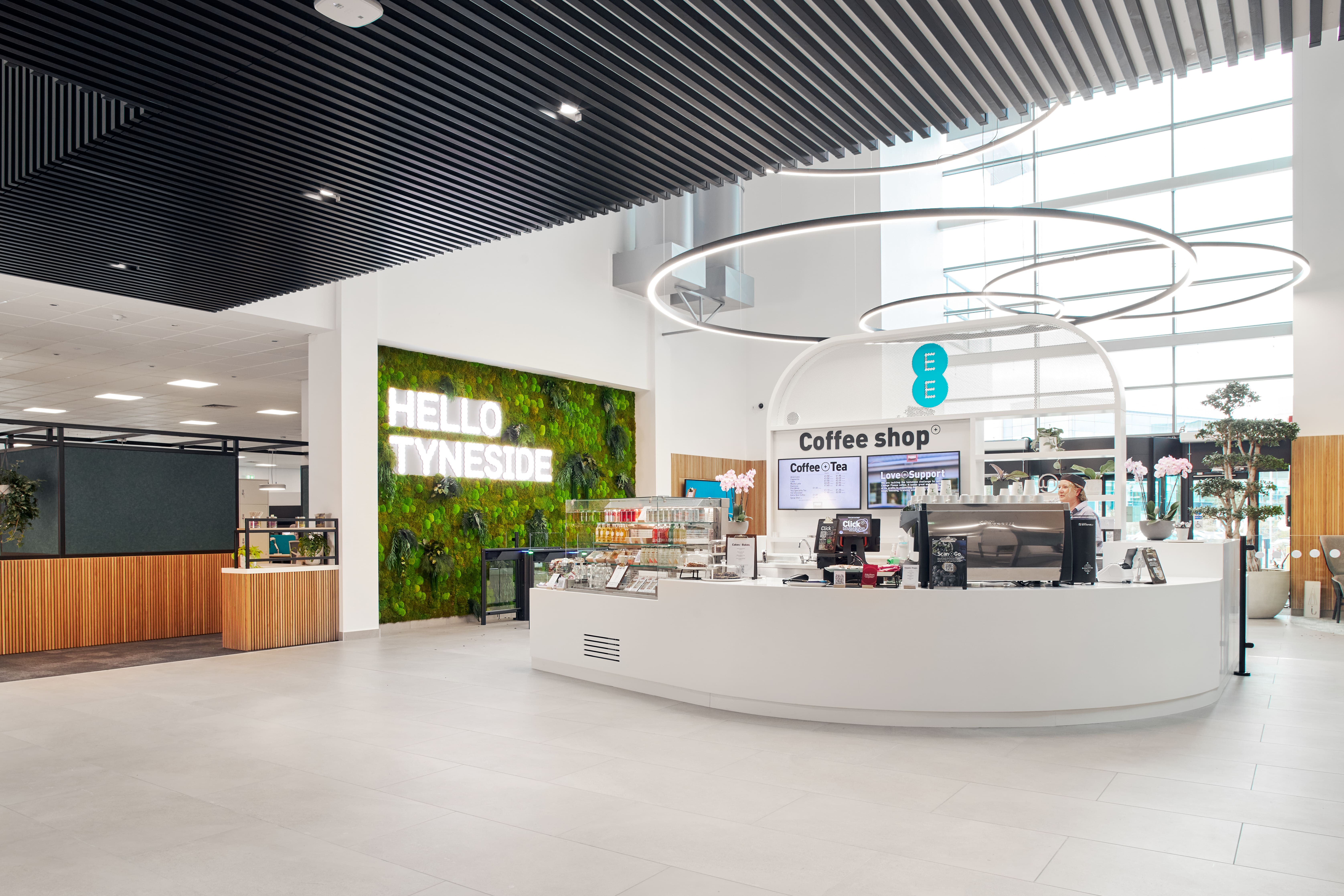
When brainstorming ideas for your office make-over, a good place to start is by improving what you already have.  For example, if you make use of basic office partitions between desks, why not use desk plants instead? Office plants have been proven to boost productivity and creativity, so doing something as simple as swapping out your partitions for greenery could see an increase in your returns down the line.

Adding office plants to your workspace is a magnificent way to transform it into a desirable place to work. Eco-themes are the future; they are an easy and affordable way to instantly upgrade an area and with a huge variety of plants to choose from they will have a unique feel.


It might seem obvious to some, but making sure that office supplies and useful items are in a designated and central location can save employees a lot of time, especially when inducting new employees, to whom the office is a strange new place. When rearranging your office, it’s a good idea to try to avoid moving these key supplies so that your workers can stay orientated.

STAFF PERKS

Think about why you are engaging in an office make-over; if you are doing it to impress clients, then you want something stunning, but if you are hoping to increase work quality and output amongst your staff, then you might be more interested in adding some facilities that they will surely appreciate.

Perhaps you can improve on the simple staff kettle that most (if not all) businesses have somewhere on their premises. The point of tea breaks – from an employer’s perspective – is to encourage organic team building opportunities.  You can further improve the relationships between your staff by providing them with access to gym facilities or making use of outdoor spaces to create a roof terrace, or courtyard with cafe style seating. We all recognise the benefits of encouraging a cohesive team that supports itself.  If you already provide these facilities to your staff, it’s always good to rethink how your staff are using the facilities. An influx of new employees might mean that the facilities you provide aren’t as relevant as they were before.


ADD A DASH OF COLOUR

Is your office exciting enough?  Take an objective look about.

Is it a generic space with white walls and a grey carpet? Being bold and adding some striking colour to a few feature walls, or areas of the office space will give your office a fresh new feel.  You could strengthen your brand identity by using a palette in your brand colours. Accent colours used in planters, soft furnishings and artwork will give the new scheme a pulled-together cohesive look.

Colour is a visual experience and actually has a subconscious effect on the brain.  Colour in the workplace has an effect on productivity, mood and emotion.  Warm colours like reds and oranges are known to raise energy levels and improve dynamism. Cool colours like blues and greens are shown to create a calming effect and improve critical thinking.Repainting your office and changing up the colours from time to time will ensure the office always looks fresh and clean and your colleagues will appreciate the effort that you put into providing them with a beautiful place to work in.


GREAT LIGHTING

Above all else, if you are going to be making improvements to your office, you should always consider the effects of your lighting.

We doubt that you’re submitting your staff to dodgy fluorescent lights that blinks on and off, but any inadequate lighting is unhelpful and could be costing your employees in new glasses prescriptions. We recommend offices with lots of natural light, but if you can’t remedy being in a dim office with very few windows, you can always supplement the existing natural light by adding mirrors to carry the light further by reflecting it. As well as prioritising sources of natural light, you should use lamps and high-quality light bulbs to make sure that your office shines.


The perfect office is possible; all you need are plants, perks, a touch of colour and some great lighting. We are more than happy to provide you with the plants, planters in every hue, and take care of them for you too.  To give your office a boost that outstrips your competitors, get in touch.