





It looks like you are visiting this site
from outside the UK region.

Go to US site

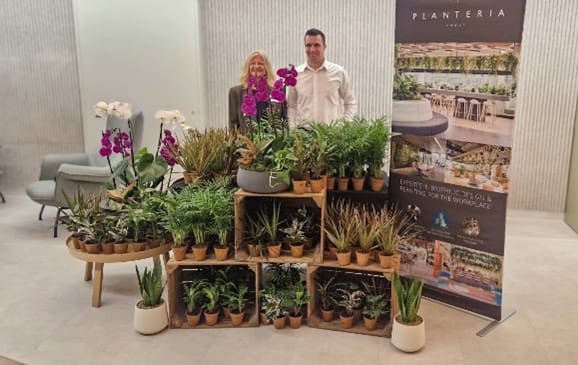
We’ve Landed: Planteria Launches in the United States

We’ve Landed: Planteria Launches in the United States

We’ve got exciting news to share – after two years of behind-the-scenes work, we’ve officially launched in the United States. 

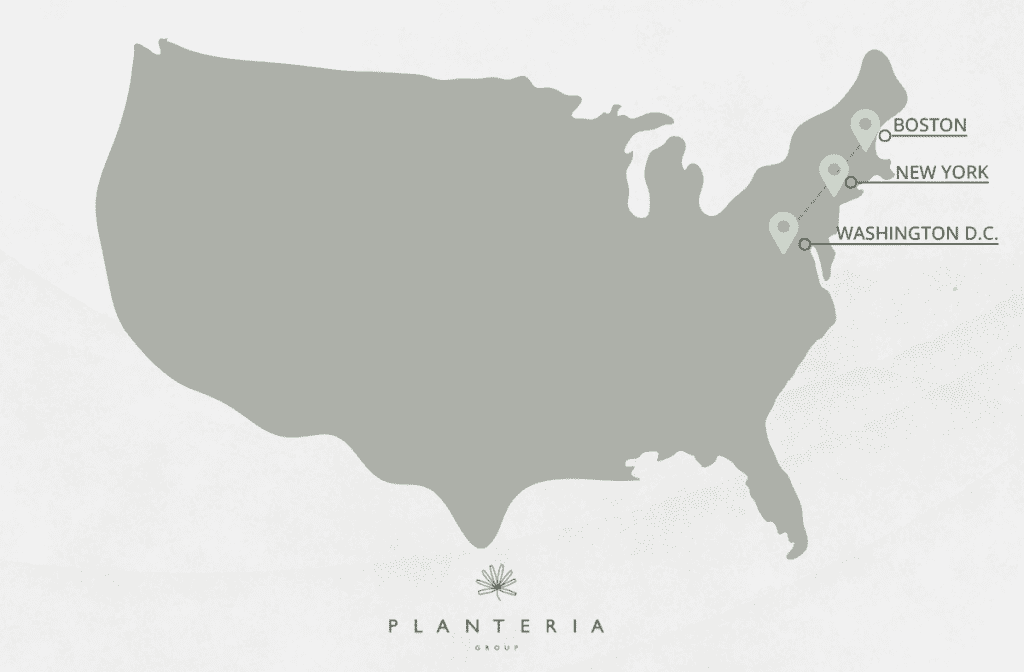
Our new headquarters at 460 Park Avenue South in New York marks a major milestone for Planteria Group. But this isn’t just an expansion. It’s a response to something far more meaningful: client demand.

Why We're Here

Our move across the Atlantic wasn’t part of a grand plan for global conquest. In fact, it started with a request from some of our most valued clients:

“We want you to bring the Planteria experience here too.”

And so, we did. We listened. We planned. We built. Now, we’re proud to say that Planteria is officially operating across the Northeast Corridor – from Boston to Washington DC – bringing the same trusted service that our UK clients already know.

Planteria group

What We're Bringing to the Table

Our US launch introduces the same signature service model that’s made us the UK’s leading office planting partner:

  • Biophilic design embedded seamlessly into workplace environments
  • Reliable, worry-free plant maintenance
  • Cost-efficient innovation with our Ecoponic substrate system
  • Enhanced employee engagement through our Engage & Bloom workplace experience program

We already maintain over 90,000 plants in UK workplaces, and now we’re bringing that experience to American businesses seeking consistency, simplicity, and results.

Planteria group

What's Next?

This is just the beginning. While we’re currently focused on the Northeast Corridor, our next destination is already on the horizon: California.

We’re excited about what’s to come – and we’re grateful to the clients who’ve trusted us to take this step with them.

Planteria group

Let's Grow Together

Want to learn more about our US services, innovations, or how Planteria can transform your workplace?

Read More

Discover ways to enhance your office environment with our expert insights on biophilic design, wellbeing, sustainability and the world of plants.

The Complete Guide to Green Walls

The Complete Guide to Green Walls

Green walls (also called living walls or vertical gardens) are installations of plants on vertical surfaces. They appear indoors or outdoors, from office feature walls to full building facades.

Green walls bring several benefits. They improve air quality, reduce noise and add visual interest. 

Inside, they can soften acoustics and lift staff mood. Research links greenery with lower stress and faster recovery.

On exteriors, they help cool buildings by shading and evaporative cooling – cutting wall temperatures by up to 14°C (25°F). 

This guide covers every type of green wall: indoor and outdoor, living and artificial. 

It includes design tips, light level advice, maintenance needs, costs and common questions.

Interior Green Wall Systems

Interior green walls add vegetation to indoor spaces like lobbies, conference rooms and offices. Below are the main categories of interior walls, each with its features, uses, pros, cons and care notes.

Exterior Green Wall Systems​​

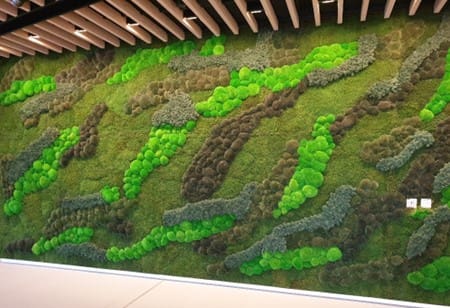
Exterior green walls and facades bring plant life to the outside of buildings. They must withstand weather and often provide building insulation and habitat.

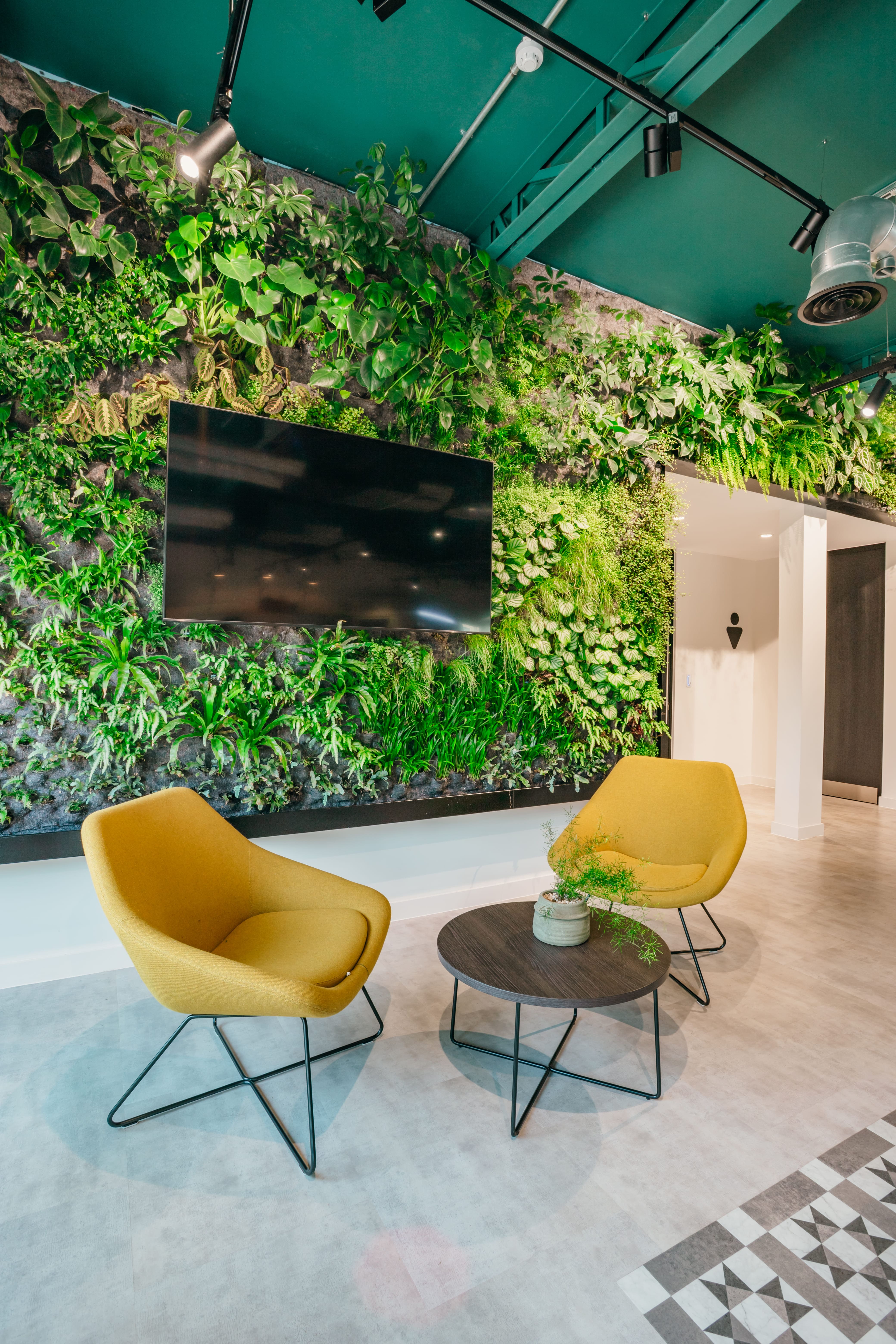
Lighting Requirements

Interior living walls need adequate light. Most wall plants require at least 1000 lux at the leaf surface to thrive. In practical terms, this often means installing full-spectrum LED grow lights above the wall. The lights should provide both blue (∼430–440 nm) and red (∼640–660 nm) wavelengths for photosynthesis, though the lighting can be tuned to emit a pleasing white light (for good colour rendering and aesthetics). Light uniformity is important: designers aim for a ratio of minimum/maximum illuminance ≥0.33 so that all plants receive some light.

In technical terms, lighting is measured by Photosynthetic Photon Flux Density (PPFD). A target PPFD of about 35 μmol·m⁻²·s⁻¹ on the foliage is recommended for green walls. Over a full day, plants often need a Daily Light Integral (DLI) of roughly 1.5–4 mol·m⁻²·d⁻¹ (the exact need depends on the plant species). In many offices, natural daylight (even from windows) falls short of this, so supplemental LEDs are used. Work with a lighting engineer or horticultural lighting specialist to calculate lamp power and placement.

Lighting Checklist:
  • Provide LED fixtures rated for plant growth (or use high-CRI white LEDs).
  • Mount lights 1–2 m from the wall for even coverage.
  • Avoid UV-heavy lighting indoors (green wall plants don’t need UV and extra UV can cause fast, ungainly growth).
  • Use timers to give plants ~10–14 hours of light per day (mimicking natural days).
  • In daylight zones, choose plants suited to the light level (shade-loving ferns versus sun-loving bromeliads)
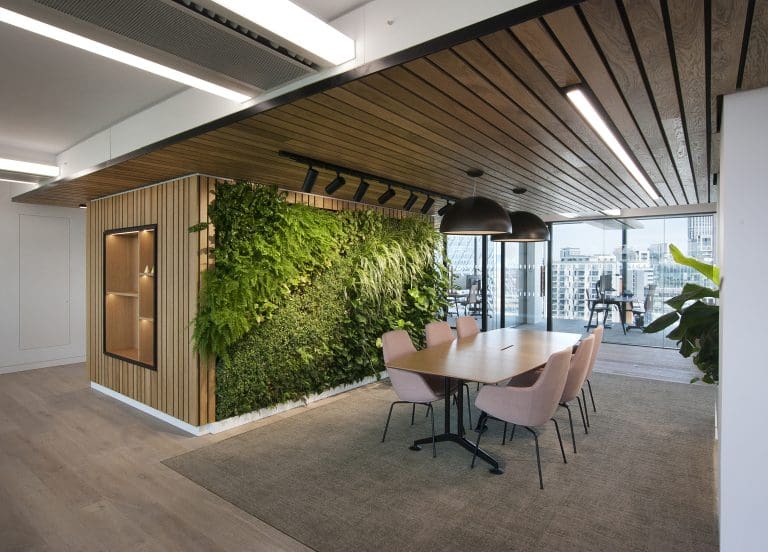
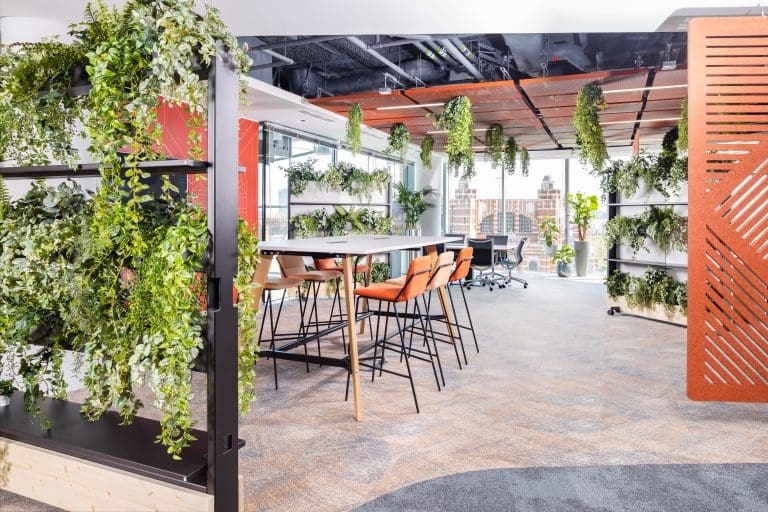
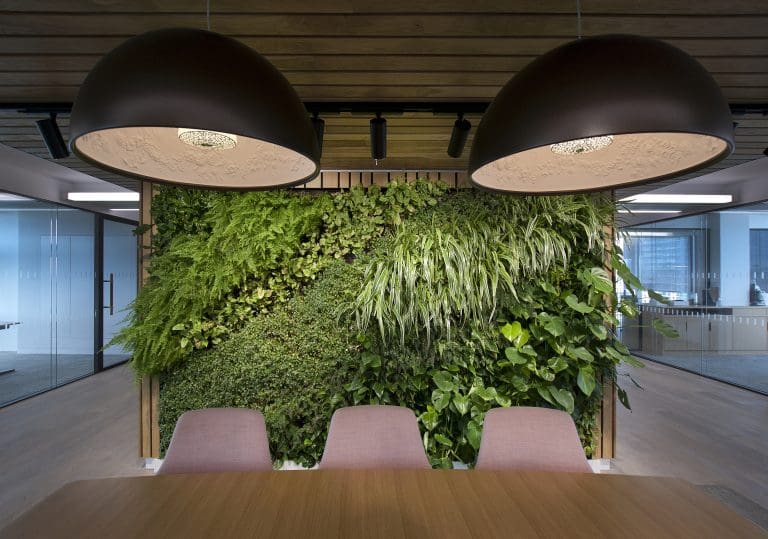
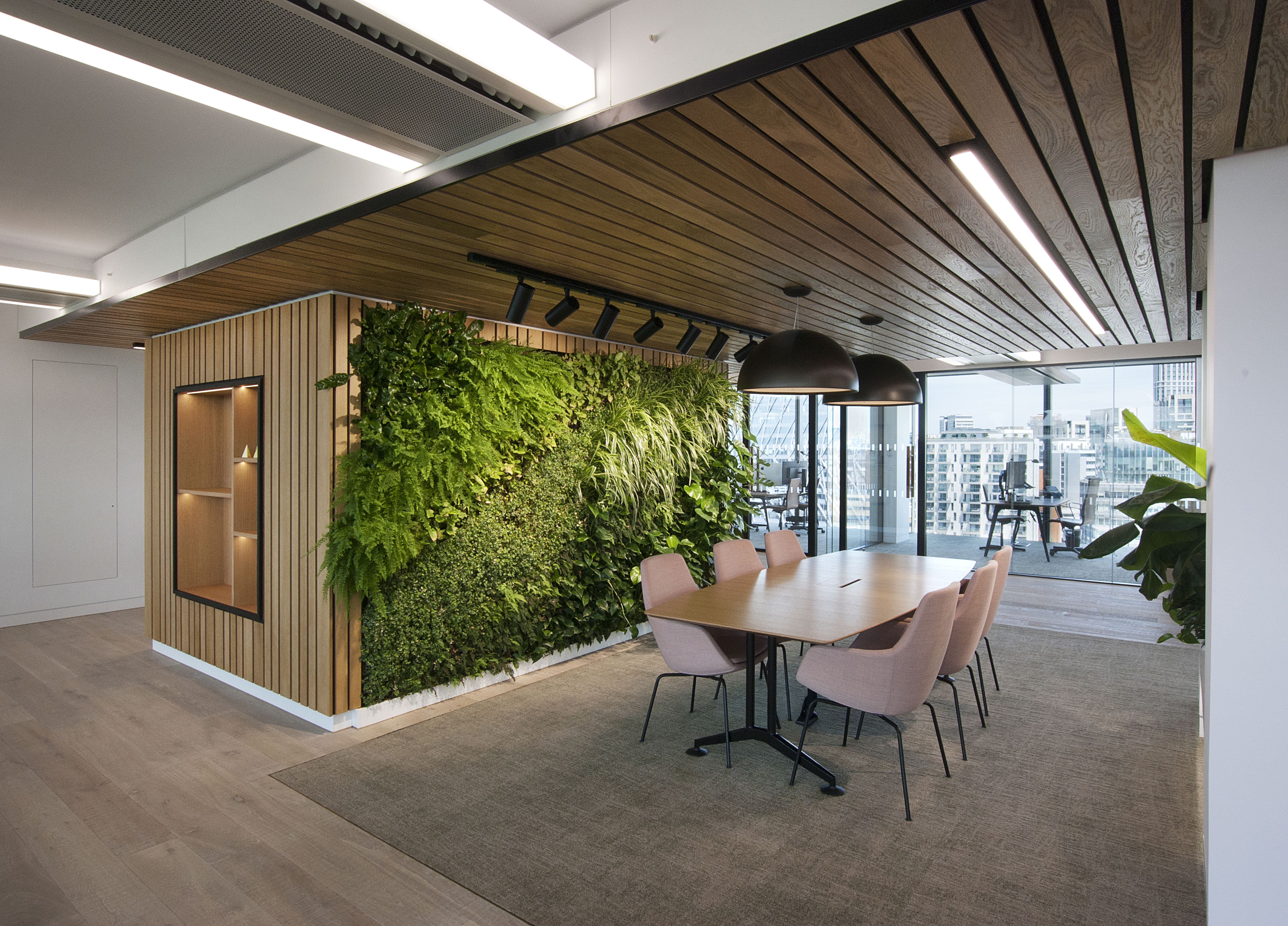
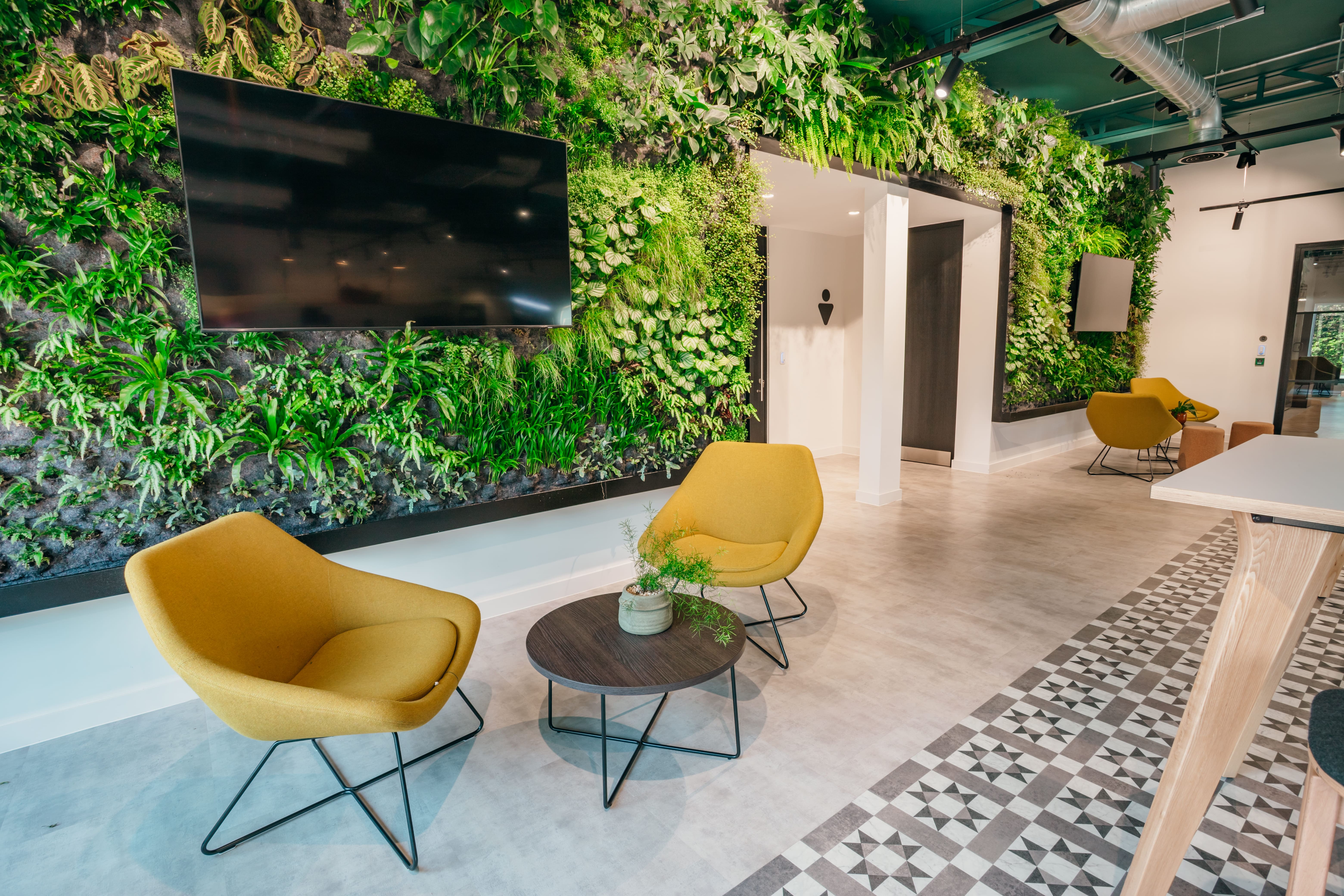
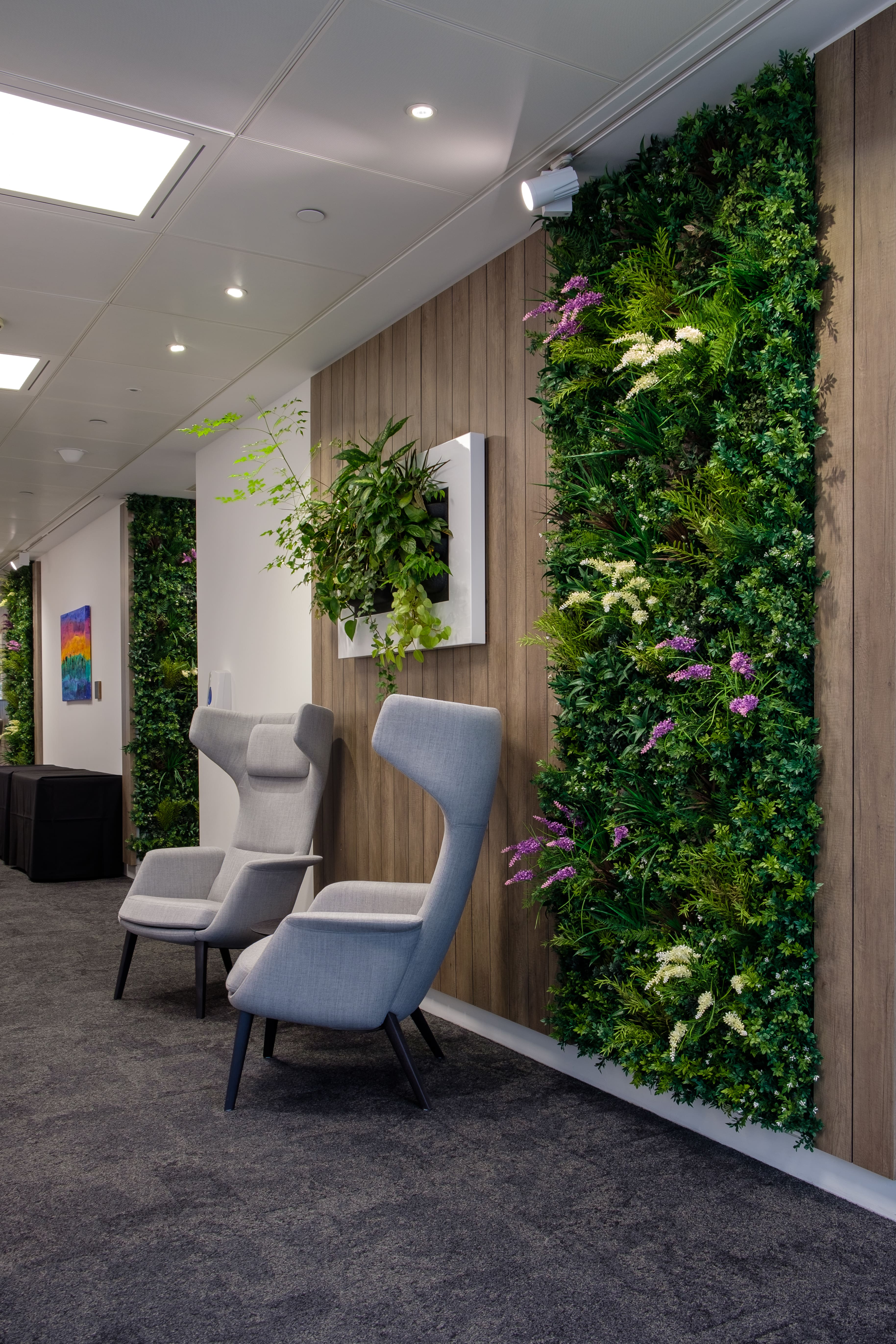
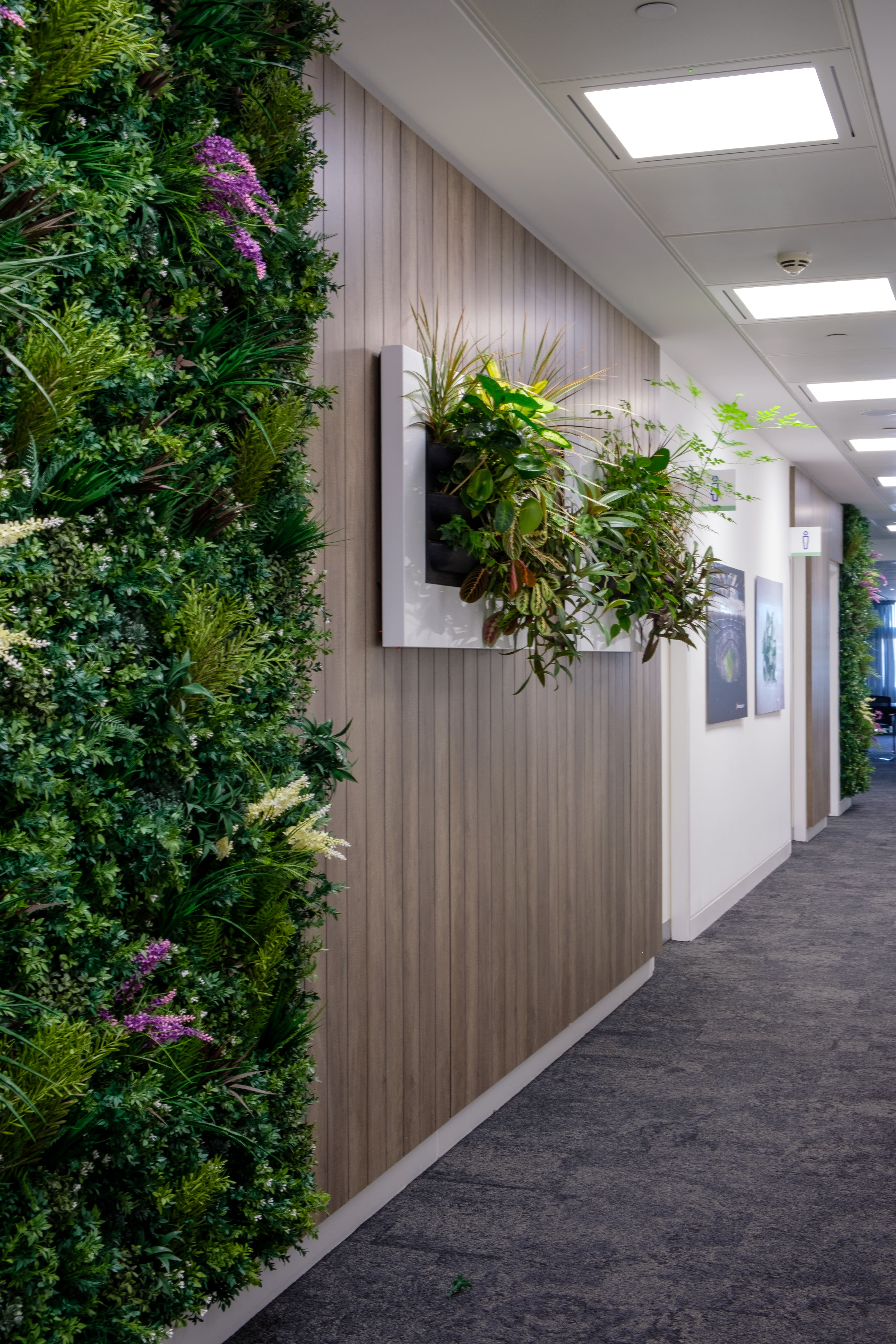
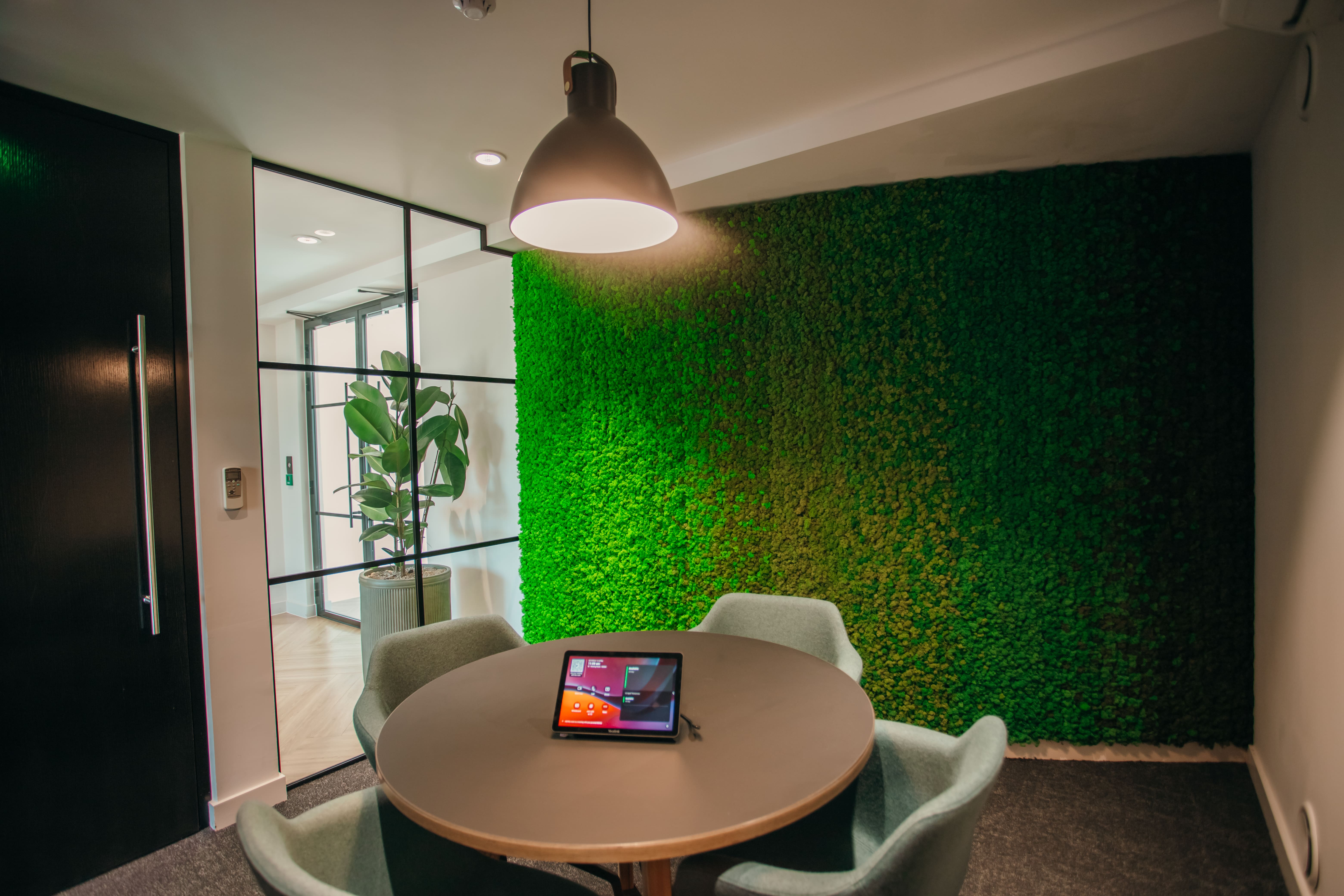
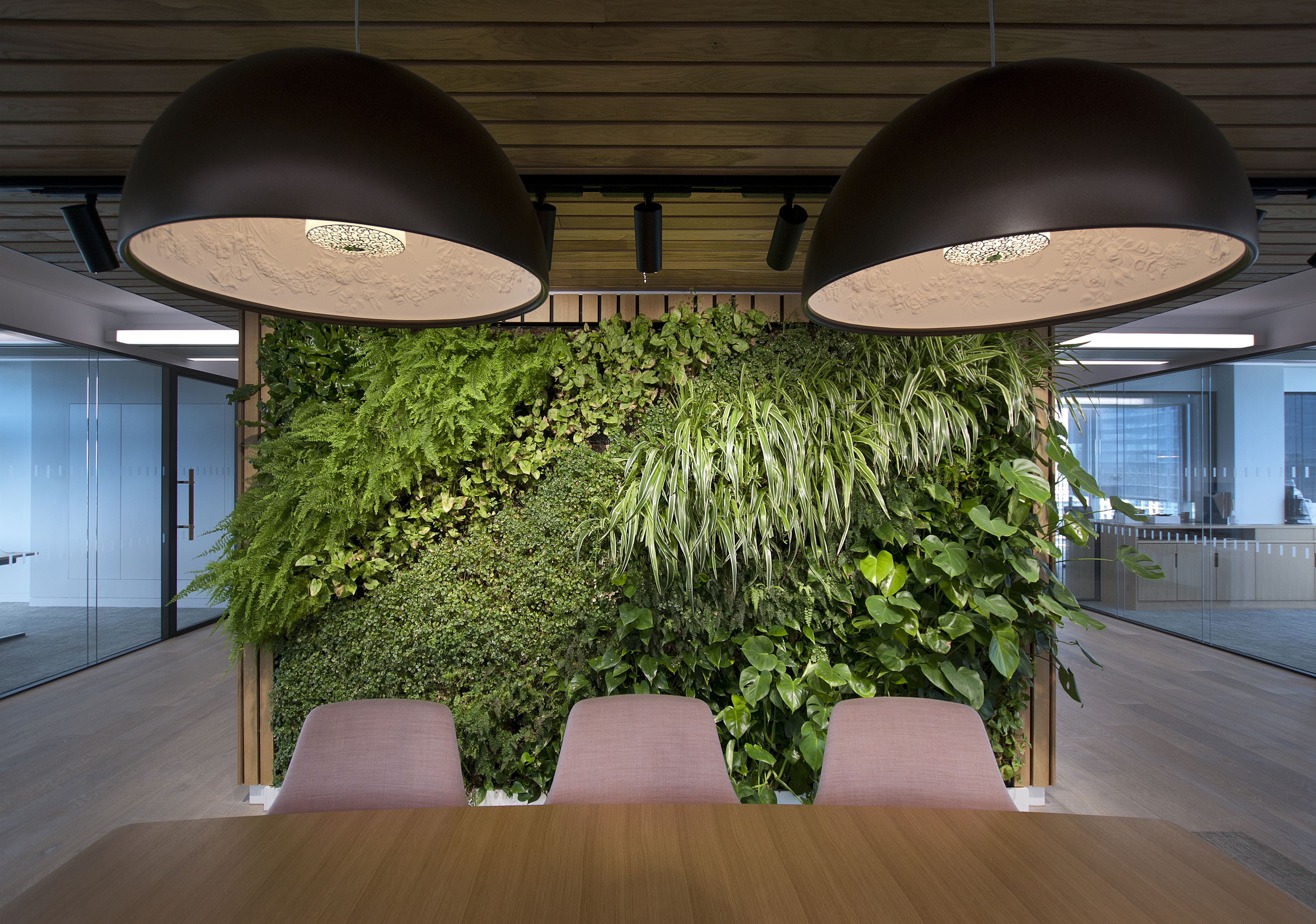
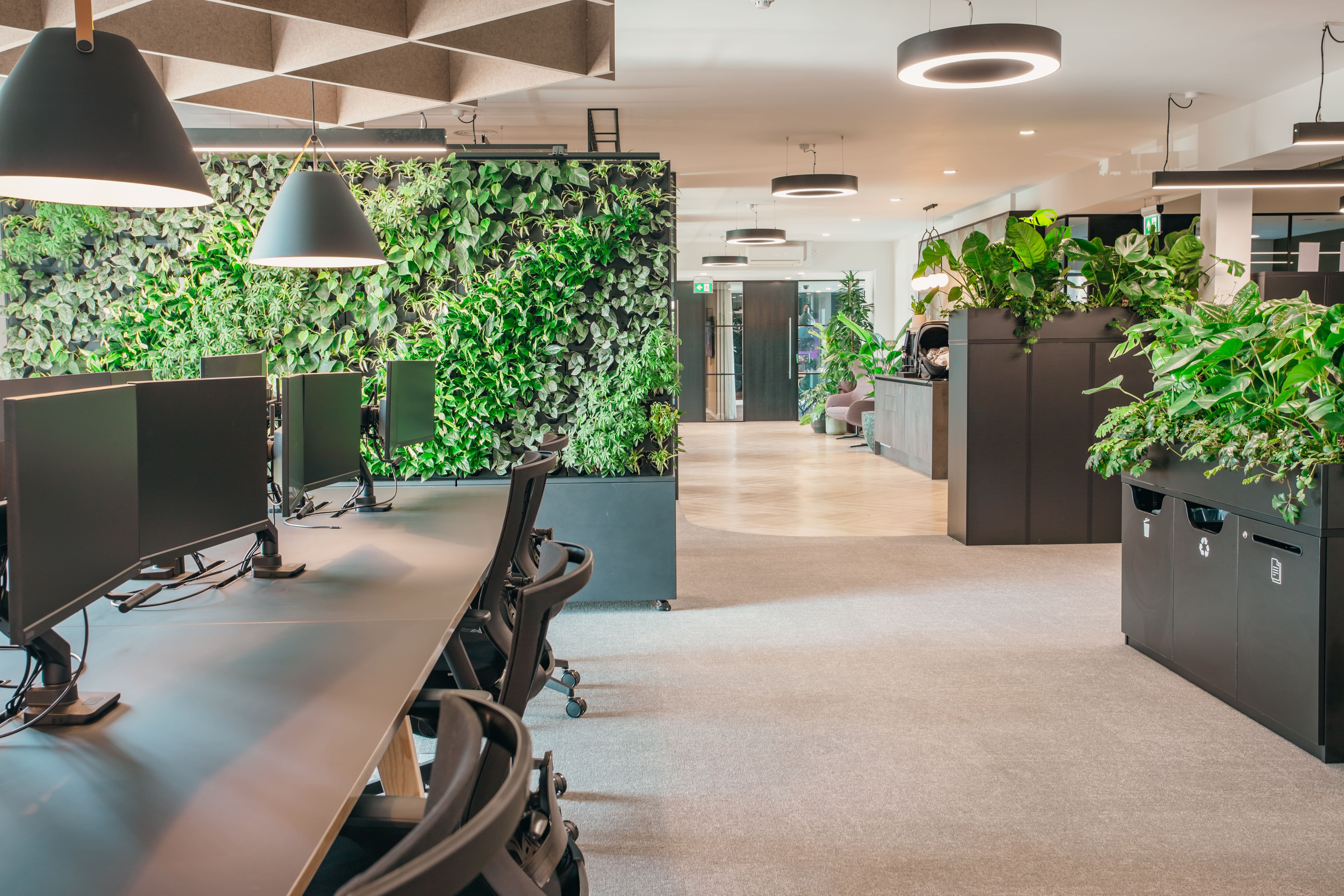
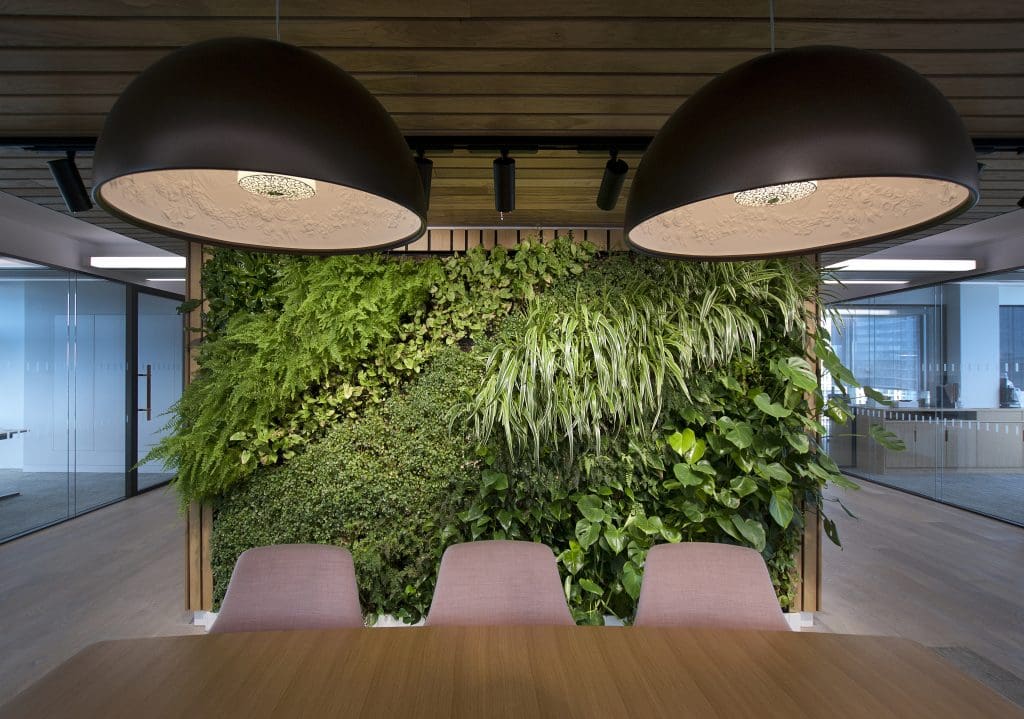
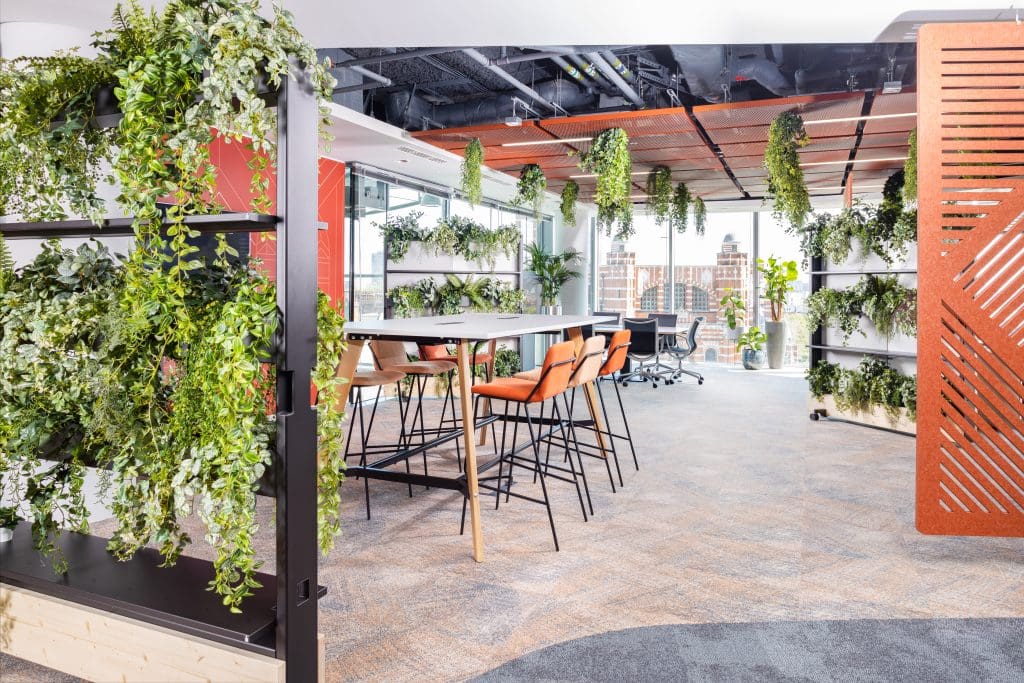
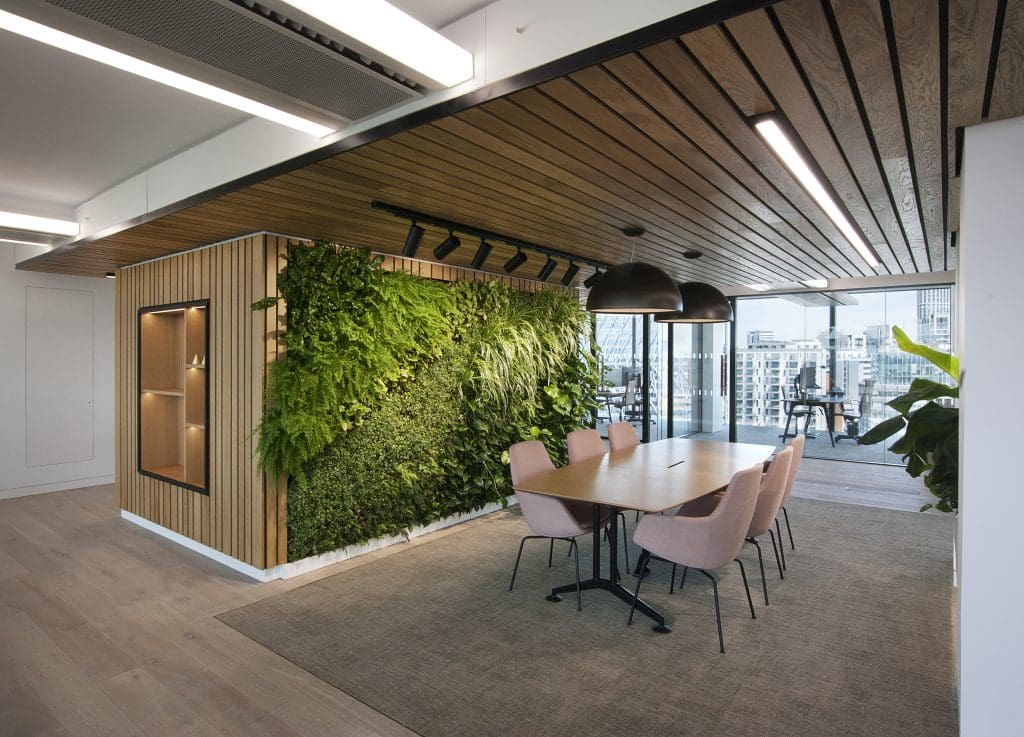
Green wall in an office setting. Ans living green wall with lights and office chairs and table

Planning and Installation Considerations

Before installing any green wall, careful planning is crucial. Key considerations include:

  • Structural Support: Assess the load-bearing capacity of the wall or support structure. A fully saturated green wall can weigh at least 50–100 kg/m² . A structural engineer should verify that the wall and anchorage can handle this weight plus wind or seismic loads. For light planters, ground-anchored frames may suffice; for heavy cladding systems, special hangers and infill panels are used.
  • Waterproofing and Drainage: Any irrigation leaks can damage the building. Install a waterproof membrane or gutter behind the green wall to collect overflow. Provide proper drainage lines to carry excess water safely away. In exterior walls, plan for stormwater connection or soakaway (for interior, a drip tray and drain to plumbing).
  • Irrigation System: Most living walls require an irrigation pump and control unit. The pump, pipes, and possibly a nutrient reservoir often live in a nearby cabinet or “plant room”. Ensure you have space and access for this equipment. Plan piping routes from a water source and to the wall, and include backflow prevention as needed. In cold climates, winterize exposed pipes.
  • Orientation and Environment: Consider sunlight, wind, and heat. South/west walls receive intense sun and can support more sun-loving plants, whereas north walls need shade-tolerant species. Also note any heat sources (e.g. windows, HVAC vents) that might stress plants. Plan for microclimate: walls under eaves get rain, exposed facades dry out quickly. 
  • Access for Maintenance: Life safety is key – plan how gardeners will reach the wall. Include scaffolding anchors, permanent catwalks, or ensure space for lifts. Design for occasional removal of panels or trimming from a platform.
  • Safety and Codes: Check fire codes (some panels must meet Class B-s3,d2 ratings for cladding). Use materials rated for interior use if inside, or UV/weather-resistant products outside. In some jurisdictions, green facades or certain heights may require permits or consultations.
  • Electrical and Other Services: Indoor green walls may need lighting or pumps – plan electrical circuits. Ensure any electrical equipment is rated for the damp environment of a green wall.
  • Integration: Coordinate with other building systems. For example, make sure irrigation water can connect to building plumbing. Avoid routing irrigation over electrical fixtures. Incorporate the green wall into the architectural design (e.g. make irrigation controls accessible, integrate base planters as furniture).

By addressing these factors up front, you ensure the green wall will perform reliably.

Planteria group

Maintenance and Aftercare

Ongoing care is essential for long-term success. Living walls require routine inspections and horticultural upkeep similar to a garden or greenhouse. Below are the typical maintenance tasks:

  • Regular Watering/Irrigation Checks: Verify that drip tubes or hydroponic lines are flowing. Check timers and sensors. In hydroponic systems, replenish nutrient solution and monitor pH. In soil systems, ensure the medium remains moist (but not waterlogged). If the wall is outdoors, adjust watering for season (more in summer, less in winter).
  • Pruning and Trimming: Trim back any overgrown plants to maintain design shape and light exposure. Remove dead or diseased foliage promptly. In high-growth species, monthly pruning is common.
  • Plant Replacement: Replace plants that die or fail to thrive. A good plant company will include free plants replacement in their maintenance contract.
  • Cleaning Filters and Drippers: Clean or replace filters, flush lines to prevent algae or mineral buildup (especially in hydroponic or hard-water areas). This prevents clogs and root rot.
  • Fertilization: Depending on the system, add fertilizer to the irrigation water or apply to soil periodically. Many green wall plants are light feeders, but replenishing nutrients ensures vigor.
  • Inspect Structure: Check that panels and supports remain securely attached. Look for leaks, eroded support brackets, or corrosion. Repair any membrane damage immediately to prevent water ingress.
  • Pest and Disease Control: Watch for insects (aphids, scale) and fungal issues.  Since plant density is high, infestations can spread rapidly if unchecked.
  • Seasonal Tasks: In climates with cold winters, plants may need some protection (e.g. remove sensitive species or use temporary covers). In summer heat, increase irrigation frequency. Remove leaf litter or debris that accumulates on the wall.

Overall, consistency is key. The long-term success of a living wall is dependent upon a robust maintenance and care program. Neglecting maintenance will quickly lead to plant loss and system problems.

Inspiration and Gallery

Explore what’s possible with green walls – real projects, real impact.

Some Frequently asked Questions

A green wall (also called a living wall or vertical garden) is a vertical surface covered with plants. It can be inside or outside, and may use live, artificial, or preserved greenery.

Green walls improve air quality, reduce noise, boost wellbeing, and enhance building aesthetics. Outdoors, they also cool buildings and support biodiversity.

A living wall is a type of green wall that uses real plants, water, and nutrients. “Green wall” is a broader term that can also include artificial and preserved moss systems.

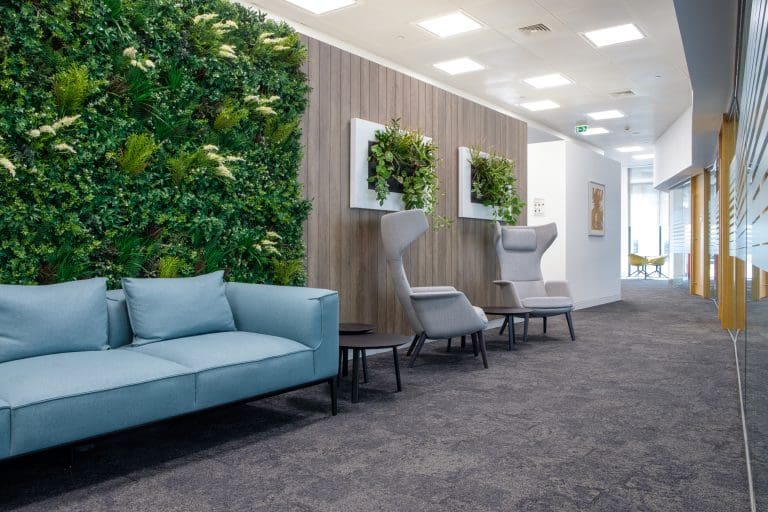
Living walls, artificial walls, preserved moss walls, living pictures, and mobile green dividers are all popular in office spaces. The best type depends on light levels, budget, and maintenance capacity.

Yes. Most living walls need at least 1000 lux at plant level. In darker areas, full-spectrum LED grow lights are usually installed.

Living walls require regular watering, pruning, plant replacement, and irrigation checks. A maintenance contract is recommended for consistent care.

Yes. You can use artificial green walls or preserved moss walls, both of which need no light. Living walls can work too, if fitted with grow lights.

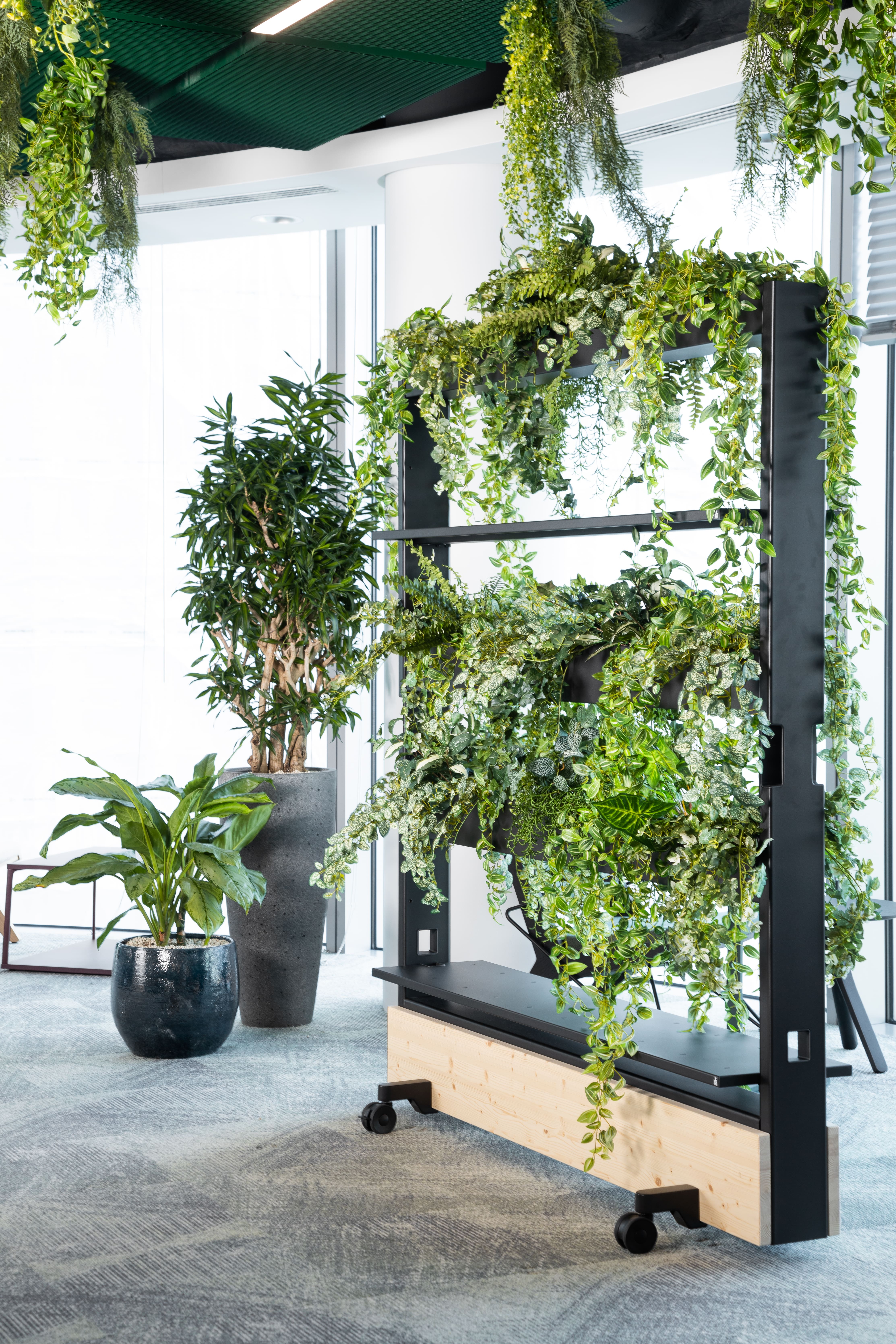
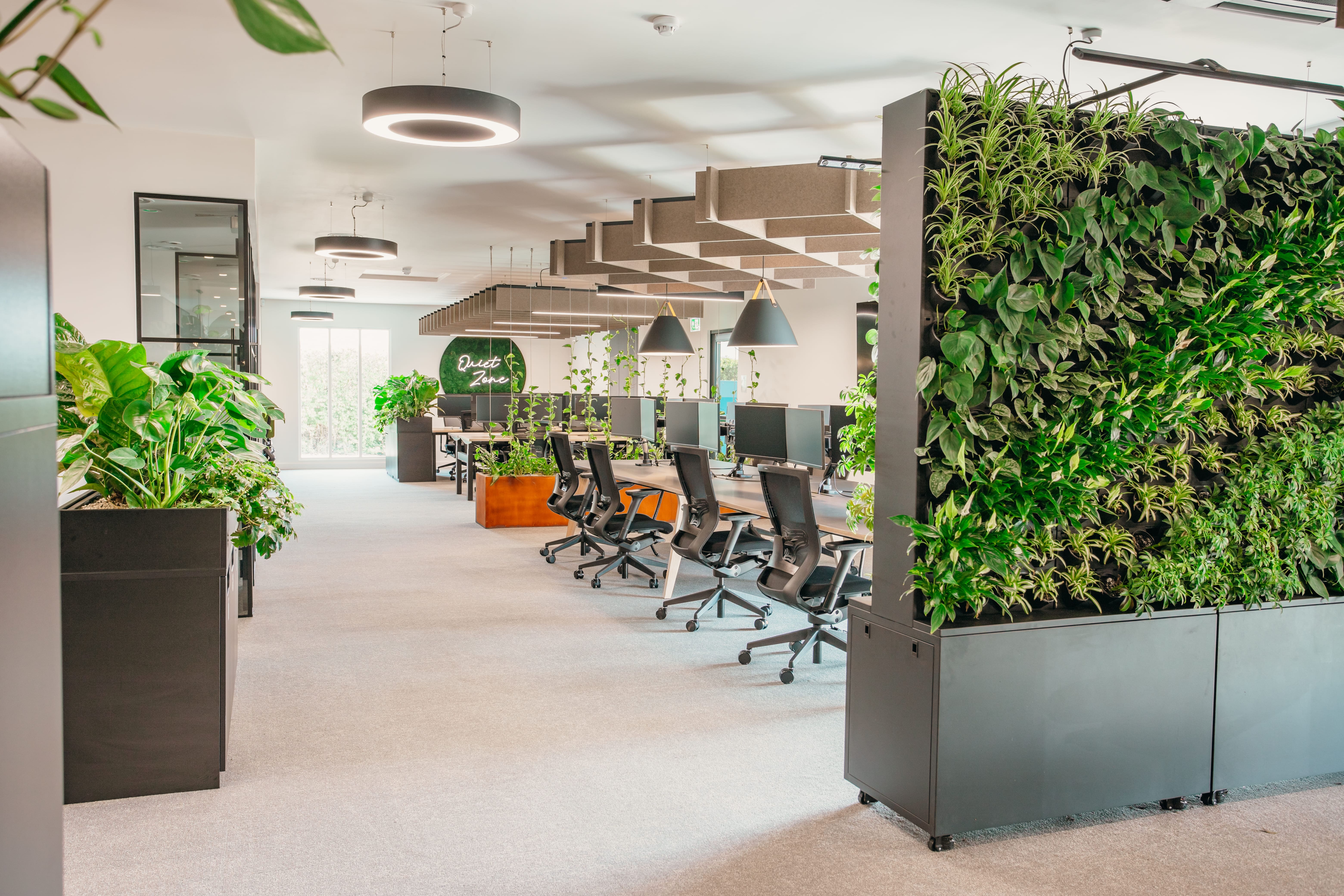
These are freestanding plant panels on wheels or stable bases. They divide space while adding greenery and can be moved or reconfigured easily.

Outdoor living walls use robust frames and irrigation systems. They attach to buildings or freestanding structures and use climate-suited plants to create living facades.

Yes. Studies show green walls can reduce exterior wall temperatures by up to 14°C. This can lower internal cooling demand and improve energy efficiency.

Yes. Artificial green walls and ivy screens require little upkeep. Wildflower walls need seasonal care but are designed for biodiversity rather than appearance.

Saturated living walls can weigh 50–100 kg per square metre. Always check structural capacity with an engineer before installation.

Key requirements include a load-bearing surface, waterproofing, drainage, irrigation system, and adequate lighting. Maintenance access must also be considered.

Costs vary by size, system type, and complexity. Living walls have higher upfront and maintenance costs. Artificial and moss walls are cheaper long-term.

Exterior installations might, depending on size, height, and local regulations. Interior walls generally don’t. Always check with your local planning authority.

Typical contracts include watering, fertilisation, pruning, plant replacement, pest checks, irrigation system checks, and structural inspections.

It's possible, but professional maintenance is recommended to ensure irrigation, lighting, and plant health are managed properly.

Yes, when designed well. Living walls can reduce heat gain, capture rainwater, and support biodiversity. Using UK-grown plants and peat-free media can further reduce environmental impact.

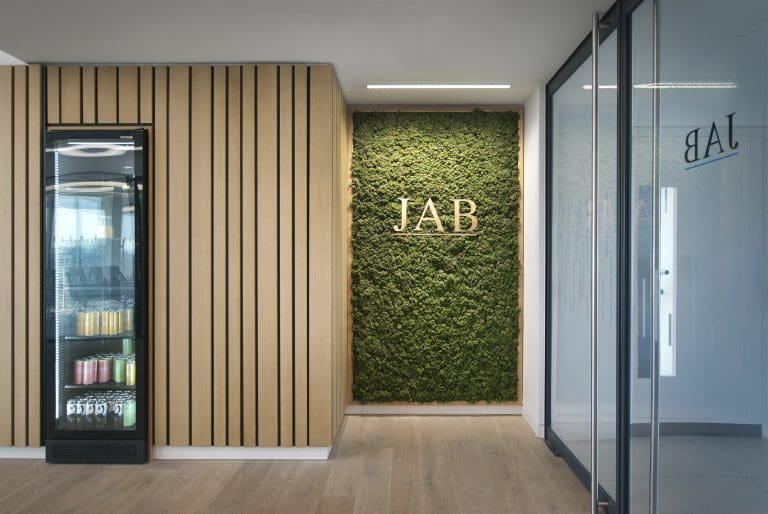
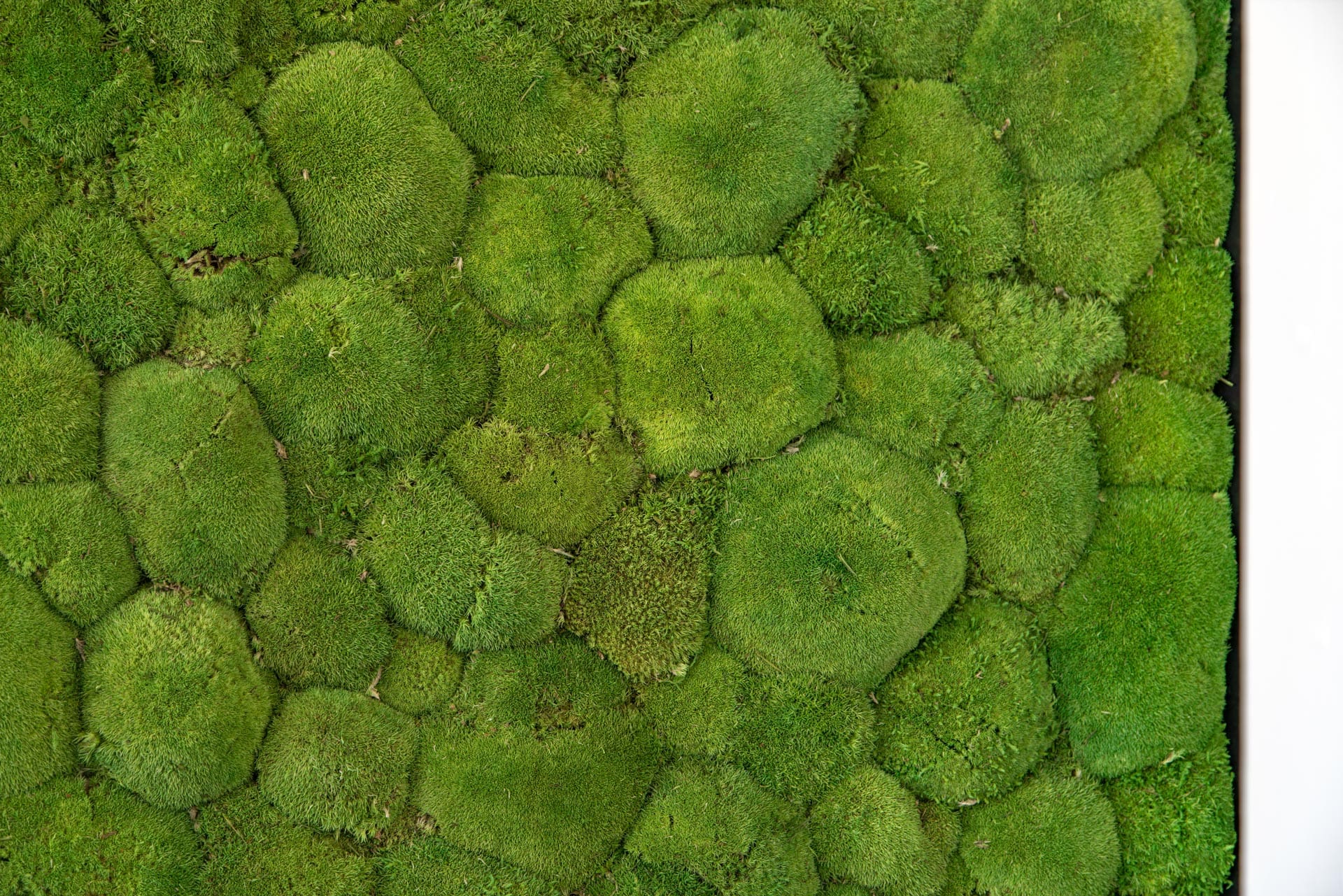
It’s a real moss installation treated with natural preservatives. It stays soft and green without growing, and doesn’t need water, light, or soil.

High-quality panels can be very realistic, especially from a short distance. However, up close, it is almost always possible to tell they are not real.  They’re best for low-light or low-maintenance settings where a real wall wouldn't be practical.

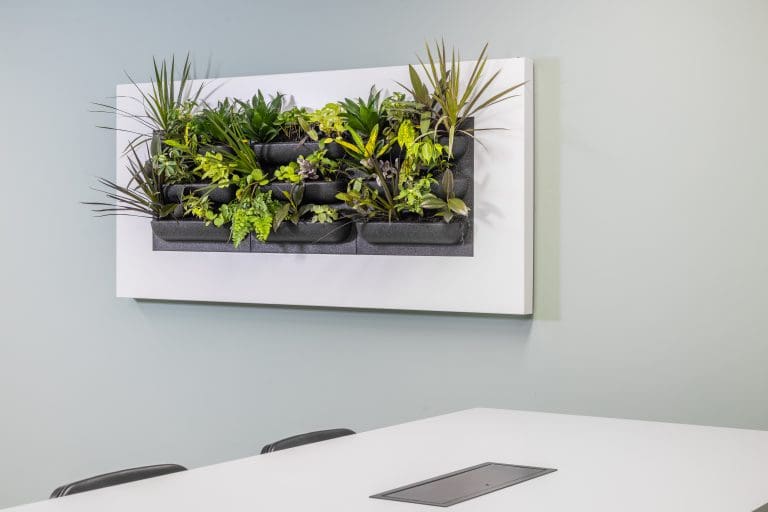
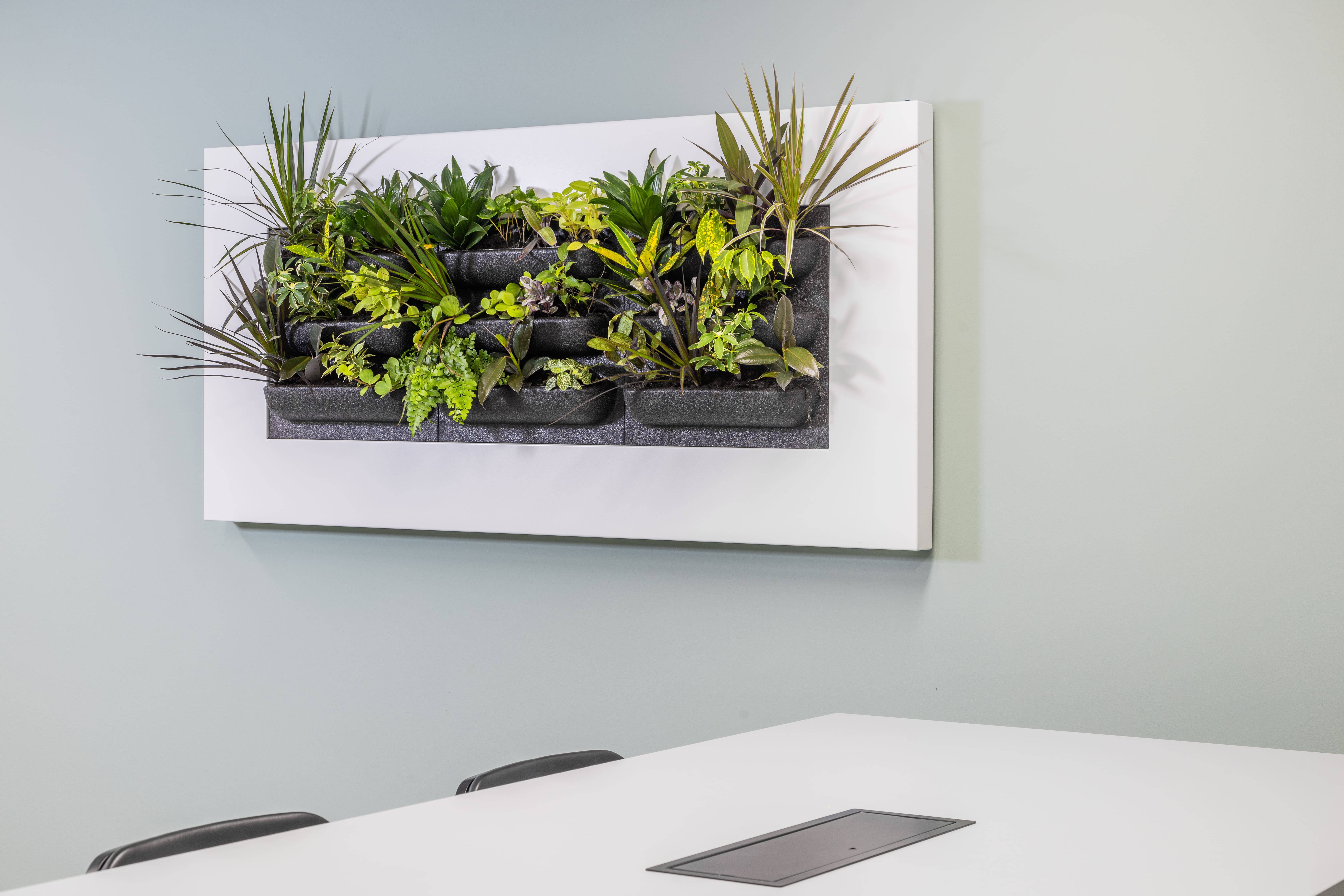
 A living picture is a framed arrangement of live plants, hung like artwork. It’s a compact green wall suited to small or decorative spaces.

The Science and Strategies Behind Engage & Bloom

The Science and Strategies Behind Engage & Bloom

Harnessing nature for workplace wellness and engagement

This resource explores the science and strategies behind Planteria Group’s Engage & Bloom workplace experience programme. It will show how the programme provides employees, organisations and facilities managers with several key benefits from both a commercial and wellbeing standpoint.

Key theories and frameworks are identified, demonstrating the scientific and strategic theory that underpins the Engage & Bloom programme.

Planteria group

An Introduction to Engage & Bloom

Engage & Bloom is a science-backed employee experience
programme that is centred on the principles of biophilia and its scientifically
proven benefits in terms of productivity and wellbeing. Such benefits are
achieved through harnessing the power of nature to create inspirational spaces.

The Engage & Bloom programme teaches clients how to look
after their plants at home, as well as inspiring them in the world of planting
and nature through a range of engaging experiences, including workshops,
interactive QR codes, and educational pieces. 

Workplace experience program by planteria group

The Modern Workplace Challenge

The modern workplace presents numerous challenges to ensure employees are working at an optimal level that benefits both the individual and the wider organisation. Since 1950, research suggests that we have gradually become more disconnected from nature and the benefits it provides.

A 2023 study by the UK Government identified that people spend 80-90% of their time indoors. To make matters worse research suggests that on average an office worker spends 12 hours per day looking at a screen.

Offices commonly experience a disconnect from nature, due to urban environments and sterile interior settings, as well as the growing importance of technology that has often acted as a substitute for nature as a source of recreation and entertainment. 

Increasing Importance of Well-being and Engagement for Productivity

Engage & Bloom is based on the concept of biophilia, which refers to a human being’s innate desire to connect with nature. This is further reinforced by numerous scientific findings, notably an experiment conducted by the Chelsea Flower Show.

This experiment invited participants to take part in a study that measured their creativity, happiness, and productivity across a variety of different workplace designs. The results found that allowing staff to make design decisions in a workspace enhanced with office plants can:

·       Increase well-being by 47%

·       Increase creativity by 45%

·       Increase productivity by 38%

These findings highlight the significant benefits that simply being around plants can have on employees. However, the interactivity of the Engage & Bloom programme enables organisations and their employees to harness these benefits to an even more powerful extent.

The Innate Human Connection to Nature: Biophilia

Biophilia is described as ‘an innate love for the natural world, supposed to be felt universally by humankind.’ The biophilia hypothesis is based upon the belief that humans have an inbuilt tendency to seek connection with nature and other forms of life.

In fact, the word biophilia is a combination of two ancient Greek words: bio (meaning life) and philia (meaning love). The term was first used by German social psychologist Erich Fromm, who claimed that biophilia manifests as the ‘wish to further growth, whether in a person, plant, idea, or social group.’

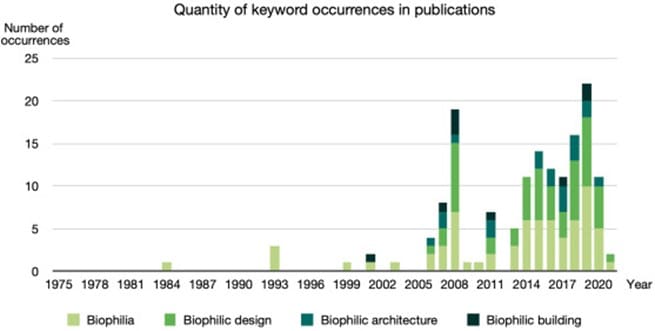
The growing awareness and popularity of biophilic design is indicated in the below graph, which demonstrates how the word biophilia, along with related keywords, has seen a significant spike in how frequently it is mentioned in publications, particularly from 2008 onwards.

Planteria group

Engage & Bloom is a solution that combines both science and strategy through engaging workplace activities. As well as improving productivity and wellbeing, Engage & Bloom also promotes teamwork and fosters connections with nature and one another.

The Engage & Bloom programme applies Fromm’s concept of growth in terms of people, plants, and social groups by giving individuals the opportunity to enjoy a shared experience that connects them with plants and nature both on an individual and group level.

Planteria group

The Science of Wellness in the Workplace

Workplace wellbeing encompasses how employees feel at work and about work, with a focus on developing and displaying healthy behaviours.

More specifically, it can include some of the following elements:

  •         A positive working environment
  •         Job satisfaction and purposefulness
  •         Good leadership and management
  •         Pay and reward
  •         Personal development
  •     Physical and mental health

Planteria group

Impact of Stress, Poor Air Quality and Sterile Environments on Staff

Factors such as stress, poor air quality, and sterile environments can all have a negative impact on workplace wellbeing. Poor workplace mental health has been estimated to cost UK businesses an incredible £45bn each year. Furthermore, Lumien data reveals how wellbeing impacts employees 27% of the time, and as a result, companies are losing 17% productivity.

Annually, this equates to £5,318.45 per employee, representing a significant organisational cost that could be mitigated through the implementation of wellbeing-focused initiatives.

Scientific Evidence Supporting Biophilia

Taking an evidence-based approach to workplace wellbeing allows employers to understand their employees wants and needs, along with areas of improvement.

According to the Mental Health Foundation, 45% of people reported that visiting green spaces helped them to cope. Likewise, Harvard research finds that spending 20 to 30 minutes in an outdoor setting where people feel they are interacting with nature can lower stress hormone levels.

Planteria group

Cognitive and Productivity Benefits of Greenery in Offices

The concept of biophilia is supported by various studies and frameworks, including Kaplan’s Attention Restoration Theory which found that exposure to nature reduces mental fatigue, as well as helping improve focus and our ability to concentrate.

Likewise, Ulrech’s 1981 Stress Reduction Theory claims that natural environments promote recovery from stress, while urban environments tend to hinder it. 

Planteria group

The Psychological Basis of Nature Engagement

According to the National Library of Medicine, individuals have less mental distress, less anxiety and depression, greater wellbeing and healthier cortisol profiles when living in areas with more greenspace.

This is reinforced by NHS research, which found that people who spend at least two hours a week in nature experience better health and higher psychological wellbeing than those who do not visit nature at all during an average week.

Planteria group

Sensory Benefits of Plant Interaction

Sensory planting encourages an increasingly engaging and
meaningful experience with plants, stimulating senses, including smell, sound,
touch, and sight.

According to the RHS, selecting plants that are particularly
good for your senses can improve mood and general wellbeing. 

Examples of plants with sensory benefits include:

·       Fragrant flowers, such as lavender, jasmine, and rose

·       Herbs, including mint, basil, and rosemary

·       Plants with a particularly textural appearance include lamb’s ear, ferns, and ornamental grasses.

·       Vibrantly coloured plants that satisfy the visual sense

·       Edible plants such as strawberry plants

Planteria group
Our Vertical Horizons towers can be used to grow herbs, salads and edible produce in the office.

Employee Engagement: Why it Matters

In their 2023 State of the Global Workplace Report, analytics and advisory firm Gallup found that nearly 6 in 10 employees are feeling disengaged at work. Traits of disengaged employees can include demotivation, missed deadlines, disinterest in team activities, and avoidance in taking initiative.

Such behaviours have also been described by the term ‘quiet quitting,’ whereby a disengaged employee only fulfils the bare minimum of their duties.   

Planteria group

The Impact of Disengagement

Employee disengagement can result in several issues, both for an individual’s wellbeing and the organisation. Decreased productivity is a key risk of disengaged employees, along with high absenteeism and turnover rates and the subsequent recruitment and training costs.

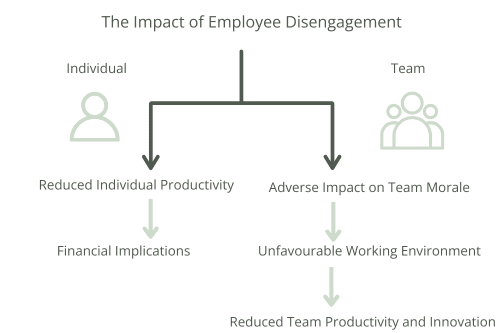
The 2023 State of the Global Workplace report found that disengaged employees are estimated to cost the global economy $8.8 trillion dollars, which represents 9% of global GDP. As well as the financial implications, employee disengagement also results in an adverse impact on team morale, which may cause an overall reduction in workplace productivity and innovation due to an unfavourable working environment. 

Planteria group

The Role of Nature in Engagement

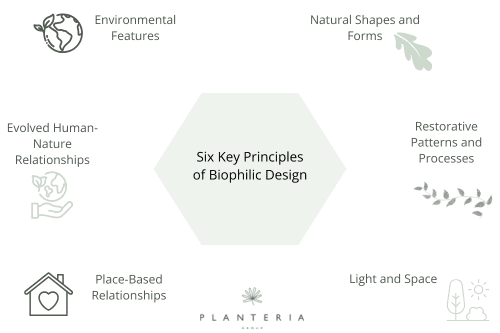
Biophilic design can be classified into six key principles illustrated below:

Planteria group

The last two principles provide a clear insight into how biophilic design can foster a sense of purpose and belonging. Place-based relationships refer to the link between culture and ecology. This is based upon a human’s sense of connection with familiar surroundings and feelings of protection or stewardship towards such places, known as Place Attachment Theory.

A study published in the Journal of Environmental Psychology investigated the connection between green buildings and place attachment. It found that biophilic design and opportunities for connection to nature were amongst the most important aspects for supporting Place Attachment Theory and can enhance individual wellbeing, quality of life, as well as increase pro-environmental behaviours and community resilience.

When coupled with the attachment to nature and health and wellbeing benefits that biophilic design provides, it is clear to see the powerful impact that spaces with a strong biophilic element can have on an individual’s sense of belonging within that space. 

Planteria group

How Interactive Experiences with Plants Create Meaningful Connections

Direct contact with vegetation represents one of the most successful ways of promoting human connection in design. Dr. Stephen Kellert claims that human evolution and survival require the management of natural environments, particularly with regards to sensory elements. Moreover, DelSesto highlights the variety of often overlooked ways that we interact with plants in daily life.

From clothing to writing materials, plants are used to produce essential daily items. What’s more, the exchange of plants as a mark of celebration or condolence highlights their powerful role in landmark events in our lives.

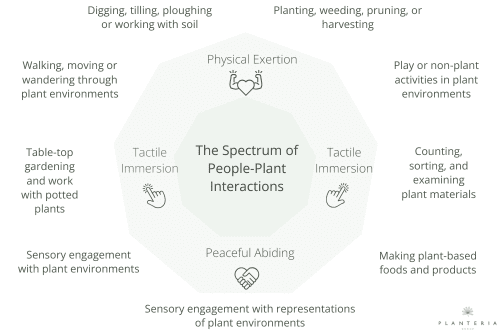
DelSesto’s below spectrum categorises people-plant interactions into key groupings: physical exertion, tactile immersion, and peaceful abiding. Different aspects can align particularly strongly with some of the identified benefits of biophilia. For example, interactions classified under the ‘peaceful abiding’ grouping are likely to be closely aligned to the benefits of stress reduction, while those classed as ‘tactile immersion’ may be particularly effective at boosting engagement and concentration.

Planteria group

Strategies Behind Engage & Bloom: Tailored Solutions for Every Workplace

Engage & Bloom comprises three modular packages, allowing tailored solutions for every workplace. In addition to an informative biophilic webinar, employees can dial in live and speak to our ‘Plant Doctor’ who will advise on care and maintenance of specific plants. 

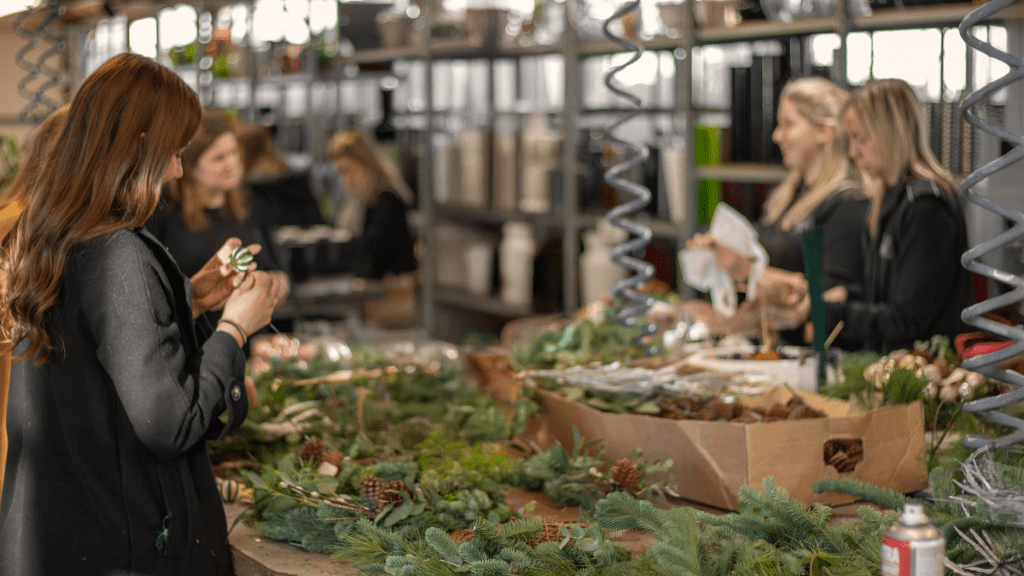
Furthermore, there is the opportunity to identify and learn about plant species simply by scanning a plant’s QR code, which brings up the relevant page of the Plantopedia. Silver and gold packages also include interactive and engaging biophilic-based workshops, which can encompass activities such as wreath making, floristry, and orchid arrangement.

Planteria group

Flexible Solutions to Suit Workplace Needs

Engage & Bloom is focused on creating tailored solutions for every workplace. The flexibility of several key offerings within the programme allows employers to implement activities in accordance with their workplace’s needs and schedules.

Plant giveaways, biophilic webinars, and workshops can be scheduled at a convenient time and location for the business, whether it is on-site or at a separate location as part of an out-of-office event.

Engagement Through Experience

According to Michigan State University, there are many activities workplaces can implement to improve group cohesion and build trust.

Such activities often give employees the chance to interact with colleagues in a different way and reveal different aspects of their personalities that may not come out during normal work interactions.

Other advantages of team building include:

  •     Boosting employee engagement
  •     Encouraging communication
  •     Mitigating  conflict
  •     Increasing  collaboration

Engage & Bloom workshops provide an opportunity for employees to experience these benefits, whether working directly together or enjoying a shared experience alongside each other to produce wreaths, orchid displays, and floristry bouquets.

As noted by McKinsey & Company, being amongst nature helps with attention span, creativity, well-being, and happiness and should act as a foundational resource for both individual and team development.

How Interactive Learning Builds Deeper Connection

Referring to DelSesto’s spectrum of people-plant interactions, the different activities within the Engage & Bloom programme can be classified within this framework. Floristry bouquets, moss art, orchid and wreath making workshops are categorised under the ‘tactile immersion’ category due to employees’ physical interaction with plant materials.

Other aspects of the Engage & Bloom programme, such as plant giveaways, dial-in plant clinics, and identifying plant species using a QR code and Plantopedia are categorised under the ‘peaceful abiding’ category, due to their focus on sensory engagement with plant environments and representations of plant environments. Such interactive and informative activities can promote deeper connections within the workplace.

The social element of a shared workplace activity can help employees to feel connected to one another and the activity. According to Times Higher Education, feeling connected to what is being learnt and the people one is learning alongside is what underpins engagement. They go on to state that feeling socially connected enhances an individual’s sense of belonging, which is essential to maintain motivation and feelings of safety and comfort.

Employee Satisfaction Surveys

Employee satisfaction following increased interaction with biophilia can be measured in several ways. Heightened creativity may be evident in subsequent projects and brainstorming sessions, while reported increases in productivity can also be observed.

Organisations may find that outlined objectives are being reached increasingly quickly and projects are completed ahead of schedule. In terms of wellbeing, employers may observe a positive change in the overall mood and atmosphere within the workplace

Client Success Stories

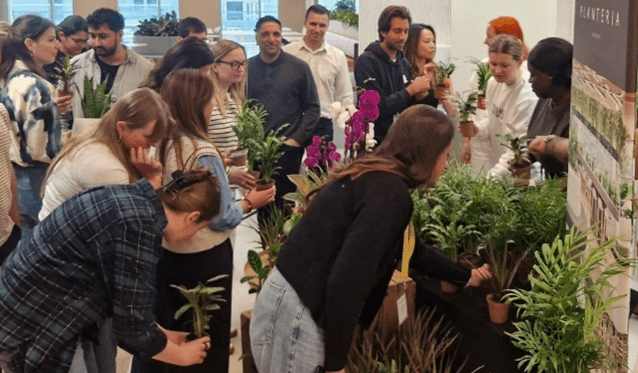
Recently, we brought the Engage & Bloom program to a leading social media platform’s London office. Employees fully embraced the experience, from learning about plant care to taking home their own plant, the event left lasting impressions and fostered stronger connections with nature in the workplace. 

The client shared the following feedback after the event: “I’m so happy that you shared some beautiful pictures with me today. The plants look amazing, and I was extremely happy to see the engagement with our members; they looked happy. Well done to the Planteria team!”.

Planteria group
Planteria group
Planteria group

Case Studies

Engage & Bloom activities have been successfully implemented in a diverse range of workplaces and industries.

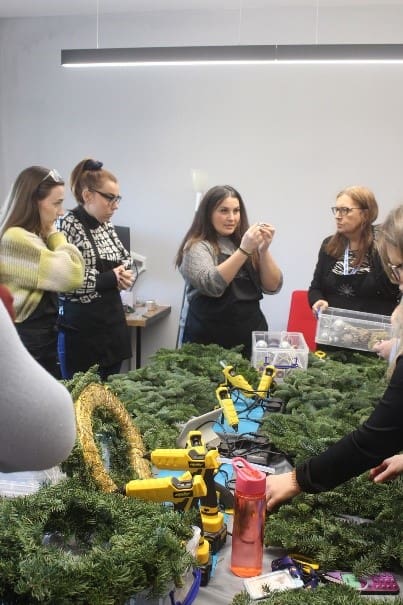
Wreath making makes a particularly popular seasonal workshop that can be adapted to the season, whether it is over the festive period, autumn, or spring. As such, materials can also be adapted to suit the season, theme, and even the organisation’s brand colours, creating a truly personalised experience for each individual workplace.

Planteria group
Planteria group
Planteria group

Quantifiable Benefits for Staff Engagement and Wellness

Awareness and application of biophilia within the workplace, through biophilic design elements in the office and Engage & Bloom engagement activities can be quantifiably measured using numerous metrics.

The outlined body of scientific research strongly suggests that organisations would see a reduction in absenteeism and the number of cases of reported stress and wellbeing-related issues when biophilic design and activities are regularly implemented within the workplace.

Implementing Engage & Bloom

According to the KPMG 2024 CEO Outlook Report, the majority of UK CEOs expect companies to shift towards a full return to office work within the next three years. As such, it is important for facilities professionals to look at ways to create calming and inviting workplaces.

The implementation of biophilic design principles is a key way to achieve this and demonstrate the facilities manager’s commitment to wellbeing and engagement. Introducing new and innovative biophilic initiatives can help facilities managers to further strengthen their client relationships and demonstrate proactive awareness of scientific and strategically backed initiatives that benefit their clients.

Preparing for an Engage & Bloom Rollout

The Engage & Bloom team will contact you to book in your events on a date that is convenient to your team.  They will talk through the options with you and help you choose the best event type to suit your team, goals and/or the time of year. 

For example, the wreath building workshop is most popular in Quarter 4 – as staff get to take home their own handcrafted wreath ready to decorate their home for Christmas.The Engage & Bloom team will identify what sort of space they need to hold the workshop or activities. 

We recommend sending out company-wide communications for the larger events or specific invitations to the workshops.  Allow staff enough time to ensure they are in the office on the specific days.  The anticipation of a fun and engaging event can be a engagement piece in itself – reminding them that the company is committed to their wellbeing and have them looking forward to the event.

Planteria group

Partnership with Planteria Group

Planteria Group is committed to delivering tailored solutions for each individual workplace. With three packages available, employers can choose the one that is best aligned to their budgetary and organisational needs, with each package consisting of several Engage & Bloom initiatives. Silver and Gold packages also let organisations choose between 2-4 yearly workshops, with the opportunity to pick from several different workshop options and tailor them to suit their organisation’s needs.

Conclusion

Engage & Bloom is rooted in a scientific foundation. It’s based upon the key principles identified in Kaplan’s Attention Restoration Theory regarding nature exposure reducing mental fatigue.  It is also based on Ulrech’s 1981 Stress Reduction Theory and its belief that natural environments promote recovery from stress.

Engage & Bloom harnesses the power of nature in the form of interactive initiatives that improve cohesion, build trust, and encourage enhanced team relationships.

As highlighted, the implementation of an Engage & Bloom workplace experience programme provides several key benefits, both in terms of individual employee wellbeing, productivity, and creativity. Additionally, there are a multitude of wider organisational benefits, including reduced absenteeism, labour turnover, and heightened team morale.

Discover tailored solutions that provide organisational, individual, and team benefits. Let us help you transform your workplace today.

About Planteria Group

Planteria is the UK’s leading office plant company, operating as an independent, family-run business of experts for more than 40 years and maintaining over 90,000 plant displays nationwide. We are committed to creating best-in-class biophilic design and have worked on some of the UK’s most prestigious projects. 

You’ll find our work in offices, showrooms, and public buildings across the UK. Our Services: Design, installation and maintenance of planting for workplaces.  Interior and exterior biophilic design, living walls and moss walls. We also offer corporate floristry and seasonal decorations, including orchids, Christmas trees and more workplace experience services via our Engage & Bloom Programme.

Contact Information

ENGAGE & BLOOM TEAM

T: 0345 505 3333

E: engageandbloom@planteriagroup.com

Read More

Discover ways to enhance your office environment with our expert insights on biophilic design, wellbeing, sustainability and the world of plants.

15 Things to Consider When Choosing Plants for Your New Office

15 Things to Consider When Choosing Plants for Your New Office

It can be difficult to know where to begin when deciding which plants to choose for your office, so we’ve put together 15 essential factors to keep in mind.

Whether you’re moving into a new building or refurbishing your existing space, introducing greenery is a simple yet impactful way of enhancing your office. Plus, plants are scientifically proven to provide plenty of other important benefits.

For business owners they increase the value of your property and help attract talent. For your staff they increase wellbeing, creativity, and increase productivity by up to 15%.

Planteria group

1. Lighting Conditions

Lighting is one of the most important factors in determining which plants will thrive in your office. Before you decide which plants to go for, we like to establish the light you have available in your office, particularly the amount of natural light. You can then choose plants that are a good match for your lighting conditions.

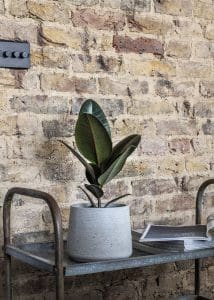
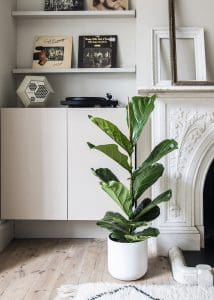
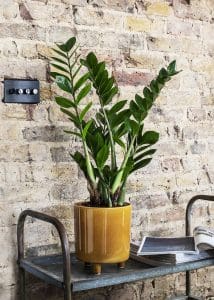
For example, pothos, philodendron, rubber plants, and fiddle-leaf figs are all ideal for well-lit spaces, while in darker environments options will be more limited.  However plants like the ZZ plants (Zamioculcas zamiifolia) and snake plant (Sansevieria) can thrive in low-light. There are also important considerations such as the colour of the light (very important for plant growth) and light schedules (some plants need periods of darkness). 

Planteria group

2. Space Availability

Make the most of your office planting by considering all aspects of the space. While floorstanding plants can be an obvious starting point, consider other alternatives, including hanging planting and small desktop plants that add an uplifting feel to workstations.

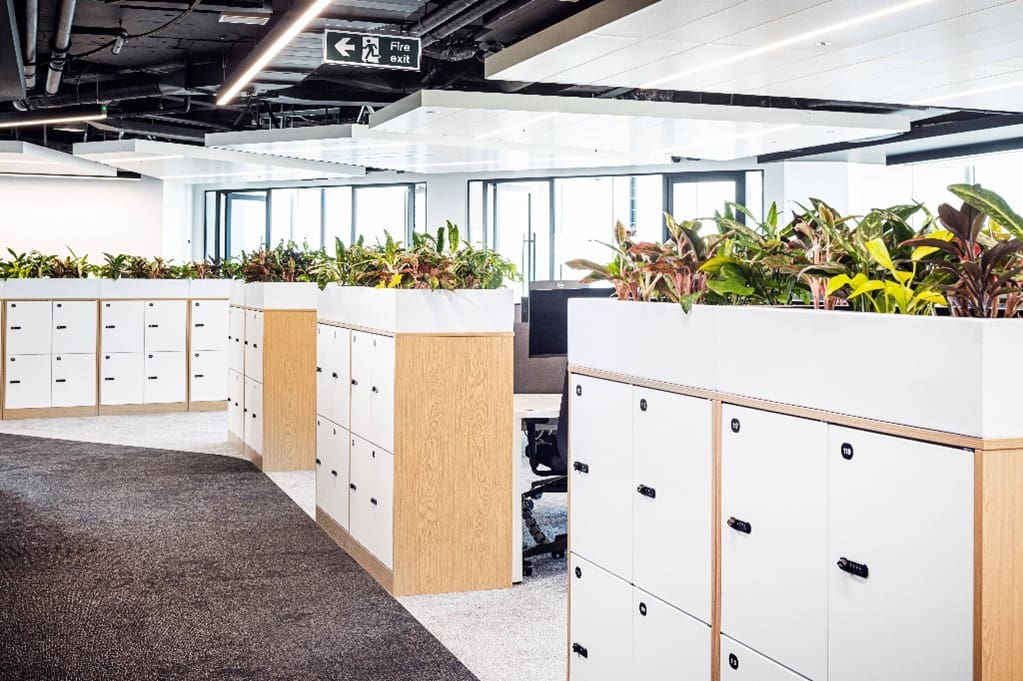
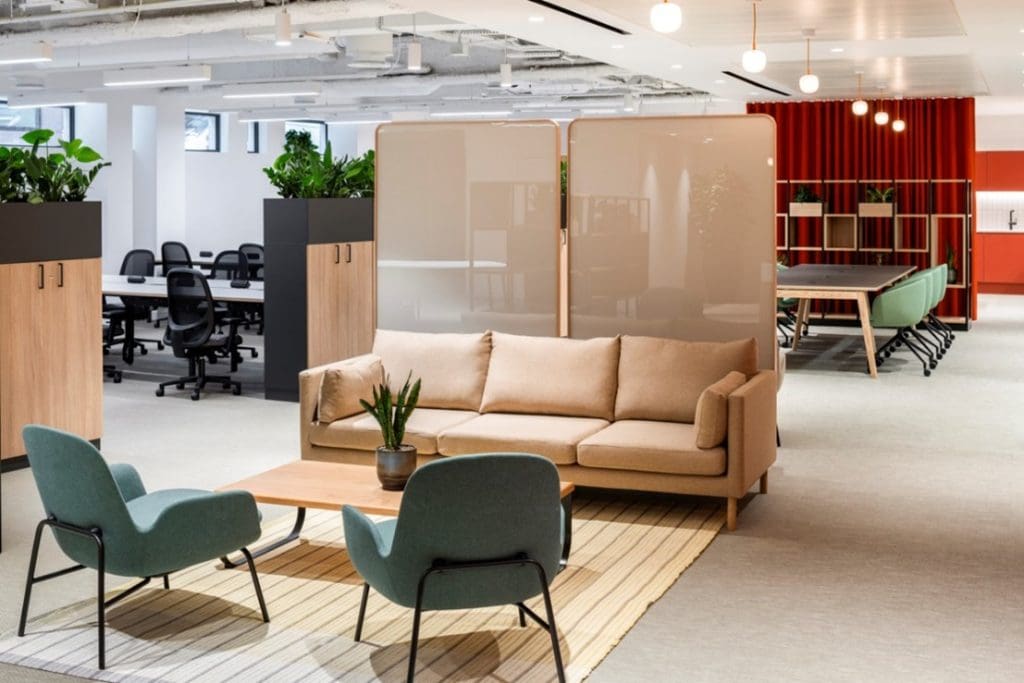
You may also like to choose a trailing plant that will cascade down from shelves, creating an eye-catching feature. At Planteria, our team enjoys developing innovative and bespoke planting solutions. For the below project we added planters to the tops of lockers, transforming a practical office essential into a decorative feature.

Planteria group

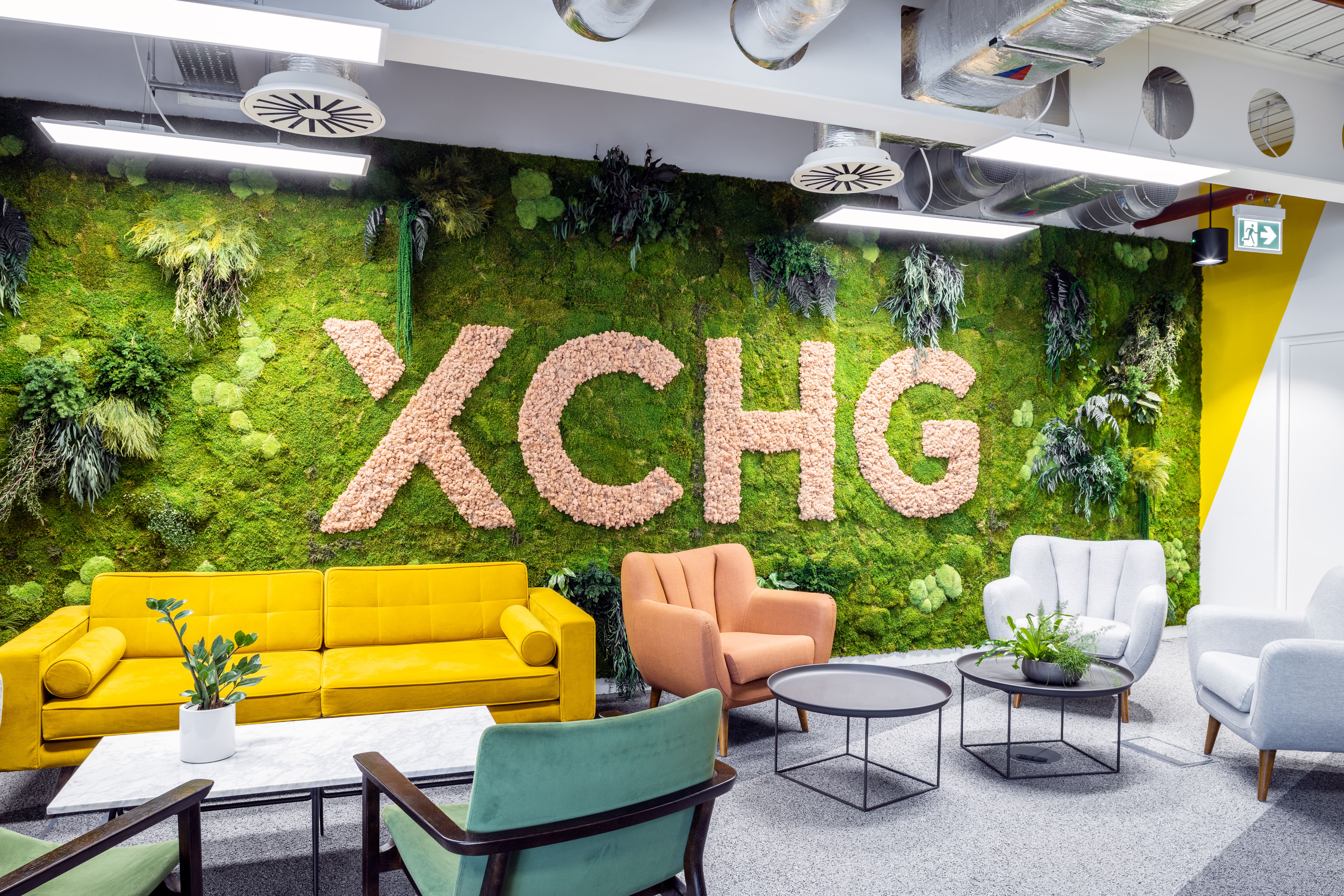
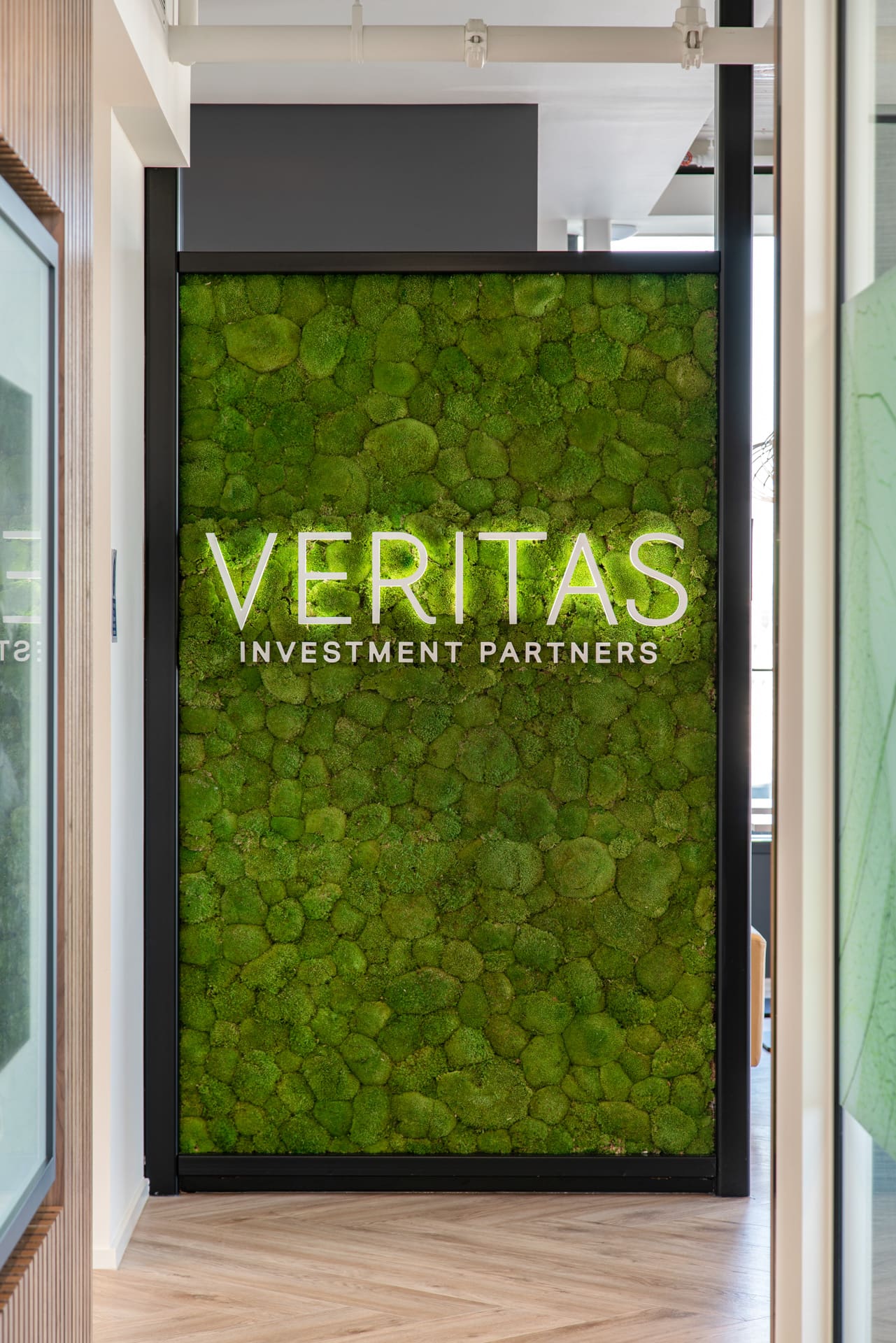
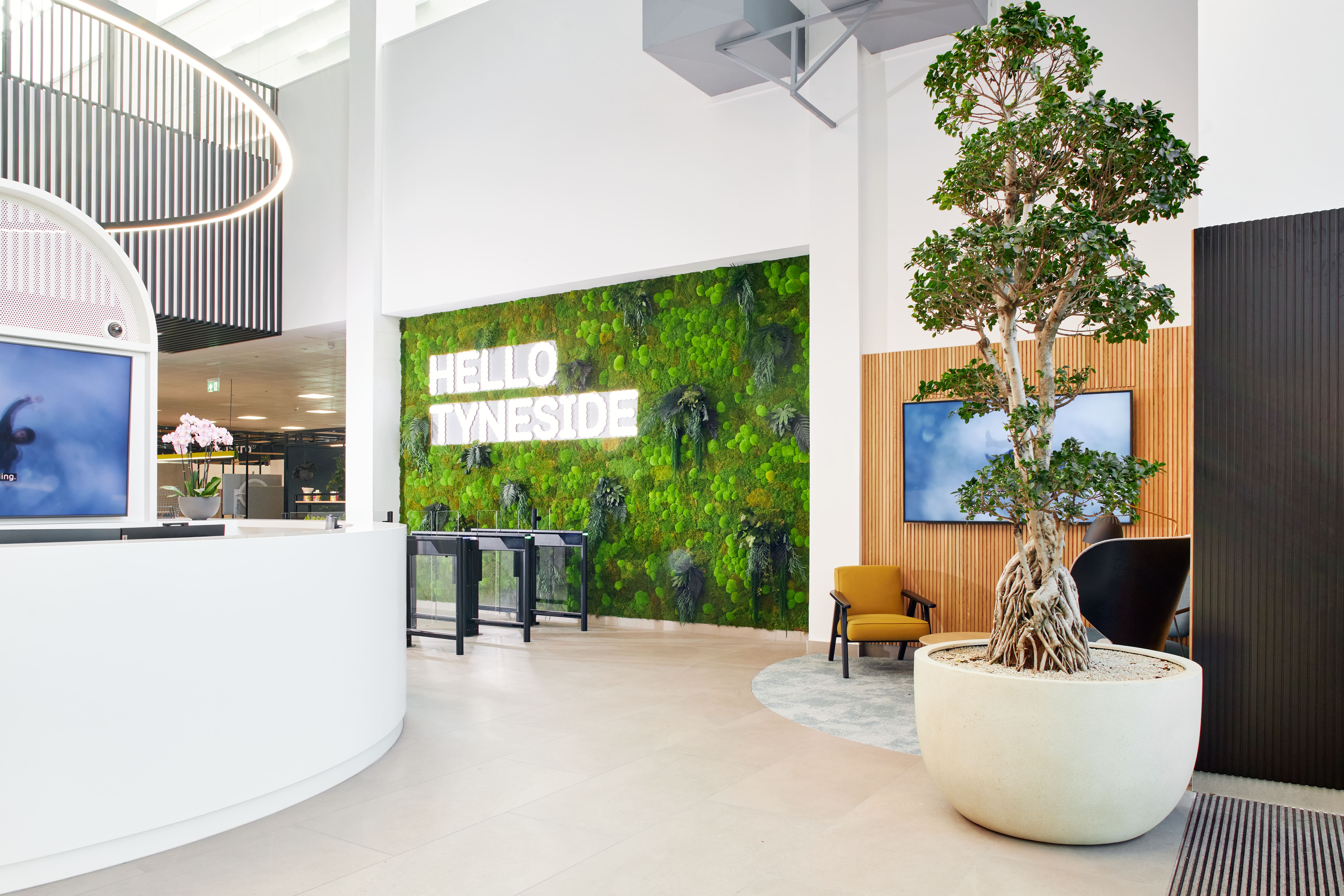
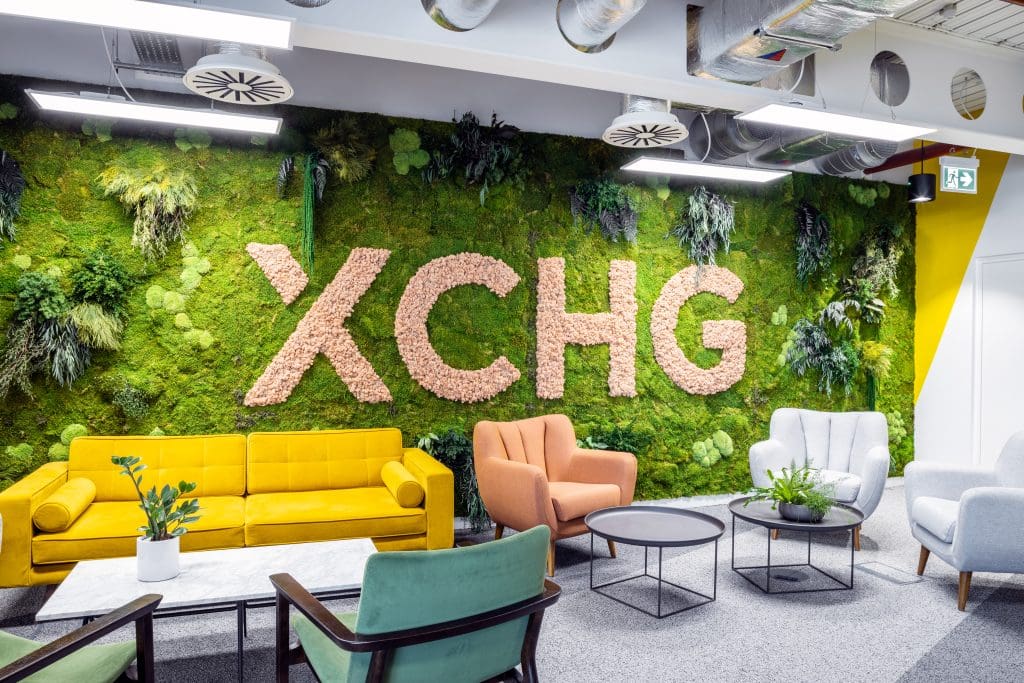
A moss wall can create true wow factor in your office. As well as looking incredibly impressive, moss walls reduce noise levels- perfect for loud office environments. Similarly, a living wall is an impactful office planting solution that won’t take up any floorspace. Consider a professionally designed and installed living wall that reflects your company and brand, even potentially incorporating your logo. Installing a living wall in a customer-facing area also creates a memorable first impression for guests.

Planteria group

As well as plants, introducing fresh flowers into your office will have an undoubtedly uplifting effect on your employees. Assemble bouquets yourself or make it a team bonding activity. If you’d prefer to leave it to a professional, the Planteria floristry team can assemble and deliver regular bouquets to your office. 

As well as creating an inviting and vibrant workspace for staff, they also help build a positive first impression for guests. For a simple yet striking option, choose an orchid. When combined with moss and flowers, they make an elegant addition to any office and are available in various sizes.

Planteria group

3. Sustainability

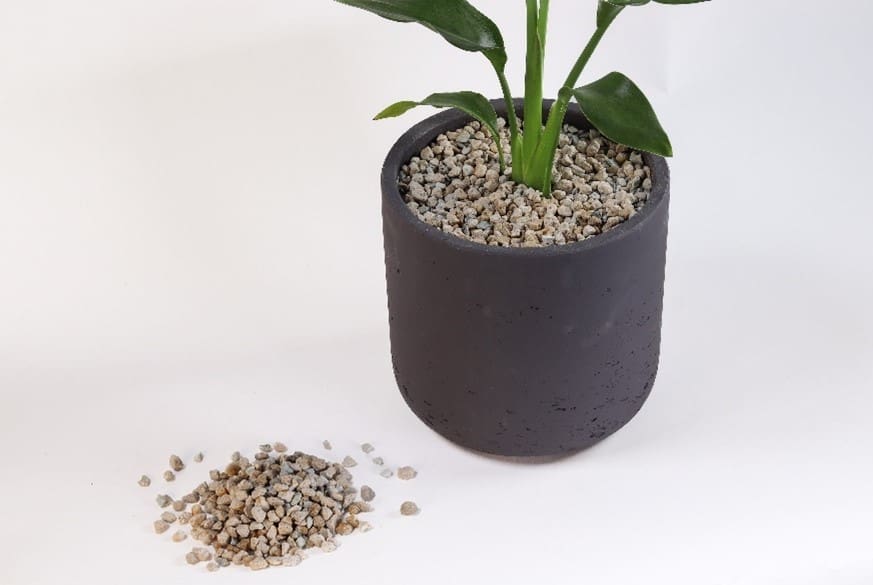
Sustainability is an important consideration with almost any purchase, and office plants are no different. Consider ways to make your office planting scheme more environmentally friendly. For example, Ecoponic is a pure mineral mixture of pumice and zeolite that acts as an alternative to soil. Ecoponic offers numerous benefits, including:

  •             Permanent structural stability that keeps soil airy and enables root absorption
  •            Optimal air pore volume, creating ideal conditions for growing
  •             Circular, allowing it to be re-used and recycled infinitely
  •            Peat-free, protecting vulnerable peatlands, wildlife and reducing emissions
  •            Efficiency in water storage and absorption
  •             Reduced likelihood of flies or pests due to a lack of organic material

As well as planting material, pots also provide an opportunity to make a more sustainable choice. Elho pots are made from 100% recycled plastic using wind energy. Plus, they’re recyclable. Likewise, Capi produces various sustainable planting solutions. Capi Waste Line products are made from recycled cork and marine debris. 

Capi’s Nature range includes beige pots made from recycled sawdust, green designs made from recycled artificial grass and black options made from recycled textiles. When it comes to maintenance, Planteria also have a team of Walking Plant Technicians who visit client offices on foot to reduce emissions.

Planteria group

4. Creating a Story

Adding plants to your office space gives you an opportunity to be creative and incorporate meaningful links and references to your business. Our design team will create a planting scheme that matches your brand’s colours for a cohesive look and feel. 

The below example shows how our Planteria design team took inspiration from Experian’s branding guidelines:

Planteria group

Shades of purple and pink were infused into the cabinet top planting, naturally blending the company’s branding with the greenery. Most of the pots were chosen in neutral colours, accented with hints of blue tones to link back into Experian’s branding.

You may also wish to draw inspiration from your logo or product/service offering when planning your planting scheme. 

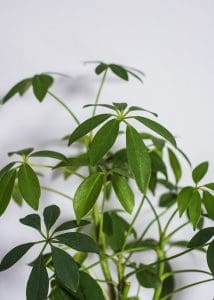
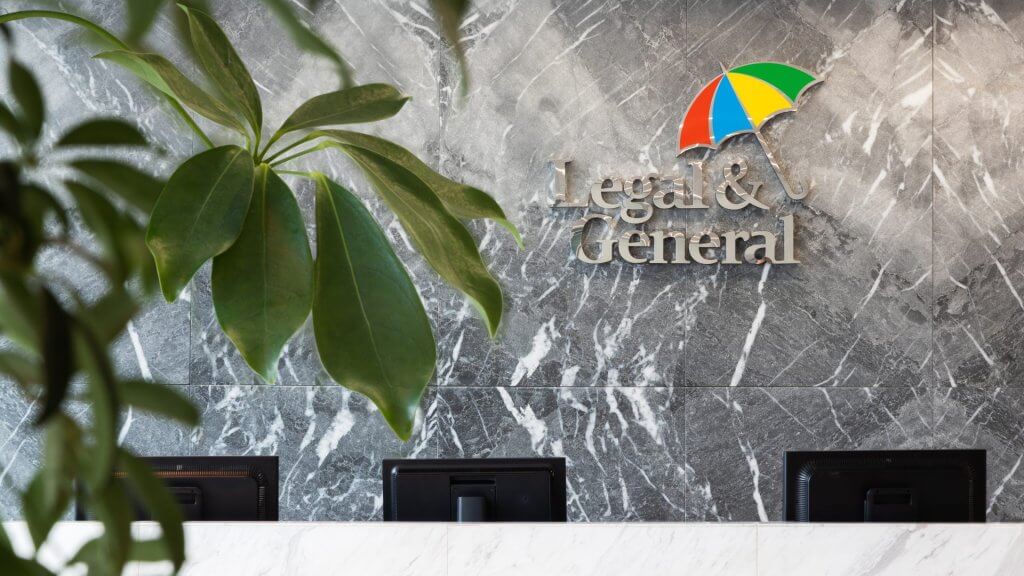
For example, when designing a scheme for a Legal & General whose logo featured an umbrella, we installed umbrella trees as a subtle yet clever nod to their brand.

Planteria group
Planteria group

5. Maintenance Requirements

While it’s natural to think about how your plants initially look, it’s crucial to consider how much maintenance they will require on an ongoing basis. Keeping your plants healthy and safe from pests can be a big task. 

Most businesses opt to appoint a plant maintenance contractor where specialist plant technicians will visit and tend to your plants. These services normally offer free replacements for plants that are unwell, dead or growing too tall. 

If you’re short on time and prefer to take care of your plants in-house, it makes sense to consider low-maintenance options, including ZZ plants, aloe vera, or philodendrons, which are great choices for those with busy schedules.

Planteria group

6. Size of the Plant

Before you go ahead and purchase your plants, it’s important to consider their size. Not just at the time you’re buying them, but the size they may potentially grow to. Larger plants can help to fill empty and expansive spaces but may overwhelm smaller rooms. 

Likewise, a very small plant in a large space can look disproportionate. If you have limited space, consider smaller plants or even desk-sized options such as succulents or air plants.

Planteria group

7. Air Quality Benefits

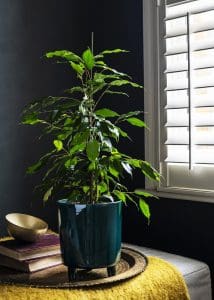
One of the most advantages of office plants is their ability to improve air quality. Some plants, like the philodendron selloum, dracaena warneckei, ficus benjamina and aglaonema greyound are known for their air-purifying properties, helping to remove toxins.

If you are wanting to make a significant difference to the air quality, it will require a large number of plants.  A living wall is a brilliant way of naturally increasing oxygen levels and air quality.

Planteria group

8. Employee Preference

Why not share the process of choosing your office plants with your employees? Ask their preferences and get them involved in the process. After all, they will be surrounded by the plants every day. Involving employees in the process can also make them feel more accountable for the plants when it comes to taking care of them.

Plus, it demonstrates your commitment to their wellbeing and creating an office space that they will enjoy working in.

Planteria group

9. Cost and Budget

Plants come in a variety of price ranges, depending on their size, rarity, and species. Be sure to set a budget before you begin choosing your plants so you can select your plants in alignment with your budget.

While more affordable plants like snake plants and spider plants are great budget-friendly options, if you’re working with a larger project, you may wish to opt for larger or more exotic plants that add a unique focal point to your space, especially when they’re positioned in a key area, such as centrally in the office or in the reception area.

Planteria group

10. Safety Considerations

If you regularly have young children or pets in your office, it’s important to choose plants that are non-toxic. Some common office plants, like the aloe vera plant, are safe, while others, such as dieffenbachia or poinsettias, can be toxic if ingested. 

Always check if a plant is pet-friendly before introducing it to the office if you know animals are going to be around.

Planteria group

11. Aesthetic Appeal

Looks aren’t everything when it comes to plants, but they do play a very important part. Consider the colour, leaf shapes, and sizes and how they will fit in with your office décor. If you’d like to create a minimalistic and contemporary office space, opt for sleek, modern plants like snake plants or bonsais.

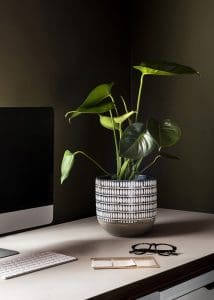
For a vibrant or tropical aesthetic, choose plants with large, bold foliage such as monstera or fiddle-leaf figs. If adding plants is part of an office-wide refurbishment, consider making a moodboard beforehand so you can get a clear idea of the aesthetic you’re aiming for and which plants have been used in similar spaces.

Planteria group

12. Growth Rate

The growth rate of a plant will impact how often you need to repot it or trim it. If you prefer a more contained plant, choose slow-growing options that require minimal maintenance. For example, blue star fern, calathea and philodendron.

Some plants, like the ficus benjamina grow quickly and may require more frequent attention. Knowing the growth rate helps prevent your plant from outgrowing its space too quickly and allows you to stay on top of whatever maintenance is needed.

Planteria group

13. Temperature Tolereance

Plants have varying tolerances to temperature, so it’s essential to match them to your office’s climate. Remember to check the temperature and humidity levels in your office before choosing plants. 

Always got the heating on? opt for cacti and succulents that generally prefer warm, dry conditions. If your office is a cooler climate, choose ZZ plants, aspidistra and Phoenix date palms that can thrive, even in cooler, more humid environments. 

Planteria group

14. Pots and Containers

It’s not just the plant you need to consider; pots and containers have an important part to play in enhancing the visual appeal of your plant while also promoting healthy growth. Choose pots with proper drainage to prevent root rot.

Additionally, consider how the container fits with the overall aesthetic of the office. Ceramic, concrete, and modern metallic pots can provide a sleek look, while wooden or woven baskets create a natural and laidback feel. Likewise, square and rectangular planters and pots have a modern and streamlined appearance, while round shapes give an organic feel.

Planteria group

15. Seasonal Changes

Finally, it’s worth considering the impact that the different seasons will have on the plants you choose. Some plants may require additional maintenance during certain times of the year. Seasonality is also a consideration in terms of how your plants look too, with potential changes in leaf colour, volume and flowers across the different seasons.

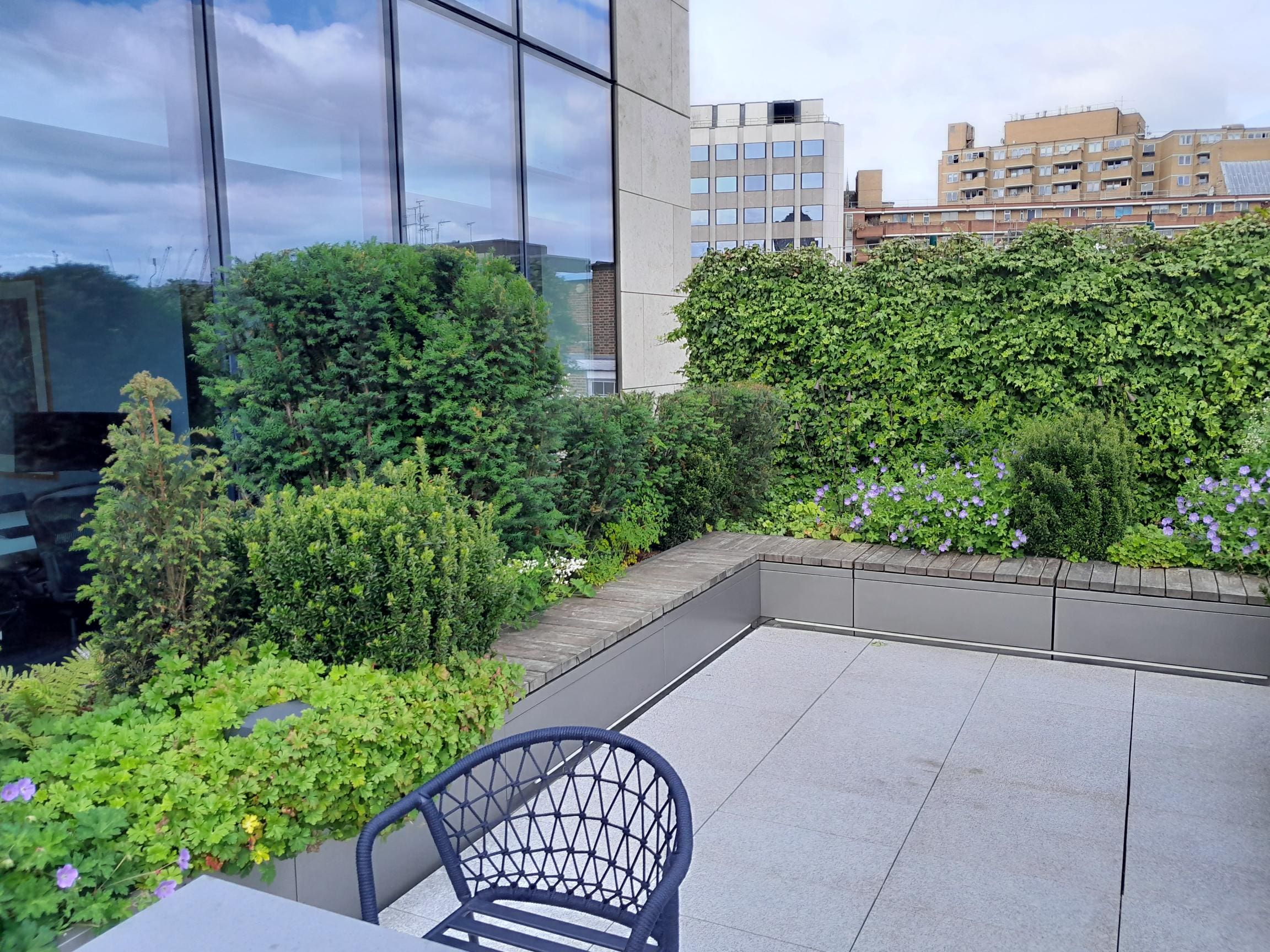
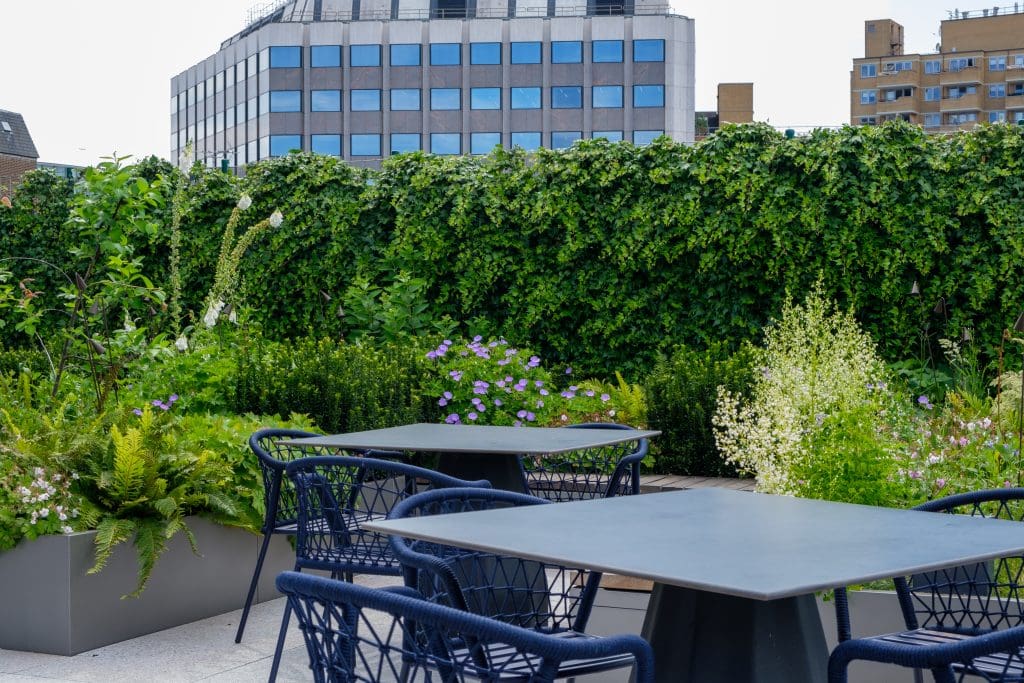
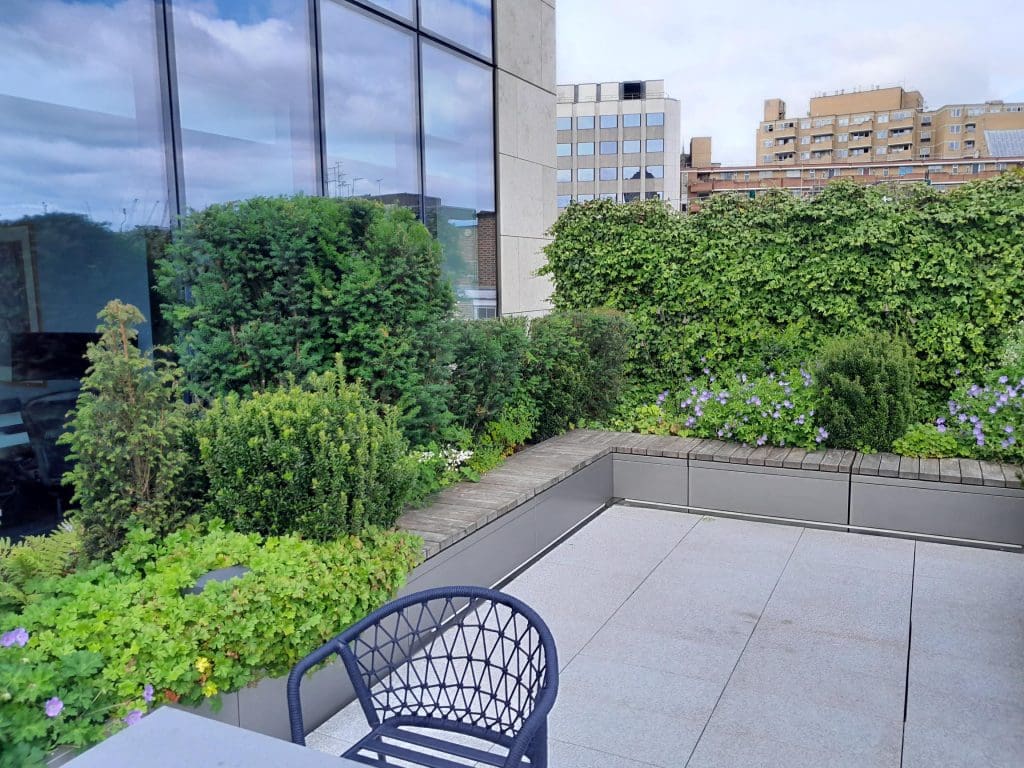
As well as considering planting inside your office, don’t forget about the exterior. Whether it’s at the front entrance or a terrace an exterior planting scheme allows you to enjoy greenery and seasonal blooms in your outdoor environment.

Planteria group

Conclusion

Picking the right plants for your office can depend on several features, in terms of both visual appearance and practical considerations. Keeping these 15 factors in mind allows you to choose a selection of plants that will suit your space and be suitably maintained, creating a healthier, more enjoyable workspace for all.

If you’re short on time or would prefer to leave it to a professional, consider contacting the friendly Planteria team. We can take care of everything from coming up with a design that suits your space to installation and ongoing maintenance.

Get in touch today to see how we can transform your office space.

Jll birmingham, a group of team members sitting in the auditorium

Read More

Discover ways to enhance your office environment with our expert insights on biophilic design, wellbeing, sustainability and the world of plants.

Sustainability, Biodiversity, Biophilia and Building a Better Future

The pandemic has heightened environmental awareness.  As COVID-19 swept through all our lives and made huge changes to the way we have had to live, this has given us time for introspection and reflection on the fragility of our planet and our core values. What is important to us?   That is the question that we have asked ourselves.  The answer?  Looking after our physical and mental health as well as the planet that we live on.

In an article published in June 2019, the Guardian wrote that Briton’s are more worried about the climate crisis than the economy, crime, or any other issues.
 

Planteria group

Sustainability, biodiversity, and wellbeing issues are complex interconnected subjects. Everything we do and how we live impacts the planet, our health, and our wellbeing.  It’s very clear that we need to make better choices and decisions to improve our situation in all these areas, it requires a holistic approach.

The mental health foundation, who chose nature as their theme for Mental Health Awareness week this year, published the results from recent research which shows that one of our top coping strategies during lockdown was to go for walks outside and that 45% of us reported that being in green spaces had been vital for our mental health.  Another example of our yearning for nature to help us cope during this period was that websites showing footage from Webcams of wildlife saw hits increased by over 2000%.

It is no wonder then that sustainability, biodiversity, and other green issues are at the top of the agenda for most people. Organisations understand the importance of this and of their own corporate social responsibility to ingrain this into their values.  It is wonderful to see that most leading organisations now have appointed a Head of Sustainability role.   This is a senior leadership position that takes an overarching responsibility for ensuring that sustainability and corporate social responsibility are considered in all areas of operations within the business.

Over the past year, the majority of us have had our lives turned upside down. Working from home, schooling from home, cut off from physical contact with friends and family.   With everything from holidays to weddings cancelled, we had a lot more time on our hands.  As well as giving us time and space to think about the important things, we have proved that it is possible to work and learn from home, spend more time in nature and in relative comfort, less time commuting, and have less impact on the planet as a result. We now have the opportunity to reassess, re-evaluate and build back in a better way, that suits us as individuals.  The most innovative and successful companies are adapting to this by offering their staff a hybrid model and flexibility to support their work life balance.

How can we create a better future? This is the question, and it is also the opportunity, that is being facilitated by designers, architects, and leaders in the property management sector.

“The future will belong to the nature smart – those individuals, families, businesses and political leaders who develop a deeper understanding of the transformative power of the natural world and who balance the virtual with the real”.  Richard Louv – ‘The Nature Principle’.
Planteria group

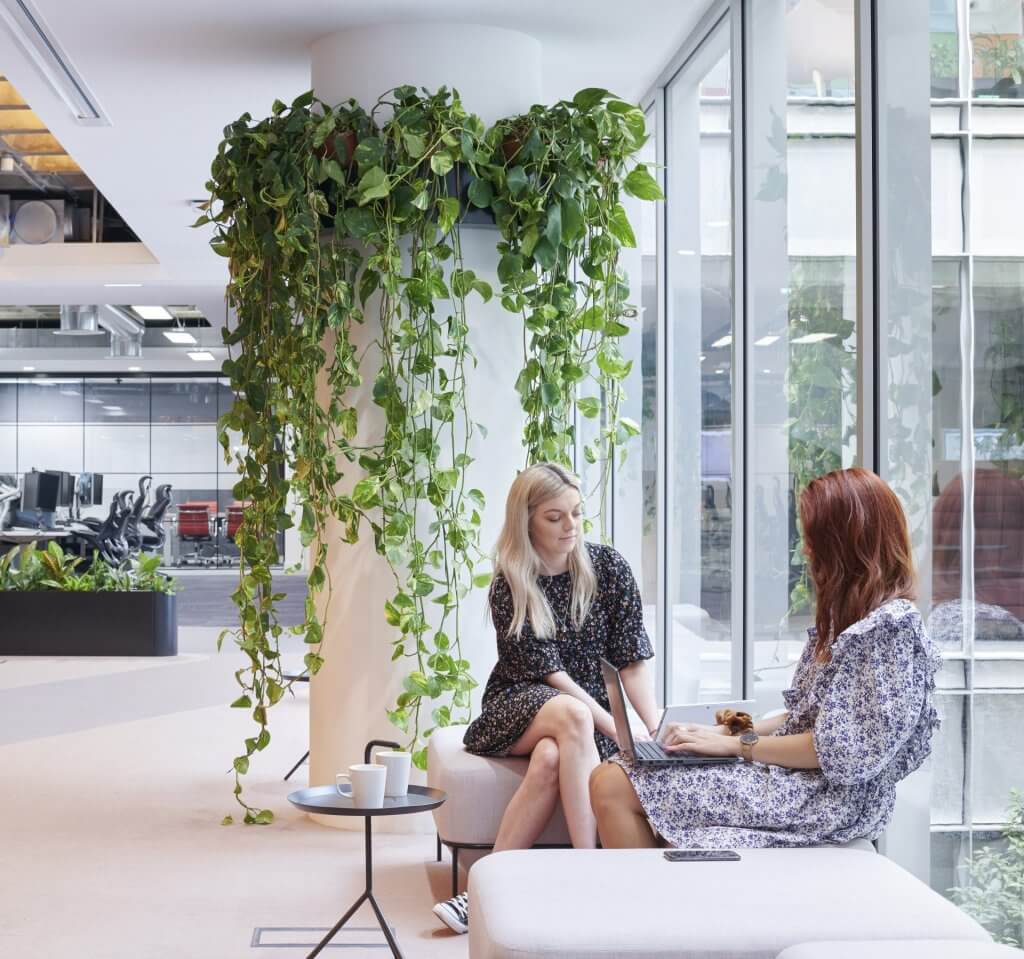
(Designed by M Moser. Photography by Alex Kendrick.)

The co-working sector, in particular, looks set for a boom as they specifically offer flexibility and attractive collaborative working spaces.  Innovative companies like our client Fora Space feature impressive, biophilic-design led spaces, linked to nature, and are leading from the front in this sector.

The importance of good design linking us to nature is better understood now, especially since we have spent the past year being able to access our gardens and local parks more frequently. The truth is that in this country we spend more than 90% of our time indoors and we have changeable unreliable weather. So, we have a real need to bring nature inside if we are to benefit from it year-round, and as we make the transition back to working from an office.  Working in spaces that feel more natural and include planting gives us the boost that we yearn for. In turn, it also boosts our health and well-being, helping us to cope with stressful situations.

We can, and should make better use of outside spaces to create gardens and pocket parks in cities.  This will increase the amount of greenery, and by selecting plants that attract nature and provide a natural habitat for wildlife, we are supporting biodiversity.  We need to maximise opportunities here,  joining up the green spaces between London’s parks, improving the views for the local community, and improving the environment. Planting additional trees wherever that is possible, helps absorb carbon, provides shade cover, and produces additional oxygen, cleaning the air.  Every small improvement adds up to make a significant difference.

At Planteria we work with a wide variety of clients including property management companies, designers and architects, collaborating on projects that improve the environment and enhance people’s well-being.

As office plant suppliers, we are committed to sustainability ourselves, and an ongoing effort to improving our practices and operations in this area.

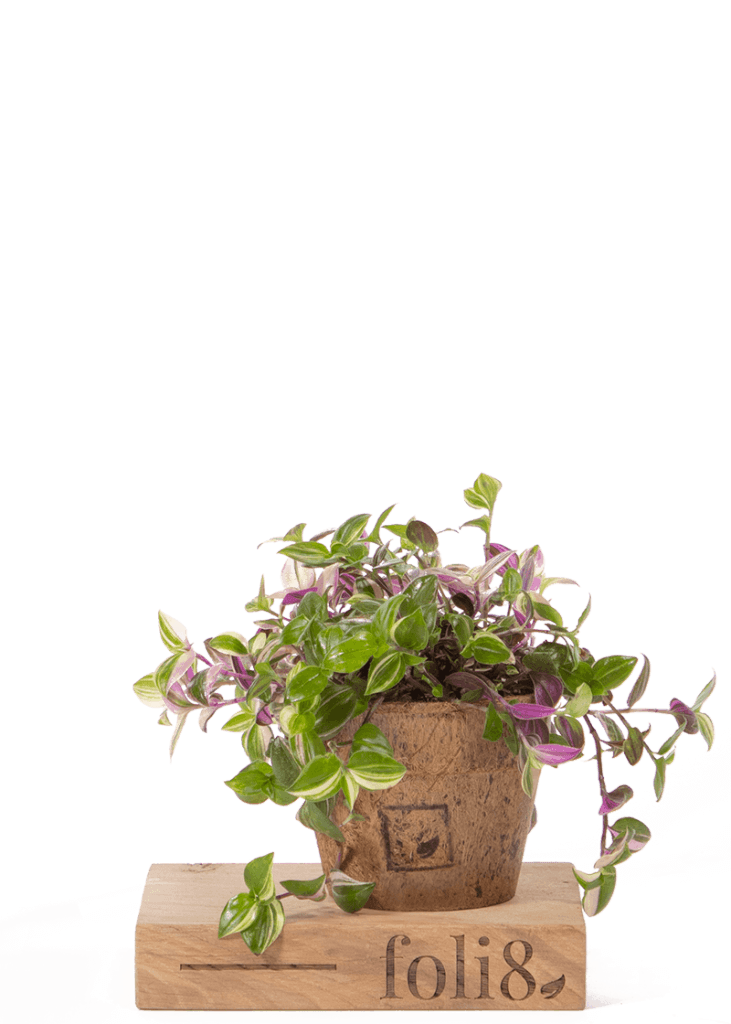
We are working to reduce plastics from our supply chain; our online plant shop – Foli8, uses coir hair pots instead of plastic.  These pots are 100% natural and made from coconut fibres. We are moving to a green company fleet and have just switched over half the fleet to electric vans.  At our head office, we keep sheep instead of mowing the lawns! We recycle and we compost all our green waste.  We also harvest rainwater as our first choice for watering our plant stocks.
Planteria group


Can we help you achieve your sustainability and corporate social responsibility goals? Please get in touch so we can discuss your ambitions.

We LOVE The Urban Jungle Trend

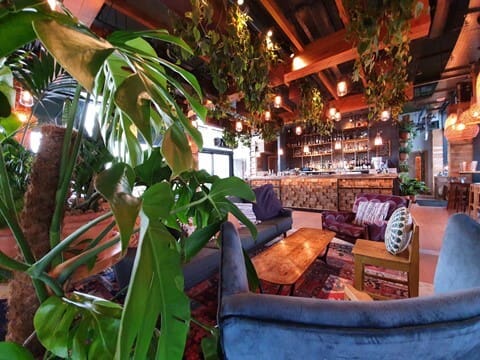
Having just a solitary plant by the window is no longer the norm – offices across the nation are creating their own little patches of green and incorporating plants into their interior décor.

The benefits of a green office space are many, from mental wellbeing to lower levels of stress. Green Plants for Green Buildings say that a productive office includes biophilic design or bringing the outside in. The urban jungle trend can help you accomplish this goal – and it’s a trend that we love here at Planteria.
Planteria urban jungle

Why Do We Love the Urban Jungle Trend So Much?

By adding planters, plant stands, indoor plants, hanging plants and more to the office, you can create a ‘jungle’ in the building or workspace (and even at home!) that boosts people’s wellbeing and productivity.

And, at Planteria, we believe this interior trend is here to stay.

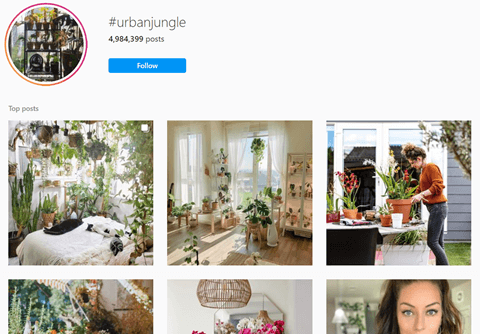
For a start, this is not a new concept, as people have been trying to create ‘jungle vibes’ in their home and place of work for a long time. If you look at the popularity of hashtags such as #urbanjungle, #junglestyle and #junglehome on Instagram, it’s clear this trend is not just a fad.

For example, there are almost 5 million posts just with the #urbanjungle tag!
Instagram

Also, with a growing number of people living in cities (it’s estimated that, by 2050, there will be 2.4 billion more people in cities), bringing the jungle indoors is an increasingly attractive option.

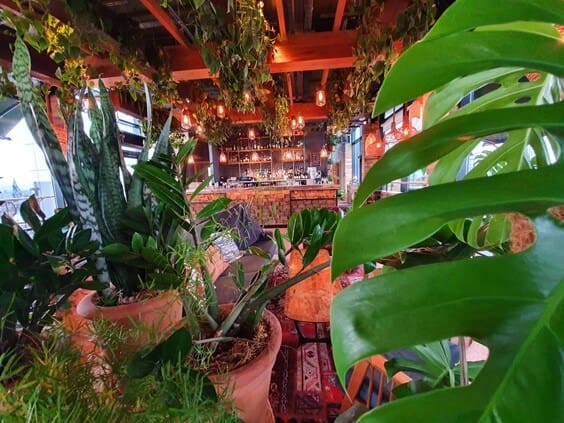
It’s difficult for us to imagine life without greenery, so it’s no wonder that the urban jungle trend appeals so much to us. Plants can create a soothing atmosphere and are a brilliant addition to commercial spaces in general, including offices.
Urban jungle

After all, an office full of bright colours and vivid greens will make people feel at ease (since it meets their biophilic needs) and reduces employees’ stress levels. We also believe an indoor jungle can improve air quality, boost people’s moods and create a happier workplace, which is why we love this trend so much.

How Easy Is It to Reproduce the Trend at Work?

The short answer is that it’s incredibly easy to bring the jungle indoors with a trusted office plant supplier.

You don’t have to go as far as Amazon, who really took the jungle look to the next level by building the Spheres. These giant biodomes in their Seattle headquarters allow staff to escape the office and work surrounded by nature:

If you’re considering rewilding your interior, there are two things you must take into account:

  • That, besides the aesthetic, the space has to maintain its functionality as well.
  • And that you need to pick the right plants for your office.

So, with this in mind, make sure that the layout of your workplace still makes sense. The visual appeal and impact of the plants are undeniable, but you also want your employees and visitors to be able to easily navigate the office without obstacles in the way, for instance.

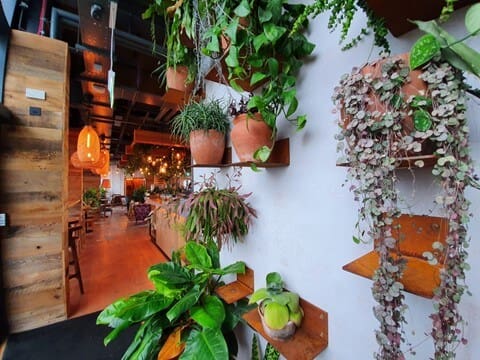
The urban jungle look is all about more plants and more coverage, so don’t skip the walls either – living walls or potted plants on walls can add to the jungle effect and maximise your floor space at the same time.
Planteria's urban jungle

Choosing the right plants for the office is also important because you want something that is easy to maintain. Plants require TLC to look their best and offices are usually busy places so, in order to keep up the jungle look, low effort plants and flowers should be top choice.  You can however leave that to us at Planteria Group and we can help pick the best ones for your space, and look after them for you too!

What’s So Fun About the Urban Jungle Trend?

Plants are a source of inspiration and this trend can help people to reconnect with nature and unleash their creativity. What’s more, plants bring life into interiors as well – if you remove all plants from a space, it’s easy to see how empty and boring it can look.

The urban jungle trend also allows people to have fun taking care of something living and to contribute to the aesthetic of their own home workspace, which appeals to many home jungle fans who prefer plants to pets, they are both cheaper and easier to care for and don’t require walking!
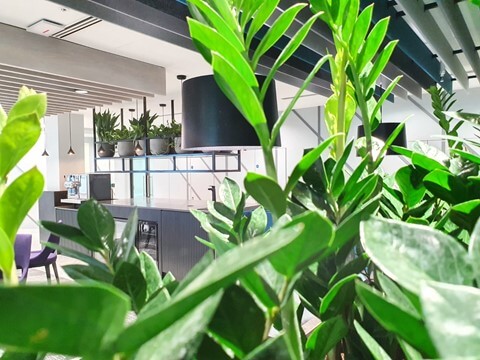
Urban jungle planteria

How Can Planteria Help?

Our expert plant technicians create solutions tailored to your workspace. We always take the building design and restrictions into consideration, which includes humidity levels, lighting and heat; this allows us to create a bespoke design that matches your unique requirements.

Our knowledge of office plants is unrivalled and we make sure to match your corporate image and select the right plants for your environment as well.

We have a wide range of plants to choose from, so you’ll be spoilt for choice with Planteria. From Dracaena Lemon Limes and Anthuriums to Sansevieria and Aglaonema Stripes, we provide beautiful plants for any type of office and sector, including hotels, restaurants and offices of every shape and size!
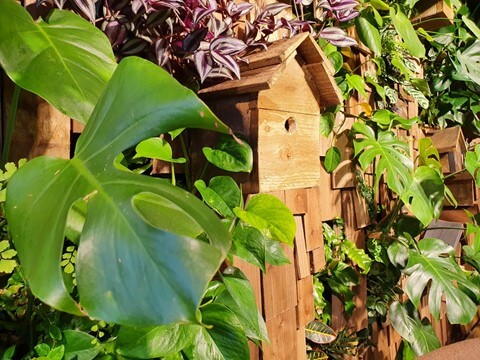
Planteria urban

We offer many options for corporate plants at Planteria, so get in touch today to learn more about them and how we can help create an urban jungle in your office.

Biophilia & other Reasons to Have Plants in the Workplace

If you’ve been reading about the buzzword Biophilia but have yet to understand what the buzz is about, then we’ve made a helpful infographic for you, designed to show you the amazing relationships that can occur between workers and plants in the modern office.

Plants truly are amazing. If you’re looking to improve your office space with some smart greenery, why not enhance your office with our office plants for hire service. Impress your workers and guests with an outstanding boardroom, ensure that they remember you as an innovative and forward-thinking company by transforming your spaces into greener, healthier, places to enjoy working in.

Planteria group infographic

And if you’re interested in reading more about the joys of biophilia and the many benefits of plants, we have plenty of blogs to keep you up-to-date on the latest hints, tips and news:

   Biophilia – What is It and Why is it Important

   Indoor Air Quality: Facts & How to Improve
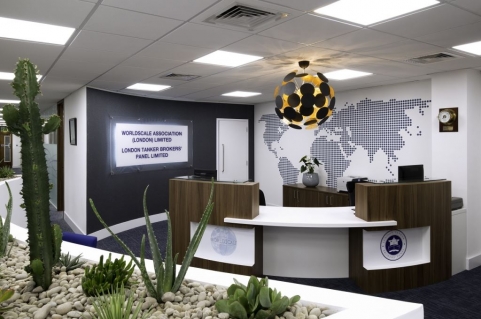
   The Best Plants for Your Office Environment

   Biophilic Design in the Workplace

Biophilic Design in The Workplace – What’s it all about?

Xnewsthumbresizex481

As the design of the workplace evolves through various trends, from cellular office environments to open plan spaces and then the rise of agile working spaces, the rising trend of biophilic design has been hard to ignore.


What is Biophilic Design?

Biophilic design is essentially a design framework that intertwines the patterns of nature into the built environment, strengthening the human-nature connection. What makes this work is the effective incorporation of natural elements such as stone, wood, living green walls, water features, and plants into the interior environment.

Apart from the inclusion of natural materials, biophilic design also incorporates the use of natural lighting to help people maintain a natural circadian rhythm, access to fresh air through high quality HVAC systems and an overall design that encourages movement, such as stairs to keep people active and mobile.

Roof terrace area with ratten furniture, artificial grass and two tree style plants.


Why is Biophilic Design so Effective?

When all the features of biophilic design are combined correctly, what is created is a workplace that optimises employee performance, health and wellbeing, helping organisations reach peak physical and mental performance. Through our innate desire to protect and nurture that which feeds us and sustains us physically and emotionally, we instinctively connect with natural features such as plants, fresh air and water.

Whilst this may seem a financial luxury given the pressures on most organisations, economic reasons are actually one of the key drivers for the growing biophilic trend. As organisations become more aware of the value of investing in employee health, wellbeing and performance, the value of creating a workplace which fosters and improves this is seen as a sound economic policy.
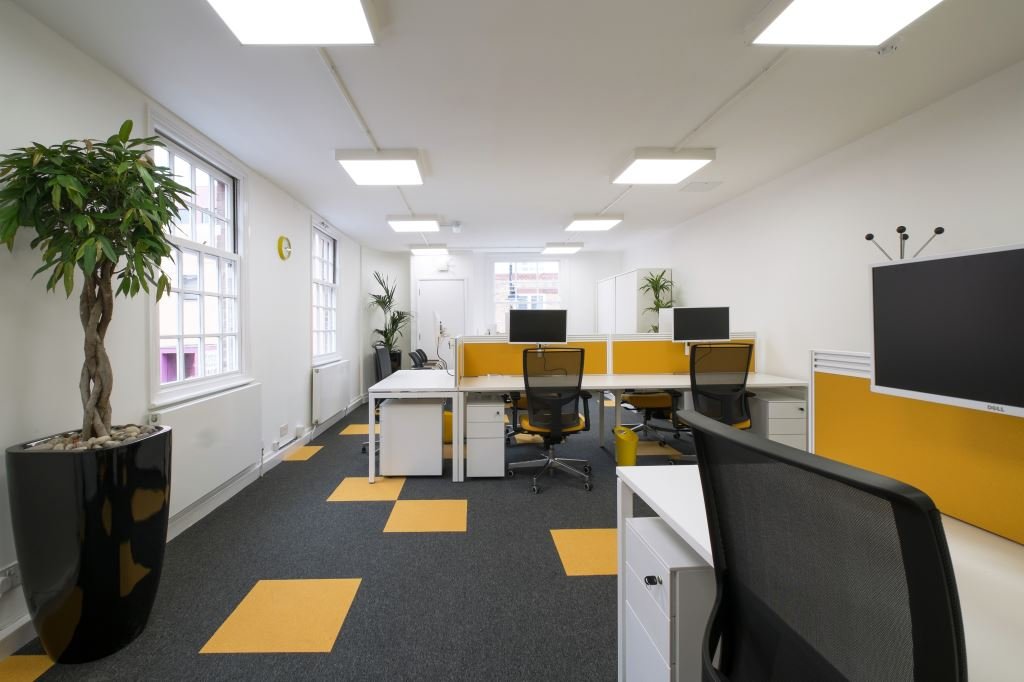
Open plant office with bright yellow desk dividers and tree style plants potted around the room edges


Why is Biophilic Design Relevant?

Biophilic design is changing the way we work and has been a key feature in workspaces from workplace design pioneers such as GoogleAmazonApple and many others across the world. The focus in creating the best workplaces is also to do with attracting and retaining key talent and these companies realise that by investing in this area, they will be successful in attracting the top workforce and maximising creativity within that workforce.

With the World Health Organisation expecting stress related illness such as mental health disorders and cardiovascular disease to be the two largest contributors to disease by 2020, the onus is on creating spaces where worker wellbeing flourishes. Numerous studies have been shown to demonstrate that by incorporating elements of nature through biophilic design into the workspace, stress levels and ill health absenteeism can be reduced whilst productivity, creativity and wellbeing are improved.
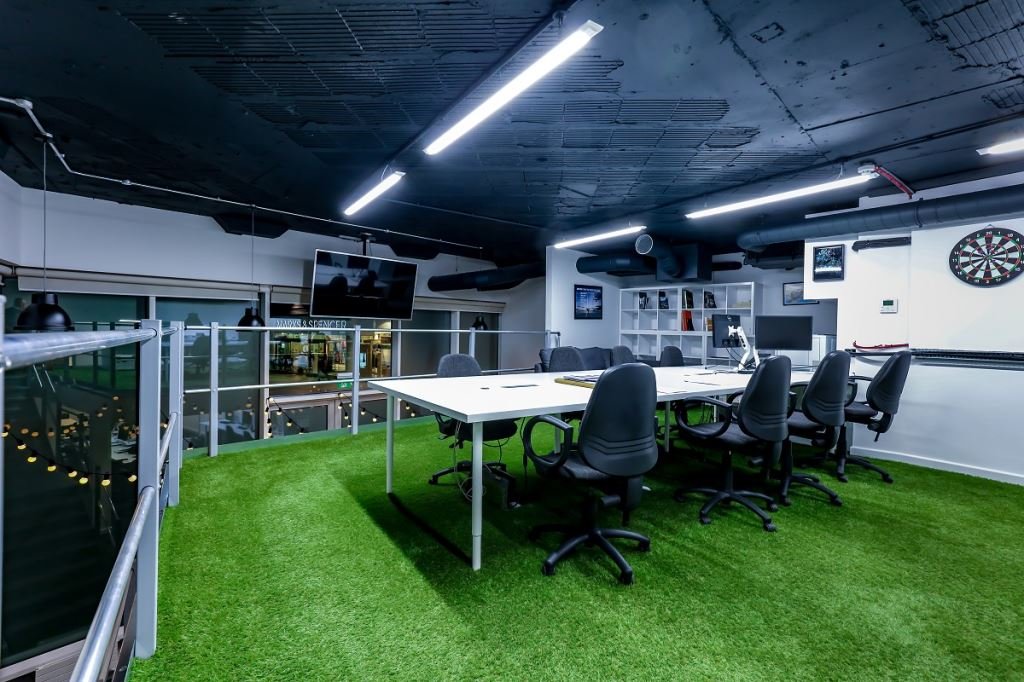
Mezzanine level meeting room in office with artificial grass


How Do We Implement Biophilic Design in Our Workspace?

The best way to implement biophilic design is at the outset of a project. By involving all the key stakeholders in such a project, including employees, facilities managers, finance teams, office design consultants and biophilic experts like Planteria Group, the whole picture can be realised.  Incorporating the spatial and human opportunities that exist enables the organisation to realise a plant display and design that increases performance, wellbeing, creativity and profit.

Planteria Group work closely with Zentura, specialists in office design and fit out, to design biophilia into the perfect space for you creating the ultimate working environment.  You can find out more, take a look at their case studies or obtain a free consultancy session here.
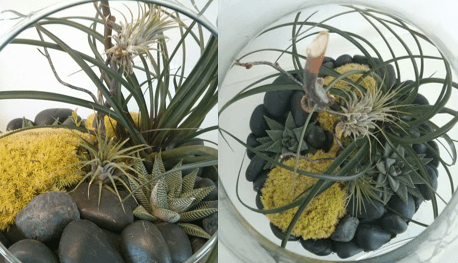
Terrariums Add Style

Xnewsthumbresizex481 Terrariums are making a stylish statement in luxury hotels, restaurants and in the receptions and board rooms of blue-chip companies thanks to our help. These exceptional planters offer a wonderfully unique and interesting way to display a variety of plants such as succulents, air plants, moss & more. Terrariums enjoyed popularity in the 1970’s and they’re making a comeback on a massive scale. We’re glad because we think they look great and we love making them too. https://youtu.be/sM6P6qBufWs As more people discover the benefits of planted terrariums we’ve noticed an increase in our requests to supply them to hotels, facilities management companies, offices & beyond. They’re on trend, easy to maintain and make a big impact to impress clients, employees and visitors at your place of business. They’re also a real conversation-starter to get people speaking and engaging with your brand. If you’re unsure what a terrarium is, it is defined in the dictionary as: a glass container, chiefly or wholly enclosed, for growing and displaying plants. Terrariums are usually closed or partially closed glass containers such as fishbowls, jars or vases containing soil, stones and a variety of plants. Due to the popularity of terrariums they now come in all shapes & sizes, allowing you to choose the style and plants appropriate for your space.

Why choose a Terrarium?

  • Low maintenance
  • Saves space, good on top of surfaces to avoid clutter
  • Great in receptions, communal spaces & meeting areas
  • Add greenery to your workplace in a unique & stylish way
  • Modern alternative to fresh flowers
  • Terrariums make a statement and they are very unique & out-of-the-ordinary

4 Benefits of Terrariums

  1. These unique little planters create a peaceful atmosphere and can help reduce stress & anxiety by adding biophilic elements in the workplace (learn more about Biophilia & why it’s important)
  2. Increase productivity, creativity and happiness
  3. Employees are 15% more productive  when workplaces are filled with just a few houseplants
  4. Make spaces more welcoming and inviting for employees, visitors and clients.

Interested in how we can offer similar improvements for you?  Contact Us Today or Request a Free Online Quote. Follow us on LinkedIn and Facebook for regular updates, inspiration and case studies.

Biophilia White Paper

Xnewsthumbresizex481

We spend a great chunk of our lives at work. For some, this isn’t so bad. Walk into a high-ceilinged workspace, filled with natural light, artwork and plant life and it’s more than likely your creative ability will be invigorated. Yet these offices are few and far between, with the reality likely being a drab, open plan office that sucks the creativity and enthusiasm from you the longer you spend there. The way we design our offices is important, from the big aspects to the small, from the obvious to the obscure.

This informative report is the result of research conducted by Where We Work, written by Jessica Andrews with input from Planteria Group.

Where We Work offers a focused range of workplace consultancy services, with the necessary tools and expertise to help understand your business, your people, and your place of work. Where We Work partners with clients to develop a robust workplace strategy by looking, listening and discussing how each company interacts with their space.

Biophilia is word that you’re going to be hearing a lot more of and it’s going to have an ever increasing influence on interior design and architecture. Yet many of us are probably unfamiliar with this term. This paper seeks to explain the concept of biophilia and its application in an office environment as well as investigating the potential benefits of plants in the workspace and why they are so often a forgotten element.

What is Biophilia?

Let’s start with the basics. What is biophilia? Simply put, it literally means ‘a love of life or living things’; stemming from the Greek word ‘philia’, meaning love. As humans, we have an intuitive and deeply ingrained connection with nature and a biological need for immersion in the natural world. The relationship between people and plants has always been profoundly important. Biophilic design is a response to this human need, which works to re-establish contact with nature in the built environment. Plants affect every aspect of our lives; without them life as we know it would not be possible. Plants not only make the air breathable, but kick off the food chain. We feel good in nature, if you were asked to picture a place where you feel calm and relaxed, chances are you would pick a scene involving nature. This is backed up by statistics which show that 90% of us imagine a natural setting when presented with this task (Mocha, 2013). Our mental and physical well-being depends on engagement with the natural environment, being in a drab room without windows and piped air makes us feel lethargic, even depressed.

A connection with the natural world is clearly important. Yet we are living in ever more urban environments, deforesting trees to build our cities around the globe. The increasing academic and organisational interest in biophilia and biophilic design is driven by the positive outcomes that it can help to create, for both individuals and businesses.

This increasing interest in biophilia comes at a time when, as a species, we are more disconnected from nature than we have ever been. Living in an inner city, one can go days without seeing a patch of grass. Living and working in central London, you have to actively search out areas of green, else it could be weeks before you escape the underground, sky scrapers and office spaces overlooking (you guessed it), yet more concrete.

At a time when businesses have more knowledge than ever before on the effect of work environments on their people and their bottom line, it’s surprising that the biophilic agenda is still in its infancy.

In its rawest form, biophilic design is the theory, science and practice of bringing buildings to life and aims to continue a person’s connections with nature in man-made environments, such as offices, where we live and work every day. By mimicking natural environments in man-made ones, we can decrease our isolation from nature and create workspaces that are imbued with positive emotional experiences. (Human Spaces, 2015)


Bringing nature to work

Biophilic design brings an office to life. The benefits of biophilia stretch far beyond the practical benefits of recycling clean air.

Recent research into biophilia has found the positive impacts contact with nature can have. Studies have shown that this impact includes increasing academic performance amongst school children, increasing consumer’s willingness to spend and even reducing stress and anxiety before medical procedures. People exposed to natural surroundings are more energised, feel less stressed and have improved attention spans (Human Spaces, 2015) – all good news for employers. Recently, white papers such as ‘The Economics of Biophilia’ have shown us that natural materials in a workspace are not extravagances, but a way to make cost-savings and drive profits. (Terrapin, 2015)

Analysis has shown that individuals with a view from their desk of natural elements such as water, trees or countryside have greater levels of well-being that people who have a view of buildings, roads or construction sites (Human Spaces, 2015). However, one study found that just 58% of workers have natural light reaching their desk and 7% have no windows at all – a clear indication that the benefits of bringing nature to work are not appreciated or applied to the workplace nearly enough.

However, it is important to note that in some cases it is not possible to provide employees with views of nature. If offices are located in the centre of a large city, it would not be a practical aim to strive towards. In these cases, it is possible to bring nature inside. Introducing plants, trees, water fountains and images of nature are all ways to add a biophilic element to an office space, increase the connection employees have to nature and reap the benefits this sows.

This may sound like a daunting task, but bringing plants into the office space has never been easier. Help is also at hand in the form of companies with a wealth of knowledge into biophilia and its application in an office environment.


Planteria case study

So we know that plants make us feel good. But how does this feeling directly apply to the workplace? How does having plants in the office impact the bottom line and how can business maximise the potential benefits?

Planteria Group are a company specialising in planting services, with clients in many different sectors including corporate offices.  Established in 1977, Planteria have grown over the past 40 years and now provide a national service to over 900 sites across the UK.  They have seen an increasing appreciation of the importance of planting in the work place.

“We have seen a change in the attitude towards planting in the work place.  What was once considered a ‘nice to have’ is now more likely to be viewed as a ‘must have’ and this is very positive.  However, we still have a way to go in raising awareness of the importance of biophilia and the beneficial effects it has on people, improving wellbeing in the work place, especially with businesses outside of our major cities.  Yes, planting helps to improve productivity and creativity but most importantly it improves physical and mental health and creates a happier environment.  So much time is spent at work, creating the best possible environment for your people is paramount.

Plants and flowers do so much more than add the finishing touches to an interior they can create a completely different ‘feel’ to a location.  What was clinical and bland can be transformed into a vibrant, or more relaxing space.  Planting can also be used for practical benefits.  For example, a living wall or moss wall will improve acoustics by absorbing sound.  Cabinet top planting can cut clutter by removing the areas where people leave cups and folders or unclaimed printing.  Or add live planting dividers to get the benefits and attractiveness of plants whilst creating instant, low cost break-out areas and informal meeting spaces in open plan office.

As one of the first tenants to make their home in London’s Iconic Walkie Talkie building.  Insurance specialists, Lancashire Group were looking to buck the trend.  Their focus in establishing a single office for their combined Lloyd’s and London market operations was to move away from the more usual monochrome minimalism and instead opt for a warm, homely, fun atmosphere for the workplace, with soft furnishings and materials to create a look that managed to be both high-end and cosy.

Plants were an essential element to complete the interior and we chose them with care to reflect and enhance this concept.  We used bark containers in the client waiting area along with neutral white containers in the office and meetings rooms.  Succulent plants add a fun, contemporary touch to the breakout areas, and funky square cabinet top displays completed the fit-out.”


Biophilia and productivity

An all too common belief is that money spent on plants is money wasted (Dravigne et al., 2008). This is a sentiment that has been widely shared throughout history, where literature argues that clean, obstruction free work spaces are the most economical route to business health and productivity (e.g. Haberkorn, 2005).

The ‘lean’, rather than ‘green’, philosophy has a long history indeed. The idea that productive workplaces are those free from interference was formally put across by Josiah Wedgewood in the 18th century and it was this work which inspired Frederick Taylor (1911) to apply the principles of scientific management to office space.

In the wake of these findings, it is common for managers to insist that workspaces should be clear of plants, pictures and anything that is not directly required for the job at hand, in order to streamline operations and maximise productivity (Haslam & Knight, 2006). Yet doesn’t basing these assumptions on work that is over a century old seem a little foolish? Indeed, the workspace, the products and services we provide and the technology we use would be unimaginable to Taylor when he came up with his theories.

The evidence suggests that to neglect enrichment in the workplace is foolish indeed. Research by Knight and Haslam in 2010 found that people who work in an environment enriched with plants were more productive than their peers who worked in a lean space. Additionally, levels of wellbeing – measured by sick days, feelings of comfort and levels of job satisfaction – were significantly higher in the spaces containing plants. This study found the lean space to be inferior in all dimensions.

Why do plants have this impact?

Generally, studies into the impact of plants have indicated that we experience a beneficial psychological and physiological reaction from being exposed to nature. Physiological stress, or arousal (as measured by heart rate, blood pressure, and/or skin conductance) is often lower after exposure to plants and nature as compared with urban settings and exposure to nature has been shown to have the capacity to improve attention (Berman et al., 2008).

As it stands, there are three main classes of explanation for these responses. The first states that plants, as living organisms, have a beneficial influence on the climate of the working environment – in particular because they improve air quality. Indeed, when planted in sufficient quantity, indoor plants have been shown to remove many types of air-borne pollutants from both indoor and outdoor sources (Nieuwenhuis et al., 2014). In offices with plants, staff well-being increases and there is a reduction in sick leave (Bergs, 2002). Plants ability to absorb carbon dioxide also has beneficial implications for the office; studies have found that student performance declines with increasing CO2 levels (Shaughnessy et al., 2006), as does workplace productivity (Seppänen et al., 2006).

The second explanation of plants’ beneficial effects revolves around our evolution. Evolutionarily speaking, a green environment reflects the natural world and so supports human physiology (Appleton, 1975).

The third and final class of explanation moves away from physiological responses and instead considers the managerial consequences of enrichment. The basic premise of this theory is that enrichment of the workplace (whether through plants or other means) signals that attempts are being made by management to improve staff well-being (Vischer, 2005). This sense of managerial care communicates their focus on employee well-being, which may lead to increased attention at work, greater productivity and engagement and lower absence and attrition. Evidence supporting this idea comes in the form of a study by Dravigne et al. (2008), which showed that people working in offices with plants reported feeling happier in their job and their performance.

Additionally, this study emphasises the aforementioned point that transforming a lean office to a green one contributes not just to employee welfare, but also to profits and organisational output. Lean, it appears, is meaner than green, not only because it is less pleasant, but also because it is less productive (Nieuwenhuis et al., 2014).

When we’re happy and feeling good, we have a more positive outlook and are generally able to do more. There is clear evidence which directly links biophilia with organisational output. In a study of call centre workers, the numbers of calls handles per hour was 6-7% greater for those with a view of the outdoor environment, in comparison to those with no view. (Human Spaces, 2015)

It is clear that enriched spaces lead to improved job performance and greater productivity.  Yet of course, this idea that empowering organisational strategies have positive consequences is not new to either social or organisational psychology. Both of these disciplines benefit from massive literature supporting the notion that productivity and well-being can be enhanced by including employees in the decision making process and giving them a voice in their workplace (e.g. Eggins et al., 2002).

So, with this abundance of evidence pointing to the fact that enriched spaces make us happier and more productive, why are aspects such as plants not a feature in all modern office spaces?

The problem with the modern office

The way we structure our offices has changed considerably over the past few decades. More often than not, the world of the modern office is dominated by open plan. It’s not hard to identify why this change has occurred, the cost of space has sky rocketed and open plan provides a cost effective way to maximise the number of staff on the office floor. Yet the evidence suggests that the costs of open plan offices might offset the benefits of savings in terms of space if it is not implemented properly, as part of a multi-layered office design. They are often cramped, noisy and starved of light and some staff find themselves in the position of having no opportunity to express their identity at work – at all.

Studies across the pond have found that 70% of American workers personalise their workspaces. Yet it is managers and employees with enclosed offices who decorate more than their co-workers in open plan spaces (Wells & Thelen, 2002). In open plan spaces, personalisation of low-status working space is often infrequent and discouraged (Laing et al., 1998). The dominance of open plan offices means that the majority of staff now suffer from a lack of identity at work and a 2010 study by Knight & Haslam found that clean-desk policies resulted in high levels of personal identity threat, increased stress and a reduced willingness to contribute to company policy. This is thought to be due to the limited opportunities these staff had to express their personal identities, for example by decorating their workspace. Open plan offices themselves are not the problem, as they do have their benefits. However, it is important that offices be designed with the drawbacks open plan can have in mind and counteract these issues – for example by including quiet spaces, artwork and greenery.

A final thought…

The evidence that enriched spaces which involve employees in their design boosts morale and productivity is important. Perhaps most notably because it challenges the managerial models which argue the best way to manage is by removing autonomy and control from staff and having decisions come only from managers – as was noted by Bibby in 1996 (work which is still very relevant to academic research today). The fact that giving workers ‘some say’ in the design of their workspace is seen as ‘experimental’ indicates just how ingrained the ethos of managerial control has become.

At its core, the simplistic answer as to why plants are so often neglected lies with the individuals responsible for office design. The management of the modern office is typically influenced by architects, interior designers and facility managers, rather than by psychologists and office workers (Cohen, 2007). Managers need to move away from an autocratic style of management, towards a more collective approach to office design which involves staff at all stages of the process. Giving employees a say in the type of plants to introduce into a space is a great way to begin this movement.

The idea of incorporating nature into the built environment through biophilic design is less often seen as a luxury in the modern workplace, but rather as a sound economic investment into employees’ health, well-being and performance. Plants in the workspace can have a remarkable impact on employee well-being, both from the biological impact of their presence and the psychological benefit being involved in decision making can have. With this in mind, it seems that taking baby steps to introduce the natural world into the man-made one we have created around us, seems to be of the utmost importance to the well-being of office staff. It seems starkly apparent that green really is better than lean in all walks of life – and the modern office should be no exception.

Author: Jessica Andrews

References

Berman, M.G., Jonides, J., & Kaplan, S. (2008). The cognitive benefits of interacting with nature. Psychological Science, 19, 1207–1212.

Bibby, A. (1996). ‘Leeds: working life in Call Centre City’, updated from an original article in Flexible Working, August; http://www.andrewbibby.com/telework/leeds.html (last ac- cessed 27 June 2006). 

Cohen, L. M. (2007). Bridging two streams of office design research: A comparison of design/behavior and management journal articles from 1980–2001. Journal of Architectural and Planning Research, 24, 289– 307. 

Dravigne, A., Waliczek, T. M., Lineberger, R. D., & Zajicek, J. M. (2008). The effects of live plants and window views of green spaces on em-ployee perceptions of job satisfaction. HortScience, 43, 183–187.

Eggins, R. A., S. A. Haslam and K. J. Reynolds (2002). ‘Social identity and negotiation: subgroup representation and super- ordinate consensus’, Personality and Social Psychology Bulletin, 28, pp. 887–899.?

Haberkorn, G. (2005). Improving flow in an office setting. In Productivity Press Development Team (Ed.), The lean office: Collected practices and cases (pp. 95–104). New York, NY: Productivity Press.

Haslam, S. A., & Knight, C. P. (2006). Your place or mine? BBC News Web site. Retrieved from http://news.bbc.co.uk/1/hi/magazine/6155438.stm

Human Spaces. 2015. The Global Impact of Biophilic Design in the Workplace. Available from: http://humanspaces.com/global-report/

Knight, C. & Haslam, S. Journal of Experimental Psychology: Applied American Psychological Association 2010, Vol. 16, No. 2, 158–172 1076-898X/10/$12.00 DOI: 10.1037/a0019292 

Laing, A., Duffy, F., Jaunzens, D., & Willis, S. (1998). New environments for working. London, England: Construct Research Communications. 

Mocha. 2013. What is Biophilia? And why you need biophilic design in your home. Available from: http://www.mochacasa.com/blog/biophilia-biophilic-design/

Nieuwenhuis, M., Knight, C., Postmes, T., & Haslam, S. A. (2014, July 28). The Relative Benefits of Green Versus Lean Office Space: Three Field Experiments. Journal of Experimental Psychology: Applied. Advance online publication.

Terrapin. 2015. The Economics of Biophilia. Available from: https://www.terrapinbrightgreen.com/report/economics-of-biophilia/

Wells, M., & Thelen, L. (2002). What does your workspace say about you.  Environment and Behavior, 34, 300–321.?
Moss Walls: Q & A

Xnewsthumbresizex481 Greenery is much sought-after in today’s workplaces and within the hospitality industry, not only because it enhances a space visually, but it also has positive effects on health & wellbeing. There are numerous studies about boosting mental wellbeing, increasing productivity & creativity and for those in the Hospitality industry a new report indicates that having more greenery in reception areas can increase the amount of time spent in these areas, translating to more revenue generated for your business (Human Spaces Biophilic Design In Hospitality report). There are several benefits to choosing a moss wall in your workspace, including the fact that they are completely maintenance-free.  Working within facilities management, business & hospitality sectors, we can offer bespoke moss walls with your company logo or corporate colours and we can help you achieve the look you’re after, even in the smallest of spaces. Moss Walls are in high-demand, and we’ve asked our resident moss wall experts some questions to help explain what they are, how to look after them and more.   Q:   What is the difference between a moss wall and a living wall? A:   Living Walls are made up from live plants planted in modular compartments and require regular maintenance, with an irrigation system is built into the wall. Moss Walls are made from moss that has been preserved, so it won’t grow anymore, and it won’t decompose.   Q: How is the moss preserved? A: This is like asking a chef for a recipe!  The moss is usually preserved with glycerine.  The moss is then washed though using food grade type colourants, so not to be harmful in anyway, and to ensure the colour stays vibrant.   Q:   Do moss walls require water & light? A:   No, Moss Walls can go anywhere internally and no water or light is required.  This is one of the benefits of choosing a moss wall.   Q: What level of maintenance is required for a moss wall? A: No maintenance at all is required for Moss Walls other than a spot of dusting every now and then. (we recommend a feather duster)   Q:  How long does a moss wall last? A:  Moss walls are long lasting installations and will need the least care and repair if they are in lower traffic areas where they won’t get touched or bumped into.   Q:    What are my choices for a moss wall? Are there different types and colours of moss?   A:  The moss we use is available in 16 different colours, and we can create client logos or other patterns in the walls if desired (as seen in the photo above).   Q: Where can it be installed, is it suited to some environments more than others? A: Moss can be installed in any interior location, for aesthetic enhancement and/or for sound absorption.  They are not recommended for exterior use   Q:   What are the benefits of a moss wall?   A: Moss walls can help with noise reduction, they require minimal maintenance, they add greenery and a biophilic design element, help increase productivity & creativity, adds a feel-good factor to those in the space, promotes calmness and wellness and much more.   Do you have other questions not listed here?  If so, let us know so that we can answer them for you. Request your FREE quote for a moss wall today: https://www.planteriagroup.com/free-quote/
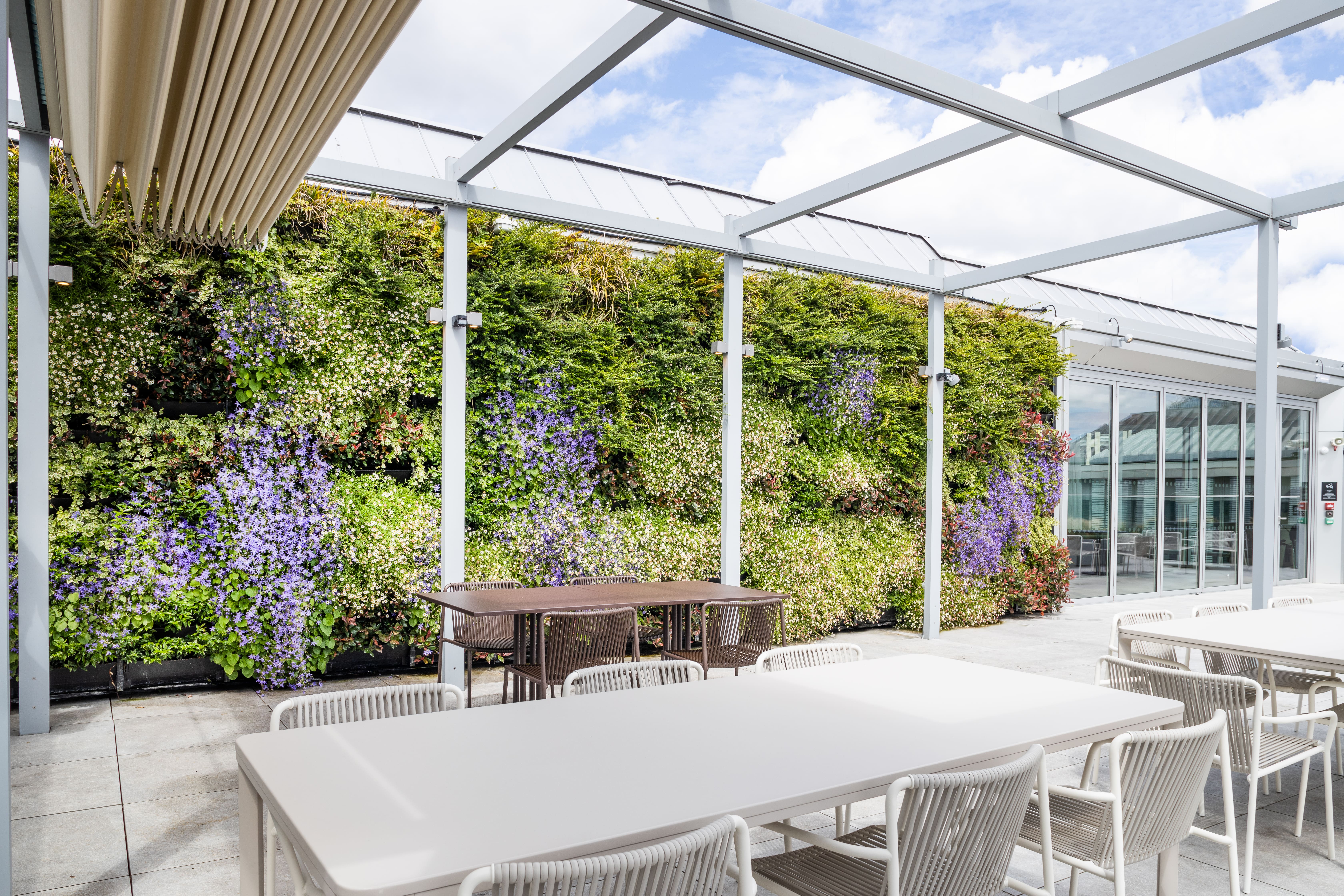
World Health Day Is Getting Greener

Xnewsthumbresizex481

April 7th is World Health Day; an important day for individuals, families and businesses to look a little more introspectively at how they live and whether there are any areas for improvement. For the individual, this could be as little as a resolution to improve fitness levels or to reduce their sugar intake. For a business, it could be as big as a new office refit decked with office plants with the purpose of improving indoor air quality, reducing stress levels and improving wellbeing.

Whether your ideas are big or small, this article will teach you about how stress became the enemy of public wellbeing and how nature can be used to fight against its unwanted effects on the mind and body.

Stressed About Stress?

The World Health Organisation [WHO] cites poor mental health and cardiovascular disease to be two prime factors of worldwide illness by 2020 and at the heart of both issues is stress. Work is a large part of most people’s lives and many workers will attest that their work environment puts an emphasis on physical well-being, also recognised as the physical ability to get into the office and do the work.

This mentality, however, is proving to be quite old fashioned in the modern office; since 1986, WHO have been stating that health ‘is not merely the absence of disease or infirmity but a positive state of complete physical, mental and social well-being’. This means that a healthy working environment is one that does not only judge its employees on their physical well-being alone but also cares for their mental well-being.

Aerial view of two colleagues chatting at a round table

This means listening to your employees when they are struggling with anxiety or heavy workloads and considering what you can do to make your workplace a happier environment. You might just find a rise in overall productivity when you make employee well-being one of your aims.

It should be understood by managers that the aim is not to remove all the pressures faced by the individual. After all, it is expected that employees will need to battle with emergencies and business-wide problems from time to time. If you feel that your company could improve its mental health awareness, you could start by considering ways to dilute the excessive stresses frequently felt by individuals. Offering more options to improve work life balance such as flexible working or allowing staff to organise their own working schedule can also be very useful. Encouraging people to talk about what is going on and offering moral support is also appreciated by your workforce.

Taking a look at the bigger picture, how can you make changes company-wide? This could be by updating your office look with some indoor office plants for a morale boost, or it could be that you introduce some new health-orientated perks for your workers.

Small coloured vases with pink roses in on balcony overlooking city

How Can Nature Help?

The fight against stress is real; the British Heart Foundation speculates that high stress at the very least contributes to your risk for developing heart and circulatory diseases. One of the biggest dangers is that individuals will seek to assuage their feelings of stress with bad behaviours like alcoholism or overeating. If you want to keep a healthy business, it is equally important to spread the word about how individuals can adopt healthy ways to release their stress, as well as tackling their work-related pressures head-on.

You can do this by getting your business or team to spend more time in nature. It has been proven by a Dutch study that surrounding yourself with natural elements can lower stress hormones, so in turn, nature can be considered as a holistic measure against developing heart disease.

Indeed, some doctors in Shetland are already prescribing nature to tackle high blood pressure and anxiety. It should be remembered that these measures should not replace an individual’s pre-existing medications, but that many health experts are seeing benefits by adding a dose of nature to their patient’s prescribed treatment. The nature prescription has now been rolled out to all ten GPs across the Shetland, including the distribution of leaflets to help locals to understand the importance of outdoor therapy.

Woman and dog walking on rural path with mountainous backdrop

You can encourage your workers to spend more time in nature and increase their exercising by organising softball games in your local park, or by arranging an office hike. It can be hard to encourage all your workers to take walks in their own time if they are not already sold on nature’s beauty.

There is another way to connect them to the benefits of nature, you can introduce natural elements to their lives within your own office through our office moss walls and office flowers. Improve both their mental- and physical health with plants that fight dust levels and improve air quality. There are plenty reasons to have plants in the workplace which you can learn about through our infographic, and with our expertly trained plant technicians to take care of your office’s new plants throughout your contract, you won’t have to worry about finding time to manage their upkeep.

Office moss wallOffice Moss Wall by Planteria

Let’s make World Health Day greener by spreading the word about the success of modern holistic practices together. We’re calling for more hikes and picnics at an individual level and a greater awareness of  the benefits of biophilic design in the workplace  business-wide. Please contact us for more information about how we can help you with an office refit that will not only boost employee morale, but health, too.

Further Reading:

1) Stress at the Workplace (Online Article, by the World Health Organisation)

2) Stress (Online Webpage, by the British Heart Foundation)

3) ‘Nature’ Being Pre-scribed by GPs in Shetland (Article by BBC News, 2018)

4) Gardening Promotes Neuroendocrine and Affective Restoration from Stress (Study by Van Den Berg and Custers, 2010)