


Supporting British horticulture
For decades, almost every interior plant used in UK offices has come from European growers, mainly the Netherlands. But that’s changing.
Planteria now offers a wide selection of 100% UK-grown interior plants, cultivated within 100 miles of London. It’s a breakthrough that supports British growers, reduces environmental impact, and strengthens supply chain resilience for our clients.
A Carefully Selected Range
We’ve worked hard to bring together a range of striking, hardy species that are ideal for office environments. Whether you’re sourcing for a workplace refurbishment or an ongoing plant maintenance contract, UK-grown options are now available across a wide range of Planteria’s services.
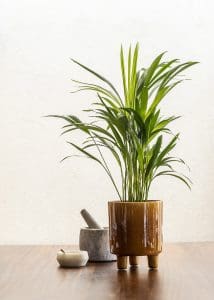
Dypsis lutescens
A go-to plant for brightening office spaces, the Areca Palm softens interiors with its graceful, arching fronds. It performs well in open-plan areas with natural light and contributes to a healthier indoor environment through its air-purifying qualities.
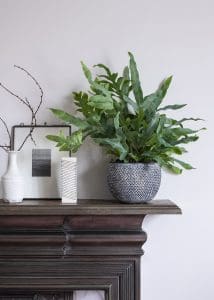
phlebodium aureum
This low-maintenance fern brings soft texture and a subtle blue-green tone to corporate interiors. Ideal for shelves, meeting rooms or relaxed breakout zones, it thrives in lower light and adds a calming biophilic touch.
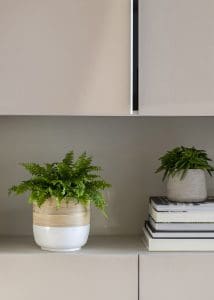
nephrolepis exaltata
The Boston Fern adds lush, trailing greenery to reception desks, communal spaces, or plant displays. It prefers moderate humidity and indirect light, making it a smart choice for well-used office environments looking to reduce stress and improve air quality.
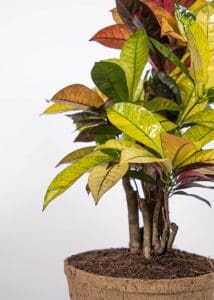
codiaeum variegatum
Crotons offer bold, multicoloured foliage that can mirror brand colours or energise workspaces. Best placed in well-lit areas like client zones or collaborative hubs, they bring impact and personality to business interiors.
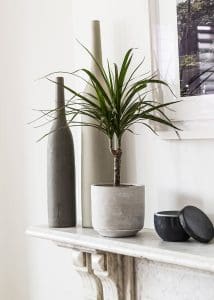
dracaena marginata
With its upright form and sleek, striped leaves, the Dragon Tree suits modern commercial settings. It copes well with lower light and occasional neglect, making it ideal for boardrooms, corridors or multi-use areas.
Dieffenbachia spp.
Known for its striking leaf patterns, Dumb Cane brings contrast and structure to office planting schemes. It performs well in controlled environments like lobbies or executive offices but should be handled with care due to its toxic sap.
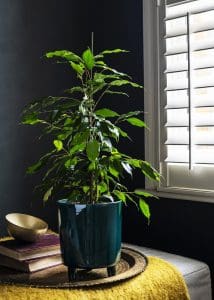
Ficus benjamina
A classic indoor tree for corporate interiors, the Weeping Fig offers elegant, arching branches with glossy foliage. It’s well-suited to lobbies, quiet zones or atriums, and helps reduce airborne toxins in enclosed spaces.
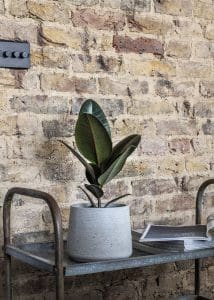
Ficus elastica
With broad, sculptural leaves and a strong vertical presence, the Rubber Plant adds structure and drama to office interiors. It’s low-maintenance, resilient, and performs well in both meeting rooms and open-plan spaces.
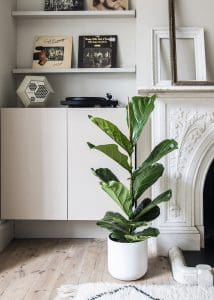
Ficus lyrata
A favourite in modern design schemes, the Fiddle Leaf Fig delivers height and impact with its large, fiddle-shaped leaves. It’s best used in bright, open areas such as reception lounges or communal break zones.
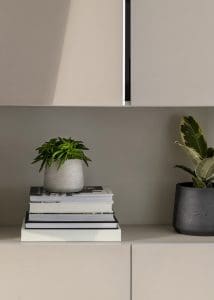
Peperomia spp.
Compact and tidy, Radiator Plants are perfect for desks, shelves, or collaborative spaces. They handle lower light well and bring subtle texture and colour without overwhelming the design.
Philodendron
This adaptable plant suits a wide range of interior settings, from relaxed breakout areas to smart executive zones. With its lush, trailing or upright growth forms, it’s ideal for bringing calm and greenery to busy environments.
Epipremnum aureum
Pothos is a go-to for trailing greenery in commercial spaces. Easy to care for and fast-growing, it works well in hanging displays, top shelves, or green walls. Instantly softening harder architectural lines.
Sansevieria spp.
With upright, architectural leaves, the Snake Plant delivers strong visual structure and suits high-traffic areas or minimal interiors. It thrives on neglect, tolerates low light, and helps filter airborne pollutants. Ideal for modern office environments.
Chlorophytum comosum
This easy-care plant is perfect for desks, shelves, or suspended planters. Its arching green-and-white striped leaves bring movement and freshness to any space. It’s also known for improving indoor air quality.
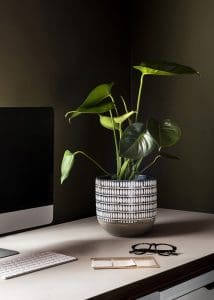
Monstera deliciosa
A bold, tropical statement plant with distinctive split leaves. The Swiss Cheese Plant brings visual interest to creative workspaces or client-facing areas. It works best in bright but indirect light.
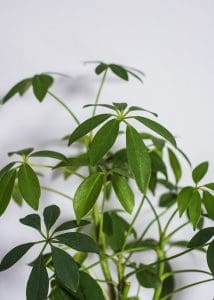
Schefflera spp.
The Umbrella Plant features glossy, radiating leaf clusters that bring soft structure to meeting rooms or collaborative zones. It’s versatile, easy to manage, and adapts well to a range of office light conditions.
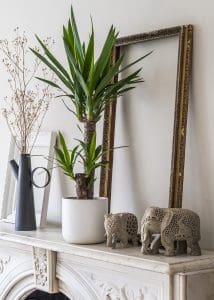
Yucca spp
With its sharp, sword-like leaves and strong vertical form, Yucca suits bold, clean-lined interiors. It prefers bright light and is ideal for entranceways, reception areas, or spots that need a low-maintenance focal point.
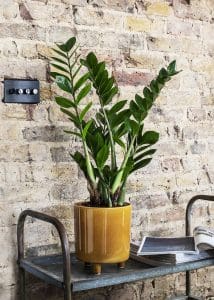
Zamioculcas zamiifolia
The ZZ Plant is a top performer in low-light spaces. With waxy, upright leaves and strong resilience to neglect, it’s perfect for offices with limited natural light or for staff who want greenery without the upkeep.
As the UK’s leading office planting specialist, Planteria is proud to help bring local growing back into the workplace. We combine best-in-class biophilic design with more sustainable plant sourcing.
These are indoor plants cultivated within 100 miles of London, supporting British horticulture and reducing environmental impact.
Support Local Communities: Each plant helps sustain skilled horticultural jobs in the UK.
Lower Carbon Footprint: Grown closer to your project site, reducing transport emissions.
More Resilient Supply: Greater control over availability and quality.
Cleaner Growing Methods: Utilise rainwater harvesting, solar or biomass heating, closed-loop irrigation, and 100% peat-free substrate.
Planteria offers a carefully selected range of UK-grown plants, including:
Areca Palm: Brightens spaces with graceful, arching fronds.
Blue Star Fern: Low-maintenance with a subtle blue-green tone.
Boston Fern: Adds lush greenery to reception desks and communal spaces.
Croton: Features bold, multicoloured foliage.
Dragon Tree: Suits modern commercial settings with its upright form.
Dumb Cane: Known for its striking leaf patterns.
Weeping Fig: Offers elegant, arching branches with glossy foliage.
Rubber Plant: Adds structure and drama to interiors.
Fiddle Leaf Fig: Provides a bold statement with its large, glossy leaves.
Yes, many UK-grown plants are ideal for office settings, offering benefits like improved air quality, reduced stress, and enhanced productivity.
By sourcing locally, these plants reduce transportation emissions and support sustainable horticultural practices, aligning with eco-friendly initiatives.
Contact Planteria Group to explore options tailored to your needs, whether for a single office or a large corporate setting.
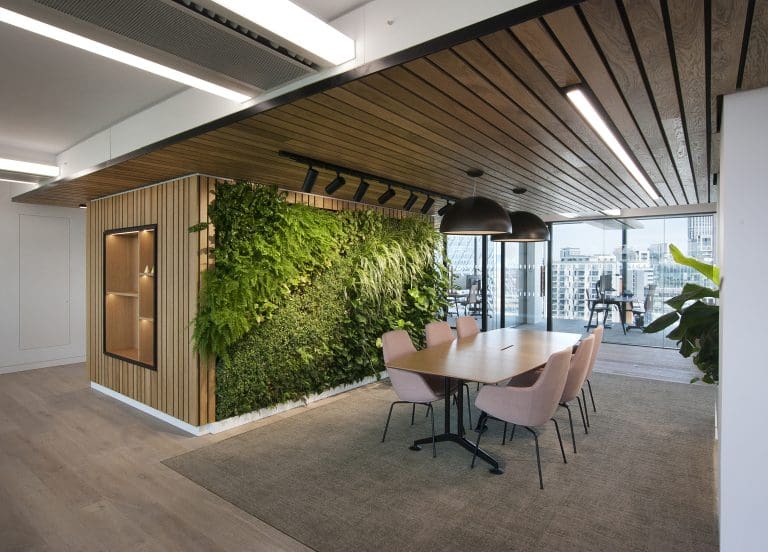
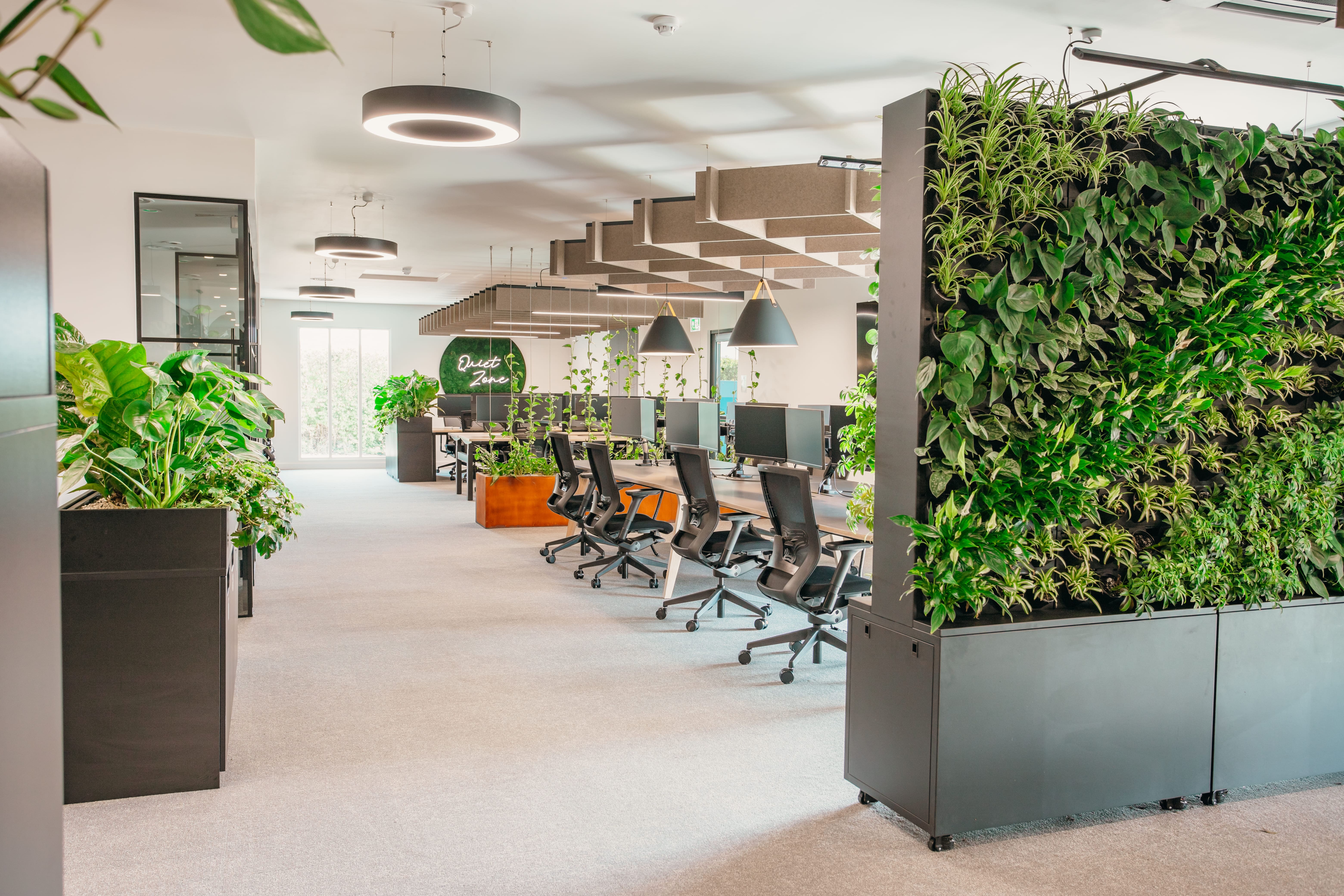
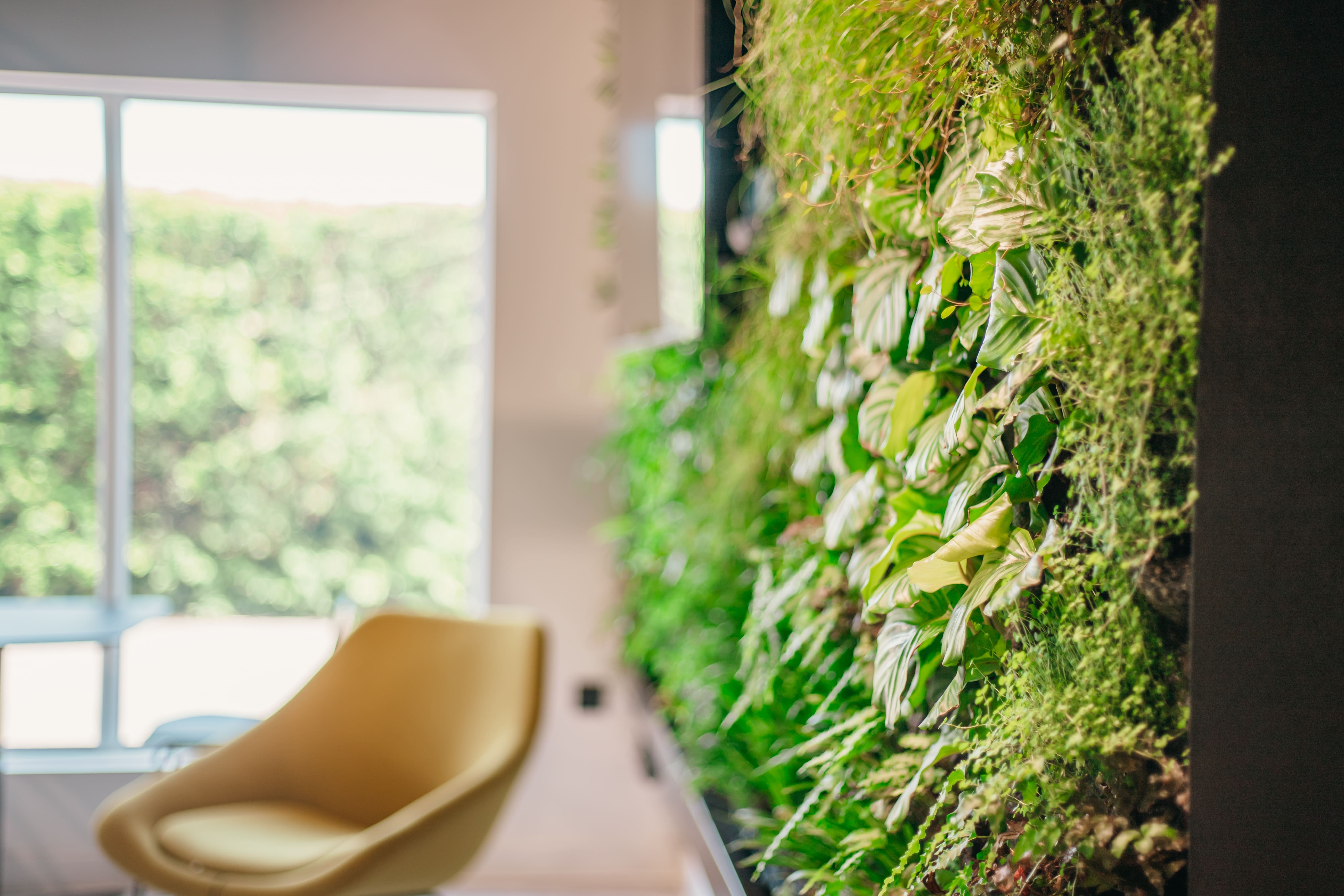
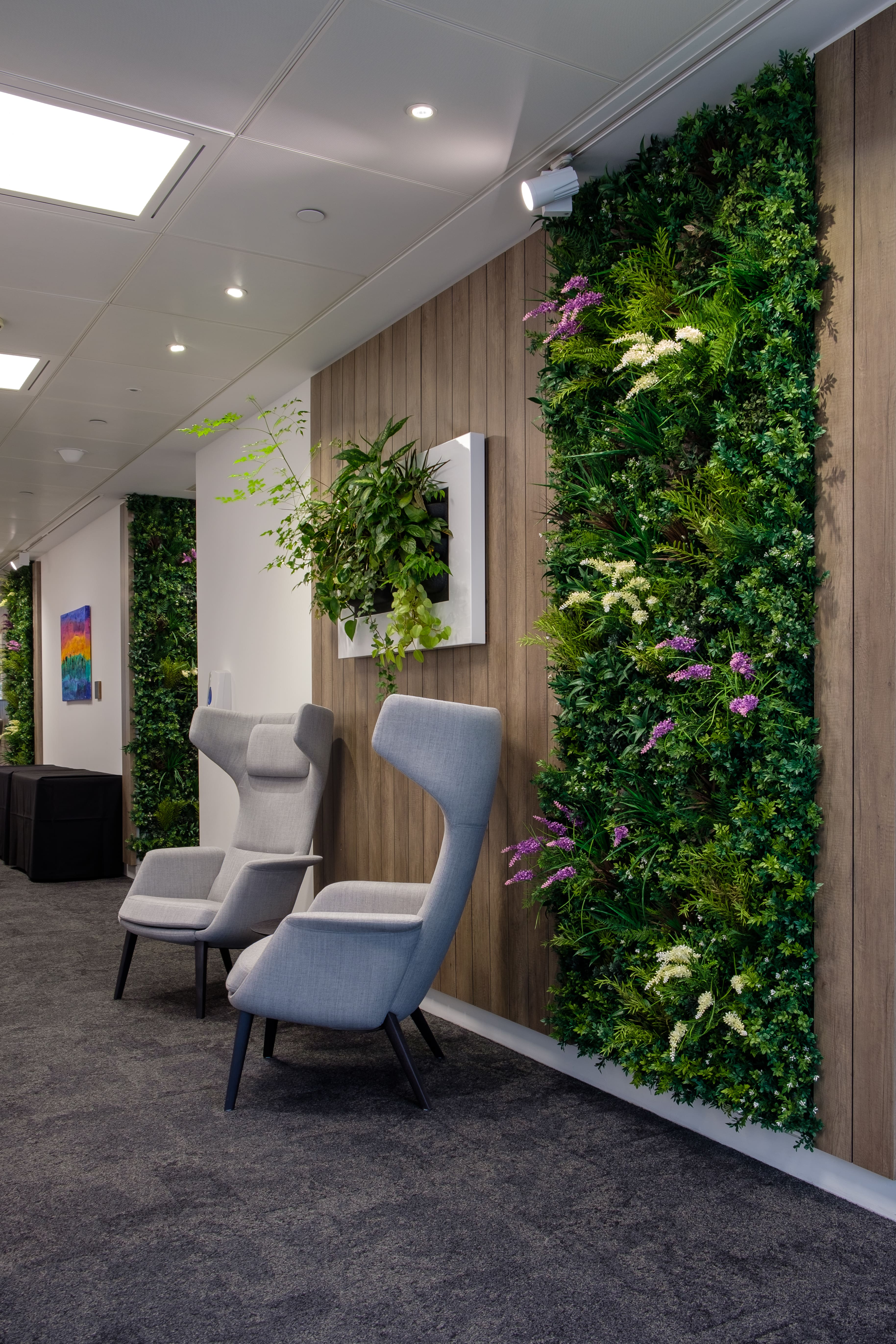
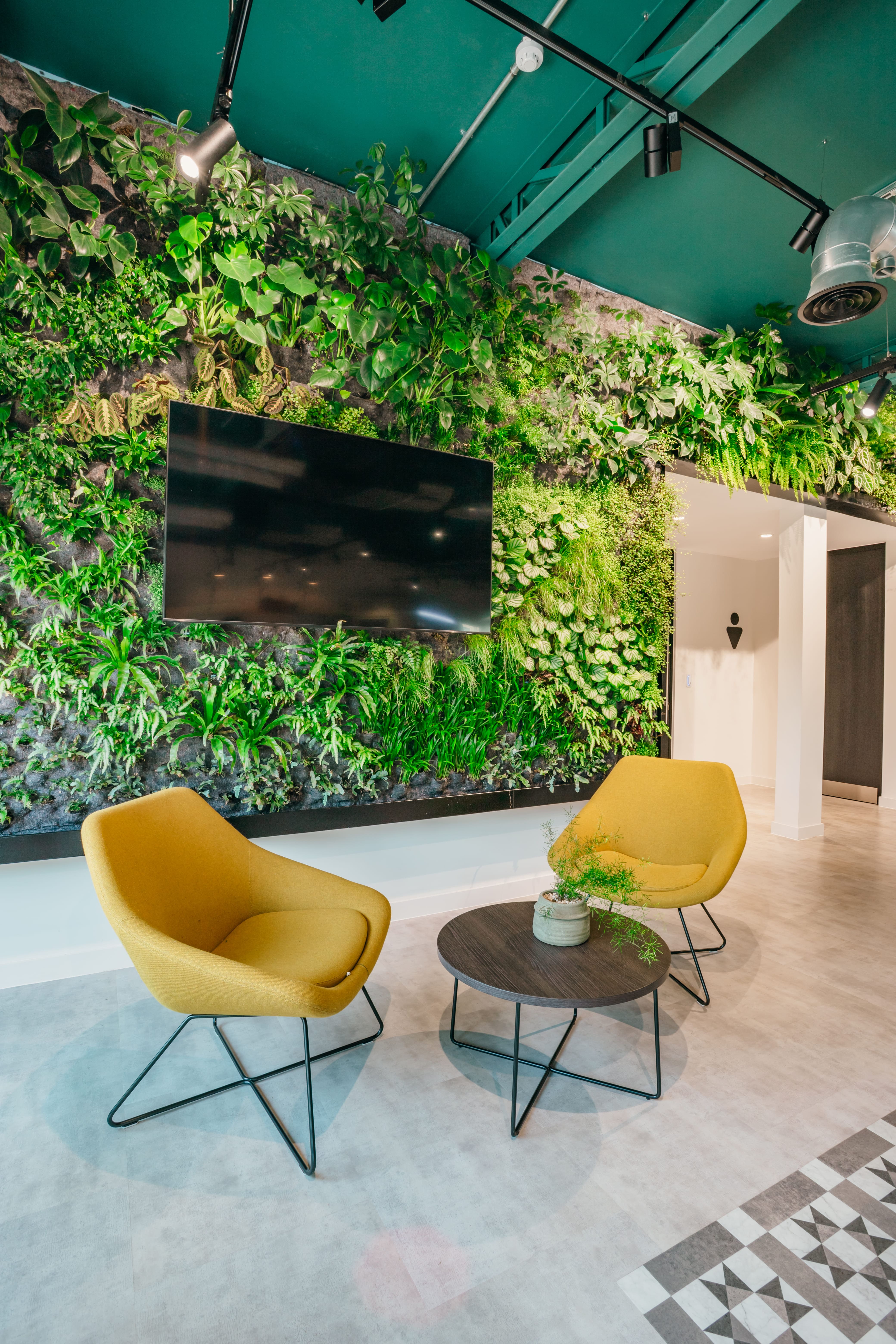
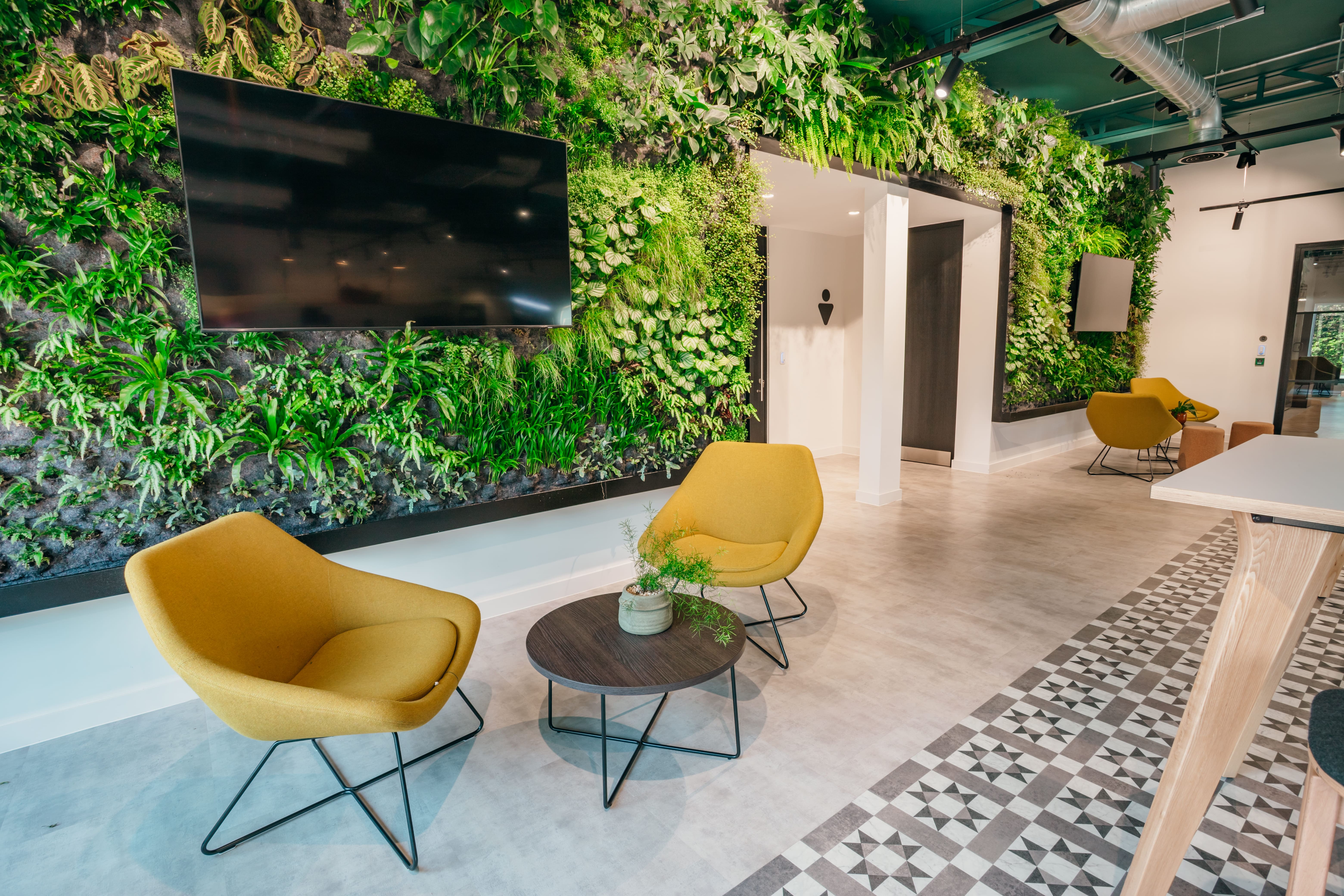
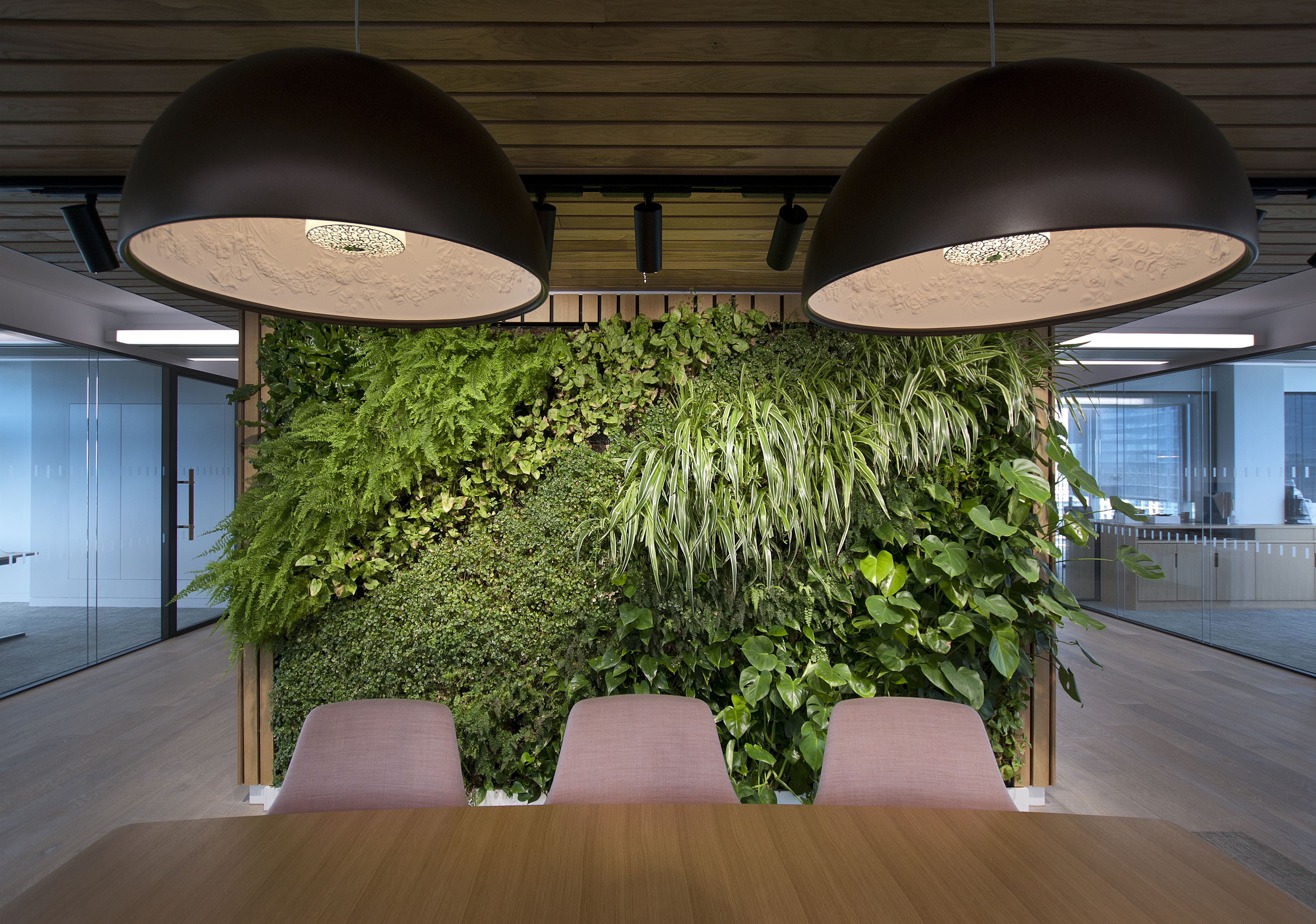
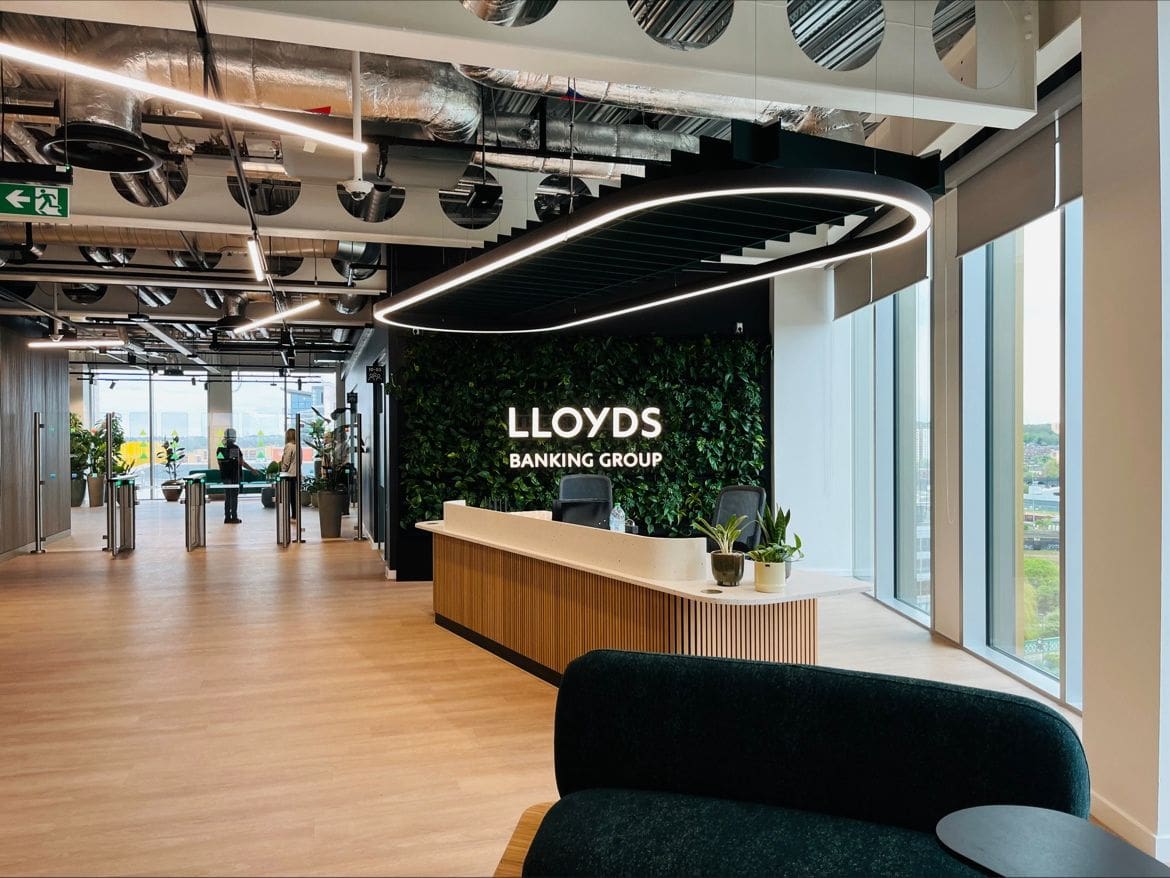
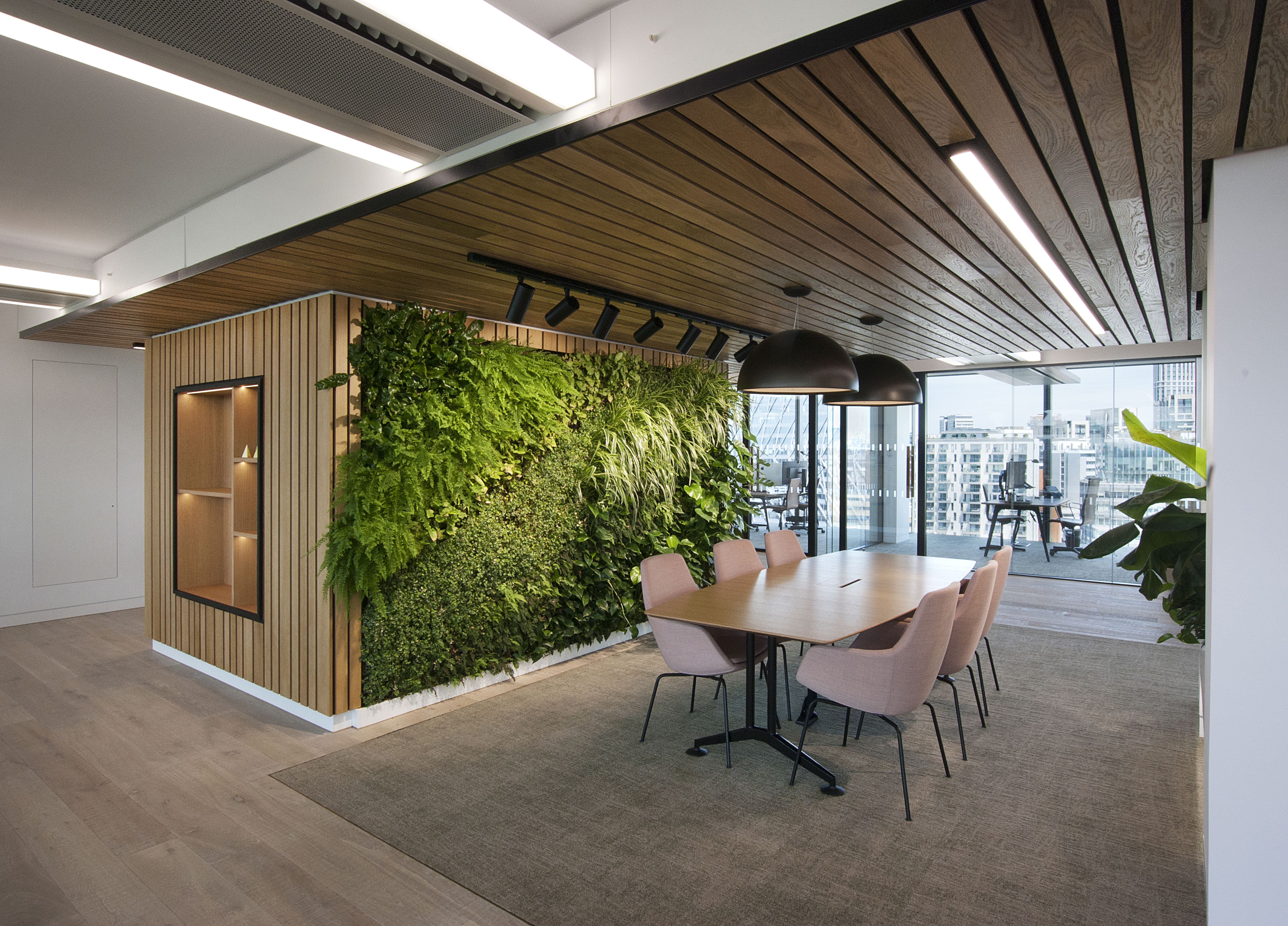
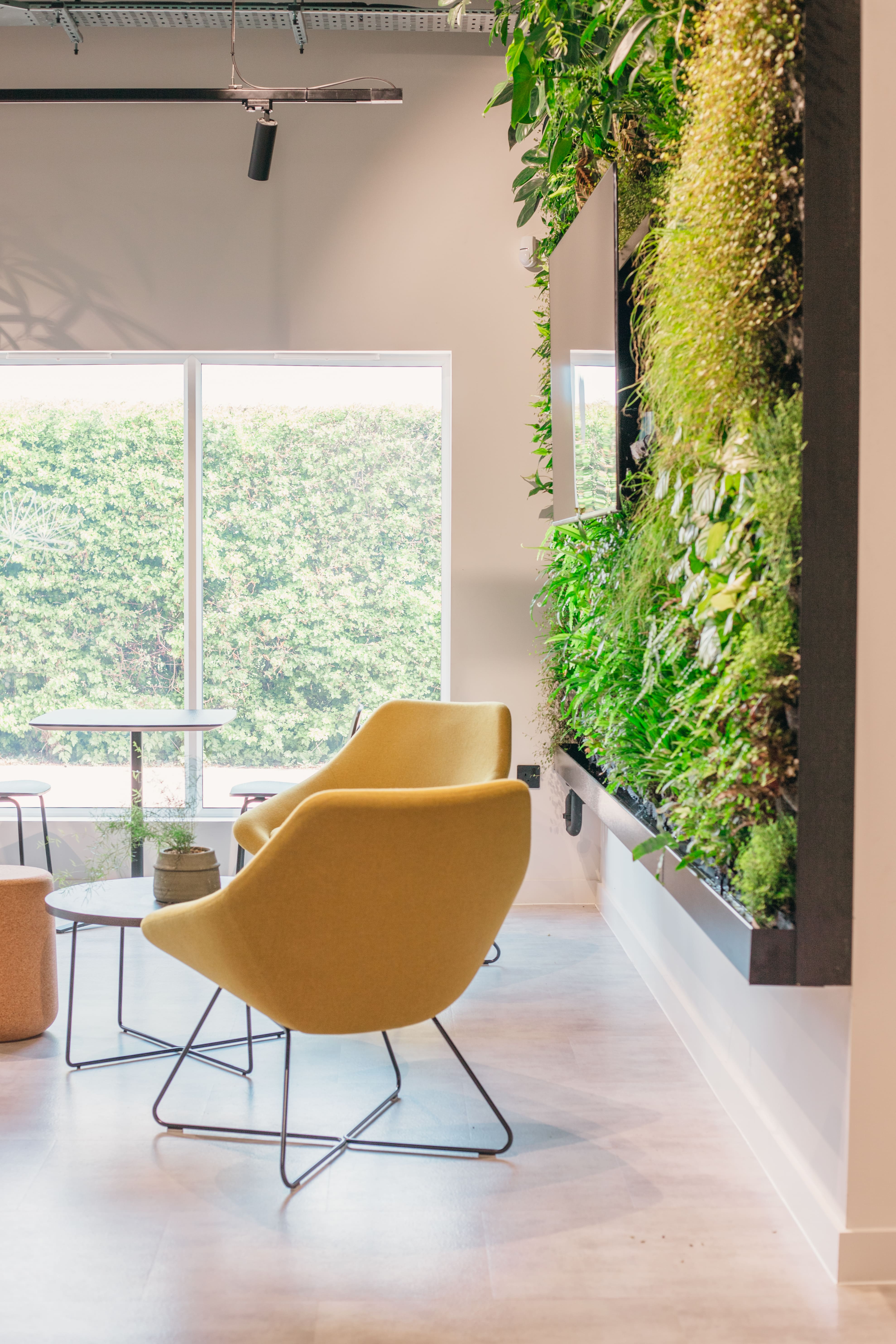
Green walls (also called living walls or vertical gardens) are installations of plants on vertical surfaces. They appear indoors or outdoors, from office feature walls to full building facades.
Green walls bring several benefits. They improve air quality, reduce noise and add visual interest.
Inside, they can soften acoustics and lift staff mood. Research links greenery with lower stress and faster recovery.
On exteriors, they help cool buildings by shading and evaporative cooling – cutting wall temperatures by up to 14°C (25°F).
This guide covers every type of green wall: indoor and outdoor, living and artificial.
It includes design tips, light level advice, maintenance needs, costs and common questions.
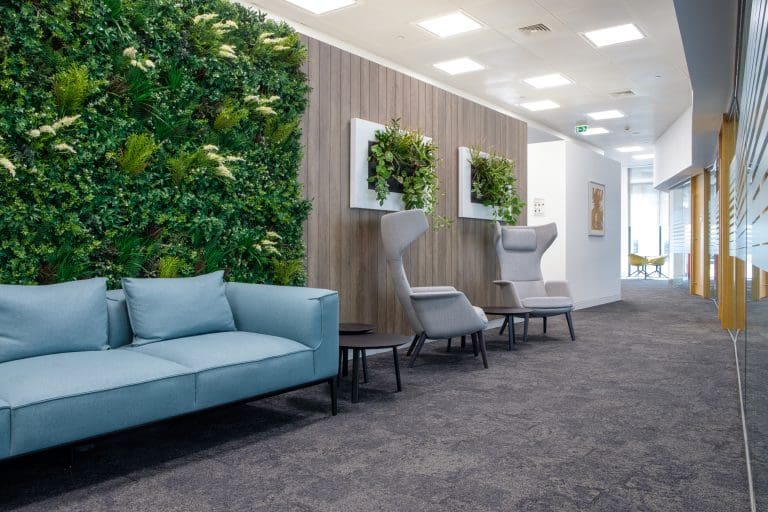
Interior green walls add vegetation to indoor spaces like lobbies, conference rooms and offices. Below are the main categories of interior walls, each with its features, uses, pros, cons and care notes.
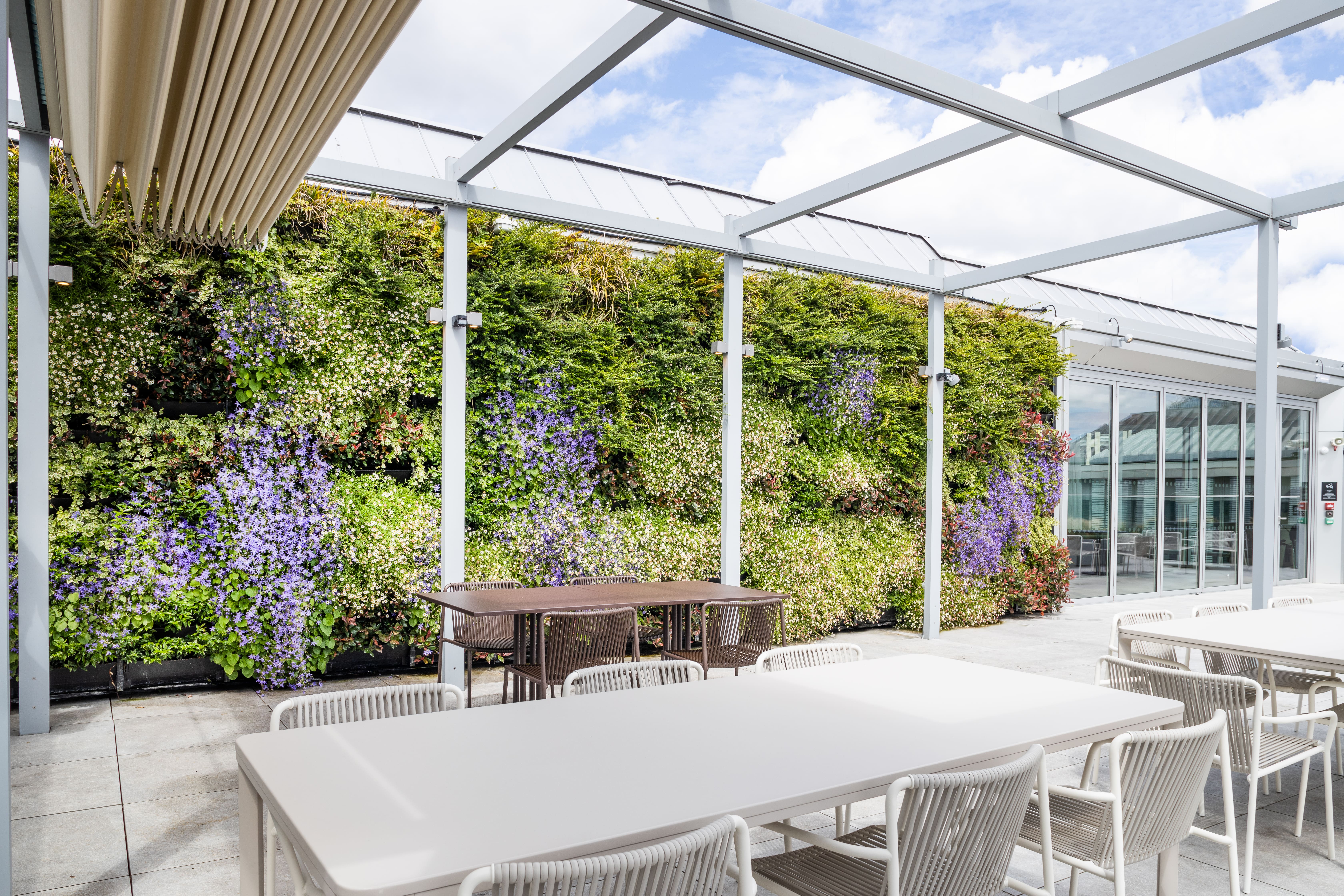
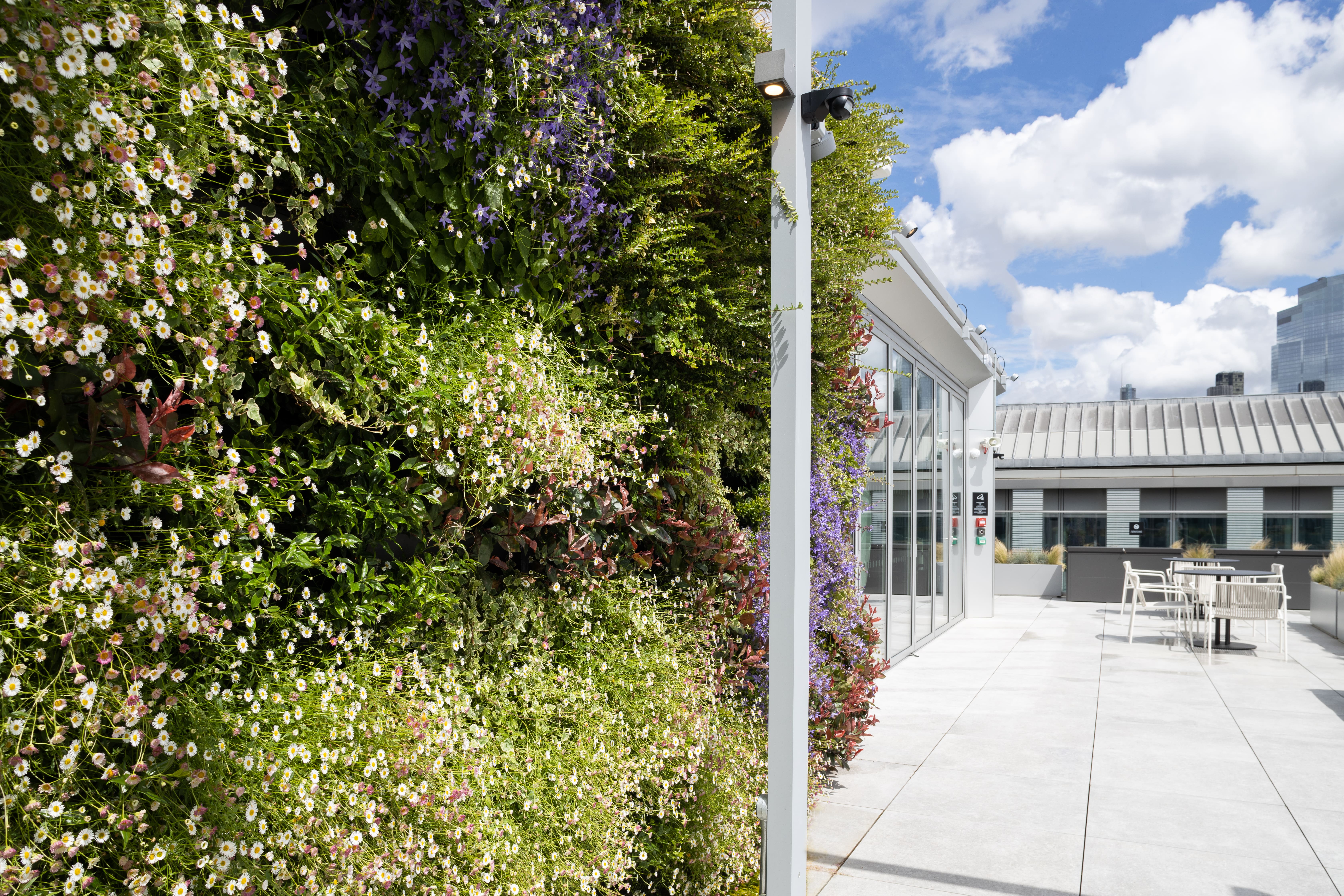
Exterior green walls and facades bring plant life to the outside of buildings. They must withstand weather and often provide building insulation and habitat.
Interior living walls need adequate light. Most wall plants require at least 1000 lux at the leaf surface to thrive. In practical terms, this often means installing full-spectrum LED grow lights above the wall. The lights should provide both blue (∼430–440 nm) and red (∼640–660 nm) wavelengths for photosynthesis, though the lighting can be tuned to emit a pleasing white light (for good colour rendering and aesthetics). Light uniformity is important: designers aim for a ratio of minimum/maximum illuminance ≥0.33 so that all plants receive some light.
In technical terms, lighting is measured by Photosynthetic Photon Flux Density (PPFD). A target PPFD of about 35 μmol·m⁻²·s⁻¹ on the foliage is recommended for green walls. Over a full day, plants often need a Daily Light Integral (DLI) of roughly 1.5–4 mol·m⁻²·d⁻¹ (the exact need depends on the plant species). In many offices, natural daylight (even from windows) falls short of this, so supplemental LEDs are used. Work with a lighting engineer or horticultural lighting specialist to calculate lamp power and placement.
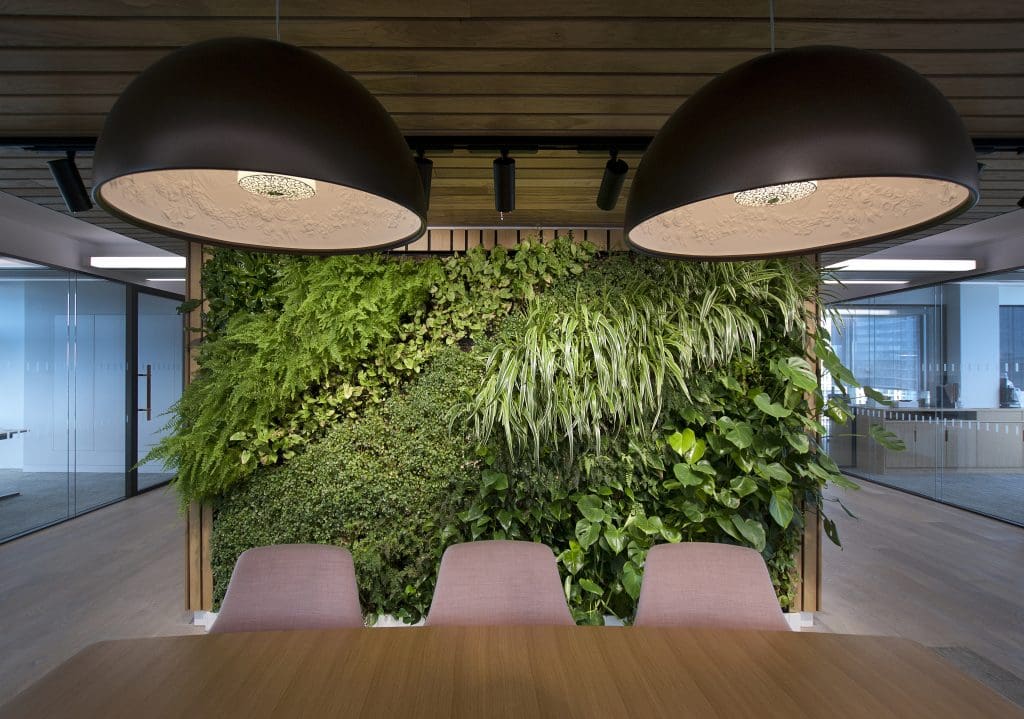
Before installing any green wall, careful planning is crucial. Key considerations include:
By addressing these factors up front, you ensure the green wall will perform reliably.
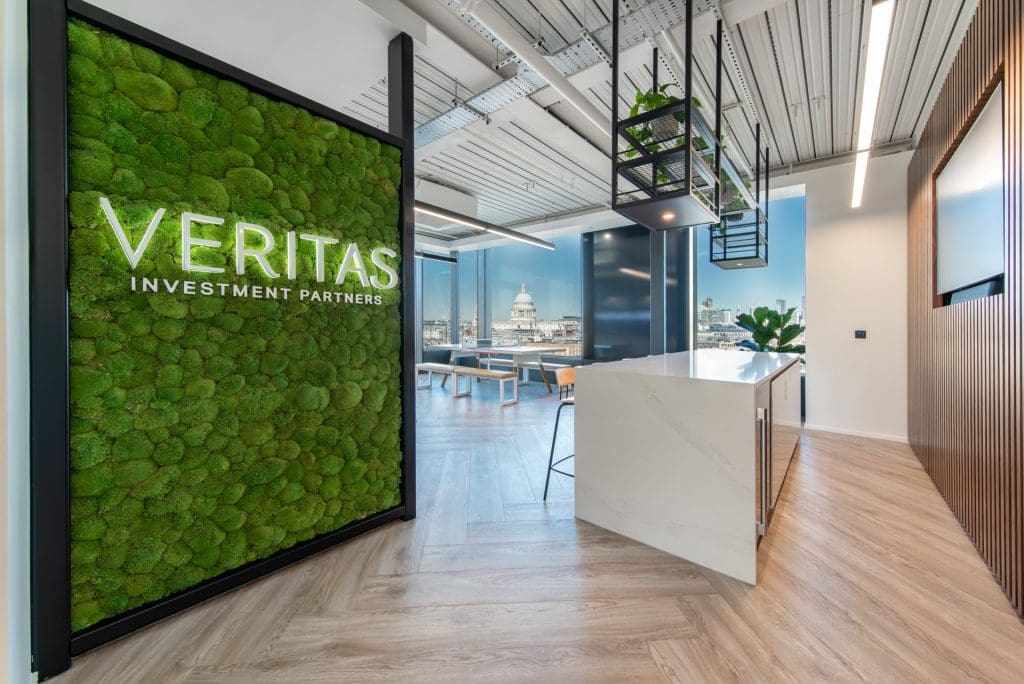
Ongoing care is essential for long-term success. Living walls require routine inspections and horticultural upkeep similar to a garden or greenhouse. Below are the typical maintenance tasks:
Overall, consistency is key. The long-term success of a living wall is dependent upon a robust maintenance and care program. Neglecting maintenance will quickly lead to plant loss and system problems.
A green wall (also called a living wall or vertical garden) is a vertical surface covered with plants. It can be inside or outside, and may use live, artificial, or preserved greenery.
Green walls improve air quality, reduce noise, boost wellbeing, and enhance building aesthetics. Outdoors, they also cool buildings and support biodiversity.
A living wall is a type of green wall that uses real plants, water, and nutrients. “Green wall” is a broader term that can also include artificial and preserved moss systems.
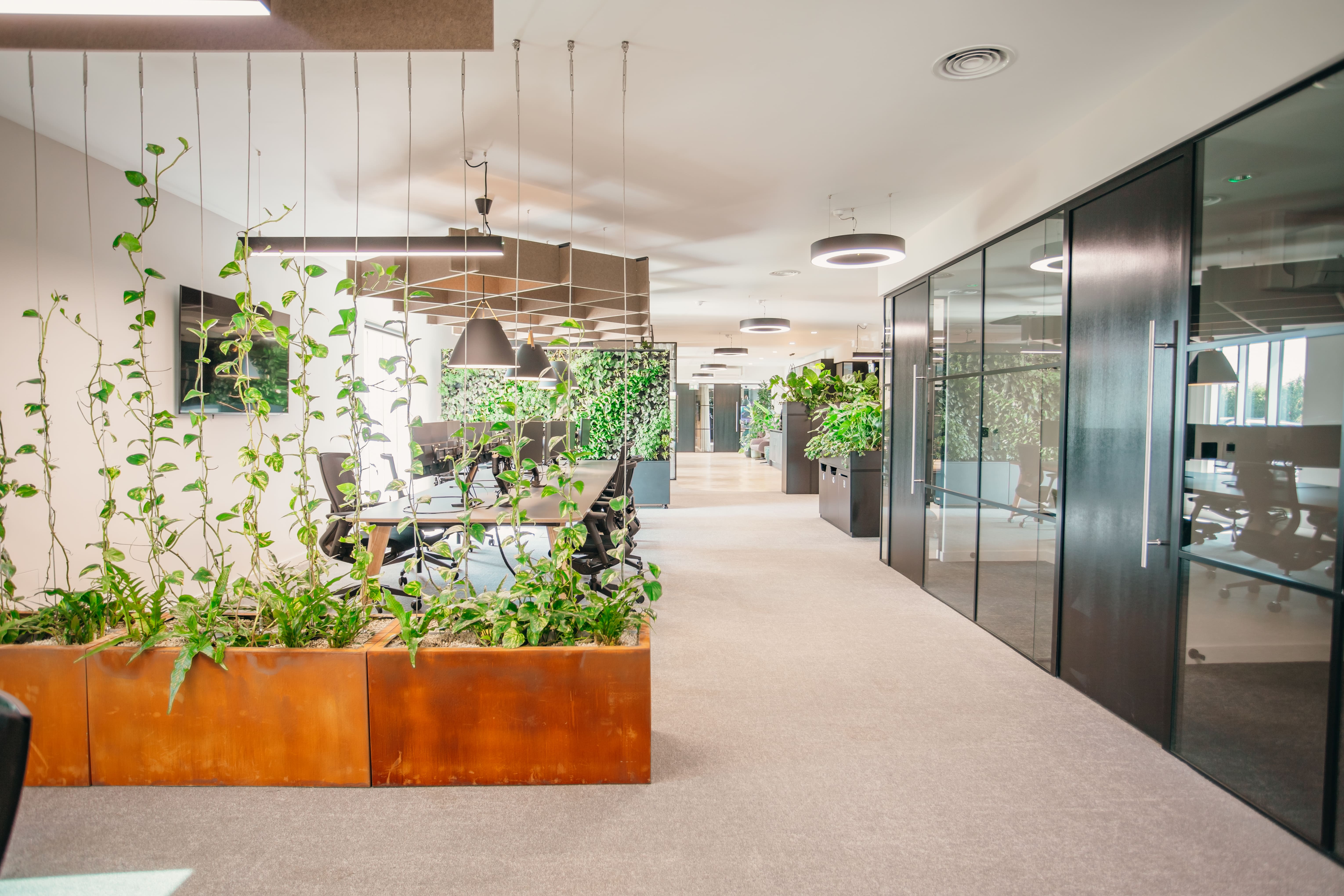
Living walls, artificial walls, preserved moss walls, living pictures, and mobile green dividers are all popular in office spaces. The best type depends on light levels, budget, and maintenance capacity.
Yes. Most living walls need at least 1000 lux at plant level. In darker areas, full-spectrum LED grow lights are usually installed.
Living walls require regular watering, pruning, plant replacement, and irrigation checks. A maintenance contract is recommended for consistent care.
Yes. You can use artificial green walls or preserved moss walls, both of which need no light. Living walls can work too, if fitted with grow lights.
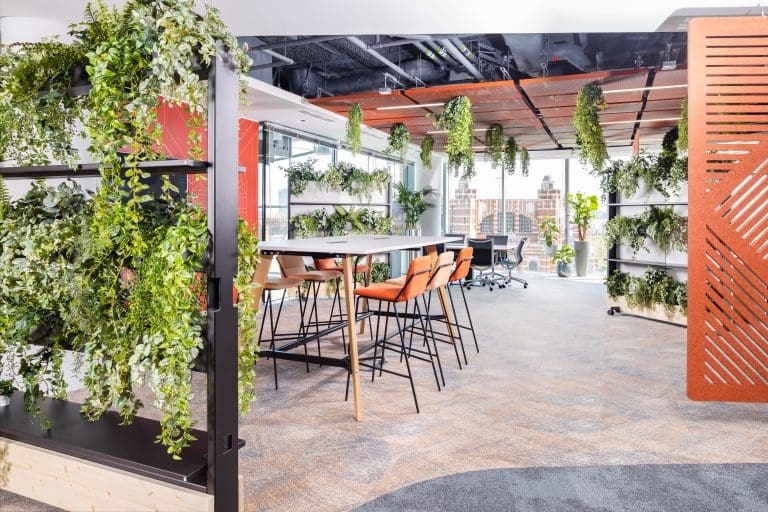
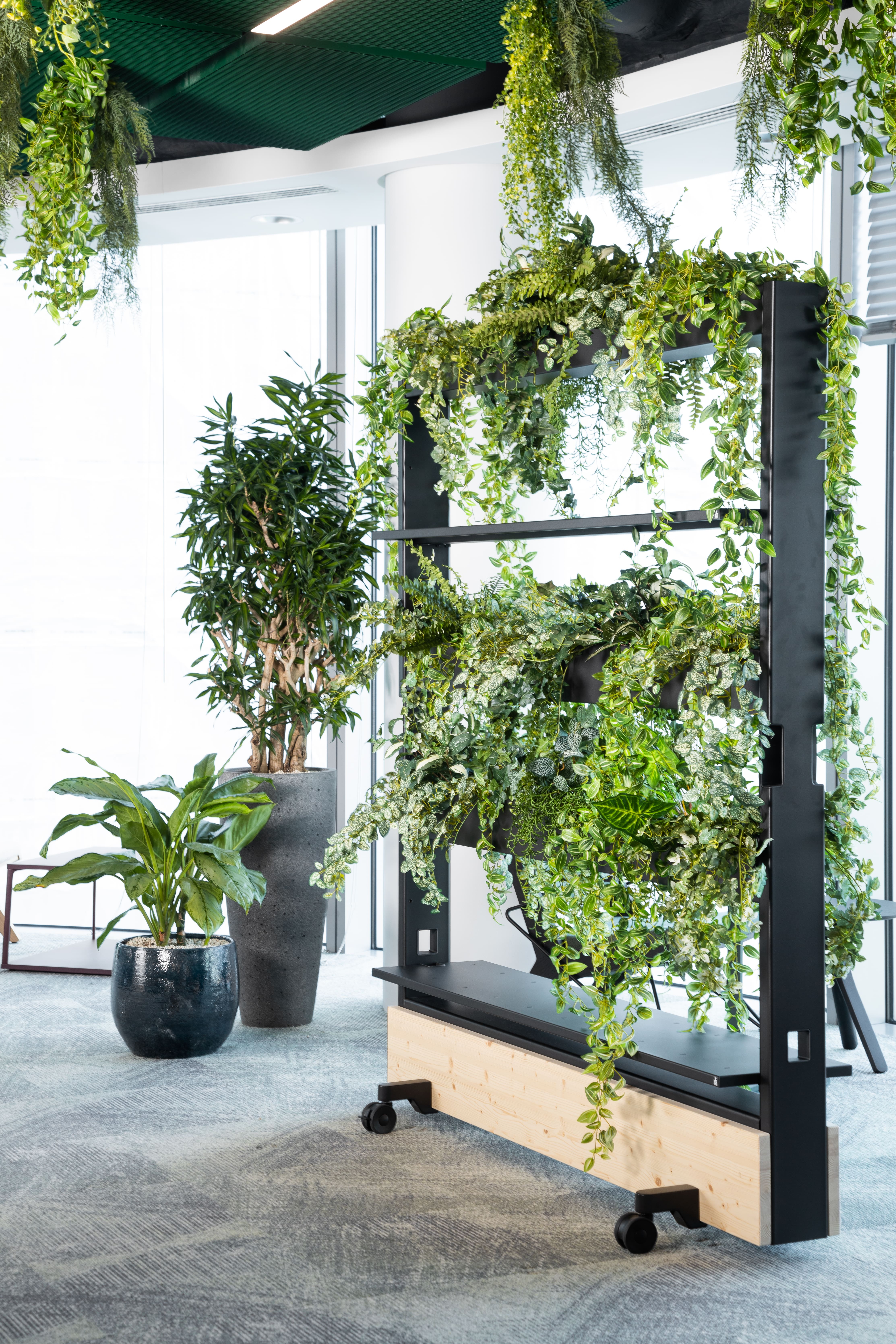
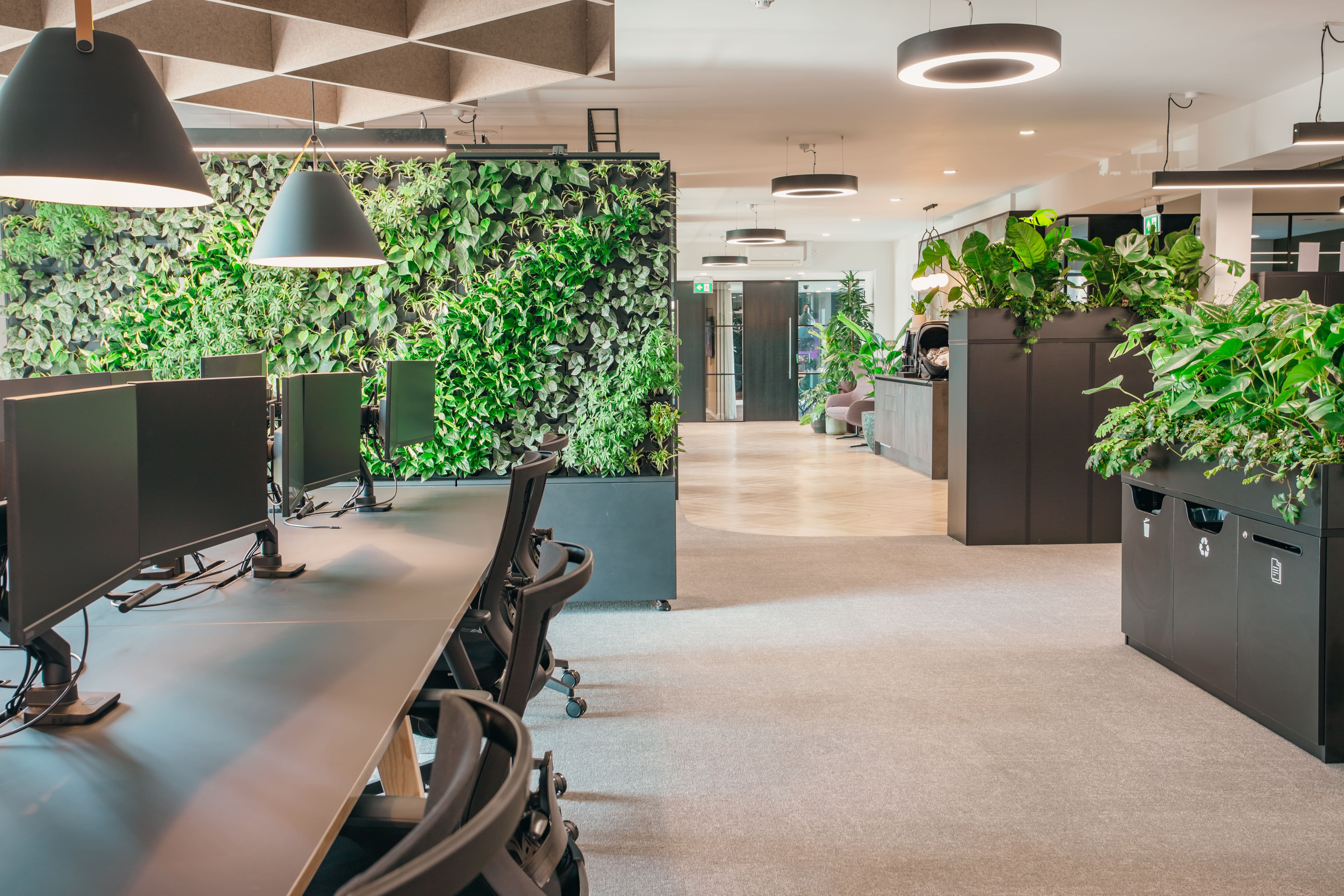
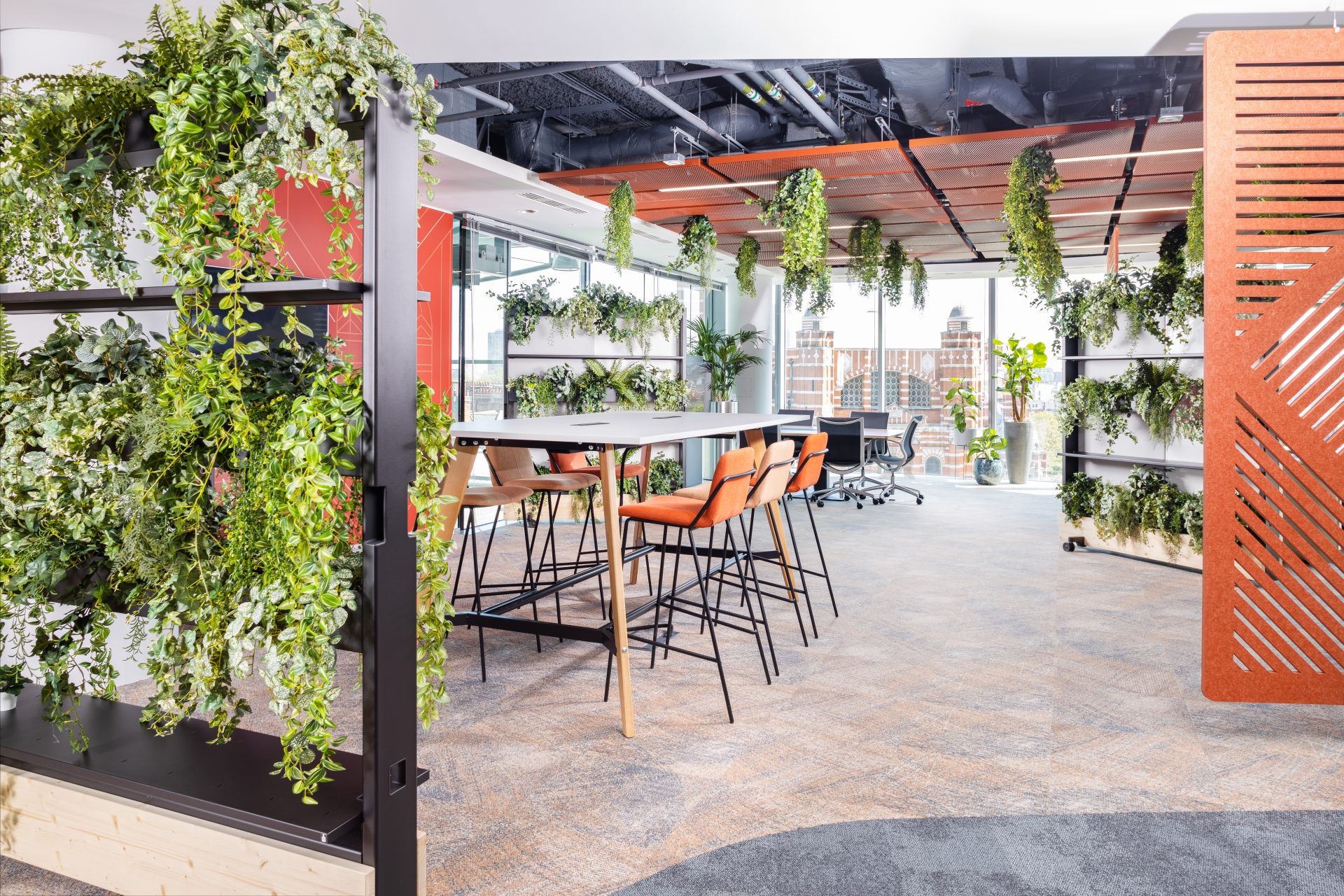
These are freestanding plant panels on wheels or stable bases. They divide space while adding greenery and can be moved or reconfigured easily.
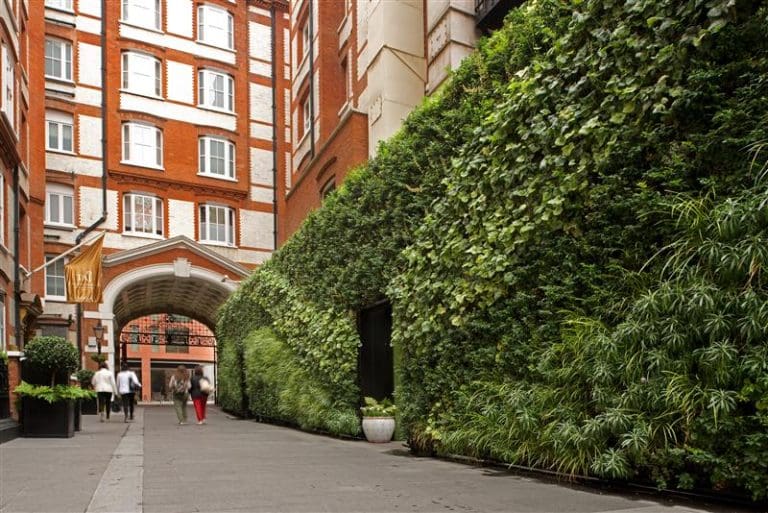
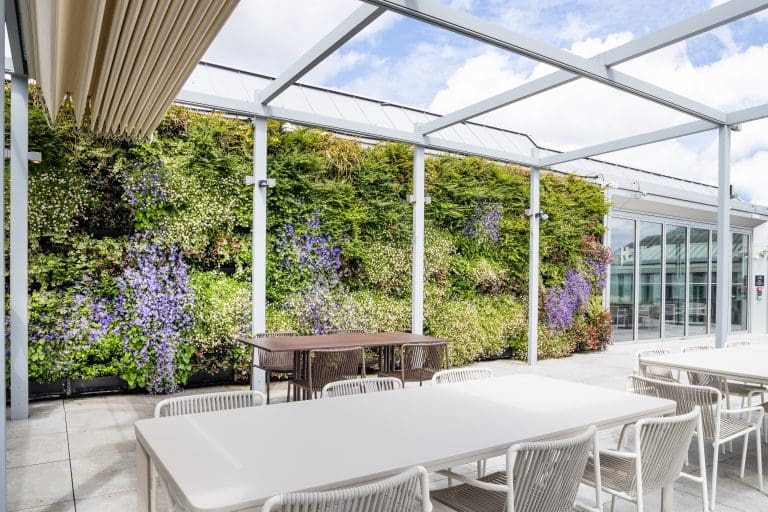
Outdoor living walls use robust frames and irrigation systems. They attach to buildings or freestanding structures and use climate-suited plants to create living facades.
Yes. Studies show green walls can reduce exterior wall temperatures by up to 14°C. This can lower internal cooling demand and improve energy efficiency.
Yes. Artificial green walls and ivy screens require little upkeep. Wildflower walls need seasonal care but are designed for biodiversity rather than appearance.
Saturated living walls can weigh 50–100 kg per square metre. Always check structural capacity with an engineer before installation.
Key requirements include a load-bearing surface, waterproofing, drainage, irrigation system, and adequate lighting. Maintenance access must also be considered.
Costs vary by size, system type, and complexity. Living walls have higher upfront and maintenance costs. Artificial and moss walls are cheaper long-term.
Exterior installations might, depending on size, height, and local regulations. Interior walls generally don’t. Always check with your local planning authority.
Typical contracts include watering, fertilisation, pruning, plant replacement, pest checks, irrigation system checks, and structural inspections.
It's possible, but professional maintenance is recommended to ensure irrigation, lighting, and plant health are managed properly.
Yes, when designed well. Living walls can reduce heat gain, capture rainwater, and support biodiversity. Using UK-grown plants and peat-free media can further reduce environmental impact.
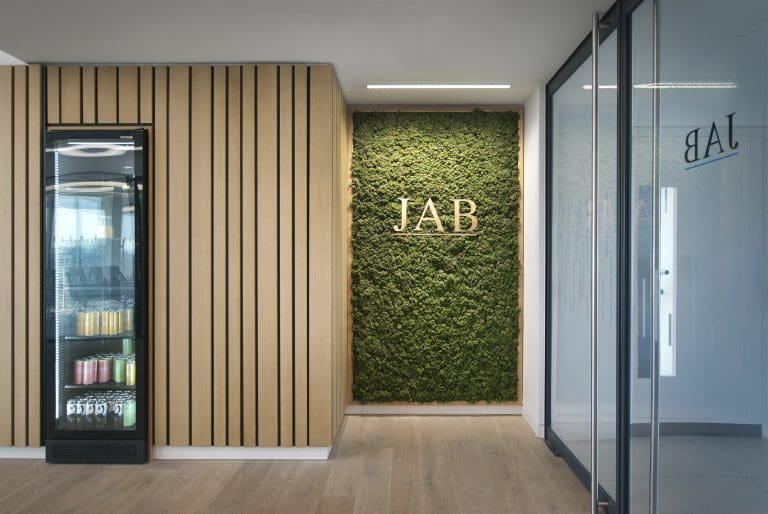
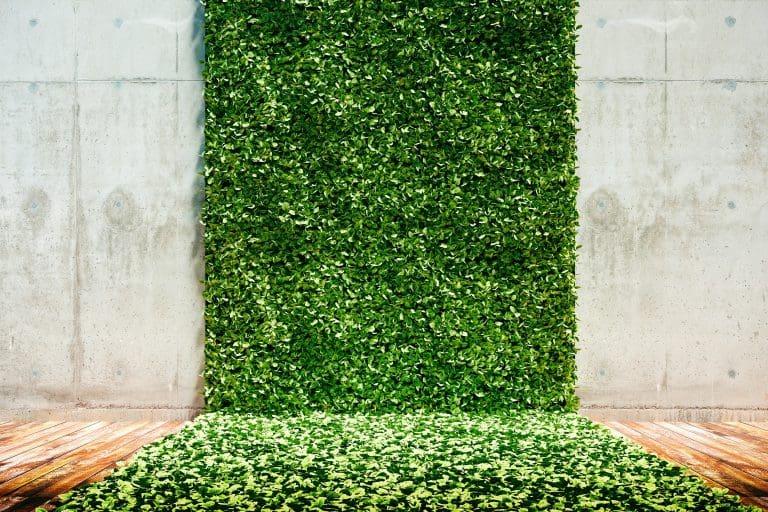
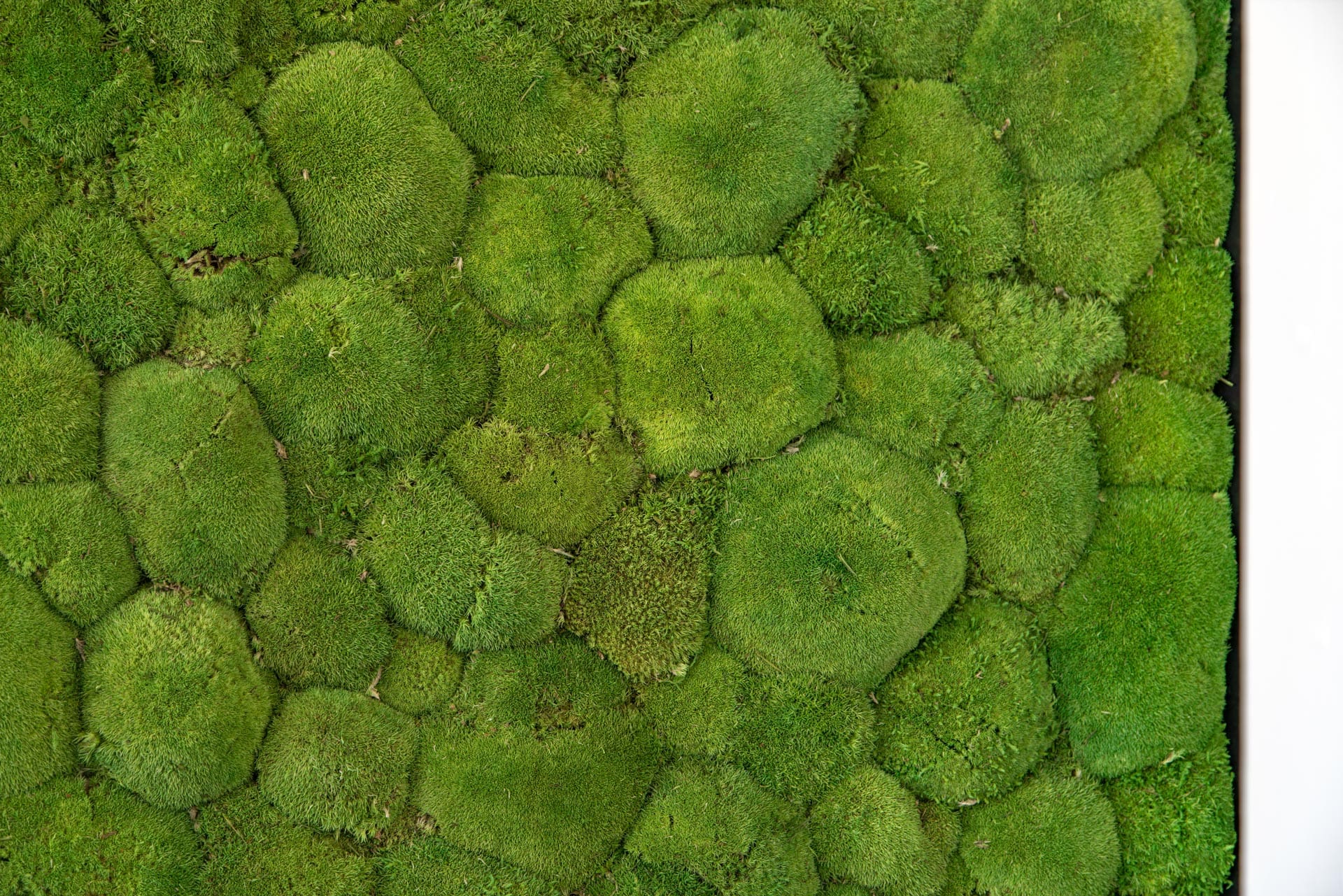
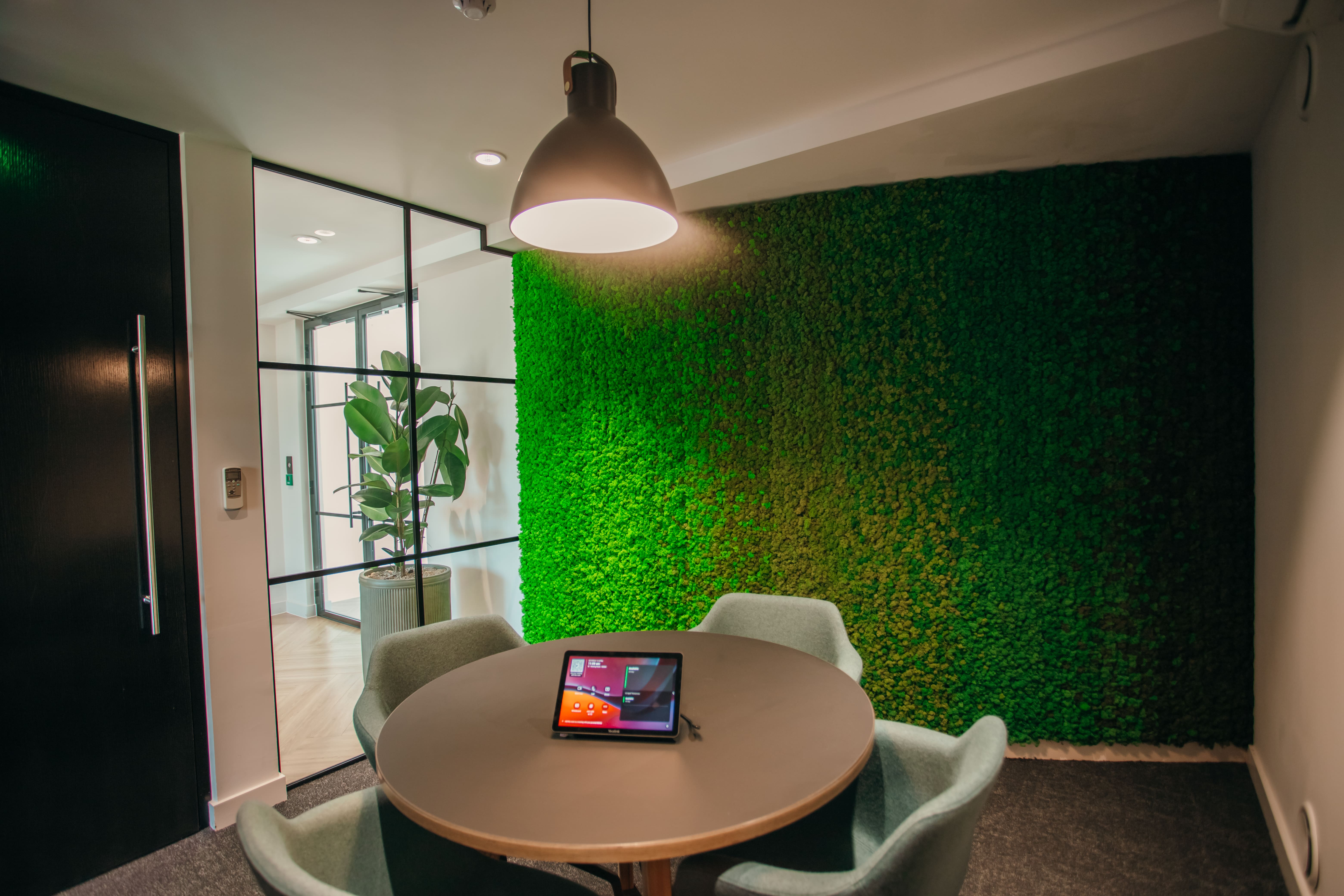
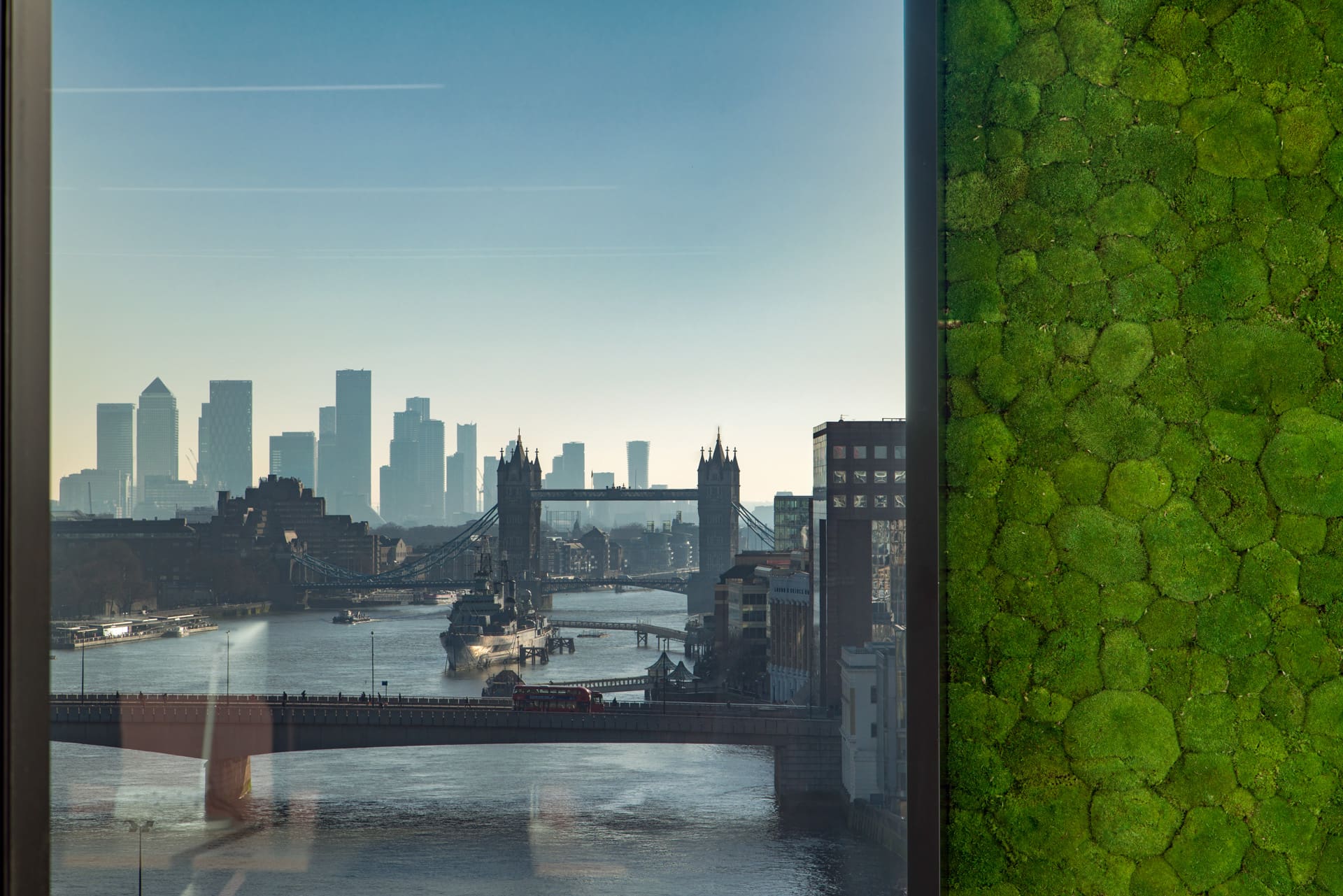
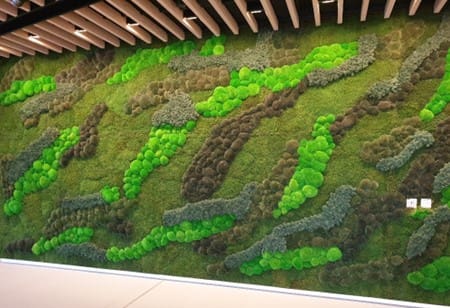
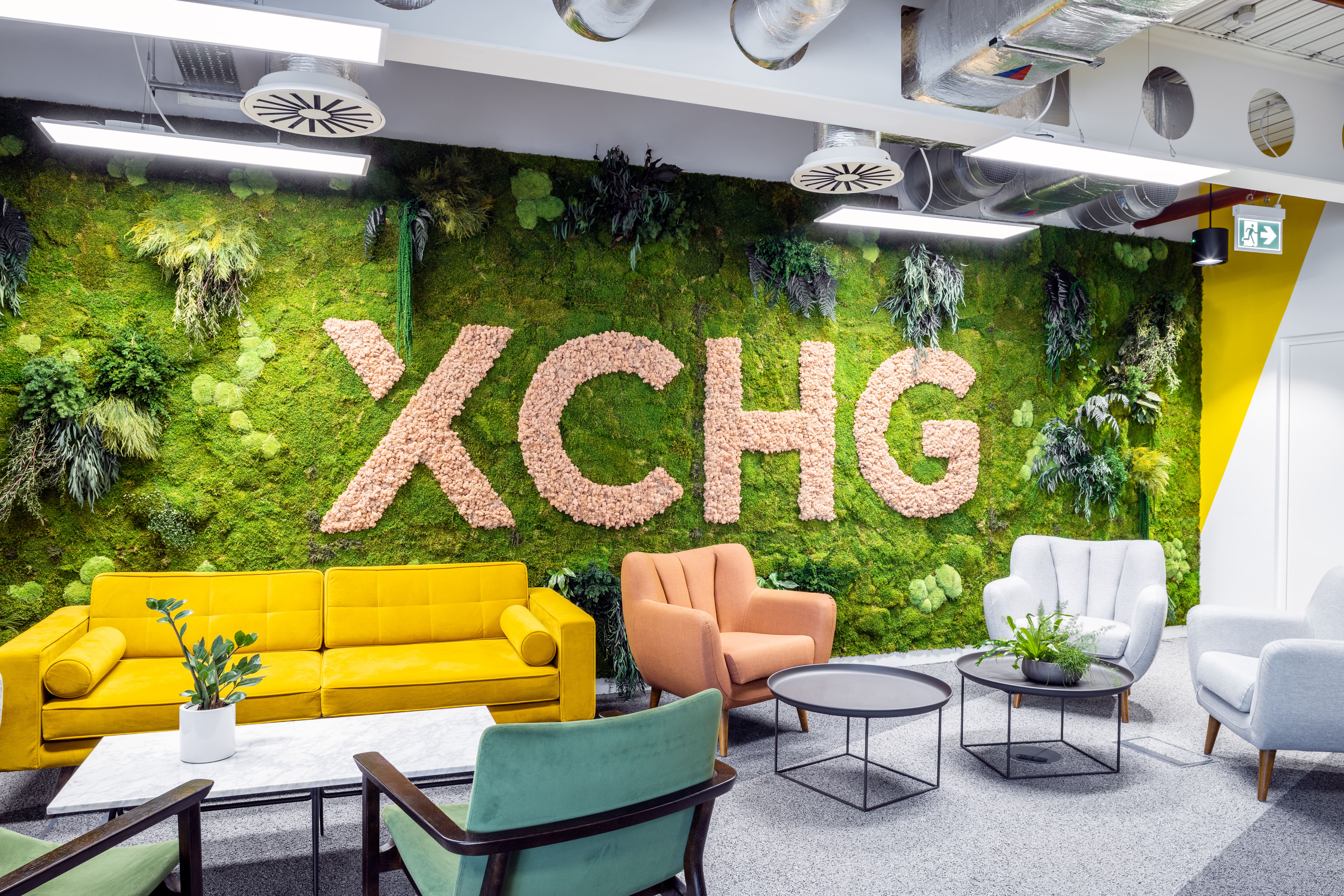
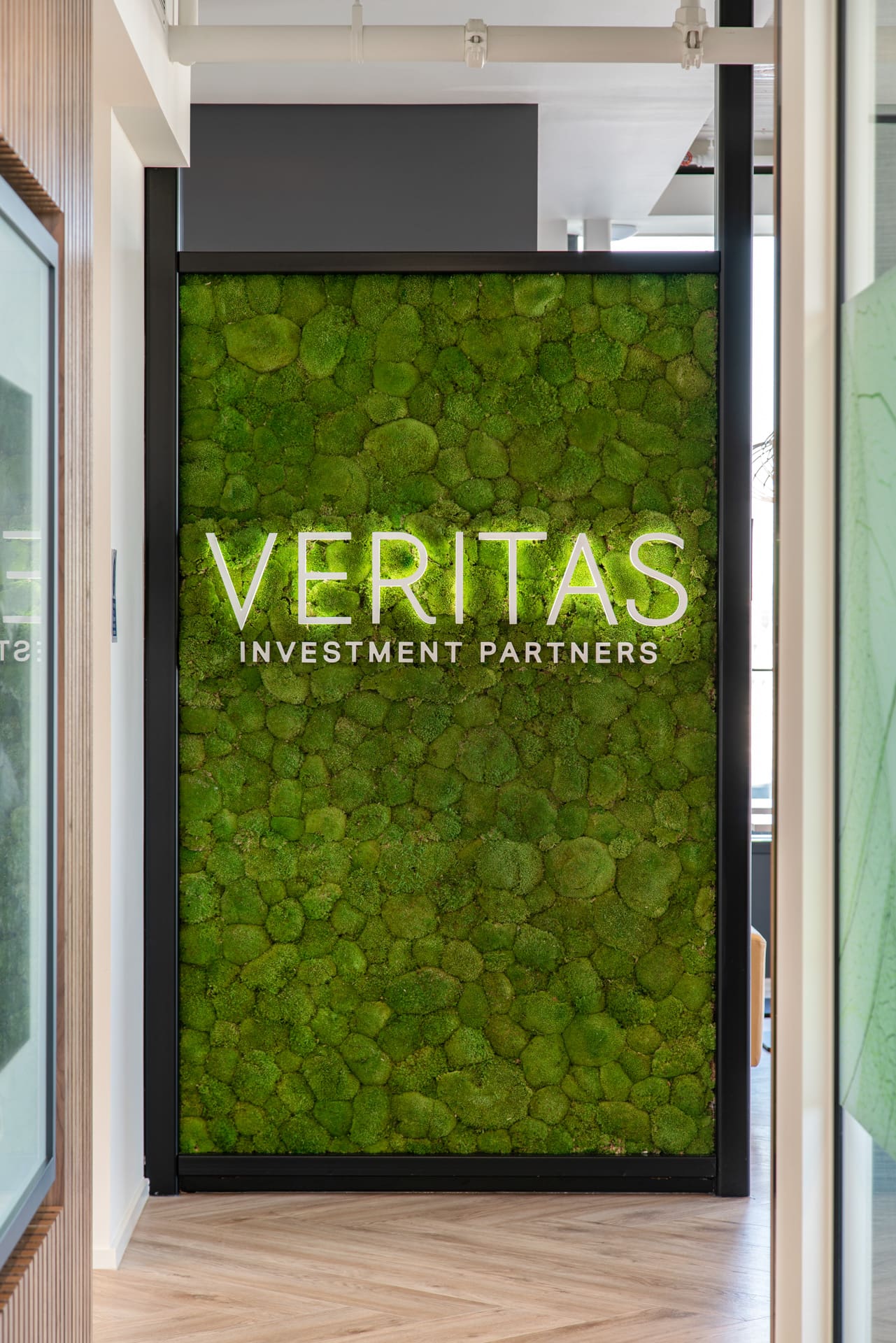
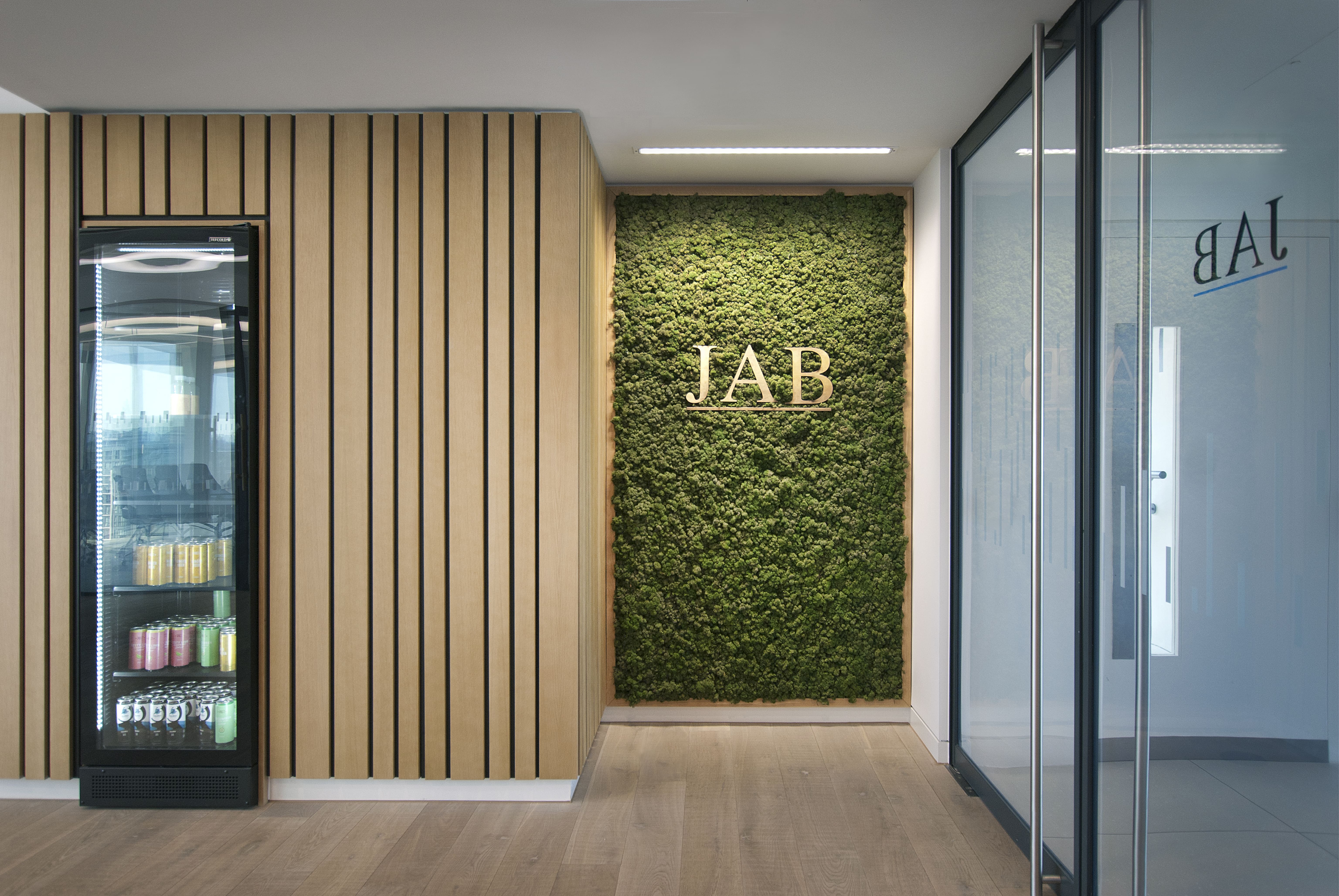
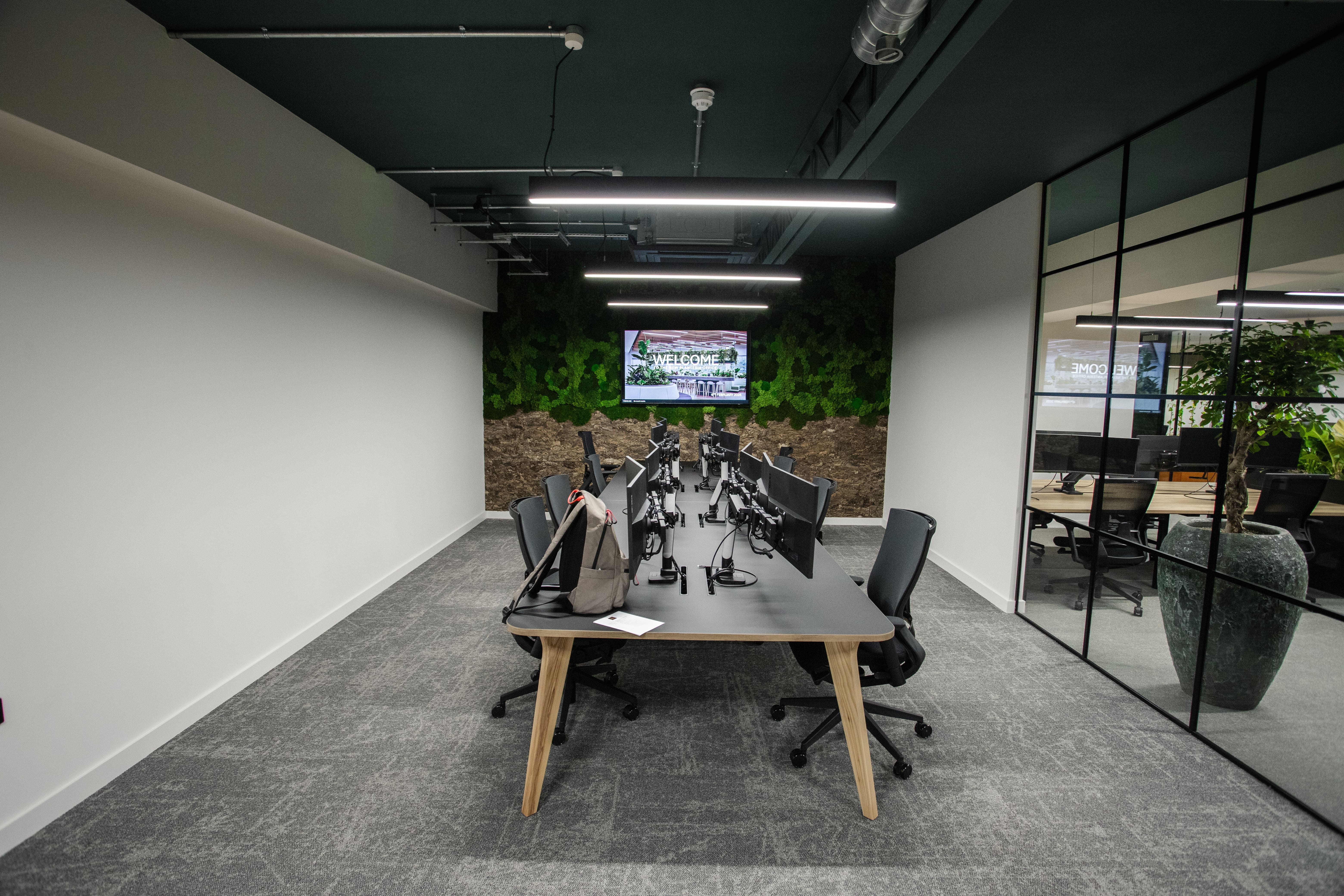
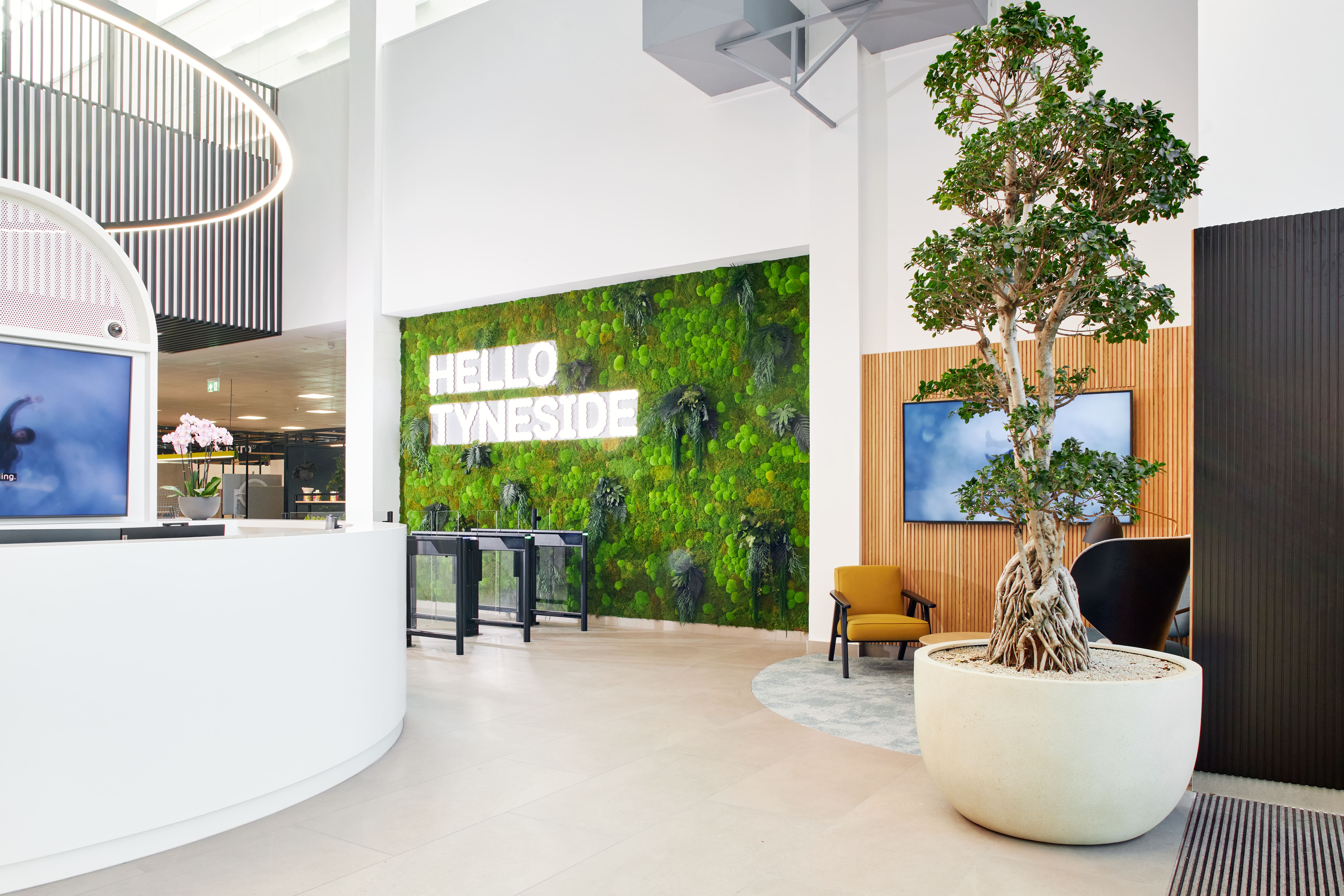
It’s a real moss installation treated with natural preservatives. It stays soft and green without growing, and doesn’t need water, light, or soil.
High-quality panels can be very realistic, especially from a short distance. However, up close, it is almost always possible to tell they are not real. They’re best for low-light or low-maintenance settings where a real wall wouldn't be practical.
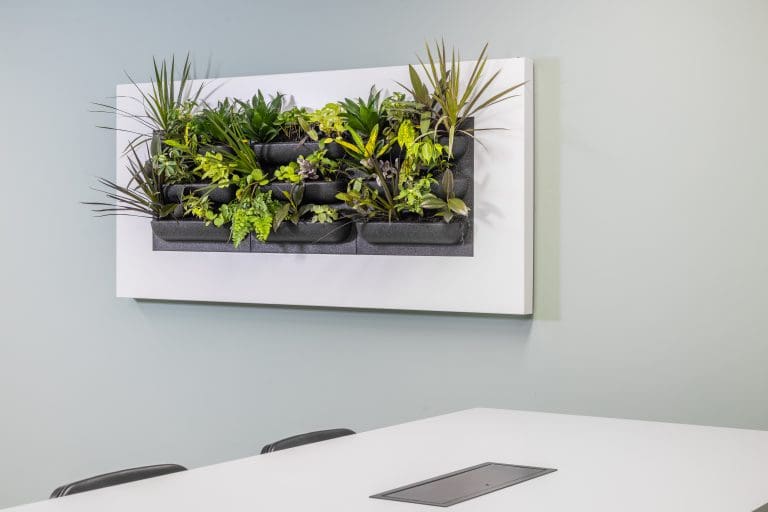
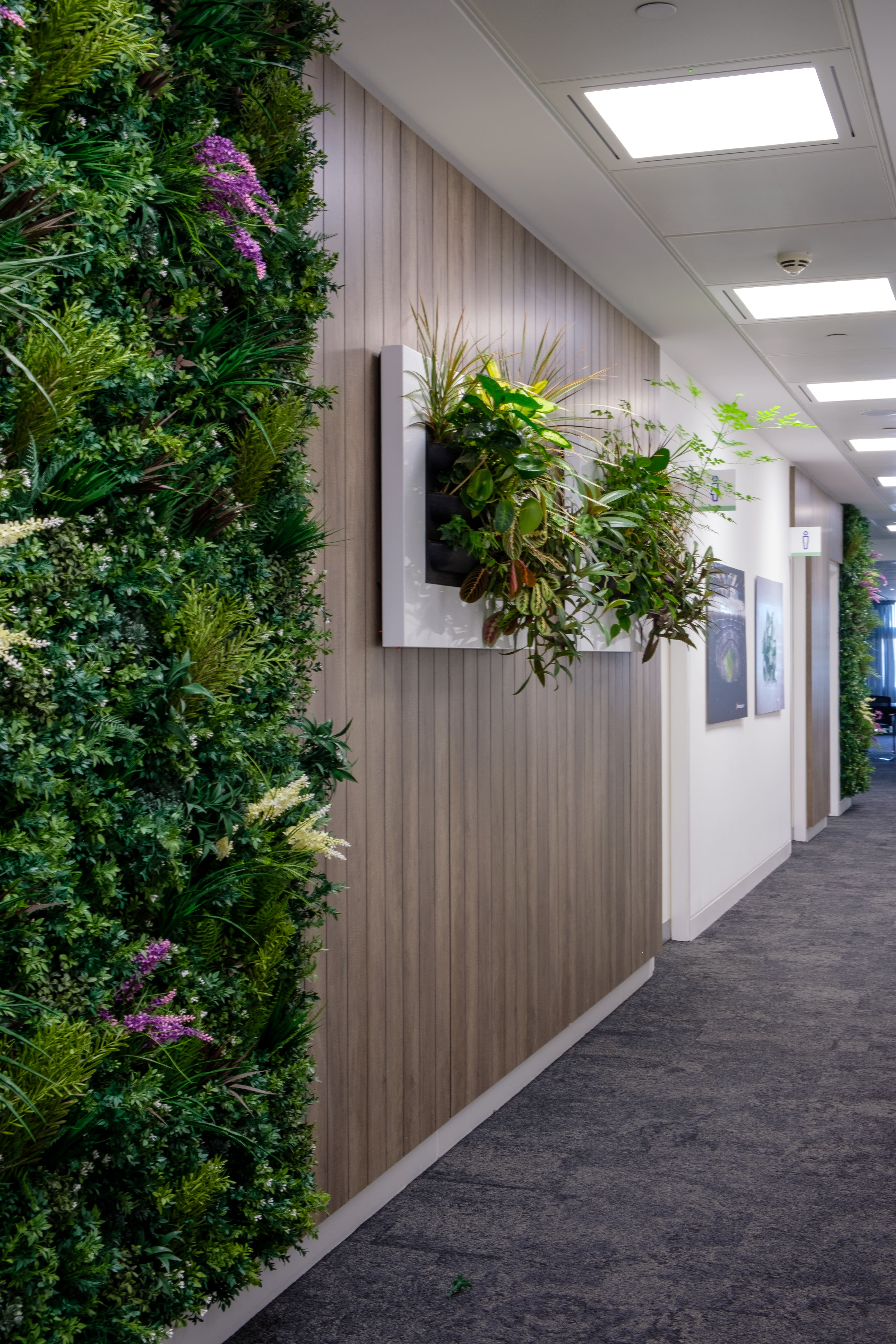
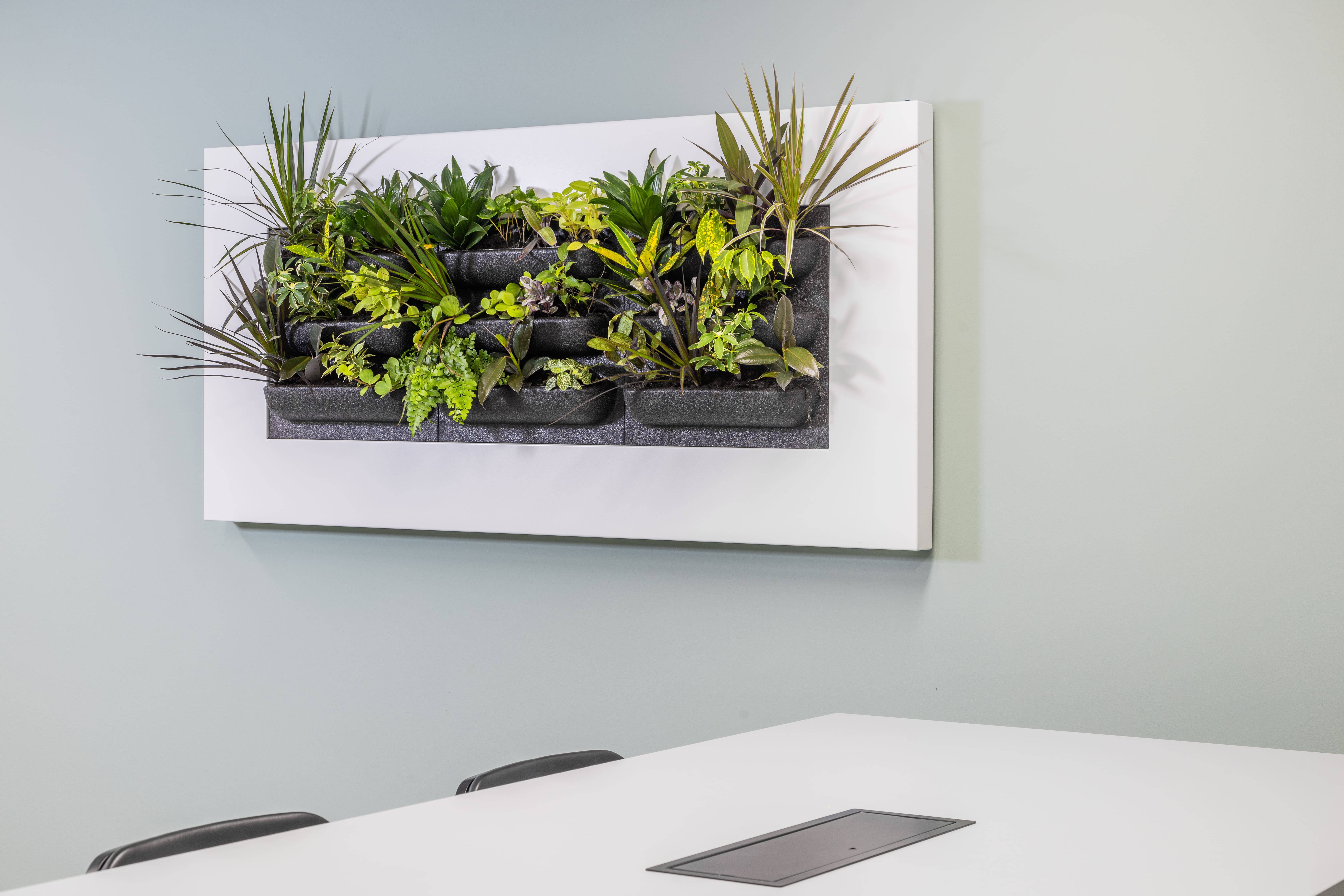
A living picture is a framed arrangement of live plants, hung like artwork. It’s a compact green wall suited to small or decorative spaces.
To provide the best experiences, we use technologies like cookies to store and/or access device information. Consenting to these technologies will allow us to process data such as browsing behaviour or unique IDs on this site.