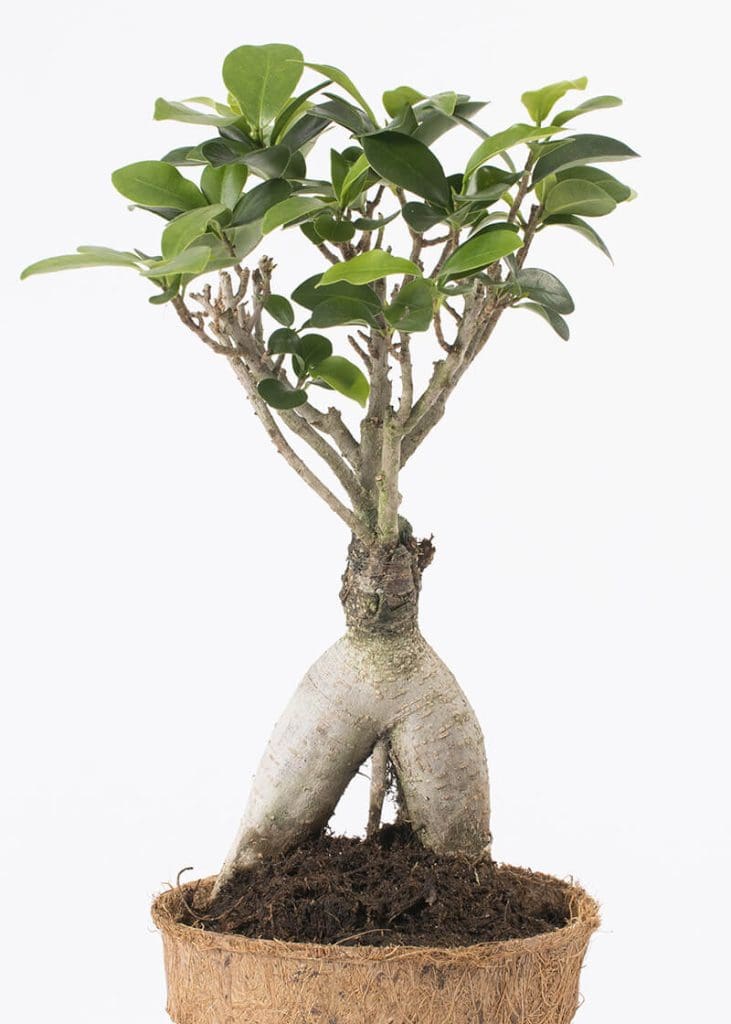
Ficus Ginseng Bonsai, or Ficus microcarpa, is a large tropical evergreen tree.
Latin name Ficus microcarpa “Ginseng Bonsai”
Pronunciation (“FY-kus my-kro-CAR-pah”)
Common name Ficus microcarpa
Origin Ficus microcarpa grows wild in the tropics of South and East Asia and Queensland, and has been widely introduced in mild climate zones all around the world, including Southern Europe. The Ginseng Bonsai plants are produced in nurseries by grafting young foliage onto older wood.
The plant is often used in interior landscapes and also as a fine ornamental outdoor tree in tropical, sub-tropical and mediterranean climates (they can tolerate quite low temperatures). The largest specimen in a botanic garden is over 33m high and has a spread of 76m.
Indoor plants are, however, much smaller.
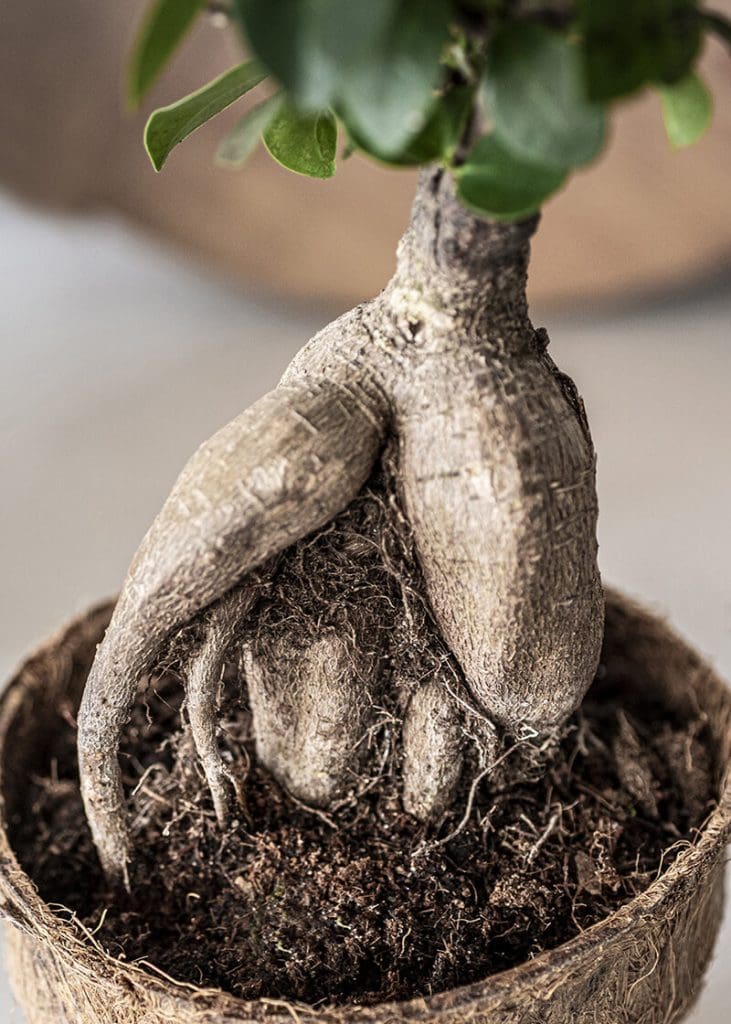
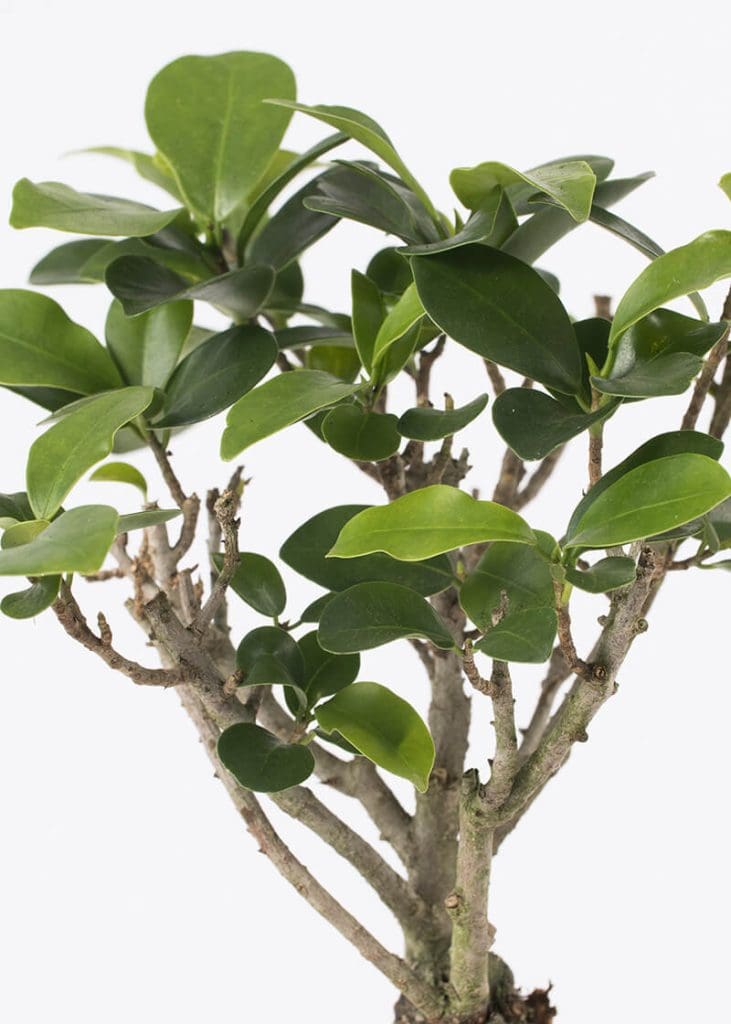
The Ginseng Bonsai form is produced as a small decorative indoor plant by grafting small shoots of foliage onto sections of roots and stems from mature trees (sometimes from a different Ficus species), to produce highly characterful plants resembling traditional bonsai trees. These could be in a gnarly, clumpy shape or more elegant curves and ‘S’ shapes, and they can be produced in a large variety of sizes.
Did you know?
The “Ginseng” in Ficus “Ginseng Bonsai” refers to its thick, bulbous roots that resemble the shape of ginseng roots.
Ficus microcarpa is toxic to pets and humans if ingested. Its sap contains compounds that can cause skin irritation, mouth discomfort, and gastrointestinal upset.
caring for your plant
Light
Medium-high to high light.
Watering
Soil should be kept moist, but not wet, and allowed to dry out a little between watering.
Pruning
If some of the shoots get straggly, they can be lightly pruned, but do not attempt to prune the mature stems and do not cut back to the grafting point.
Feeding
Dilute all-purpose fertilizer can be added to the water at every watering.
pest & diseases
Mealybugs and scale insects may be occasional problems. Mealybugs can be removed by cleaning with a damp cloth or paper towel. Larger clusters can be removed by trimming off the infested leaves. Scale insects can be removed by scraping them off with a blunt tool such as a wooden lolly stick.
Where the Ficus microcarpa originates from
This species originates in the tropics of South and East Asia and Queensland, and has been widely introduced in mild climate zones all around the world, including Southern Europe.
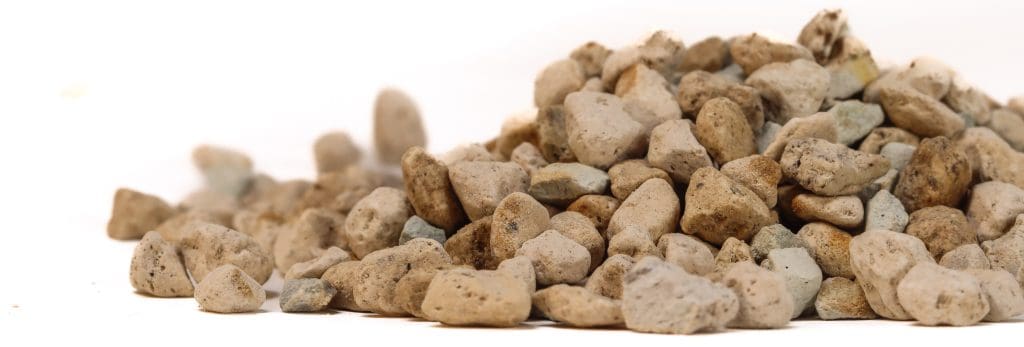
Our plants are grown in Ecoponic, an alternative to soil. Officially known as a vulkaponic substrate, it replaces traditional compost with a clean, mineral-based medium that helps protect peatlands.
According to the IUCN UK Peatland Programme, “A loss of only 5% of UK peatland carbon would be equal to the UK’s annual greenhouse gas emissions.” As well as storing carbon, the natural wetlands where peat is found are critical to the survival of plants and wildlife. Ecoponic also improves plant health and uses water more efficiently.
Research from the University of Exeter found that offices with plants can increase productivity by up to 15% while also improving concentration and job satisfaction.
Plantopedia is brought to you as part of our Engage & Bloom workplace experience program.
explore more
Why not continue your journey through the plant world. Explore more plants, their stories, habitats and the benefits they bring to spaces.
To provide the best experiences, we use technologies like cookies to store and/or access device information. Consenting to these technologies will allow us to process data such as browsing behaviour or unique IDs on this site.
Functional
Always active
The technical storage or access is strictly necessary for the legitimate purpose of enabling the use of a specific service explicitly requested by the subscriber or user, or for the sole purpose of carrying out the transmission of a communication over an electronic communications network.
Preferences
The technical storage or access is necessary for the legitimate purpose of storing preferences that are not requested by the subscriber or user.
Statistics
The technical storage or access that is used exclusively for statistical purposes.The technical storage or access that is used exclusively for anonymous statistical purposes. Without a subpoena, voluntary compliance on the part of your Internet Service Provider, or additional records from a third party, information stored or retrieved for this purpose alone cannot usually be used to identify you.
Marketing
The technical storage or access is required to create user profiles to send advertising, or to track the user on a website or across several websites for similar marketing purposes.