


Since the pandemic, the purpose of the office has changed. The conversation has shifted from mandating a “return” to offering a “reason” for people to come in.
In the UK, 71% of workers are actively seeking flexible or hybrid roles. Hybrid work has become the new baseline expectation. The workforce has tasted the freedom and comfort of remote work and they won’t return to the office without good reason.
Those reasons, increasingly, are about quality of experience. Employees now expect the office to offer what their home cannot: effortless connection with colleagues, and an environment as comfortable as their own living room.
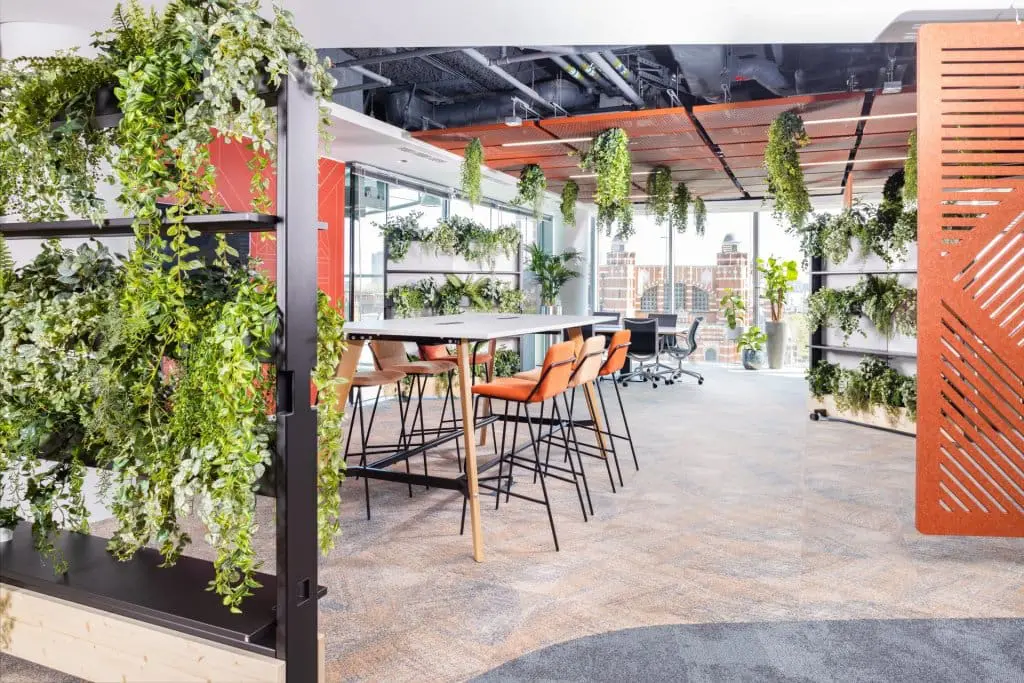
Instead of mandating returns, organisations are redesigning workplaces to entice them back. The focus is on wellness, social interaction and purposeful design.
The modern office must earn the commute by delivering an experience that balances the comfort of home with the community of the office.
Hybrid work is here to stay. It might seem like the opposite of office work, but in reality, it’s only raised the bar for what the on-site environment must deliver.
What Matters Most to Employees Today
What do today’s employees actually value in a physical workplace?
Recent research (from Gensler’s Global Workplace Survey 2025 to Oktra’s Future Workplace Report and Deloitte’s 2025 Gen Z & Millennial Survey) reveals clear themes.
Workers’ priorities have evolved, homing in on fundamentals:
- Feeling connected,
- Feeling comfortable,
- Having flexibility,
- Being in touch with nature and,
- Seeing their values reflected in the space
Below we unpack these top employee expectations.
1. Calm and Comfort
For all the fanfare about office perks in years past (think pingpong tables and bean bags), workers today are far more concerned with basic comfort and functionality.
What makes an office appealing is a sense of calm, comfortable efficiency: Good acoustics, pleasant lighting, effective climate control, ergonomic furniture and
spaces that allow focus.
In a recent design survey, 95% of participants said physical comfort (lighting, temperature, air quality, noise levels and ergonomics) was very or extremely important to feeling at home in an office.
This means investing in the indoor environmental quality of workplaces. Employees notice when these needs are met. By getting these basics right, companies create a backdrop of comfort and calm that allows people to do their best work. Layer on thoughtful details like focus rooms, comfortable furnishings and biophilic elements – the office soon feels less like a corporate machine and more like a place you actually want to spend time.

2. Access to Nature
The average person in the UK spends just 7% of their time (86 minutes) outdoors during the work week. We truly live in a nature-starved generation.
This has created another modern office demand: access to nature and natural elements in the workplace.
Biophilic design has moved from trend to mainstream. Its benefits are both intuitive and well-documented.
Research points out that biophilic design has a direct positive impact on health, wellbeing, productivity and even creativity. It also often reduces stress and absenteeism in the process.

One study found that 10% of employee absences could be attributed to a lack of connection to nature in the office environment.
In Oktra’s 2023 survey of young office workers, respondents expressed a strong desire for green and outdoor spaces at work. They recognised the ‘huge wellbeing benefits’ these bring.
Oktra identified that ‘workers want green spaces to support their wellbeing’. Their design of the future workplace included a ‘public park’ zone (a lush space with plants and natural light) right inside the office.
Daylight and greenery are fundamental to human nature. They reduce stress, improve mood and concentration and enhance creativity.
Including nature in the office is no longer optional. Workplace certifications, such as WELL or BREEAM, require buildings to include the natural environment.

3. Flexibility
Freedom to choose how and where to work has become a defining employee expectation – even within the office itself. Having experienced the autonomy of remote work, people now look for a similar level of flexibility on-site.
Rather than rows of identical desks, employees prefer a variety of spaces to choose from. The modern office includes quiet nooks, collaboration, standing desks, lounge areas and more. The office should function as an ecosystem of different settings that individuals can select based on their task and mood.
Gensler’s data shows that in recently renovated workplaces, 76% of employees feel they have a choice in where to work on any given day. Those new offices provide better access to diverse space types, from informal meeting areas to private focus rooms.
Flexibility also extends to when and how people come into the office. Many employees now expect the freedom to decide which days they commute in, based on the value they’ll get. They might come in for team meeting days or social events. Working from elsewhere when they need deep focus or personal time. Over three-quarters of workers said professional development and learning opportunities were as important as socialising in motivating them to go to the office. The future office must accommodate this ebb and flow; that means flexible layouts, policies like unassigned seating and an agile mindset about occupancy.
There’s no one-size-fits-all solution. Employers should empower people with a choice of settings and a network of spaces that suit different needs.

4. Purpose and Identity
Modern employees increasingly want their workplace to mean something. A space that reflects a sense of purpose, culture and identity that they can connect with.
This isn’t about posters of company values on the wall. It’s offices that tangibly express what the organisation stands for. Employees need to feel aligned with a greater mission.
Deloitte’s 2025 survey of Gen Z and Millennials highlights how critical this is. 89% of Gen Z and 92% of Millennials say that finding purpose and meaning in their work is important to their job satisfaction and well-being.
When young employees feel that their employer’s values match their own, they are far more likely to be happy and engaged at work. 52% of Gen Z employees who were satisfied that their organisation’s values aligned with theirs, described themselves as happy. Versus only 31% happiness among those who felt a ‘values disconnect’.

Alignment between personal and company purpose clearly boosts morale and loyalty. Office space can play a powerful role in reinforcing that alignment.
Work environments that celebrate the company’s identity help employees feel at home culturally. This is often through branding, storytelling and design which nods to its heritage or history.

A company dedicated to sustainability might use reclaimed and upcycled materials in its office. Some companies incorporate their social impact projects into artwork and create an atmosphere that mirrors its values.

When people walk into a workspace and immediately sense ‘this is who we are’, it builds pride and connection. On the flip side, a generic or overly corporate office can sap meaning from the daily experience. Companies that do this best listen to their people and shape strategy around them. This ensures the workplace resonates with employees’ own ideals and ambitions.
modern office FAQ'S
Why has the purpose of the office changed since the pandemic?
The shift to remote and hybrid work showed people they could work effectively outside the office. As a result, employees now need a strong reason to commute. The office is no longer the default place to work. It must offer things home cannot, such as connection with colleagues, better collaboration and a more engaging environment.
What do employees value most in a physical workplace today?
Research points to five core priorities: feeling connected, feeling comfortable, having flexibility, access to nature and seeing their values reflected in the space. These fundamentals matter more than perks or novelty features.
Why is physical comfort now such a high priority?
Workers spend long hours indoors, so basics like lighting, temperature, acoustics and ergonomics directly affect their wellbeing and productivity. Surveys show 95 percent of people rate physical comfort as very or extremely important. When comfort is right, people settle more easily, focus better and stay longer.
What makes an office feel calm and comfortable?
Good acoustic control, pleasant lighting, stable climate control and supportive furniture are key. Spaces for focused work, small details like soft furnishings and the presence of natural elements also help create a calm, settled atmosphere.
Why is access to nature considered essential in modern offices?
Most UK workers spend very little time outdoors during the week. Exposure to nature – through plants, views, materials or daylight – reduces stress, strengthens wellbeing and can improve mood and creativity. Some studies even link poor access to nature with higher absenteeism. Biophilic design is now widely expected rather than a niche trend.
How does biophilic design help with wellbeing?
Research shows that natural elements improve concentration, reduce stress and support overall mental health. Greenery and daylight help people feel more grounded and alert. This is why frameworks like WELL and BREEAM include nature-focused criteria.
What does flexibility in the office actually mean?
It means giving employees a choice of where and how to work. This includes varied work settings such as quiet rooms, collaboration areas, lounge spaces and standing desks. It also refers to flexible policies around when people come in, allowing them to choose office days based on meetings, learning or social connection.
Why does flexibility matter so much now?
People became used to autonomy during remote work. They want the same sense of choice in the office. When employees can pick spaces that suit their work style and tasks, they feel more in control, work more effectively and are more likely to enjoy their time on-site.
How does purpose and identity influence employee experience?
Employees want to feel that the workplace reflects the mission and values of their organisation. When the space expresses culture, heritage or social commitments, people report higher satisfaction and stronger connection. When there is a mismatch, engagement drops.
How can an office express company values in a meaningful way?
Through design choices that reflect what the organisation stands for. This could be using certain materials, showcasing stories, embedding brand colours or referencing cultural roots. It works best when it feels authentic and when employees recognise their own values in the environment.