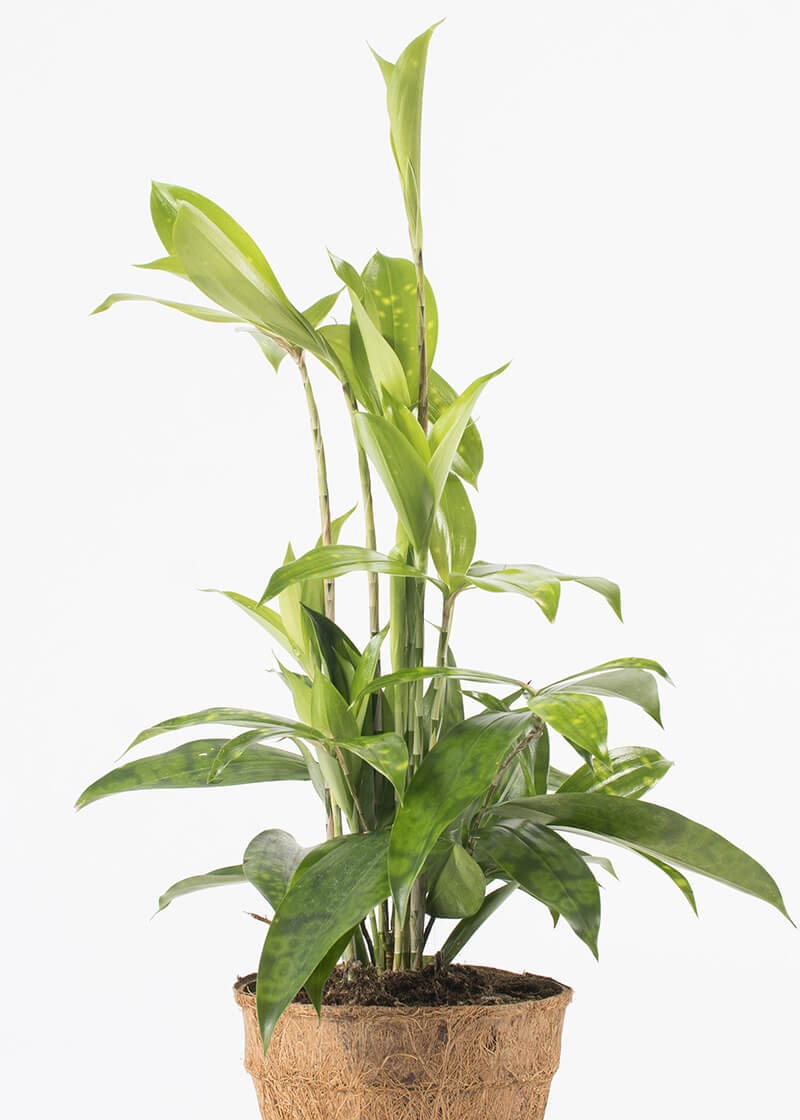
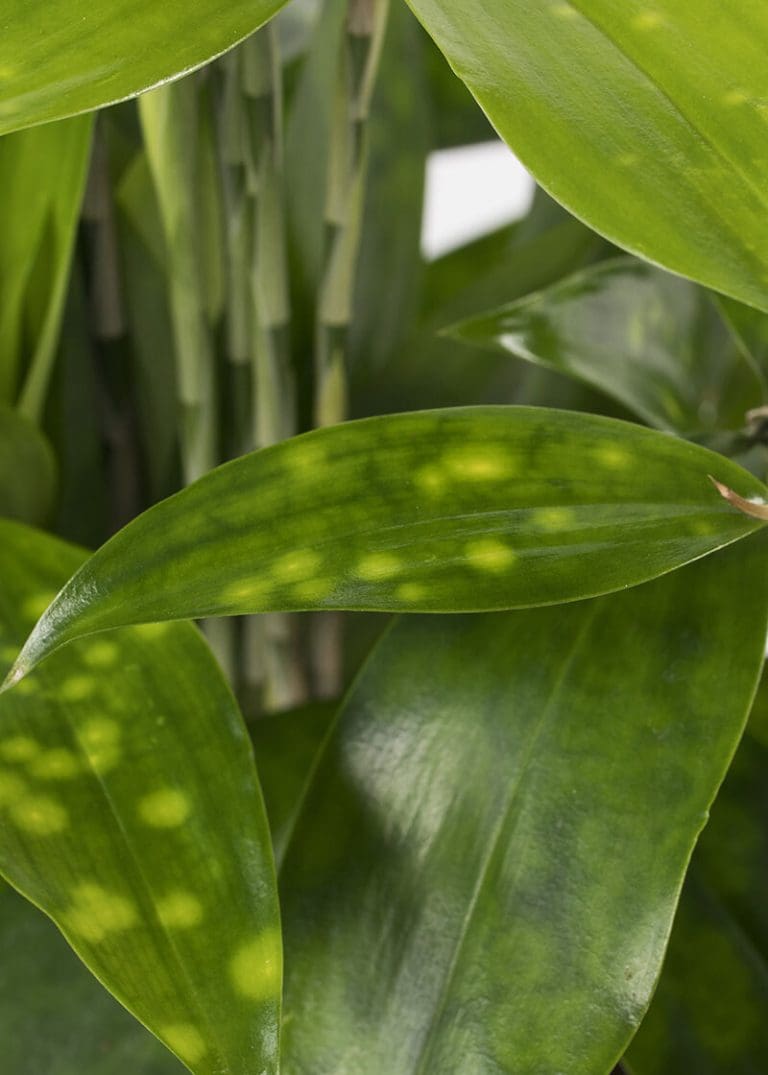
Gold Dust Dracaena, or Dracaena surculosa, is a very distinctive plant that looks unlike most other Dracaenas.
Latin name Dracaena surclosa
Pronunciation (“drah-SEE-nah surr-cue-LOH-sah”)
Common name Spotted Dracaena
Origin Coastal West Africa
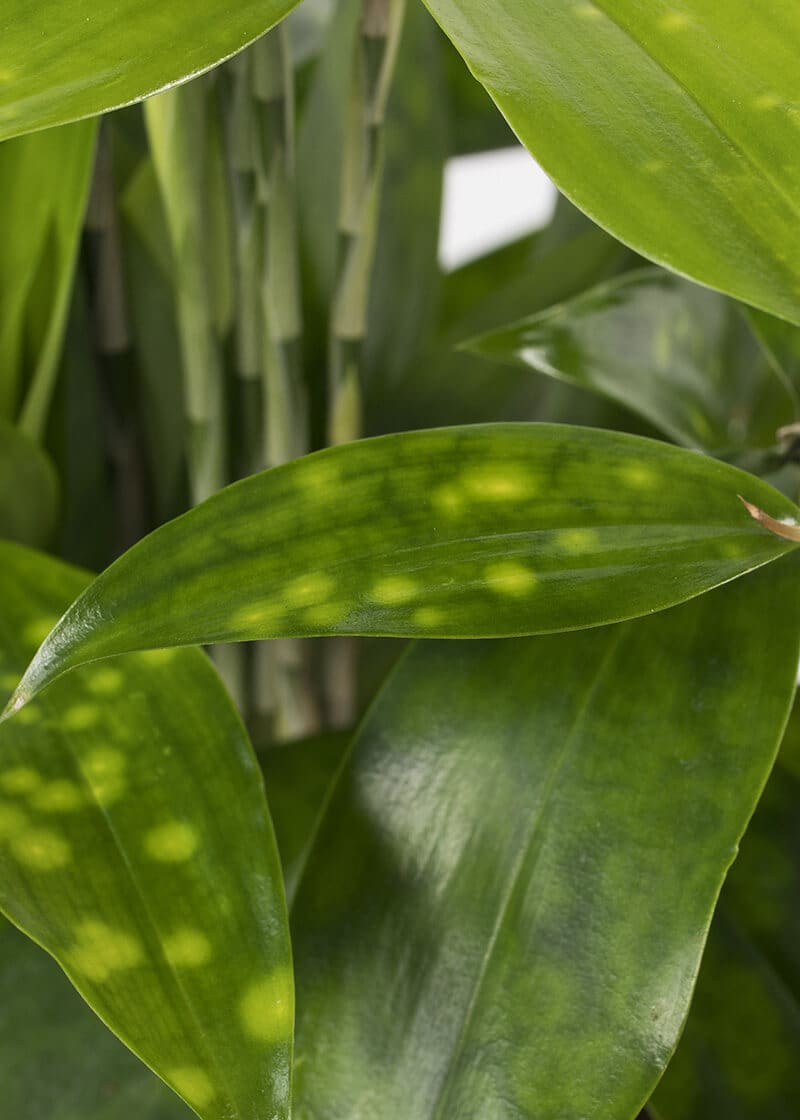
It is a small multi-stemmed shrub with slender, whip-like branching stems, and large, elliptical leaves that grow in groups of two or three, which are patterned with cream or golden-yellow spots and blotches.
Did you know?
The golden speckles on Dracaena “Gold Dust” become more pronounced with brighter, indirect sunlight, making it a dynamic and visually changing plant.
Toxic to pets if ingested. It contains saponins, which can cause vomiting, drooling, loss of appetite and lethargy in cats and dogs.
caring for your plant
Light
Medium to medium-high light, avoiding direct sunlight.
Watering
Keep soil moist, but not wet, and allow to dry out a little between watering. Regular misting with tepid water will keep the foliage looking fresh and discourage spider mites.
Pruning
Branches can be trimmed to maintain shape or size, but this will encourage branching lower down. New branches emerge as long whip-like stems before the leaves unfurl, so be careful not to cut those back thinking that they have lost their leaves and need removing.
Feeding
A weak solution of fertilizer added with the water every time you water will be beneficial.
pest & diseases
Generally pest free, but keep a lookout for mealybugs and two-spotted spider mite, both of which can be removed when you clean the plant with a damp cloth or paper towel. Regular misting with tepid water will also deter spider mites.
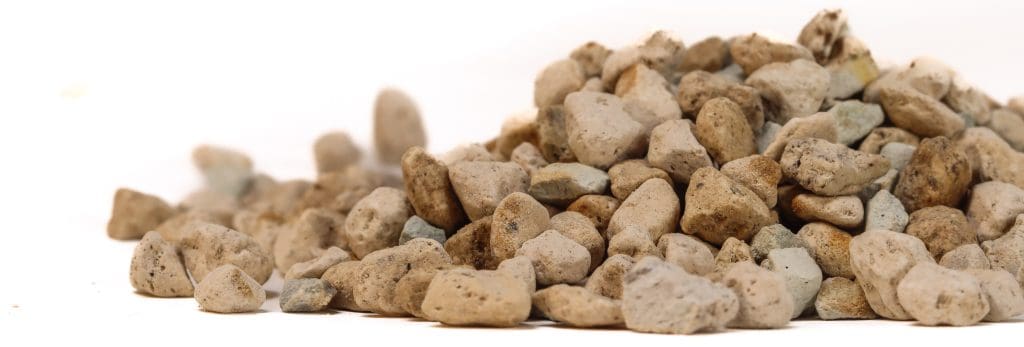
Our plants are grown in Ecoponic, an alternative to soil. Officially known as a vulkaponic substrate, it replaces traditional compost with a clean, mineral-based medium that helps protect peatlands.
According to the IUCN UK Peatland Programme, “A loss of only 5% of UK peatland carbon would be equal to the UK’s annual greenhouse gas emissions.” As well as storing carbon, the natural wetlands where peat is found are critical to the survival of plants and wildlife. Ecoponic also improves plant health and uses water more efficiently.
Research from the University of Exeter found that offices with plants can increase productivity by up to 15% while also improving concentration and job satisfaction.
Plantopedia is brought to you as part of our Engage & Bloom workplace experience program.
explore more
Why not continue your journey through the plant world. Explore more plants, their stories, habitats and the benefits they bring to spaces.
To provide the best experiences, we use technologies like cookies to store and/or access device information. Consenting to these technologies will allow us to process data such as browsing behaviour or unique IDs on this site.
Functional
Always active
The technical storage or access is strictly necessary for the legitimate purpose of enabling the use of a specific service explicitly requested by the subscriber or user, or for the sole purpose of carrying out the transmission of a communication over an electronic communications network.
Preferences
The technical storage or access is necessary for the legitimate purpose of storing preferences that are not requested by the subscriber or user.
Statistics
The technical storage or access that is used exclusively for statistical purposes.The technical storage or access that is used exclusively for anonymous statistical purposes. Without a subpoena, voluntary compliance on the part of your Internet Service Provider, or additional records from a third party, information stored or retrieved for this purpose alone cannot usually be used to identify you.
Marketing
The technical storage or access is required to create user profiles to send advertising, or to track the user on a website or across several websites for similar marketing purposes.