


Planteria Group brings a distinct perspective to the future of the workplace, one rooted in biophilic design and purposeful planting.
As specialists in corporate planting, we believe plants are no longer just decoration. They enhance wellbeing, define space and express identity. It’s about integrating nature into the workplace in ways that inspire and connect people.
Our workplace programme, Engage & Bloom, helps organisations use planting as a tool to inspire, engage and strengthen connections at work. This reflects a key insight: biophilic elements can influence how employees feel, behave and interact within an office.
So, what does experience-led planting look like in practice? First, it treats plants as wellbeing enhancers. We use the calming and uplifting effects of greenery to create environments where people feel more at ease and attentive. Countless studies show that plants reduce stress and even improve perceived air quality. Our designs often use planting to introduce softness and tranquillity. The plants become a form of visual and sensory comfort, tempering the hard edges of modern interiors with organic shapes and greenery.
Secondly, Planteria uses planting as natural architecture. A way to shape the flow and identity of a space. Plants can act as living partitions. They can divide zones without the need for walls or create focal points that draw people into communal areas. These elements add character and ‘instagrammable’ moments to the workplace, contributing to the hospitality vibe.
Importantly, planting schemes are often tailored to reflect a company’s culture or brand identity. In a recent project for Rabobank’s London offices, our team chose plants that linked back to the company’s Dutch heritage.

For Legal & General, we used the Umbrella Plant to reflect their umbrella logo. The result is an office that tells a story.

These mini case studies illustrate how design can reinforce a sense of belonging and identity. When people see their company’s ethos reflected in their physical workplace, it deepens their emotional connection to it.
Of course, an experience-led approach must also walk the talk on sustainability and this is where Planteria Group introduces its sustainability focused planting. From Ecoponic, peat-free substrate, to Walking Plant Technicians. From being zero to landfill and choosing locally sourced plants. Clients get the assurance that their plants are maintained in a way that protects the planet.
By combining biophilic expertise, design creativity and sustainable practices, Planteria Group holds planting as a key part of the workplace experience. Plants are used to improve lighting and acoustics. They mark transitions between focused library zones and vibrant café zones. They boost mood, reduce stress and reinforce what a company stands for.
The goal is simple: to make the office a place where people want to be. It all connects back to our purpose: we harness the power of nature to create inspiring spaces.
The Future Office Is Human
At its heart, the future of the office is about putting humans first.
The lesson from the past few years is that employees, not employers, now drive the conversation about how and where work gets done. And what employees say they want is simple: they want workplaces that feel good to be in.
That means:
- Spaces where they can connect with colleagues and culture,
- Environments that keep them comfortable and healthy and,
- An atmosphere that resonates with purpose and positivity.
Companies have learned that you can’t bring people back to their desks through mandates alone. It’s about earning their presence by creating an experience they value. Designing offices that are inclusive, flexible and enriching. The best workplaces now complement the freedom of remote work.
The human-centric office thrives on authentic care for people’s needs. Employees choose offices that give them a sense of community, one that allows them to concentrate in comfort and align with their values. In these spaces engagement rises, culture strengthens and innovation happens organically. Connection, comfort and purpose directly correlate with outcomes like job satisfaction, wellness and retention. And threading throughout this is nature, arguably the lifeblood of the future workplace.
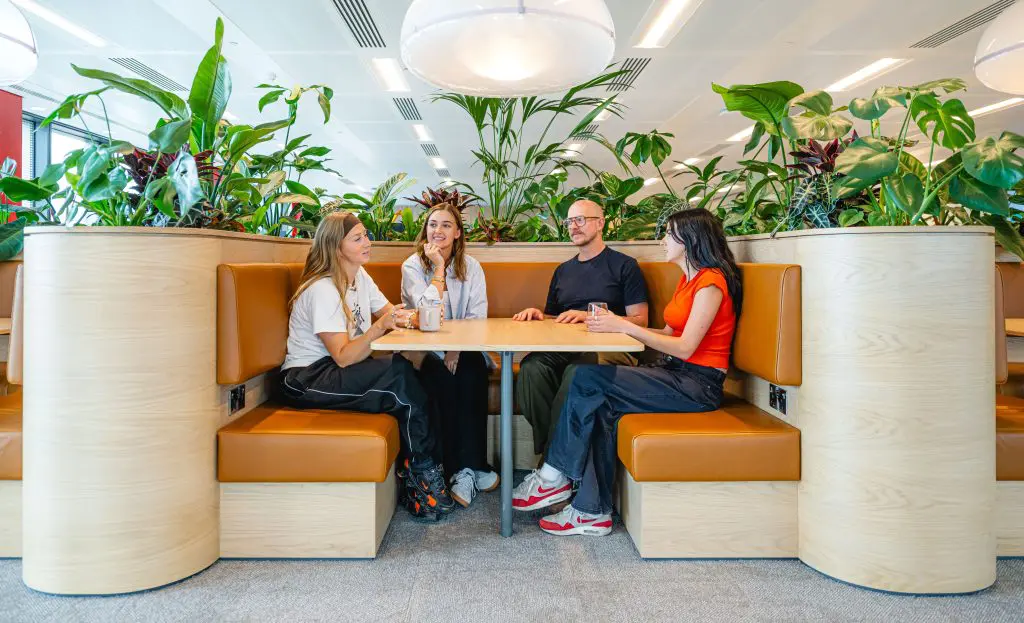
Biophilic design is one of the most effective ways to infuse offices with warmth, life and humanity. Greenery and sunlight reduces stress levels and improves cognitive function. It makes people not only happier, but more productive. Even in a tech-driven age, our basic human wiring craves a connection to nature.
From collaborative lounges filled with plants to quiet pods designed for every kind of brain. From climate-neutral buildings filled with social energy to calm, sensory-balanced spaces for focus. The office of tomorrow is being built around what people really want and need.
At its core, it’s about feeling good. Feeling connected, comfortable and part of something meaningful.
In the end, the future office is about an experience that says to employees, ‘We value you.’ Create a space where people feel valued and they will value being there. The future office is human, and that is a future worth looking forward to.
modern office FAQ'S
What does “experience-led planting” actually mean?
It is the use of planting to shape how a workplace feels and functions. Plants are chosen and positioned to improve comfort, wellbeing, social connection and the overall experience of being in the office.
How does planting improve employee wellbeing?
Greenery reduces stress, supports focus and makes spaces feel more comfortable. Studies consistently show that plants can help lower anxiety and improve how people perceive indoor air quality, which leads to calmer, more attentive employees.
Can plants really influence workplace behaviour?
Yes. Planting affects mood, comfort and how people use space. For example, well-placed greenery can encourage people to gather in shared areas, or help individuals feel at ease in quieter zones.
How can plants be used to shape the layout of an office?
Plants can act as natural partitions, guide circulation routes and define zones without walls. They soften hard edges, create focal points and add character to social spaces.
Can planting reflect a company’s culture or brand?
Absolutely. Plant choices, colours and arrangements can be linked to a company’s identity. Examples include using species tied to a country’s heritage or selecting plants that echo brand symbols.
Why is biophilic design so important in modern workplaces?
Biophilic design connects people with nature. This improves wellbeing, reduces stress and supports cognitive function. In a hybrid world, offices must offer something home working cannot. Nature plays a core role in making workplaces feel good to be in.
How does planting support hybrid and flexible working?
When an office has zones for collaboration, focus and relaxation, planting helps signal these differences. Greenery marks transitions between spaces, improves acoustics and gives each zone a clear identity, helping people choose where to work.
What sustainability practices are involved in Planteria’s planting?
Planteria uses peat-free, soil-free Ecoponic substrate, selects locally grown plants and runs a zero-to-landfill approach. The Walking Plant Technician model also cuts van mileage for maintenance visits, reducing environmental impact.
How does engaging employees with planting improve workplace culture?
When employees feel connected to their environment, they engage more with colleagues and wider company values. Planting creates warmth, encourages interaction and helps people feel part of something shared.
Why is planting becoming essential rather than decorative?
Workplaces today must earn the commute. Design now focuses on comfort, connection and purpose. Planting supports all three, making offices healthier, more welcoming and more aligned with what employees expect from a modern workplace.